
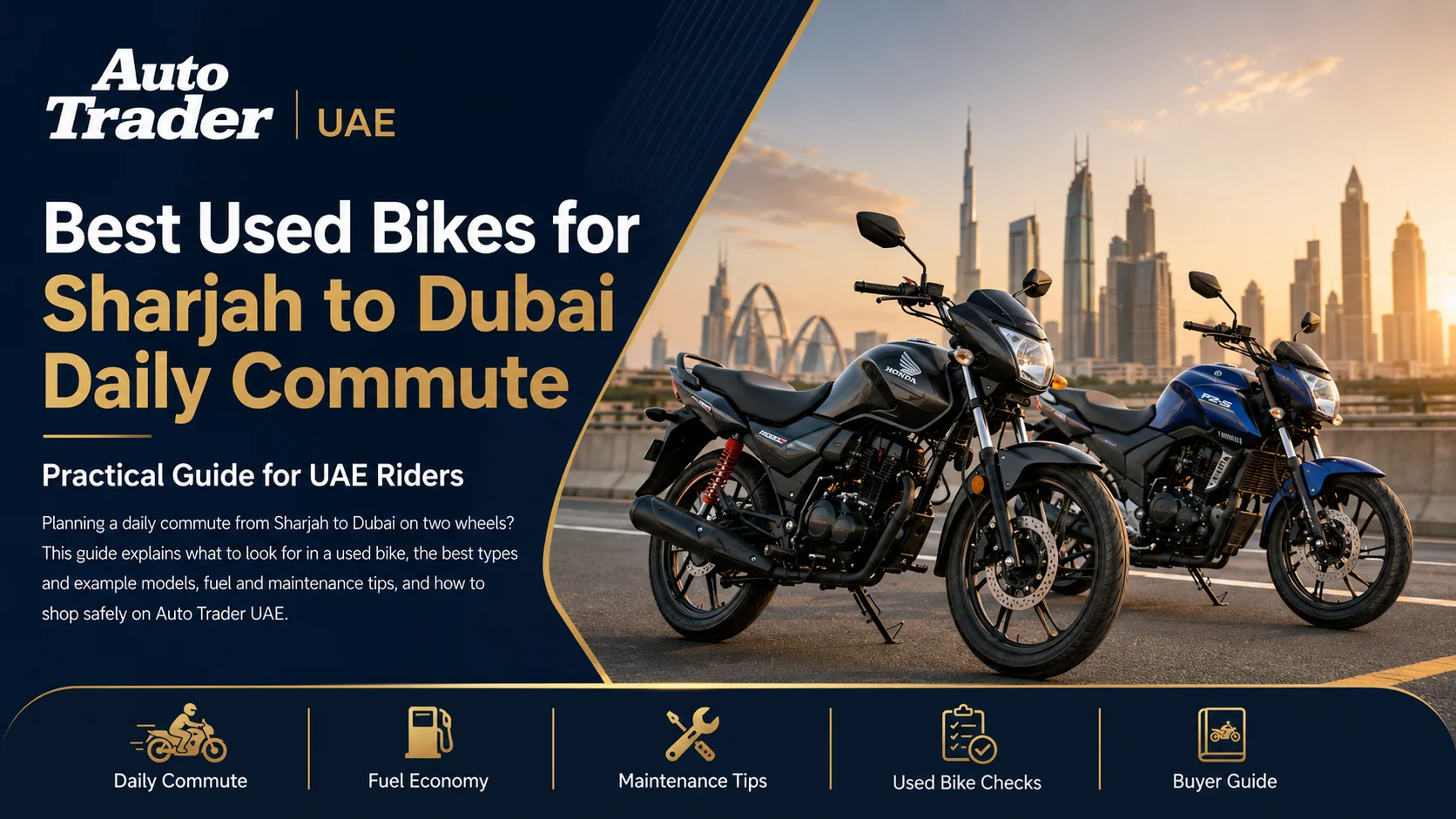
Best Used Bikes for Sharjah to Dubai Daily Commute – Practical Guide
The Sharjah to Dubai commute is one of the busiest routes in the UAE. For many riders, a used bike is the smartest way to cut travel time, dodge heavy traffic, and save on fuel. This guide explains how to choose the Best Used Bikes for Sharjah to Dubai Daily Commute, what to inspect before you buy, and how to use Auto Trader UAE to find the right motorcycle or scooter for your budget.
Is a Used Bike Right for the Sharjah–Dubai Commute?
Before picking a model, decide whether a bike suits your daily routine:
- Distance & route: The distance between central Sharjah and central Dubai is roughly 25–35 km depending on your start/end points and route (E11, E311, etc.). This is very manageable on a motorbike or maxi-scooter.
- Time of day: Peak hours mean slow-moving traffic. Bikes with good low-speed balance, smooth power delivery, and comfortable seating work best.
- Parking & access: Motorbikes and scooters are easier to park and can reduce overall commute time, especially around busy office districts and metro stations.
- Cost savings: Compared with many cars, most commuter bikes use far less fuel and are cheaper to maintain, insure and register.
If you commute most days of the week, a reliable used bike can pay for itself in fuel and time savings versus driving a car or using ride-hailing services.
What Makes a Bike Good for the Sharjah–Dubai Commute?
Riding between emirates daily is different from short inner-city trips. Focus on these features when shortlisting bikes:
1. Engine Size & Power
- Ideal range: 150cc to 400cc for most commuters.
- Why: This range offers enough power for highway speeds on E11/E311 while staying economical and easy to handle.
- Above 400cc: More comfort and power, but usually higher purchase price, insurance, and fuel costs.
2. Comfort & Ergonomics
- Upright riding position: Reduces back and wrist fatigue on 30–45 minute commutes.
- Seat comfort: Wider, well‑padded seats are better for daily use than thin sportbike saddles.
- Wind protection: A small windscreen makes a big difference at highway speeds, especially on windy days.
3. Fuel Efficiency
- Look for: Bikes that are known for good mileage (many small- to mid-capacity commuters and scooters).
- Why it matters: A daily Sharjah–Dubai round trip quickly adds up; fuel-efficient bikes can save hundreds of dirhams over a year.
4. Reliability & Parts Availability
- Popular brands: Japanese and major global brands generally have widespread service networks and easier parts access in the UAE.
- Common models: Common commuter and delivery models are easier and cheaper to fix because workshops know them well.
5. Safety Features
- ABS (Anti-lock Braking System): Strongly recommended for highway commuting and sudden braking in traffic.
- Tyres: Quality tyres in good condition are essential for stability, grip, and braking.
- Lights: Bright headlight, working brake lights, and indicators are important for visibility, especially early morning or late-night commutes.
6. Running Costs
- Service intervals: Some bikes need frequent services, others less often; check the schedule.
- Consumables: Tyres, chain and sprockets, brake pads, and oil changes are the main recurring costs.
Best Types of Used Bikes for Sharjah to Dubai Commute
Instead of focusing on one single “best” model, it’s more useful to think in categories. Here are the main types of bikes that work well for the Sharjah–Dubai run, plus example models commonly found on the UAE market.
1. Commuter Motorbikes (150cc–250cc)
Best for: Budget-conscious riders who want strong fuel economy and simple maintenance.
These are light, easy to ride, and cheap to run. They’re ideal if you mostly stick to moderate speeds and prefer predictable, relaxed performance.
Example models you may see listed on Auto Trader UAE:
- Honda CB125F / CB150 series
- Yamaha YBR125 / YB125 family
- Bajaj Pulsar 150 / 180
- TVS Apache RTR 160 / 180
Pros: Low purchase price, excellent fuel economy, widely available parts, easy for new riders.
Cons: Can feel underpowered at high highway speeds, less comfortable for larger riders or with a passenger.
2. Maxi-Scooters & Larger Scooters
Best for: Riders who value comfort, storage, and automatic transmission.
Modern maxi-scooters combine car-like convenience with bike agility, making them very attractive for daily commuting and weekday errands.
Popular options in the regional market include:
- Honda PCX 150 / 160
- Yamaha NMAX / XMAX series
- Piaggio / Vespa GTS (larger displacement variants)
Pros: Automatic (no clutch), good under-seat storage, comfortable seating and wind protection, very fuel efficient.
Cons: Higher purchase price than small commuter bikes; some models have more complex servicing.
3. 300–400cc City & Naked Bikes
Best for: Riders who want a balance of power, comfort, and practicality.
These bikes are ideal for mixed city and highway use, with enough power for safe overtaking and more stable highway behaviour.
Example models often seen in UAE classifieds:
- KTM Duke 250 / 390
- Kawasaki Z300 / Z400
- Honda CB300R / CBR300 (in more upright trims)
- Yamaha MT-03
Pros: Stronger performance, better highway stability, often better brakes and suspension.
Cons: Slightly higher fuel use and insurance; more power may be less suitable for complete beginners.
4. Sport-Touring & Light ADV (Adventure) Bikes
Best for: Riders who want both weekend rides and weekday commuting.
Sport-touring and light adventure bikes are built for longer distances, so they usually have comfortable seats, relaxed ergonomics, and good wind protection—ideal for the daily Sharjah–Dubai stretch.
Commonly available examples:
- Kawasaki Versys-X 300 / Versys 650
- Honda CB500X
- BMW G 310 GS / F series adventure models
Pros: Very comfortable over distance, upright stance, luggage options, good stability in wind.
Cons: Higher upfront cost; some models are taller, which may not suit shorter riders.
5. Classic Cruisers (Selective)
Best for: Riders who prefer a relaxed riding style and low seat height.
Some cruisers can work for the daily commute, especially if they have mid-sized engines and comfortable seating. However, they may not be as agile in tight urban traffic.
Typical options you may find as used in the UAE:
- Honda Rebel (300/500)
- Yamaha V-Star / small displacement cruisers
- Royal Enfield Meteor / Classic series
Pros: Comfortable seating, low seat height, stable straight-line cruising.
Cons: Heavier, sometimes limited cornering clearance and less suited to quick lane changes.
How to Choose the Right Used Bike for Your Commute
Use these steps to narrow down the best used bike for Sharjah to Dubai driving conditions and your experience level.
1. Set a Realistic Budget
- Decide your maximum spend including bike price, registration, insurance, and mandatory basic gear (helmet, gloves, jacket).
- Leave room for immediate maintenance such as oil change, basic service, and possibly tyres or brake pads.
2. Match the Bike to Your Experience
- New riders: Start with 150–300cc commuter bikes or scooters. They are more forgiving and easier to control.
- Experienced riders: Can consider 300–650cc models, sport-tourers or adventure bikes depending on preference.
3. Check Comfort for Your Height and Build
- Sit on the bike if possible: you should comfortably reach the ground with at least the balls of your feet.
- Ensure the handlebar and peg position feels natural; your wrists and shoulders shouldn’t be strained.
- If you plan to carry a passenger, check rear seat comfort and grab handles.
4. Consider Your Daily Route
- Mainly highways (E11/E311): Prioritise stability, wind protection, and a bit more engine capacity.
- Mixed city and highway: A 150–300cc commuter or scooter can be ideal; agile in traffic but capable of cruising.
5. Estimate Running Costs
- Ask the seller about average fuel consumption and service costs.
- Check typical service prices at workshops or dealers for that model.
- Consider tyre size and price—larger performance tyres generally cost more.
Used Bike Inspection Checklist
When browsing listings and viewing bikes listed on Auto Trader UAE, always inspect carefully or bring a trusted mechanic. Key points:
Documents & History
- Verify the Mulkiya (registration card) details match the chassis and engine numbers.
- Check for any outstanding finance or police fines if possible.
- Ask for service records or at least receipts for major work (tyres, chain replacement, major services).
Engine & Transmission
- Start the bike from cold; it should start without unusual noise or smoke.
- Listen for knocking, rattling, or irregular idle.
- Check clutch engagement and smooth gear shifts (for manual bikes).
Frame, Suspension & Wheels
- Inspect the frame for any signs of cracks, bends, or poor-quality welding that might suggest an accident repair.
- Check for leaking fork seals and unusual suspension noises.
- Spin the wheels (if possible) to ensure they track straight, and inspect rims for dents.
Brakes & Tyres
- Look at brake disc thickness and any deep grooves; thin or deeply grooved discs will need replacement.
- Check tyre tread depth and look for cracks or uneven wear.
- Confirm whether the bike has ABS and that the ABS warning light behaves normally on start-up.
Electrical & Lights
- Test all lights, indicators, horn, and switches.
- Ensure the battery cranks the bike strongly and that no warning lights stay on.
Test Ride (If Possible)
- Check for straight-line tracking when you briefly release the handlebar at low speed.
- Listen for driveline noise (chain slap, grinding, or whining).
- Test brakes progressively to feel for vibrations or pulling to one side.
Paperwork, Licensing, and RTA Requirements
For a legal Sharjah–Dubai commute, keep these points in mind:
- You must hold a valid UAE motorcycle licence appropriate for the bike’s category.
- The bike must be registered, insured, and pass the required inspections in its emirate.
- Make sure your insurance policy explicitly covers commuting between emirates.
- Use proper protective gear: at minimum a certified helmet, gloves, and sturdy clothing; many riders also choose jackets with armour and riding boots.
Tips for a Safer and Easier Sharjah–Dubai Bike Commute
- Plan timing: If possible, leave a little earlier or later than peak rush hour to reduce stress.
- Check weather: During sandstorms or heavy rain, visibility and grip can be reduced—ride conservatively or postpone when possible.
- Stay visible: Use reflective elements on your gear and keep your headlight on.
- Maintain your bike: Regular oil changes, chain lubrication, and tyre checks make a big difference on a high‑mileage commute.
Buying and Selling Used Bikes via Auto Trader UAE
Whether you are upgrading your current motorcycle or buying your first used bike for the Sharjah–Dubai commute, Auto Trader UAE makes the process more efficient.
For Buyers
- Use filters to search by price, year, mileage, engine size, and brand.
- Shortlist a few models that fit your needs (for example a 150–300cc commuter and a maxi-scooter) and compare running costs.
- Message sellers directly to ask for recent service details, tyre age, and any modifications.
- Arrange viewings in safe, public places and consider a pre-purchase inspection from a workshop.
For Sellers
- Prepare your bike: clean it, fix simple issues, and gather service records.
- Write an honest description highlighting commuting benefits: fuel economy, comfort, mileage, and any touring accessories (windscreen, luggage, phone mount).
- Upload clear photos from multiple angles, including close-ups of tyres, odometer, and any accessories.
- Price realistically based on age, condition, and similar listings on Auto Trader UAE to sell faster.
Conclusion: Choosing the Best Used Bike for Your Daily Route
The Best Used Bikes for Sharjah to Dubai Daily Commute are those that match your experience, comfort needs, and budget while offering solid reliability and low running costs. For many riders, that means:
- 150–300cc commuter bikes or scooters for economy and ease of use, or
- 300–500cc city, naked, or light adventure bikes for more comfort and stability on the highway.
By focusing on comfort, fuel efficiency, safety features, and a clean service history, you can turn the Sharjah–Dubai drive into a more predictable, cost-effective part of your day. When you’re ready to shop, explore the wide range of used bikes in the UAE listed on Auto Trader UAE, compare options side by side, and find the motorcycle or scooter that fits your commute perfectly. And if you ever decide to move back to four wheels, you can also browse thousands of used cars in UAE and used cars in Dubai to suit every budget and lifestyle.
Browse used bikes in UAE on Auto Trader UAE to compare live listings, prices, and current market activity more clearly.
Related Links
Buyer Takeaway
When buying a used car in the UAE, focus on vehicle condition, service history, inspection quality, paperwork, and total running costs rather than price alone. Compare options carefully and choose the option that best matches your budget and real needs.
Seller Takeaway
If you are selling a used car in the UAE, present the service history clearly, price the vehicle realistically, and highlight condition, specification, and ownership strengths honestly. A well-prepared listing with accurate details usually attracts more serious buyers.
Auto Trader UAE connects you with thousands of used cars from trusted private sellers and dealers across Dubai and the UAE.