
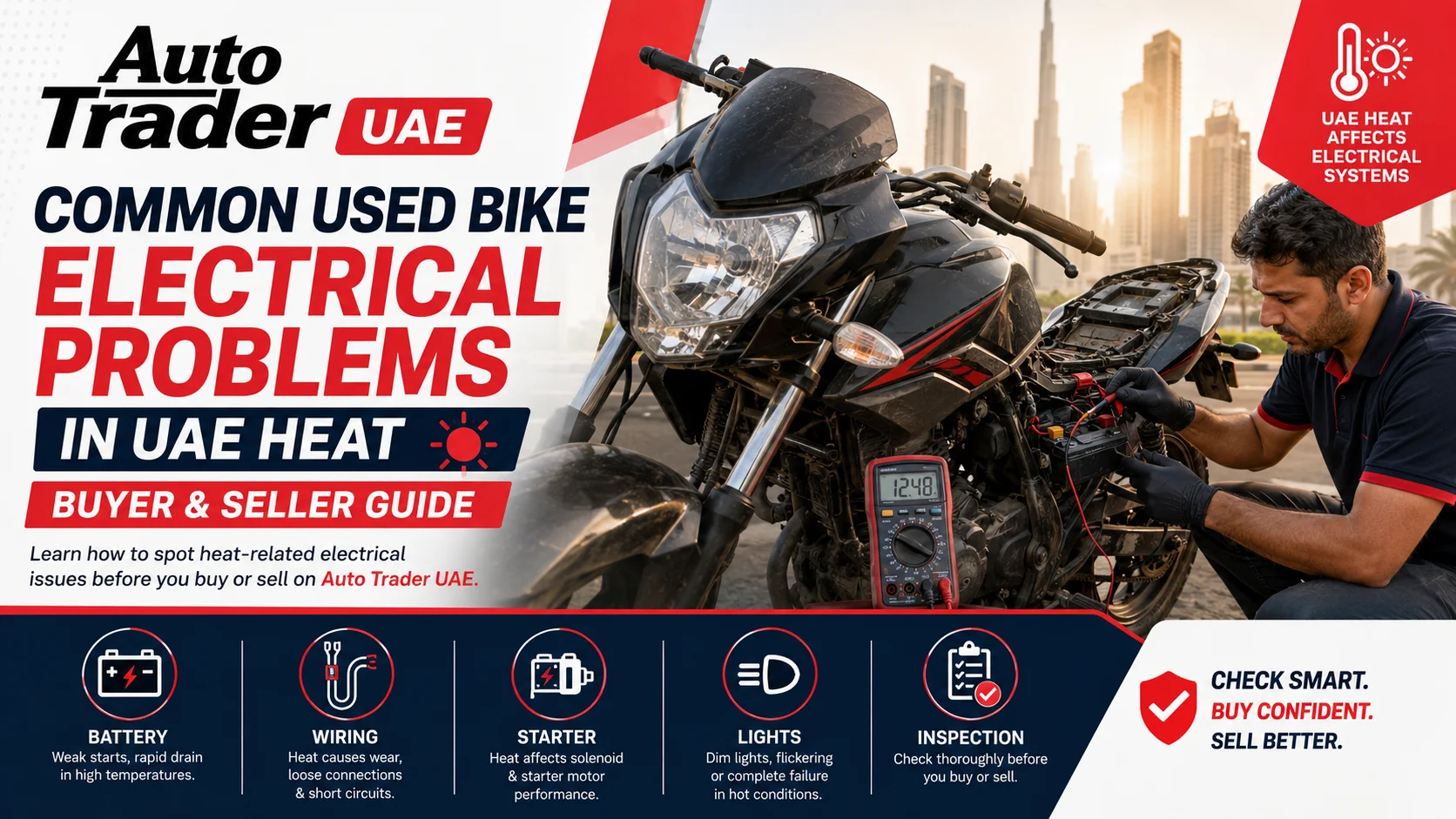
Common Used Bike Electrical Problems in UAE Heat: Buyer & Seller Guide
Riding a bike in the UAE means dealing with extreme heat, strong sun, dust, and humidity. Those conditions are tough on any motorcycle, but they are especially hard on electrical components. If you’re shopping for a used bike on Auto Trader UAE or preparing your own motorcycle for sale, understanding heat-related electrical issues can save you serious time and money.
Why UAE Heat is Tough on Bike Electrics
High temperatures, especially when a bike is parked outside or used daily as a commuter, can accelerate wear on wiring, rubber insulation, batteries, and electronic control units. Add slow traffic, short trips, and the occasional off‑road ride, and you get a perfect recipe for electrical problems.
Common effects of UAE conditions include:
- Faster battery degradation
- Cracked or brittle wiring insulation
- Corroded connectors from humidity and salty air near the coast
- Overheating of ECU, regulators, and sensors
This guide explains the most common used bike electrical problems in UAE heat, how to recognise them during an inspection, and what you can do as a buyer or seller.
1. Battery Failure and Weak Starting
Why batteries suffer in UAE heat
Motorcycle batteries are highly sensitive to temperature. In the UAE, long hours parked in open sun, high engine bay temperatures, and short urban rides mean batteries rarely get an ideal life. Heat speeds up chemical reactions inside the battery, leading to:
- Loss of capacity (battery stores less charge)
- Warped or sulphated plates
- Drying out of fluid in older lead‑acid types
Typical symptoms when viewing a used bike
- Slow cranking or clicking sound when you press the starter
- Engine starts only after several attempts, especially when cold
- Dash lights flicker or dim when starting
- Battery needs frequent jump‑starts or the owner keeps it on a charger
Quick buyer checks
- Ask the seller when the battery was last replaced and for any receipts.
- Check for swelling, cracks, or powdery corrosion around the terminals.
- Turn ignition on and operate indicators, brake light, and horn. Weak performance can signal a tired battery.
- If possible, start the bike from cold, not after it’s been idling in the shade for 20 minutes.
Tips for sellers
- If your battery is more than 3–4 years old or clearly weak, consider replacing it before listing. A fresh battery makes a strong first impression.
- Clean terminals and remove corrosion so the bike presents well in photos and viewings.
2. Regulator/Rectifier and Charging System Issues
How heat affects the charging system
The regulator/rectifier (often called the “reg/rec”) converts AC current from the stator to DC and controls voltage going to the battery. It is a common failure point on used bikes in hot climates. Constant heat, plus any blocked airflow from fairings or luggage, can cause:
- Overheating and internal failure of the unit
- Over‑charging (burning bulbs, boiling batteries)
- Under‑charging (battery never fully recovers)
Symptoms to watch for
- Battery often goes flat even with regular riding
- Headlight brightness changing with engine revs more than normal
- Blown bulbs or fuses with no clear reason
- Electrical burning smell near the reg/rec area
Buyer inspection tips
- With the bike running, switch on lights and indicators to see if any flicker or dim suddenly.
- Ask if the regulator/rectifier has ever been replaced, especially on older Japanese or European bikes known for reg/rec issues.
- Look around the reg/rec and wiring for melted plastic, cracked plugs, or DIY repairs.
Advice for sellers
- If your bike has a known weak charging system design, consider a quality aftermarket upgrade and keep the invoice. It can be a selling point.
- A basic voltage test by a workshop is inexpensive and can reassure buyers if you share the report.
3. Wiring Harness Damage and Brittle Insulation
Heat and UV damage to wiring
On bikes regularly parked outdoors, UAE sun and heat can dry and crack the protective insulation around wires, particularly near the headstock, under the seat, and around the tail section. Off‑road use can also cause harness chafing.
What this looks like
- Intermittent electrical issues when turning the handlebars
- Indicators or headlight cutting out when riding over bumps
- Random blown fuses or short circuits
- Visible exposed copper or hardened, brittle wire coating
How to inspect as a buyer
- Turn the handlebars fully left and right while lights and indicators are on. Watch for flickering or cutting out.
- Gently move wiring looms around the headstock and under the seat to see if any connections are loose.
- Look for tape‑wrapped sections and non‑original connectors, which can indicate past repairs.
- Check under the seat and around the battery area for melted or discoloured wires.
Seller preparation
- Secure any loose wiring with proper clips or sleeves instead of random tape.
- Fix obvious exposed wires before listing the bike; visible wiring problems quickly put buyers off.
4. Switchgear and Control Buttons Failing
Why switchgear suffers in the UAE
Handlebar switches (starter button, kill switch, indicators, lights) are exposed to direct sun, dust, sweat, and occasional rain or washing. Over time, heat can warp plastic housings and dry out internal grease, while dust can contaminate the contacts.
Common symptoms
- Starter button needs several presses to work
- Indicators don’t engage or cancel correctly
- High/low beam switch feels sticky or intermittent
- Kill switch occasionally cuts power while riding over bumps
Buyer checklist
- Operate every button several times: starter, kill switch, hazard lights, indicator switch, horn, and headlight controls.
- With the bike idling, gently tap and move the switch housings to see if anything cuts out.
- Check for cracked or faded plastics, which hint at long‑term sun exposure.
Seller tips
- Clean around switches carefully; avoid heavy water spray that can push moisture inside.
- If a switch is clearly faulty, replacing it is usually cheaper than losing a serious buyer over a small but worrying fault.
5. Sensor and ECU Heat Stress
Electronics in extreme climates
Modern bikes rely on sensors (temperature, oxygen, throttle position, ABS) and an ECU to manage fuel, ignition timing, and safety systems. In UAE traffic and summer temperatures, these components can run hot for long periods, especially if cooling is marginal or the bike is ridden hard.
How problems show up
- Difficult hot starts even if cold starts are fine
- Engine cutting out when idling in heavy traffic
- Warning lights on the dash (engine, ABS, traction control)
- Poor fuel economy or uneven throttle response
Buyer questions and checks
- Ask the seller if any warning lights have appeared recently or if diagnostic codes were cleared.
- Check that the engine warning light illuminates briefly on ignition, then goes out once the bike starts.
- Let the bike idle for a few minutes; watch for rough running, cutting out, or warning lights as it warms up.
- If the bike has selectable riding modes, cycle through them and ensure they work properly.
What sellers can do
- If you’ve recently had a sensor, ECU, or ABS unit replaced, keep invoices and mention them in your listing as a positive upgrade.
- Before sale, have a workshop scan for stored error codes; sharing a clean report can build trust with buyers.
6. Lighting, Indicators, and LED Failures
Heat, vibration, and LEDs
Many modern bikes in the UAE run LED headlights and indicators. While LEDs generally last longer than halogen bulbs, poor‑quality aftermarket units or badly fitted accessories can fail early in high heat or cause electrical glitches.
Issues to expect
- Condensation or moisture inside headlight or indicator lenses
- Individual LED segments not working
- Very fast indicator flashing (flasher relay or load issue)
- Headlight cut‑outs when hitting bumps or turning the bars
Buyer inspection guide
- Test all lights: low beam, high beam, indicators, brake lights (front and rear lever), number plate light, and hazards.
- Check lenses for cracks, yellowing, or water marks that suggest past leaks.
- Look critically at any aftermarket lighting. Ask who installed it and whether it’s connected via proper plugs or just twisted wires and tape.
Seller preparation
- Fix non‑working bulbs or LEDs; small faults are often used by buyers to negotiate heavily.
- If you’ve fitted high‑quality LED upgrades, mention brands and installation details in your Auto Trader UAE ad.
7. Accessory Wiring and DIY Modifications
Extra load and poor installation
In the UAE, many riders add accessories like phone chargers, auxiliary lights, aftermarket horns, or extra cooling fans. If these are wired incorrectly or using thin, cheap cables, they can overload circuits, blow fuses, and create drain on the battery when the bike is parked.
Warning signs
- Untidy wiring running directly off the battery with no proper fuse
- Multiple add‑on chargers or USB sockets dangling around the handlebars
- Fuses regularly blowing on certain circuits
- Battery going flat quickly even if you don’t ride much
Buyer evaluation tips
- Follow any non‑factory wiring from the battery or under the seat to see what it powers.
- Ask who installed accessories – a recognised workshop, or DIY at home.
- If the bike has many electrical add‑ons, factor the risk into your budget for a future re‑wire or professional tidy‑up.
Advice for sellers
- Remove low‑quality accessories or tidy up messy wiring before listing the bike.
- Provide receipts and installation details for any premium accessories (aux lights, GPS, alarm systems) to show they’re done properly.
Heat‑Aware Inspection Checklist for UAE Buyers
When you go to see a used motorcycle in the UAE, use this simple electrical checklist alongside your usual mechanical checks:
Before the test ride
- Inspect battery area for corrosion, swelling, or loose terminals.
- Check main wiring harness around headstock, under the tank, and under the seat.
- Test all switches: starter, kill, indicators, high/low beam, horn, hazard.
- Verify all lights, brake lights, and indicators are working correctly.
- Look for warning lights on the dash and confirm they self‑test properly.
During the test ride
- Note starting behaviour when hot and cold if possible.
- Watch for flickering lights or cutting out over bumps.
- Check that ABS and other systems operate normally (where fitted).
After the ride
- Turn off the bike, wait a few minutes, then restart to test hot starting.
- Smell around the bike for any burnt‑plastic odour that might indicate overheating wiring or components.
If you’re not confident checking these items yourself, consider paying a reputable UAE workshop for a pre‑purchase inspection, especially for larger or high‑value bikes.
Preventing Electrical Problems in UAE Heat
For owners and future sellers
Good habits throughout ownership can reduce heat‑related failures and help you achieve a better price when you sell on Auto Trader UAE:
- Shade and covers: Park in covered areas where possible. Use a breathable bike cover to reduce sun exposure and dust buildup.
- Regular battery checks: Replace weak batteries before they fail and keep terminals clean.
- Professional wiring: Use proper plugs, fuses, and cable routing for accessories; avoid cheap DIY shortcuts.
- Cooling and airflow: Keep radiator and oil cooler clean and free from debris. Avoid blocking airflow around the regulator/rectifier.
- Scheduled servicing: Stick to service intervals so workshops can spot early signs of electrical stress, sensor faults, or wiring damage.
How UAE Riders Can Use Auto Trader UAE
Whether you’re dealing with common used bike electrical problems in UAE heat as a buyer or seller, Auto Trader UAE makes the process easier:
- For buyers: Filter used motorcycles by price, mileage, year, and location, then use the inspection tips above when viewing bikes in person.
- For sellers: Fix basic electrical issues, gather service history and receipts, then create a clear, honest listing that highlights recent electrical work and sensible upgrades.
When you’re ready to upgrade or change category, you can also explore a wide range of used cars in UAE or focus on used cars in Dubai alongside your next bike purchase.
Conclusion
The UAE climate is demanding, and electrical systems are one of the first areas to show the effects of extreme heat on a used motorcycle. By understanding batteries, charging systems, wiring, and modern electronics – and by using a structured inspection approach – you can avoid costly surprises and negotiate confidently.
Browse the latest used bikes and used cars on Auto Trader UAE, compare options, and use this guide as your checklist when you view your next ride in person.
Browse used bikes in UAE on Auto Trader UAE to compare live listings, prices, and current market activity more clearly.
Related Links
Buyer Takeaway
When buying a used car in the UAE, focus on vehicle condition, service history, inspection quality, paperwork, and total running costs rather than price alone. Compare options carefully and choose the option that best matches your budget and real needs.
Seller Takeaway
If you are selling a used car in the UAE, present the service history clearly, price the vehicle realistically, and highlight condition, specification, and ownership strengths honestly. A well-prepared listing with accurate details usually attracts more serious buyers.