
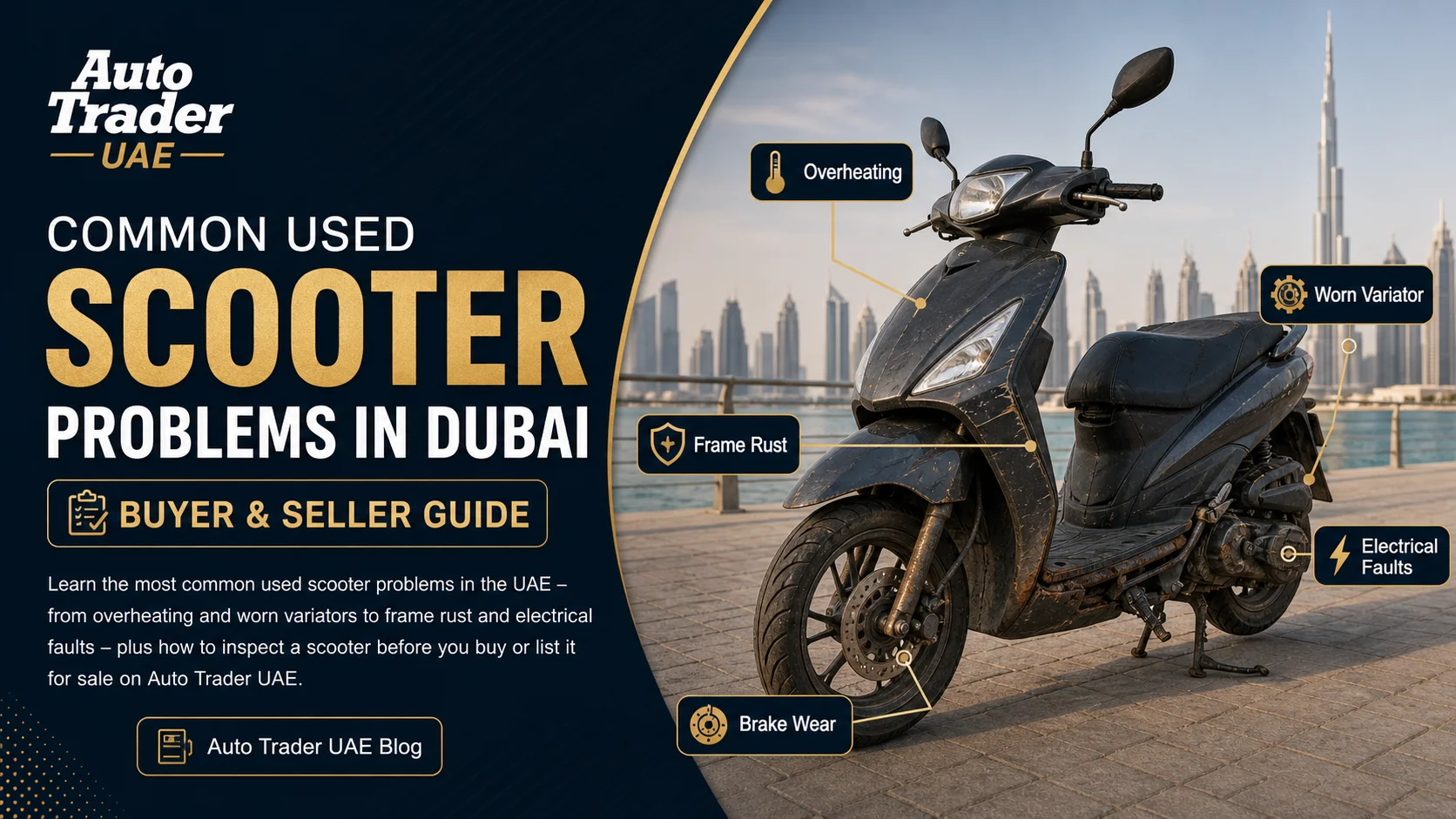
Common Used Scooter Problems in Dubai: Buyer & Seller Guide
Scooters are one of the smartest ways to move around Dubai and the wider UAE – cheap to run, easy to park, and perfect for city traffic. But the heat, dust, and heavy stop‑start use can be tough on used scooters. This guide explains the most Common Used Scooter Problems in Dubai, how to spot them during inspection, and what buyers and sellers should do before completing a deal on Auto Trader UAE.
Why Used Scooters in Dubai Need Extra Attention
Dubai’s conditions are harder on scooters than many new riders expect:
- High temperatures push cooling systems, batteries, plastics, and tyres to their limits.
- Dust and sand work their way into air filters, brakes, bearings, and switches.
- Stop‑start city riding wears out CVT belts, clutches, and brakes faster than steady cruising.
- Frequent delivery use means long hours, heavy loads, and sometimes minimal maintenance.
Because of this, two scooters of the same age and mileage can be in very different condition. A careful inspection is essential before you buy or sell.
1. Engine Wear & Overheating
Why it’s common in Dubai
Scooter engines are small but work hard. In Dubai, slow traffic in hot weather means limited airflow and higher engine temperatures. If the owner skips regular oil changes or uses poor‑quality oil, internal wear accelerates.
Warning signs to look for
- Hard starting when the engine is hot or after short stops.
- Rough idle or stalling at traffic lights.
- Knocking or ticking noises from the top or bottom of the engine.
- Blue or white smoke from the exhaust (oil burning).
- Strong oil smell or visible oil leaks around the engine.
Quick checks for buyers
- Start the scooter from cold if possible and again when hot.
- Let it idle for several minutes – it should not stall or overheat.
- Check the oil level and colour; very dark, thick oil can indicate neglect.
- On liquid‑cooled models, check coolant level and look for dried coolant marks.
Tips for sellers
- Service the scooter (oil, oil filter, and coolant where applicable) before listing.
- Keep service invoices and show them to buyers on inspection.
- A clean, dry engine area builds confidence; wipe away old residue but don’t hide active leaks.
2. CVT Belt, Clutch & Variator Wear
Most modern scooters in the UAE use a CVT (Continuously Variable Transmission) with a rubber belt and variator. Heavy stop‑start commuting and delivery work wear these parts quickly.
Common symptoms
- Slow take‑off even with full throttle.
- Judder or vibration when pulling away from a stop.
- High revs but poor acceleration – the engine screams but speed builds slowly.
- Whining or scraping noises from the left side of the scooter.
Inspection tips
- Test ride from a complete stop on flat ground; acceleration should be smooth and linear.
- Climb a slight incline; a slipping belt will be obvious.
- Ask if the CVT belt and rollers/variator weights have ever been replaced, and at what mileage.
Seller advice
- If the scooter has high mileage or obvious judder, replace the belt and worn variator parts before selling.
- Mention any new transmission parts in your Auto Trader UAE listing – it’s a strong selling point for daily commuters and delivery riders.
3. Suspension & Frame Fatigue
Dubai’s speed bumps, ramps, and rough service roads can wear out suspension and even stress the scooter’s frame, especially if it’s carried heavy loads or a delivery box.
What goes wrong
- Leaking front forks – oil on the fork tubes or dust seals.
- Weak rear shock – the bike feels bouncy or bottoms out easily with a passenger.
- Bent frame or forks from accidents or hitting kerbs.
How to check
- Stand in front of the scooter and look at it head‑on. The front wheel, mudguard, and handlebars should be aligned.
- Push down hard on the handlebars and seat; the suspension should compress smoothly and return without bouncing excessively.
- Check the frame around the steering head and under the floorboard for cracks, dents, or weld marks from repairs.
For sellers
- If the scooter has been in an accident, be transparent. Buyers in the UAE value honesty more than a perfect cosmetic history.
- Leaking fork seals are usually not expensive to fix and can greatly improve ride quality and resale value.
4. Brake Wear & Heat Fade
Constant braking in city traffic and high road temperatures are tough on scooter brakes.
Typical issues
- Thin or glazed brake pads that reduce stopping power.
- Warped discs causing vibration under braking.
- Old brake fluid that boils more easily in heat, causing a soft lever feel.
Buyer checklist
- Check pad thickness; you should see at least a few millimetres of material.
- During a test ride, brake firmly from 40–60 km/h. The scooter should stop straight, with no shudder.
- Squeeze the brake levers; they should feel firm, not spongy, and should not come close to the grip.
Seller checklist
- Replace worn pads before advertising the scooter.
- Bleed the brake system and refill with fresh fluid if it’s older than two years.
- Mention new brakes in your listing to reassure safety‑conscious buyers.
5. Electrical Problems & Battery Failure
Heat and short trips are hard on scooter batteries and electrics. Parking outdoors under the sun can also damage switches and wiring.
Common faults
- Weak battery – starter turns slowly or clicks only.
- Intermittent lighting – indicators, horn, or brake light works only sometimes.
- Charging issues – the scooter starts but the battery keeps dying.
How to spot them
- Turn the ignition on and test all lights, horn, indicators, and the starter button.
- Watch the headlight brightness when you rev the engine – a slight change is normal, but large dips can mean charging problems.
- Ask when the battery was last replaced; in the UAE, 2–3 years of life is common if used regularly.
Seller best practice
- Fit a new, branded battery if the old one is weak – it’s inexpensive and avoids negative first impressions.
- Fix obvious wiring issues (loose indicators, broken switches) before taking listing photos.
6. Cooling System Issues (Liquid‑Cooled Scooters)
Many larger scooters used in Dubai and Abu Dhabi are liquid‑cooled, which helps manage the heat but adds maintenance points.
What typically fails
- Low coolant level from slow leaks or neglect.
- Radiator blockage from dirt, insects, and road debris.
- Cooling fan failure so the bike overheats in traffic.
Buyer inspection tips
- Check the coolant reservoir level with the engine cool.
- Let the scooter idle until it warms up; the cooling fan should come on automatically.
- Look for white or greenish crust around hoses, radiator, or water pump – signs of slow leaks.
For sellers
- Top up coolant with the manufacturer‑recommended type and bleed the system if needed.
- Clean the radiator fins gently to improve airflow.
7. Tyres, Wheels & Alignment
Hot asphalt, rough surfaces, and frequent riding with loads cause faster tyre wear in the UAE.
Common problems
- Squared‑off rear tyres from long straight‑line commutes.
- Cracked sidewalls due to age and heat exposure.
- Bent rims from potholes or hitting kerbs.
How to check
- Look for the tyre manufacture date (a four‑digit code). Over 5 years old? Plan to replace, even if tread remains.
- Inspect tread pattern for uneven wear or flat spots.
- Spin each wheel off the ground (with a stand) and check if it wobbles.
Seller tips
- Replacing old or cracked tyres before listing immediately improves both safety and perceived value.
- Photograph the tyres clearly for your Auto Trader UAE ad so buyers see their condition.
8. Bodywork, Plastics & Rust
Scooters in Dubai often live outdoors, exposed to UV, sand, and occasional coastal humidity.
Typical cosmetic issues
- Faded paint and plastics from sun exposure.
- Cracked or broken panels from small falls or tight parking.
- Rust on the exhaust, under the floorboard, and around bolts.
Why it matters
- Cosmetic damage can hide previous accidents.
- Rust in structural areas can compromise safety and make future repairs difficult.
Buyer checks
- Remove or lift the floor mat and inspect the metal underneath.
- Look for mismatched panel colours or poor‑quality repainting.
- Check the exhaust for deep rust or holes, especially on older delivery scooters.
Seller improvements
- Replace obvious broken plastics; many scooter parts are relatively inexpensive.
- Clean and polish plastics to improve first impressions in listing photos.
9. Service History Gaps & Non‑Genuine Parts
With tight running costs, some owners in the UAE delay servicing or use non‑genuine parts. That doesn’t automatically mean a bad scooter, but it does increase risk.
What buyers should do
- Ask for service invoices, not just verbal promises.
- Check where the scooter was serviced: main dealer, independent workshop, or self‑maintained.
- If there’s no history, budget extra for a full service immediately after purchase.
What sellers should do
- Gather all receipts, even from independent garages; upload clear photos of them in your Auto Trader UAE listing.
- Be honest if you performed basic maintenance yourself – and explain what you did and when.
How to Inspect a Used Scooter in Dubai: Step‑by‑Step
Use this simple process when viewing a scooter from Auto Trader UAE listings or private sellers.
1. Paperwork & identity
- Check the registration card (Mulkiya) matches the chassis and engine numbers.
- Confirm the seller’s Emirates ID matches the registered owner where possible.
- Check that the RTA inspection (if required) and insurance can be arranged without issue.
2. Cold start
- Ask the seller not to warm the bike before you arrive.
- Observe how easily it starts from cold and whether it idles smoothly without throttle input.
3. Visual walk‑around
- Look for leaks under the scooter (oil, fuel, coolant).
- Check tyres, brakes, and suspension as described above.
- Inspect for accident signs – misaligned panels, fresh paint in small areas, or bent levers.
4. Electrical test
- Test headlight (low and high beam), indicators, horn, brake lights, and any accessories.
- Check the instrument cluster for warning lights that stay on.
5. Test ride
- Listen for unusual noises under acceleration, braking, or turning.
- Check straight‑line tracking by briefly taking your hands slightly off the bars at low speed on a safe, empty road.
- Confirm smooth acceleration from a stop and stable behaviour at 60–80 km/h if the scooter is capable.
Smart Maintenance Habits for UAE Scooter Owners
Whether you’ve just bought a scooter or plan to sell later, good maintenance protects value:
- Oil changes every 2,000–3,000 km (or as recommended) using quality oil suited for hot climates.
- Air filter cleaning/replacement more often than in cooler, cleaner climates – sand and dust are constant.
- CVT service at manufacturer intervals (belt, rollers, clutch inspection).
- Battery checks – avoid leaving the scooter unused for months; use a smart charger if stored.
- Shaded parking or a cover to protect plastics, seat, and tyres from UV damage.
Keeping records of this work will help you sell faster and at a better price on Auto Trader UAE.
Buyer Takeaway: Red Flags vs Acceptable Wear
Not every flaw is a deal‑breaker. In Dubai’s market, focus on:
Major red flags:
- Serious frame damage or obvious twisting.
- Strong engine knocking, heavy smoke, or repeated overheating.
- Electrics that repeatedly cut out or a charging system that doesn’t work.
Usually acceptable (with price adjustment):
- Old tyres that simply need replacing.
- Weak battery, if the scooter otherwise runs well.
- Minor cracks or scratches on plastics.
Negotiate based on required repairs and always leave some budget for a full post‑purchase service.
Seller Takeaway: How to Get Better Offers
To attract serious buyers on Auto Trader UAE:
- Fix easy, high‑impact items first: tyres, battery, basic service, and obvious leaks.
- Prepare clear, well‑lit photos from all angles, including tyres, dashboard, and service receipts.
- Write an honest description, listing recent maintenance and any known issues.
- Be ready to allow a short test ride for serious buyers with a valid UAE licence.
Presenting a well‑maintained scooter can increase buyer confidence and reduce negotiation pressure.
Next Steps on Auto Trader UAE
If you’re looking to upgrade your ride or switch from four wheels to two, Auto Trader UAE makes it easy to browse and compare options across the country. Explore:
- Used cars in UAE – for drivers considering both scooters and compact city cars.
- Used cars in Dubai – ideal if you commute across the city and want a back‑up vehicle alongside your scooter.
Whether you’re buying or selling, understanding the most common used scooter problems in Dubai helps you make safer, smarter decisions – and get better value from every ride.
Browse used bikes in UAE on Auto Trader UAE to compare live listings, prices, and current market activity more clearly.
Related Links
Conclusion
A careful used car purchase in the UAE starts with research, proper inspection, and clear paperwork before making the final decision.