
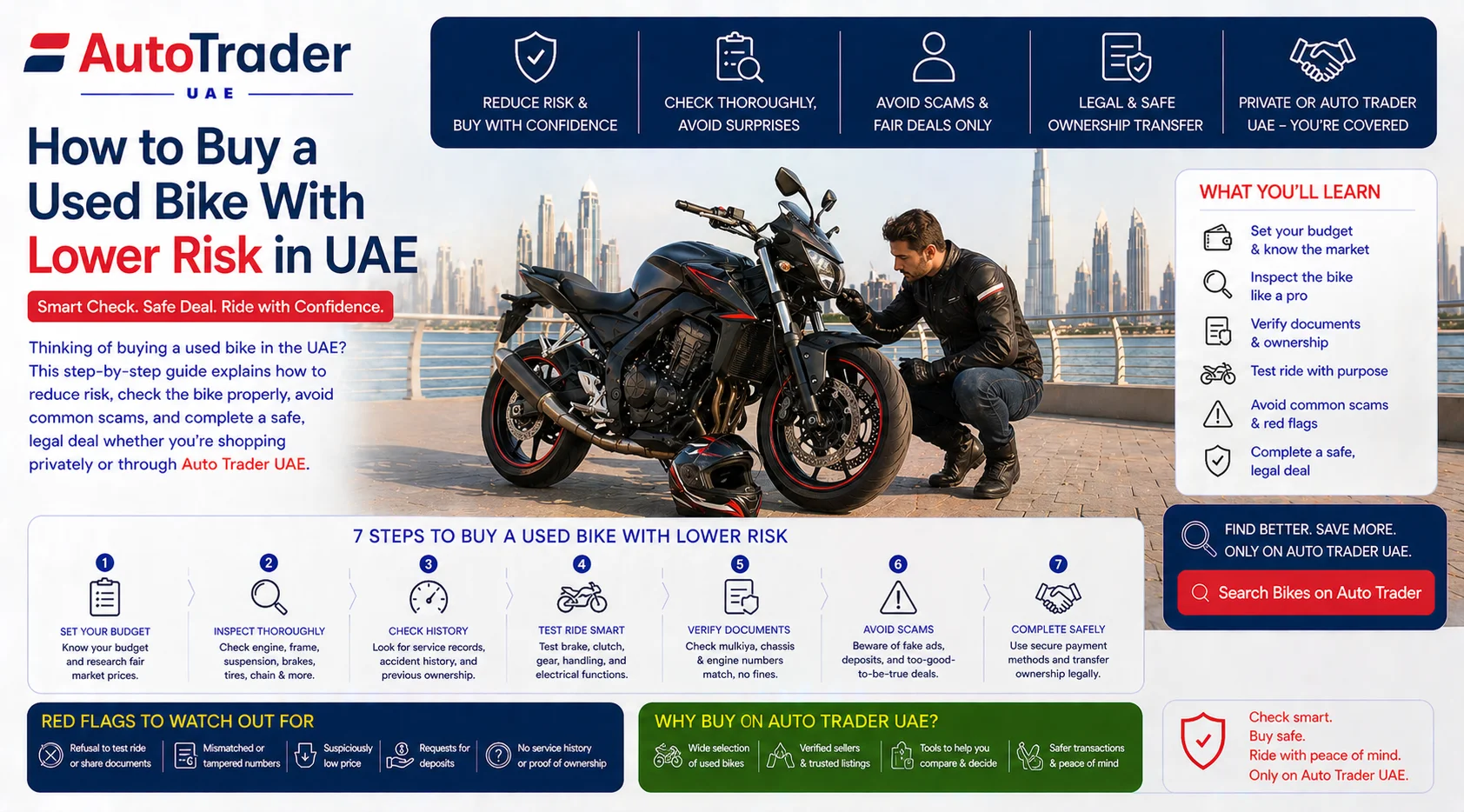
How to Buy a Used Bike With Lower Risk in UAE
Buying a used bike in the UAE can save you a lot of money and open up a bigger choice of models – from commuters and delivery bikes to big touring and sport machines. But if you rush the process, you risk hidden damage, unpaid finance, or legal headaches. This guide explains how to buy a used bike with lower risk in the UAE, step by step, so you can ride away confident in your purchase.
1. Decide Your Budget and Bike Type
Before you start browsing, be clear on what you really need. This helps you avoid overpaying or choosing the wrong type of bike.
Set a realistic budget
- Bike price: Decide the maximum you can spend on the bike itself.
- Extra costs: Include registration transfer, insurance, minor repairs, new tyres or brake pads, and riding gear if you need it.
- Running costs: Bigger engines (600cc+) usually mean higher fuel, tyres, maintenance, and insurance.
Choose the right category
- Commuter / small bikes: 150–400cc, easier to ride, cheaper to run, good for city use and deliveries.
- Adventure / touring: Better for long distances and mixed riding, often with luggage options.
- Sport bikes: Powerful and fast but less comfortable daily, higher insurance and tyre wear.
- Cruisers / classics: Relaxed riding position and style-focused, check for cosmetic condition carefully.
- Scooters: Automatic, practical in traffic, and usually cheaper to maintain.
Match the bike type to your real usage: daily commuting, weekend rides, delivery work, or track days.
2. Where to Find Safer Used Bike Listings in UAE
Your choice of marketplace can reduce risk before you even meet the seller.
- Online platforms: Reputable classifieds like Auto Trader UAE let you filter by price, year, mileage, and location, and compare many bikes side by side.
- Dealers: Often more expensive than private sellers but may offer limited warranties or inspection reports on some bikes.
- Word of mouth: Friends, riding groups, and social clubs can be a good source, but still follow all checking steps.
Look for listings with:
- Clear, high-quality photos from multiple angles
- Full details: year, mileage, service history, modifications
- Accurate location and a reachable UAE mobile number
Be cautious if a bike is significantly cheaper than similar models without a clear reason.
3. Check the Listing for Early Red Flags
Before you call or message the seller, scan the ad carefully.
Warning signs to watch for
- Very low price compared with similar bikes with no explanation (e.g. accident history, urgent sale, mechanical issue).
- Limited or blurred photos, especially around fairings, engine, wheels, and exhaust.
- Vague description such as “perfect condition” with no details on service history, mileage, or ownership.
- Reluctance to meet in person or pressure to send a deposit before viewing.
If anything feels off, skip the bike. There are plenty of used bikes in the UAE market.
4. Questions to Ask the Seller Before Viewing
A quick call or chat can save you wasted trips and reveal how transparent the seller is. Ask:
- Why are you selling the bike? Listen for clear, reasonable answers.
- How long have you owned it? Short ownership periods may or may not be an issue, but ask why.
- Do you have full service history? Agency or specialist workshop records are a big plus.
- Has the bike ever been in an accident? Minor drops are common; serious crashes need careful inspection.
- Any outstanding finance? In the UAE, the bike can’t be transferred until bank clearance is obtained.
- Are there any modifications? Ask about exhausts, tuning, lights, or cosmetic changes.
- Is the bike currently registered and insured? Helpful for test rides and transfer planning.
Take notes so you can compare what you were told with what you see in person.
5. How to Safely Arrange a Viewing
Reduce risk by controlling where and how you meet.
- Meet in a public, well-lit place – petrol stations, RTA test centres, or near a busy café are better than remote areas.
- Bring a friend if possible – extra eyes can spot issues you might miss.
- Schedule in daylight – you need good light to inspect paint, leaks, and tyres.
- Ask to see the Emirates ID and registration card (Mulkiya) to confirm the seller is the legal owner.
Avoid paying any money before you've physically seen and inspected the bike.
6. Physical Inspection Checklist for Used Bikes
You don’t need to be a mechanic to catch many issues. Use this structured checklist:
6.1 Frame and alignment
- Stand in front of and behind the bike and check if wheels, handlebars, and forks line up straight.
- Look for bends, cracks, or fresh welds on the frame and subframe.
- Check for mismatched paint or stickers on one side – could indicate repaired crash damage.
6.2 Forks, suspension, and steering
- Compress the front suspension; it should move smoothly without knocking sounds.
- Inspect fork tubes for rust, deep scratches, or oil leaks around the seals.
- Turn the handlebars side to side; there should be no tight spots or grinding (steering head bearings).
6.3 Wheels, tyres, and brakes
- Check tyre tread depth and look for uneven wear, cracks, or very old date codes.
- Spin wheels (if possible) to see if they wobble or have bent rims.
- Inspect brake discs for deep grooves or blue discoloration (overheating).
- Squeeze levers – brakes should feel firm, not spongy.
6.4 Engine and exhaust
- Look for oil leaks around engine joints, covers, and the bottom of the engine.
- Check the exhaust for excessive rust, dents, or loud aftermarket systems that may not be road-legal.
- Cold start the engine if possible – a healthy bike should start without extended cranking.
- Listen for knocking, rattling, or metallic noises as it warms up.
6.5 Controls, electrics, and instruments
- Test all lights: headlight (low and high beam), indicators, tail and brake lights.
- Check horn, starter button, kill switch, and ignition lock.
- Verify that the odometer, fuel gauge, temperature gauge, and warning lights work correctly.
6.6 General condition
- Scratches on bar ends, levers, or one side of the bike usually mean it has been dropped.
- Look at the chain and sprockets – a dry, rusty chain suggests poor maintenance.
- Check seats, mirrors, and plastics for cracks or cheap replacements.
If you’re not confident, consider paying a trusted workshop or mechanic to inspect the bike before you commit.
7. Test Ride: What to Look and Feel For
Test riding is one of the best ways to reduce risk when buying a used bike in the UAE.
Before you ride
- Make sure you have a valid UAE motorcycle licence.
- Wear proper protective gear (helmet minimum).
- Agree with the seller on the route and conditions (short city loop is usually enough).
During the ride
- Engine: Should rev cleanly without hesitation, misfires, or smoke from the exhaust.
- Gearbox: Shifts should be smooth with no slipping or jumping out of gear.
- Clutch: Engagement should be predictable; slipping under hard acceleration is a warning sign.
- Handling: The bike should track straight when you briefly release the bars; no pulling to one side.
- Brakes: Strong, consistent stopping with no vibration through the lever.
If the seller refuses any test ride without a reasonable explanation, consider it a risk factor unless you can offset it with a detailed professional inspection.
8. Documents You Must Check in UAE
Paperwork is as important as the bike itself when you want a low-risk purchase.
Essential documents
- Mulkiya (registration card): Check the chassis (VIN) and engine numbers against the bike’s frame and engine stamps.
- Emirates ID: The seller’s name should match the name on the Mulkiya.
- Service history: Stamps or invoices from authorised dealers or reputable workshops.
- Warranty papers (if applicable): Confirm if any manufacturer or extended warranty is still valid and transferable.
Outstanding fines and finance
- Traffic fines: These must be cleared before transfer. The seller should handle this.
- Bank loan / mortgage: If there is finance, the bank must release the bike (clearance letter) before it can be transferred.
Do not pay the full amount until you are sure the bike is free of finance and ready for transfer.
9. Understand Typical UAE Used Bike Risks
Knowing common local risks helps you spot them faster.
- Heat and sun damage: The UAE climate can crack plastics, fade paint, and dry out rubber parts. Check seats, hoses, and tyres carefully.
- High mileage delivery bikes: Many small bikes are used for delivery. They can look tidy but have very hard usage, so inspect engines and clutches closely.
- Track use: Some sport bikes are used on track days. Ask directly; heavy track use may mean more wear on brakes, tyres, and engines.
- Non‑approved modifications: Extremely loud exhausts, illegal lighting, or unsafe tuning can cause RTA test failures or insurance issues.
If you’re unsure about a modification, ask a workshop or check if it complies with local regulations.
10. Negotiating a Fair Price
Once you’re happy with the bike’s condition and paperwork, it’s time to agree on a price.
Research market value
- Compare similar models on Auto Trader UAE by year, mileage, and condition.
- Adjust for extras such as luggage, upgraded suspension, or nearly new tyres.
Negotiate based on facts
- List any issues: tyre wear, upcoming service, cosmetic damage.
- Estimate reasonable repair costs and use these to justify your offer.
- Stay polite and realistic – a fair deal is better than chasing a huge discount and losing a good bike.
Agree in writing (messages are fine) on the final price including who pays for transfer fees and testing.
11. Completing a Safe and Legal Transfer in UAE
The exact process can vary slightly by emirate, but the key steps are similar.
Documents usually required
- Buyer and seller Emirates IDs
- Original Mulkiya (registration card)
- Valid insurance policy (in buyer’s name for post‑transfer)
- Passing vehicle inspection report (if required for renewal or transfer)
- Bank clearance letter if the bike had finance
At the RTA / traffic department
- Both parties attend the registration office or service centre.
- Submit documents, pay any outstanding fines and transfer fees.
- Registration is transferred and a new Mulkiya is issued in the buyer’s name.
Only pay the remaining balance once you are at – or about to complete – the official transfer, and use secure methods (bank transfer or cash at the counter, not before).
12. Payment Safety Tips
To reduce financial risk when buying a used bike in the UAE:
- Avoid sending deposits to unknown sellers, especially for “reserved” bikes you haven’t seen.
- Use bank transfers when possible so you have a record of payment.
- If using cash, meet at a bank branch or RTA centre and count money in a secure area.
- Get a signed receipt stating the bike details (VIN, plate number, model), price, date, and names of both parties.
13. After You Buy: First Steps With Your Used Bike
Lower your long‑term risk by starting strong from day one.
- Book a full service with a trusted workshop, even if the seller claims it’s “just done”.
- Replace basic consumables if they’re old: oil, filter, brake fluid, coolant (if applicable).
- Check tyre pressures, chain tension, and all lights again before regular use.
- Review your insurance coverage to ensure it matches your usage and bike value.
14. How Auto Trader UAE Helps You Buy a Used Bike With Lower Risk
Using a structured approach and the right marketplace makes a big difference to safety and value. On Auto Trader UAE you can:
- Compare hundreds of used bikes across the UAE by price, mileage, and condition.
- Shortlist bikes that match your budget and riding style.
- Contact sellers directly and follow the checklist in this guide during viewings and test rides.
For more support on budgeting, ownership costs, and getting the most from your money, explore the finance and ownership tips in the Auto Trader UAE money section. You can also visit the Auto Trader UAE blog for more buying guides, maintenance advice, and UAE‑specific tips for riders. By combining careful checks, safe payment practices, and a trusted marketplace, you can buy a used bike in the UAE with much lower risk – and enjoy your next ride with confidence.
Browse used bikes in UAE on Auto Trader UAE to compare live listings, prices, and current market activity more clearly.
Related Links
Buyer Takeaway
When buying a used car in the UAE, focus on vehicle condition, service history, inspection quality, paperwork, and total running costs rather than price alone. Compare options carefully and choose the option that best matches your budget and real needs.
Seller Takeaway
If you are selling a used car in the UAE, present the service history clearly, price the vehicle realistically, and highlight condition, specification, and ownership strengths honestly. A well-prepared listing with accurate details usually attracts more serious buyers.
Conclusion
A careful used car purchase in the UAE starts with research, proper inspection, and clear paperwork before making the final decision.