
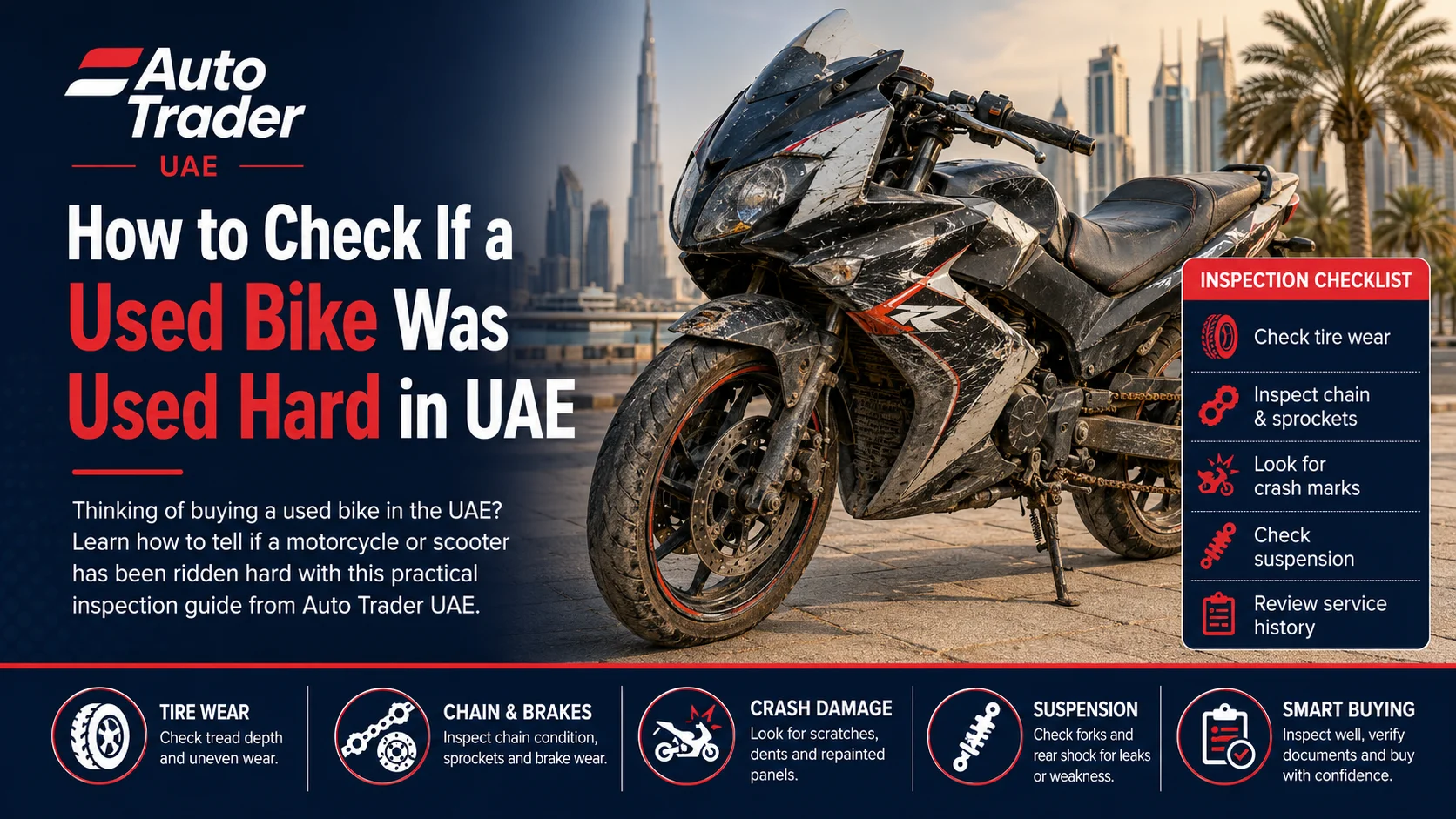
How to Check If a Used Bike Was Used Hard in UAE
Used bikes can be amazing value in the UAE, but only if you avoid machines that have been abused. Whether you are shopping for a daily commuter, delivery bike, weekend sports bike, or adventure tourer, knowing how to spot signs of hard use will help you pay the right price – or walk away.
This practical guide from Auto Trader UAE explains how to check if a used bike was used hard in UAE conditions, what to look for on different parts of the motorcycle, and how to use what you find in price negotiations.
Why it matters in the UAE market
Hot weather, sandy conditions and stop‑start city traffic in the UAE can accelerate wear on a motorcycle. If a bike has also been ridden aggressively or used for heavy delivery work, key components may wear out early, even if the mileage looks low.
That is why a careful physical inspection is just as important as the odometer reading when you browse used bikes for sale in the UAE.
First checks before you visit the bike
1. Review the advert carefully
- Look for vague wording: Phrases like “very fast bike”, “wheelie machine”, or “track ready” can sometimes hint at harder use.
- Check usage type: Delivery, track days, stunts, off‑road and rental use are all tougher on a bike than relaxed commuting.
- Service claims: “Recently serviced” is not the same as a full history. Note what is actually stated: oil changes, major service, new tyres, brake pads, chain and sprockets, etc.
2. Ask questions by phone or WhatsApp
Before you travel across Dubai, Abu Dhabi, Sharjah or other emirates to see a bike, ask:
- “What did you mainly use the bike for?” (daily commuting, weekend rides, delivery, track, off‑road)
- “How long have you owned it?” Short ownership can sometimes mean the seller discovered an issue.
- “How often is it serviced and where?” Workshops familiar with UAE conditions are a positive sign.
- “Any accidents, drops, or track days?” Watch for hesitation or inconsistent answers.
If the answers sound honest and consistent, add the bike to your shortlist and compare it with other options on used motorcycles in the UAE or used scooters in the UAE.
Exterior signs a bike has been used hard
1. Fairings, paintwork and body panels
- Multiple mismatched panels: Different shades of colour or slightly different fit gaps can indicate accident repairs or frequent drops.
- Deep scratches on the sides: Long horizontal scrapes on fairings, engine cases or exhaust usually mean the bike slid along the road.
- Fresh paint on one side only: Could be a respray after a crash; check closely for sanding marks or over‑spray on bolts and rubber parts.
2. Handlebar ends, levers and foot pegs
These parts are the first to touch the ground in a fall.
- Scuffed bar ends and levers: Light scratches can be normal; heavy gouges suggest multiple drops or slides.
- Bent brake or clutch levers: Indicates a fall and poor repair – they should be straight and smooth.
- Ground‑down foot pegs: Excessive wear on the underside means the bike has been leaned over very aggressively, often on track.
3. Frame and subframe
The frame is the bike’s “chassis”. If damaged, repairs can be expensive and unsafe.
- Check welds and paint: Look for cracks, re‑welds, paint bubbles or fresh paint on the main frame or subframe.
- Uneven alignment: Stand directly behind the bike and see if the rear wheel lines up with the front; misalignment can follow heavy impacts.
Engine and mechanical signs of hard use
1. Engine starting and idling
- Cold start: If possible, see the bike started from cold. A heavily worn engine may take longer to start or idle roughly.
- Smoke from the exhaust: Blue smoke suggests oil burning; black smoke can indicate an overly rich mixture or poor tuning.
- Loud rattles or knocking: Persistent knocking, especially under light throttle, can be a sign of internal wear.
2. Oil leaks and condition
- Check under the engine and around gaskets: Heavy or multiple leaks may indicate poor maintenance or overheated components.
- Oil colour: Very dark, thick oil may show long intervals between changes. In UAE heat, regular oil change is critical.
3. Cooling system (important in UAE heat)
- Overheating history: Ask if the bike has ever overheated in traffic.
- Check radiator fins and hoses: Bent or crushed fins may indicate stones, falls or careless pressure‑washing; hardened or cracked hoses mean age and heat stress.
- Fan operation: Let the bike idle until the fan kicks in. If it never comes on – or the temperature climbs dangerously – there may be a problem.
Suspension and brakes: how to spot abuse
1. Forks and rear shock
- Leaking seals: Oil around fork tubes or the rear shock shaft indicates worn seals – common in bikes that jump speed bumps or ride off‑road hard.
- Bouncy or harsh ride: Pump the suspension while the bike is stationary. It should compress smoothly and return without excessive bouncing.
- Uneven sag: If the rear drops much more than the front (or vice versa), suspension may be tired or incorrectly set for heavy use.
2. Brakes
- Warped discs: On a short ride, feel for pulsing in the brake lever at low speed – can indicate overheated or warped brake discs from hard use.
- Blue‑tinted discs: Blue or purple colouring can mean the brakes have been run extremely hot, as on track or aggressive desert road riding.
- Pad thickness: Very worn pads with grooved discs suggest the owner did not maintain the bike well.
Tyres, wheels and chain: small parts, big clues
1. Tyres
- Uneven tyre wear: Squared‑off tyres show a lot of straight‑line highway or delivery use. Heavy wear on the edges indicates hard cornering or track days.
- Different brands front and rear: Not a problem by itself, but can show budget maintenance.
- Very old tyres: Check the date code; even with good tread, tyres older than five or six years may be hard and unsafe.
2. Wheels and rims
- Dents or flat spots: Look closely at alloy rims. Dents suggest hitting potholes or curbs at speed.
- Scrapes around edges: Heavy kerbing marks can mean frequent aggressive parking or careless riding.
3. Chain and sprockets
- Slack and tight spots: Spin the rear wheel and watch the chain. If tension changes noticeably, it is worn.
- Hooked sprocket teeth: Teeth that lean forward like hooks show prolonged hard use without proper chain changes.
- Dry or rusty chain: In a sandy, coastal environment like the UAE, this is a clear sign of poor care.
Signs of track use or stunts
Many riders in the UAE enjoy track days at Yas Marina or Dubai Autodrome. Occasional track use is not always bad – it can be controlled, well‑maintained riding. But heavy track or stunt use can accelerate wear.
- Safety wiring holes: Small drilled holes in bolts (for wiring) often indicate track preparation.
- Multiple different fairing kits: Track riders sometimes swap to cheaper track fairings – look for odd panel combinations.
- Burnt clutch smell: Can suggest frequent wheelies and hard launches.
- Unusually short gearing: If the bike feels very revvy at normal road speeds, previous owners may have fitted different sprockets for stunts or track.
Service history and paperwork in the UAE
1. Service records
- Dealer or specialist stamps: Regular servicing at known workshops who understand UAE heat and dust is a strong positive sign.
- Receipts for parts: Look for evidence of timely oil changes, coolant, brake fluid, filters, tyres, chain and sprockets.
- Gaps in history: A missing period may not be a deal‑breaker, but combine it with your physical inspection before deciding.
2. RTA history and ownership
- Verify details with the seller: Make sure chassis and engine numbers match the registration card.
- Ask about previous emirates: A bike that moved between Dubai, Abu Dhabi and other emirates can be fine, but confirm that ownership transfers were completed properly.
Test ride: how it should feel
Only test ride if you are licensed, insured and the seller agrees. If you are not confident, bring an experienced rider or independent mechanic.
- Engine response: Power delivery should be smooth, without flat spots or surges.
- Gear shifts: Gears should engage cleanly. False neutrals or popping out of gear can indicate gearbox wear from hard use.
- Clutch feel: A slipping clutch (revs rising without acceleration) is common after aggressive riding.
- Steering stability: Let the bike roll hands‑light at low speed (if safe). Wobble or pulling may indicate frame, fork or wheel issues.
How to use these checks in negotiation
Finding signs of hard use does not always mean you must walk away. It means you should:
- Adjust your expectations: A bike used for delivery or frequent long rides may still be fine if the price reflects the wear.
- Estimate immediate costs: List what needs replacing soon – tyres, chain set, brake pads, fluids, fork seals – and factor this into your offer.
- Be realistic with performance models: Sports bikes and big‑capacity machines are more likely to have been ridden hard; solid maintenance is more important than gentle use.
When to walk away
Consider walking away if you notice:
- Evidence of frame damage or poor frame repairs
- Severe engine noises, smoke or obvious overheating
- Suspension or brakes in dangerous condition
- A seller who refuses a basic inspection or gives inconsistent answers
Next steps: finding the right used bike in the UAE
Knowing how to check if a used bike was used hard in UAE conditions puts you in a strong position as a buyer or seller. Combine this inspection checklist with a realistic budget and you’ll quickly filter out weak options and focus on well‑cared‑for machines.
Ready to start comparing real bikes? Browse:
And if you’re also considering a second‑hand car, you can explore a wide range of used cars in the UAE and popular used cars in Dubai – all in one place on Auto Trader UAE.
Browse used bikes in UAE on Auto Trader UAE to compare live listings, prices, and current market activity more clearly.
Related Links
Buyer Takeaway
When buying a used car in the UAE, focus on vehicle condition, service history, inspection quality, paperwork, and total running costs rather than price alone. Compare options carefully and choose the option that best matches your budget and real needs.
Seller Takeaway
If you are selling a used car in the UAE, present the service history clearly, price the vehicle realistically, and highlight condition, specification, and ownership strengths honestly. A well-prepared listing with accurate details usually attracts more serious buyers.
Conclusion
A careful used car purchase in the UAE starts with research, proper inspection, and clear paperwork before making the final decision.