
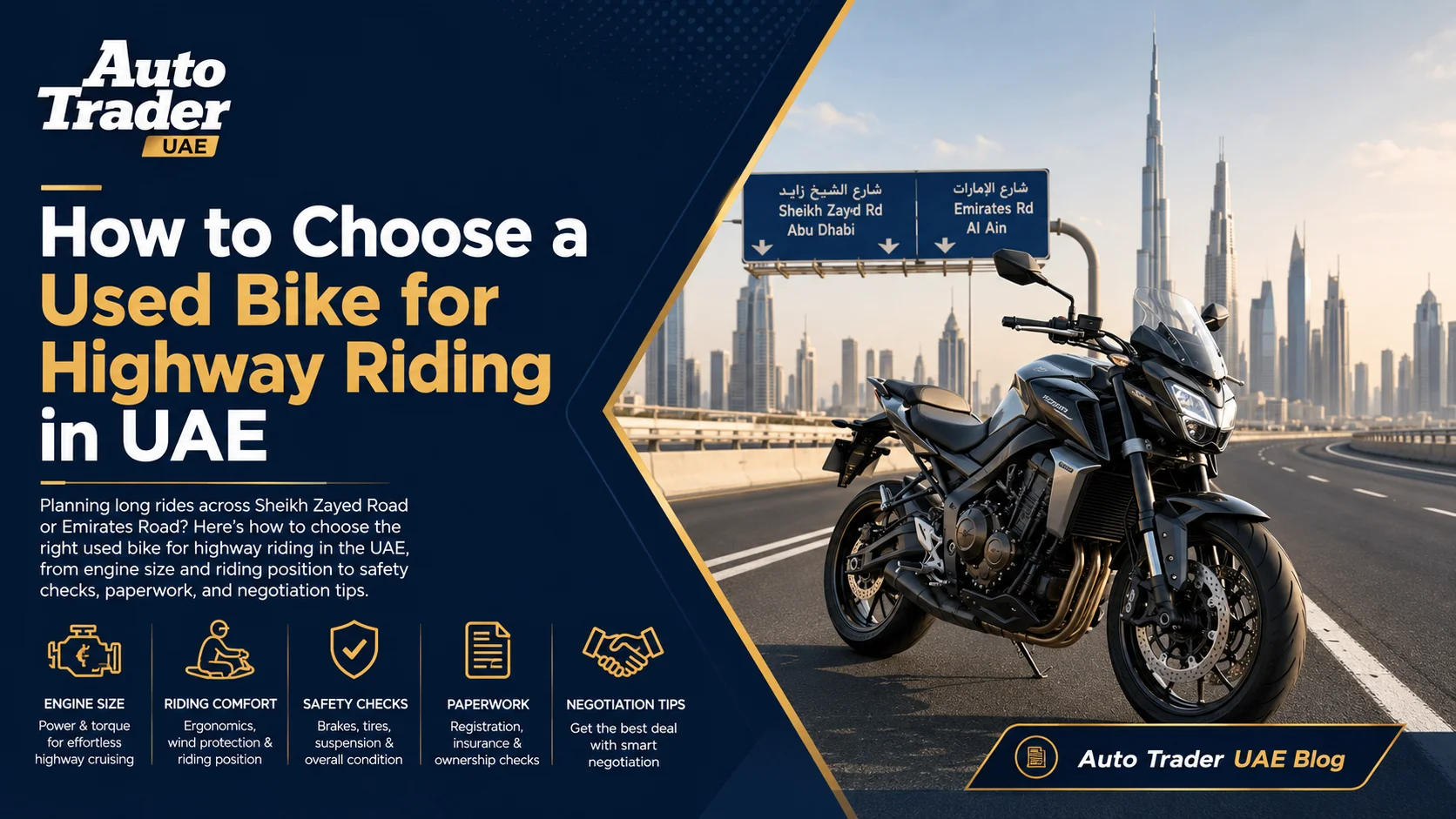
How to Choose a Used Bike for Highway Riding in UAE
Highway riding in the UAE is different from short city commutes. Long stretches of fast-moving traffic, strong crosswinds, high temperatures, and night riding all demand the right type of bike – and the right condition. If you’re shopping for a used bike for highway use, choosing wisely can make the difference between relaxed cruising and stressful, unsafe rides.
This guide from Auto Trader UAE explains what to look for when choosing a used bike for highway riding in the UAE, how to inspect a bike before buying, and how to use online listings on Auto Trader UAE to find the right motorcycle at the right price.
1. Decide What Kind of Highway Riding You’ll Do
Before looking at specific bikes, be clear about how you’ll actually ride:
- Daily commuting on highways: Dubai–Sharjah commute, Abu Dhabi–Mussafah, etc.
- Weekend touring: Longer trips between emirates, occasional overnight rides.
- Sporty rides: Fast, spirited riding within legal limits on open roads.
- Mixed use: Combination of city, short highways, and occasional long trips.
Your riding style affects which type of used bike works best for UAE highways:
- Sport touring bikes: Good wind protection, strong engines, comfortable for distance.
- Naked / standard bikes: Upright position and easy handling; best if you add a windscreen for long rides.
- Adventure / ADV bikes: Excellent comfort, high seating, strong suspension; ideal for mixed highway and occasional off-road.
- Cruisers: Relaxed riding, torquey engines; choose one with good highway stability and comfortable seat.
2. Choose the Right Engine Size for UAE Highways
Highway speed limits in the UAE are generally 120–140 km/h on major roads, and traffic often flows near the upper end of that. Your bike needs to cruise at these speeds without strain.
- 300–400cc: Acceptable for shorter highway runs if geared well and properly maintained, but may feel busy at 120+ km/h, especially with a heavier rider or pillion.
- 500–650cc: Good balance for most riders. Enough power to overtake safely, handle headwinds, and cruise comfortably.
- 700–1000cc and above: Best for frequent long-distance highway riding, two-up touring, and carrying luggage. More stable at speed, but higher running costs and insurance.
Focus less on top speed and more on comfortable cruising RPM. On a test ride, see how the bike feels at 120–140 km/h: Is the engine relaxed or screaming? Is there enough power in reserve to overtake?
3. Prioritise Comfort and Riding Position
Comfort is critical when you’re spending long stretches on E11 or E611. Pay close attention to:
- Riding position: An upright or slightly forward-leaning stance is usually best for highway riding. Extremely aggressive sportbike positions can be tiring on wrists and neck.
- Seat comfort: Sit on the bike for a few minutes; check seat width, padding, and shape. Ask if an aftermarket touring seat is installed.
- Handlebar height and reach: You should not be over-reaching or hunched; you want relaxed shoulders for long rides.
- Footpeg position: Mid or slightly rear-set footpegs tend to balance comfort and control.
If the used bike is otherwise perfect but not fully comfortable, consider the cost of upgrades like bar risers, better seat foam, or highway pegs – and factor that into your budget.
4. Ensure Good Wind Protection and Stability
Crosswinds and turbulence from trucks are common on UAE highways. Look for:
- Windscreen / fairing: A decent screen reduces fatigue and neck strain. On naked bikes, even a small touring screen helps a lot.
- Weight and wheelbase: Slightly heavier bikes with a longer wheelbase usually feel more planted at highway speeds.
- Tyre size and type: Wider, touring-oriented tyres can offer better straight-line stability than narrow, lightweight setups.
- Suspension condition: Worn fork seals, tired shocks, or incorrect preload affect stability. Check for bouncing, wallowing, or excessive dive when braking.
5. Safety Features to Look For
At highway speeds, safety features matter. When comparing used bikes for UAE highways, prioritise:
- ABS (Anti-lock Braking System): Highly recommended for emergency braking on fast roads and variable surfaces.
- Traction control: Useful on powerful bikes, especially if you ride in wet conditions or encounter sandy patches.
- Strong braking setup: Inspect discs for grooves, pads for thickness, and test braking performance at moderate speed.
- LED lighting: Bright headlights, indicators, and brake lights improve visibility at night and in dusty conditions.
- Slipper clutch: Reduces wheel hop on aggressive downshifts, useful on sports and sport-touring bikes.
6. Check Cooling System and Heat Management
The UAE climate is tough on engines and riders. For highway use, you’ll still hit slow traffic at toll gates, service roads, and city exits. When choosing a used bike:
- Prefer liquid-cooled engines for regular high-speed and hot-weather use.
- Inspect the radiator for damage and leaks; check that the cooling fan kicks in when the bike warms up.
- Look for engine heat shielding near your legs, especially on V-twins and big four-cylinder bikes.
- Ask about overheating history; repeated overheating can damage engines and head gaskets.
7. Luggage and Practicality for Long Rides
For serious highway riding, basic practicality matters just as much as power:
- Luggage options: Check if the used bike comes with panniers, a top box, or soft bag mounts.
- Mounting points: If it doesn’t have luggage, look for standard mounting points for racks and carriers.
- Fuel range: A tank range of at least 250–300 km is ideal for highway touring between emirates.
- Passenger comfort: If you plan to ride with a pillion, check the rear seat size, footpeg position, and grab rails.
8. How to Inspect a Used Highway Bike in the UAE
Once you’ve shortlisted bikes on Auto Trader UAE used bikes, arrange viewings and inspections. Here’s what to check carefully:
8.1 Visual Inspection
- Frame and chassis: Look for bends, weld marks, or repainted areas that may indicate accident damage.
- Forks and swingarm: Check for straight alignment, no cracks, and no play in bearings.
- Levers, bar ends, and footpegs: Multiple scrapes can signal previous drops or crashes.
- Fairings and tank: Minor cosmetic scratches are normal; mismatched paint on just one side could mean repaired crash damage.
8.2 Mechanical Condition
- Engine start-up: The bike should start easily from cold, idle steadily, and not produce excessive smoke.
- Unusual noises: Knocking, rattling, or loud ticking can point to internal wear.
- Clutch and gearbox: Gear changes should be smooth, with no slipping clutch or jumping out of gear under load.
- Chain and sprockets: Look for kinks, rust, and hooked sprocket teeth; a worn set suggests poor maintenance.
- Suspension: Bounce the front and rear; the bike should compress and return smoothly without squeaks or clunks.
8.3 Tyres and Brakes
- Tyre age and wear: Check tread depth and sidewalls for cracks. Tyres older than ~5 years may need replacement even if tread remains.
- Tyre type: Touring or sport-touring tyres are better for highway use than pure off-road or track-focused rubber.
- Brake discs: Feel for lip on the edge; deep grooves or blue discoloration hint at heavy wear or overheating.
- Brake fluid: Should be clear to light amber, not dark or dirty.
8.4 Test Ride Checks (Where Allowed)
If the seller and insurance situation permit a test ride, focus on how the bike behaves at highway-relevant speeds:
- Does it track straight when you briefly relax your grip?
- Is there any handlebar wobble during acceleration or deceleration?
- How does it pull from 80–120 km/h? This is a key range for overtaking in UAE traffic.
- Are there vibrations that become uncomfortable above 100 km/h?
9. Verify Service History and Ownership
A used bike that will live on the highway needs a solid maintenance record. Ask the seller for:
- Service book or invoices from official dealers or reputable workshops.
- Oil change intervals and proof of regular filter, plug, and coolant changes.
- Major service records such as valve clearances, timing chain inspections, or belt replacements (on some models).
- Modification history: Performance exhausts, air filters, and tuning can affect reliability if not done properly.
Cross-check the VIN (chassis number) on the bike with the registration card. Ensure there are no outstanding fines or issues when transferring ownership through the relevant emirate authority (e.g. RTA Dubai, Abu Dhabi Police).
10. Budgeting: Purchase Price vs Running Costs
When choosing a used highway bike, consider the total cost of ownership in the UAE:
- Insurance: Larger, more powerful bikes usually cost more to insure.
- Fuel consumption: Bigger engines use more fuel at high speeds; touring riders should factor this into monthly costs.
- Tyres: High-performance rubber wears faster, especially in heat. Touring tyres may last longer.
- Service and parts availability: Popular models often have cheaper, more widely available parts and service options.
- Upcoming maintenance: If tyres, chain kit, or a major service are due soon, use this to negotiate – or adjust your budget.
11. Common Highway Bike Types and Who They Suit
Here’s how the main categories of used bikes match different UAE highway riders:
- Sport Tourers: Best for riders prioritising speed with comfort – regular inter-emirate rides and weekend trips.
- Adventure / ADV: Ideal if you want upright comfort, luggage, and the option to explore gravel tracks and desert access roads.
- Naked / Standard: Great all-rounders for those mixing city commuting with occasional highway rides, especially with add-on windscreen.
- Cruisers: Suited to relaxed riders who enjoy steady cruising and strong low-end torque rather than high-rev performance.
12. Paperwork and Legal Considerations in UAE
Before finalising your used bike purchase:
- Confirm the bike has valid registration and passing (inspection), or factor the renewal cost in.
- Check that the bike’s specifications and modifications are road legal (especially exhausts and lighting).
- Ensure you hold the correct motorcycle licence category for the bike you’re buying.
- Complete the ownership transfer at the official authority (RTA or relevant emirate traffic department) to avoid future liability issues.
13. Buying Safely Through Online Listings
When shopping via online platforms like Auto Trader UAE:
- Use filters to focus on engine size, mileage, year, and price range that suit highway use.
- Favour listings with detailed photos, clear service history, and honest descriptions of condition.
- Arrange to meet in safe, public locations and avoid paying full amount before you inspect the bike.
- Consider a pre-purchase inspection by a trusted workshop, especially for high-performance models.
14. Final Checklist Before You Decide
Before you commit to a used highway bike in the UAE, confirm:
- The bike can cruise comfortably at 120–140 km/h with some power in reserve.
- You’re comfortable with the riding position and seat for at least 30–60 minutes.
- The bike has sound mechanical health, with no serious accident history.
- There’s at least a basic level of wind protection and stability.
- The service history and paperwork are complete and verifiable.
- The overall package – purchase price plus required fixes – fits your budget.
15. Next Steps: Find Your Used Highway Bike on Auto Trader UAE
Once you know what you’re looking for, start comparing real bikes and prices across the UAE. Use Auto Trader UAE to browse:
- Used bikes in UAE – filter by type, engine size, and price to shortlist highway-ready models.
- Used cars in UAE – ideal if you’re also considering a second vehicle for family or practical use.
- Used cars in Dubai – explore additional options if you’re based in Dubai and want to compare commuting choices.
By focusing on the right bike type, engine size, comfort, and condition, you can choose a used bike that feels stable, safe, and enjoyable on UAE highways – and holds its value well when it’s time to upgrade through Auto Trader UAE.
Browse used bikes in UAE on Auto Trader UAE to compare live listings, prices, and current market activity more clearly.
Related Links
Buyer Takeaway
When buying a used car in the UAE, focus on vehicle condition, service history, inspection quality, paperwork, and total running costs rather than price alone. Compare options carefully and choose the option that best matches your budget and real needs.
Seller Takeaway
If you are selling a used car in the UAE, present the service history clearly, price the vehicle realistically, and highlight condition, specification, and ownership strengths honestly. A well-prepared listing with accurate details usually attracts more serious buyers.
Conclusion
A careful used car purchase in the UAE starts with research, proper inspection, and clear paperwork before making the final decision.