
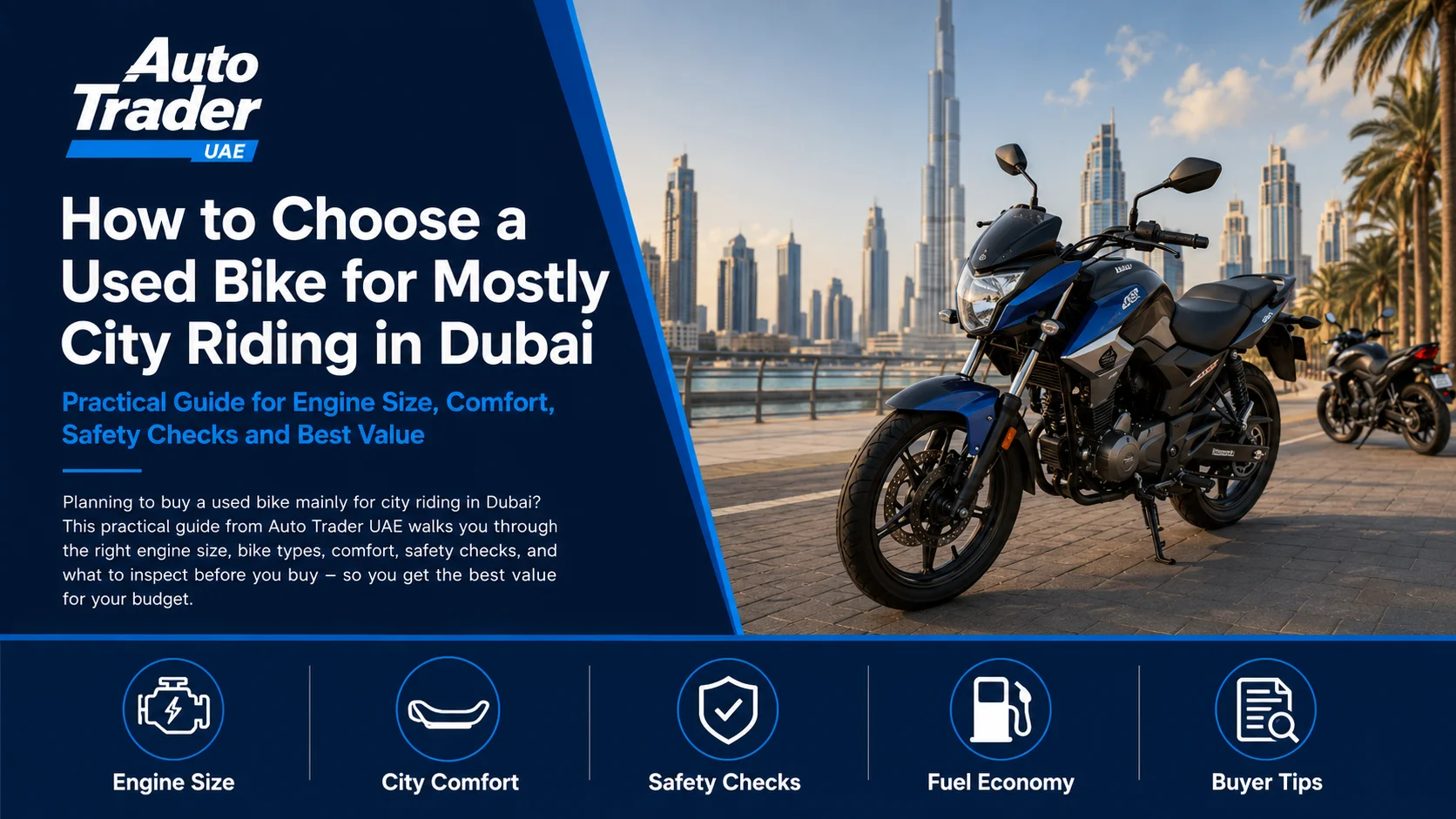
How to Choose a Used Bike for Mostly City Riding in Dubai
Dubai’s mix of wide highways, busy inner-city streets, and year-round riding weather makes motorbikes very tempting. But if you’ll be riding mostly in the city – to work, to the metro, or for quick errands – you don’t need a massive superbike. You need something practical, comfortable, fuel‑efficient and easy to handle in traffic.
This guide from Auto Trader UAE explains how to choose a used bike for mostly city riding in Dubai, what to check before you buy, and how to make the most of your budget on the UAE used bike market.
1. Define Your City Riding Needs First
Before you even start browsing listings, be clear about how you’ll really use the bike.
Key questions to ask yourself
- Daily distance: How many kilometres will you ride per day? Short commutes under 20 km may tolerate a smaller bike; longer daily trips need more comfort and better suspension.
- Route type: Is it mostly inner-city streets, or do you use Sheikh Zayed Road, Al Khail Road or similar highways regularly?
- Traffic levels: Will you ride during rush hours around Business Bay, Deira, Bur Dubai, or JLT?
- Parking: Do you have secure parking at home and work, or will the bike stay outside in the sun?
- Passenger use: Will you regularly carry a pillion passenger or luggage?
Your answers will shape what type of used bike suits you best.
2. Choose the Right Bike Type for Dubai City Riding
Different styles of motorcycles behave very differently in city traffic. Here are the most relevant categories for mostly urban use in Dubai.
Commuter & Standard Bikes
Best for: Daily rides, beginners, budget buyers.
These are upright, neutral-position bikes in the 125–400 cc range. They are light, easy to ride, fuel efficient, and simple to maintain – ideal for weaving through Dubai’s stop‑start traffic without fatigue.
Scooters & Maxi-Scooters
Best for: Short trips, relaxed riding, automatic convenience.
Scooters (usually 110–300 cc) and larger maxi-scooters offer automatic transmissions, under-seat storage and step-through frames. They are perfect if you want car-like convenience in city use and prefer not to worry about shifting gears constantly in traffic.
Naked / Street Bikes
Best for: Mixed city and weekend rides, some highway use.
Naked bikes in the 250–650 cc segment can work well in Dubai when you split usage between city and open roads. They sit more upright than full sport bikes, offer better low‑speed control, and still have enough power for short highway stretches.
Lightweight Adventure / Dual-Sport
Best for: Comfortable commuting, taller riders, bad road patches.
Soft adventure and dual‑sport models in the 250–400 cc range can be surprisingly good in the city. The higher seating position gives better visibility in traffic and can handle occasional rough parking areas or speed bumps comfortably.
Bikes to Avoid for Mostly City Use
- Large superbikes (600 cc+ sport bikes): Aggressive riding position, heat build‑up in traffic, expensive tyres and insurance.
- Very heavy cruisers: Can be hard to manoeuvre and park in tight city spaces.
- Big touring bikes: Overkill if you rarely leave the city; higher running costs.
3. How Much Power Do You Really Need?
For mostly city riding in Dubai, bigger is not always better. Think in terms of practicality, not just speed.
Engine size guidelines for Dubai city use
- 125–200 cc: Ideal for inner-city work, lower speeds and short distances. Very efficient and easy to handle.
- 250–400 cc: Excellent balance for Dubai – enough power to comfortably join highways when needed, while staying manageable in traffic.
- 500–650 cc: Better if you spend more time on highways or do weekend rides, but still want something usable in town.
Always match power to your experience level. New riders in the UAE are usually better starting with something around 200–400 cc rather than jumping straight to high‑performance bikes.
4. Comfort Matters in Dubai Weather
Heat, humidity and stop‑go traffic make comfort crucial when choosing a used bike for city riding in Dubai.
Key comfort points to check
- Riding position: Look for an upright stance with relaxed handlebars. Your wrist and back shouldn’t feel strained when seated.
- Seat height: You should be able to place at least one foot flat on the ground. This makes low‑speed control and parking much easier.
- Seat padding: Thicker, wider seats help on longer commutes. Sit on the bike for a few minutes during inspection – don’t just look at photos.
- Engine heat management: In hot weather, some bikes direct a lot of heat to your legs. After a short test ride, notice how hot your thighs and feet feel.
- Wind protection: Small screens can help at 80–100 km/h on Dubai’s main roads, but for pure city riding a big touring screen is not essential.
5. Practical Features for City Riding in Dubai
Look beyond engine size and styling. City riders benefit from specific practical features.
Fuel efficiency & tank range
With daily commuting, fuel costs add up. Check:
- Average fuel consumption (from owner reports or online forums, not just claimed figures).
- Tank size – small tanks mean more trips to refill, which can be annoying if you live far from a fuel station.
Storage & carrying capacity
- Factory or aftermarket top boxes and side boxes are very useful for laptops, gym gear or groceries.
- Under‑seat storage on scooters can fit a helmet or bag.
- Check for solid luggage racks if you plan to use a top box.
Brakes & safety
- ABS (Anti‑lock Braking System): Highly recommended for city riding and wet conditions.
- Inspect disc rotors, brake pads and fluid level; spongy or weak brakes are a warning sign.
- Some modern bikes include traction control; nice to have, but not essential for small city bikes.
Low‑speed handling
For mostly city riding, weight and balance matter a lot. During your test ride:
- Practice U‑turns and tight circles in a safe area.
- Check how the bike feels at walking pace alongside cars.
- See if steering is light enough for tight car parks and narrow side streets.
6. What to Check Mechanically on a Used City Bike
Dubai’s climate is tough on bikes. Heat, dust and sometimes coastal humidity can accelerate wear. When viewing a used bike, inspect carefully or have a qualified mechanic assess it.
Service history
- Ask for service records, invoices and warranty work.
- Confirm oil changes were done regularly, especially in hot months.
- Check if major services (valve clearances, chain and sprockets, brake fluid) have been done at the right mileage.
Engine & cooling
- Start from cold and listen for unusual knocks, rattles or smoke from the exhaust.
- Ensure the bike idles smoothly without constant throttle input.
- Check coolant level (if liquid‑cooled) and look for leaks or staining around the radiator and hoses.
- Watch the temperature gauge during the test ride, especially in traffic, to ensure it doesn’t overheat.
Chain, sprockets & tyres
- Chain: Should have correct tension and be well lubricated; no rusty sections or tight spots.
- Sprockets: Teeth should not be sharp or hooked.
- Tyres: Check tread depth, look for cracks from sun exposure, and confirm they are a reputable brand and correct size.
Suspension & frame
- Inspect front forks for oil leaks and pitting.
- Check the rear shock for leaks and excessive sag.
- Look carefully at the frame for bends, cracks, or weld marks that suggest accident repairs.
Electrics & accessories
- Test lights, indicators, horn, starter, and instrument cluster.
- If the bike has extras (phone mount, USB charger, aftermarket lights, alarm), ensure they are wired neatly and functioning.
7. Legal, Insurance and RTA Considerations in Dubai
Always make sure the bike you’re buying can be registered and insured without issues in Dubai.
Registration and passing
- Check the Dubai RTA or relevant emirate authority traffic file for any outstanding fines.
- Confirm the bike has a valid passing certificate or is ready to pass inspection (lights, mirrors, number plate, exhaust, tyres).
- Match the VIN and engine number on the bike with the registration card.
Insurance impact for city riders
- Request insurance quotes for the specific make, model and year before you commit.
- Smaller, commuter‑style bikes are usually cheaper to insure than large superbikes.
- Providing proof of safe riding (defensive riding courses, clean licence) can sometimes help with better premiums.
8. Budgeting: Purchase Price vs Running Costs
When you choose a used bike for mostly city riding in Dubai, think total cost of ownership – not just the price on the ad.
Upfront costs
- Bike purchase price
- Registration transfer fees
- Insurance for at least one year
- Any immediate maintenance (tyres, chain, service, battery)
- Riding gear: helmet, gloves, jacket, appropriate shoes
Running costs
- Fuel for your daily commute
- Regular servicing and consumables
- Parking fees if applicable
- Occasional repairs or upgrades
Often, a slightly more expensive but well‑maintained bike will be cheaper overall than a cheaper example needing major work.
9. Test Riding a Used Bike in Dubai City Conditions
A proper test ride is essential. Try to ride in conditions similar to your daily use.
Before the ride
- Check tyres are correctly inflated.
- Adjust mirrors and controls to fit you.
- Wear proper safety gear, even for a short ride.
During the ride
- Start in a quiet area to get used to clutch, throttle response and braking.
- Ride through some typical Dubai traffic, with frequent stops and starts.
- Test low‑speed balance, U‑turns, and quick stops.
- If safe and legal, briefly reach normal highway speeds to feel stability.
After the ride
- Look for any new leaks or smells.
- Listen again to the engine at idle.
- Ask yourself honestly: can I ride this bike comfortably every day in summer traffic?
10. Where to Find Good Used City Bikes in the UAE
Using a trusted marketplace helps you compare many options, check prices, and find well‑maintained examples.
On Auto Trader UAE, you can:
- Filter by price, mileage, engine size, and year to find suitable city bikes.
- Compare dealer and private seller listings side by side.
- Save favourite bikes and monitor price changes.
You can start browsing used motorbikes in the UAE here:
- Used bikes for sale in UAE
- Used cars for sale in UAE (if you are comparing two‑wheel and four‑wheel commuting options)
11. Buyer Tips Specific to Dubai City Riders
- Think compact: Narrow, light bikes are easier to park and filter through congestion.
- Prioritise cooling: Bikes known for good heat management will be more comfortable in slow traffic.
- Check sun exposure: Bikes parked outdoors often show faded paint, cracked seats and brittle plastics – budget for repairs if necessary.
- Consider gear: A ventilated jacket, summer gloves and a good helmet are essential in Dubai’s climate.
- Plan for future use: If you expect to start doing longer weekend trips, consider a slightly more capable bike now rather than upgrading too soon.
12. Final Takeaway: Matching the Bike to Your Dubai Lifestyle
Choosing a used bike for mostly city riding in Dubai is about balance. You want enough power to stay safe and confident in traffic, but not so much that the bike becomes heavy, hot and expensive to run. Focus on comfort, easy handling, fuel efficiency and good maintenance history.
Once you’re clear on your daily needs and budget, explore the latest used bikes in UAE on Auto Trader UAE. If you’re also considering a small hatchback or compact SUV for family duties, you can compare options across our full used cars in UAE listings – including popular used cars in Dubai.
With the right research, inspection, and a careful test ride, you can find a reliable used city bike that makes every trip across Dubai faster, cheaper and more enjoyable.
Browse used bikes in UAE on Auto Trader UAE to compare live listings, prices, and current market activity more clearly.
Related Links
Buyer Takeaway
When buying a used car in the UAE, focus on vehicle condition, service history, inspection quality, paperwork, and total running costs rather than price alone. Compare options carefully and choose the option that best matches your budget and real needs.
Seller Takeaway
If you are selling a used car in the UAE, present the service history clearly, price the vehicle realistically, and highlight condition, specification, and ownership strengths honestly. A well-prepared listing with accurate details usually attracts more serious buyers.
Conclusion
A careful used car purchase in the UAE starts with research, proper inspection, and clear paperwork before making the final decision.