
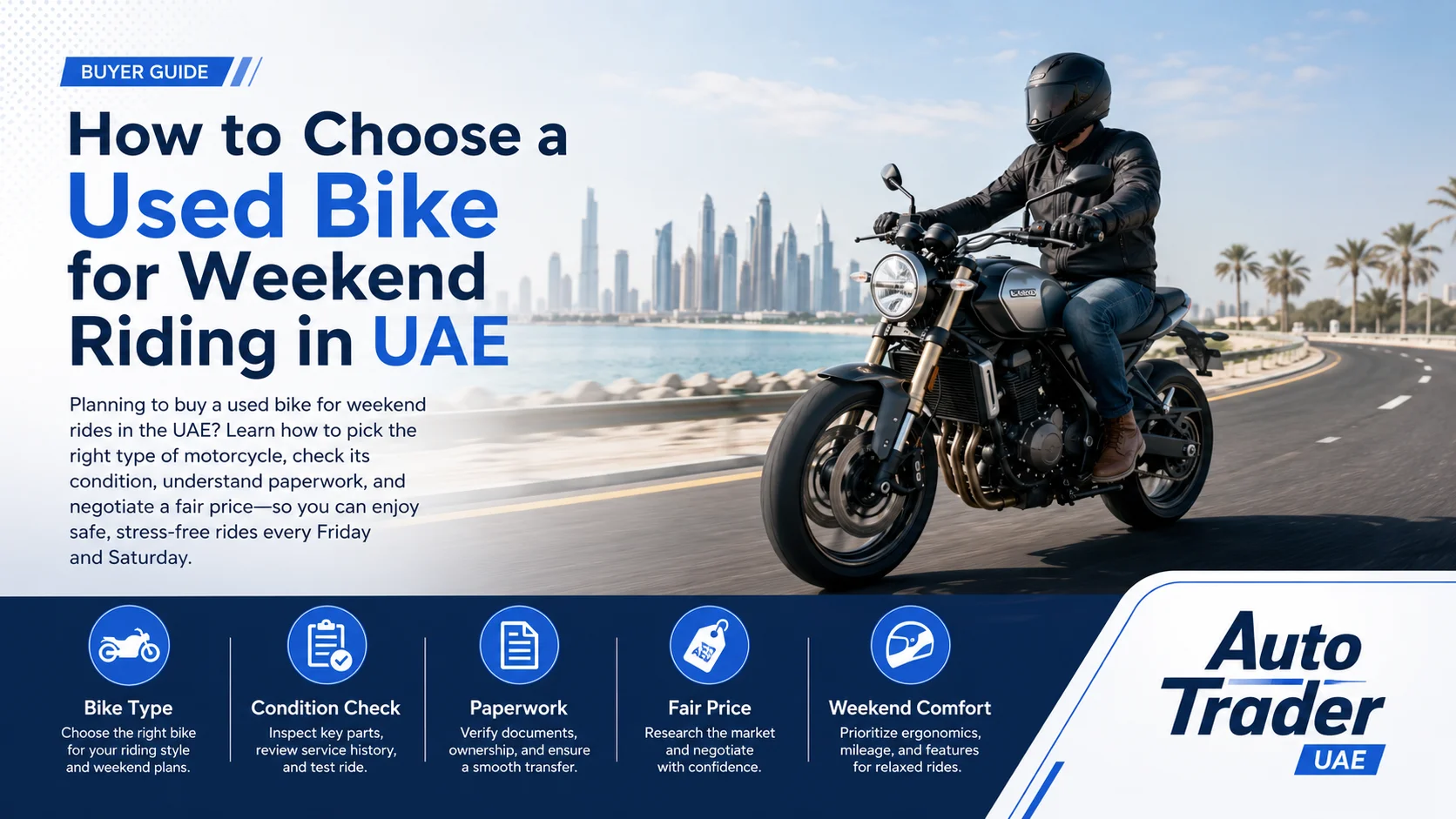
How to Choose a Used Bike for Weekend Riding in UAE
If your idea of a perfect weekend is an early‑morning ride to Jebel Jais, Hatta, or along Dubai’s beachfront, a used bike can be the most cost‑effective way to get there. This guide from Auto Trader UAE explains how to choose the right used motorcycle for relaxed weekend riding in the UAE, what to inspect, and how to avoid costly mistakes.
1. Decide What Kind of Weekend Rider You Are
Before you browse bikes, be clear about how you’ll actually use it. Your riding style will shape everything from engine size to ergonomics.
Key weekend riding styles in the UAE
- Beachfront cruisers: Easy rides around JBR, La Mer, Corniche, or Abu Dhabi city on smooth roads. Comfort and style matter more than speed.
- Mountain and desert-road tourers: Longer rides to Jebel Jais, Hatta, Fujairah, or Liwa. You need stability, comfort, and enough power for highway overtakes.
- City café-hopping: Short, frequent rides in dense traffic with regular stops. Light weight and easy maneuverability are key.
- Occasional track or spirited riding: Sportier rides on open roads or track days at Dubai Autodrome or Yas Marina. Power, braking, and handling matter most.
Match the bike to your real usage rather than buying the most powerful machine you can afford. In the UAE, traffic, speed limits, and heat can make a balanced middleweight bike more enjoyable than a superbike.
2. Choose the Right Type of Bike for Weekend Use
Different bike categories suit different weekend scenarios. Here’s a quick overview to narrow your search.
Cruisers
Best for: Relaxed city and coastal rides, effortless highway cruising.
Why they work in UAE: Low seat height, relaxed riding position, stable on long, straight roads. Popular for riders who want style and comfort over pure speed.
Consider if you: Like laid‑back riding, want to ride pillion with comfort, and prefer smooth torque to high revs.
Sport / Supersport bikes
Best for: Spirited rides and occasional track days, short weekend blasts rather than long tours.
Why they’re tricky in UAE heat: Aggressive riding position can be uncomfortable in slow traffic; engines can run hot in summer, especially in stop‑start city riding.
Consider if you: Already have some experience, understand sports bike maintenance, and your rides are shorter and more performance‑focused.
Naked / Standard bikes
Best for: Mixed usage—city, weekend short trips, and light touring.
Why they work well here: Upright position, lighter weight, easier to ride in traffic, still fun on twisty mountain roads.
Adventure / Touring bikes
Best for: Long‑distance weekend trips across emirates, including some light off‑road.
Why they suit UAE: Comfortable ergonomics, wind protection, and fuel range for long stretches between stops. Higher ground clearance helps with occasional rough patches or sand near lay‑bys.
Commuter / Small-displacement bikes
Best for: Newer riders, short city rides and budget-conscious weekend fun.
Why they’re popular: Lower purchase price, cheaper insurance, and easier to handle in city traffic. Great if you mainly ride on Fridays around town and don’t need high speed.
3. Choose the Right Engine Size for UAE Conditions
Engine capacity (cc) has a big impact on performance, comfort, and running costs.
- Up to 250cc: Good for new riders, city use, and short weekend trips. Limited highway power when overtaking at 120 km/h, especially with a pillion.
- 300–500cc: Excellent middle ground for UAE weekend leisure riding—enough power for highways, still manageable and economical.
- 600–800cc: Strong performance for mountain roads and touring; better for experienced riders. Insurance and tyres cost more than smaller bikes.
- 1000cc and above: Serious performance, often more than you can fully use on public roads. Best for skilled riders who understand the costs and responsibilities.
Match engine size to your licence, experience, and insurance budget. In the UAE, insurers may quote higher premiums for larger engines, high‑performance models, or riders with limited history.
4. Plan Your Budget the Smart Way
Don’t just budget for the bike’s sticker price. Weekend riding in the UAE has a few extra cost factors.
Budget checklist
- Bike purchase price: Set a realistic range and leave some room for negotiation.
- Registration (RTA), transfer, and inspection fees: Factor in the cost of transferring ownership and renewing registration if needed.
- Insurance: Premiums vary by engine size, brand, rider age, and driving record.
- Riding gear: Helmet, gloves, jacket, boots, and optionally riding pants. Don’t compromise on gear if you’re planning longer weekend trips.
- Initial servicing and consumables: Oil and filter, brake pads, chain and sprockets, tyres, coolant, and battery if needed.
- Accessories: Phone mount, luggage rack, top box, crash protection, or windscreen—useful for weekend touring.
A well‑maintained used bike with fresh consumables is often cheaper long‑term than a cheaper bike needing immediate tyres, chain, and brake work.
5. Where to Find a Good Used Bike in the UAE
For most buyers, the safest approach is to browse established online platforms and reputable dealers.
- Online classifieds: Use Auto Trader UAE to filter used bikes by emirate, budget, engine size, mileage, and more. You can compare multiple bikes side by side and shortlist the ones that fit your weekend riding plans.
- Dealers: Some dealers offer inspected and warrantied used bikes, which may cost slightly more but reduce risk.
- Owner-to-owner: Buying directly from an owner can be good value, especially when you can see service records and how the bike is stored.
Whichever route you choose, insist on seeing the bike in daylight and in a safe, public location.
6. What to Check When Inspecting a Used Bike
You don’t have to be a mechanic, but a basic inspection can save you from expensive surprises.
6.1. First impressions and general condition
- Cleanliness and care: Well‑kept bikes usually suggest a careful owner. Dust is fine; neglect is not.
- Signs of storage: Check for corrosion, faded plastics, or cracked seats—especially if the bike was kept outside in UAE sun.
- Panel gaps and paint: Mismatched paint or uneven gaps may indicate accident repairs.
6.2. Chassis and frame
- Look along the frame for bends, cracks, or poorly-done welds.
- Check steering stops near the headstock for damage that may suggest a past crash.
6.3. Forks, suspension, and wheels
- Front forks: No oil leaks around fork seals; tubes should be smooth with no deep pitting.
- Rear shock: No oily residue or excessive bounce when you sit and push down on the rear.
- Wheels and tyres: Look for cracks, dents, or uneven wear. Check tyre date codes—very old tyres harden in UAE heat and should be replaced.
6.4. Brakes
- Check discs for deep grooves or heavy lips on the edge.
- Brake pads should have enough material left.
- During a test ride, braking should be strong and straight, without pulsing (warped discs) or spongy feel (air or old fluid).
6.5. Engine and drivetrain
- Cold start: Ask the seller not to warm the bike before you arrive. It should start cleanly from cold without excessive smoke.
- Exhaust smoke: Blue smoke suggests oil burning; black smoke suggests rich fueling; white smoke once warm may indicate issues.
- Engine noise: Listen for loud knocking, rattling, or ticking that doesn’t fade as it warms.
- Oil leaks: Check around engine covers, sump, and gaskets.
- Chain and sprockets: Chain should be lubricated and not stretched; sprocket teeth should not be hooked or sharp.
6.6. Electrics and electronics
- Test headlights (high/low beam), indicators, horn, and brake lights.
- Check instrument cluster, ABS light, and any warning lights.
- If the bike has riding modes, traction control, or Bluetooth, test that they work properly.
If you’re unsure, consider paying a trusted workshop to inspect the bike before you commit.
7. Paperwork, History, and Legal Checks
In the UAE, a clean legal and service history is just as important as the physical condition.
7.1. Registration and ownership
- Ensure the seller’s Emirates ID matches the name on the registration card (Mulkiya).
- Check that the chassis (VIN) and engine numbers on the bike match the Mulkiya.
- Confirm registration status and expiry date; factor renewal into your cost if it’s due soon.
7.2. Fines and loans
- Ask the seller to show that there are no outstanding traffic fines.
- If the bike is under bank finance, make sure the loan is cleared and the bike released before transferring ownership.
7.3. Service history and receipts
- Service book or invoices from workshops help confirm genuine mileage and proper maintenance.
- Regular oil changes and timely major services are especially important in UAE heat.
- Receipts for tyres, chain kits, and major parts indicate a cared‑for bike.
8. Test Riding a Used Bike for Weekend Comfort
A test ride is essential when your main goal is relaxed weekend use.
What to pay attention to
- Riding position: Can you ride for 30–60 minutes without wrist, back, or neck pain? Try to simulate your usual weekend route—short city sections plus some highway.
- Seat comfort: Consider if you’ll ride with a passenger; some sports bikes have small rear seats not ideal for weekend pillion rides.
- Engine response: Smooth power delivery is better for relaxed rides than jerky, on‑off throttle behavior.
- Heat management: In warmer months, some bikes direct a lot of hot air onto the rider’s legs—notice this during the test ride.
- Wind protection: On highways, a small screen or fairing can make a big difference to comfort.
If the bike feels like a struggle during a short test ride, it will feel worse on a long weekend trip. Don’t force yourself into a style that doesn’t suit your body.
9. Negotiating and Closing the Deal
Once you’ve found the right bike, negotiate fairly and complete the purchase properly.
Smart negotiation tips
- Research similar used bikes on Auto Trader UAE to understand realistic market prices.
- Use factual issues to justify your offer—old tyres, upcoming major service, or worn chain/sprockets.
- Be prepared to walk away; there are always other bikes available.
Payment and transfer
- Use secure payment methods and avoid carrying large amounts of cash.
- Meet the seller at an authorised RTA test and registration centre for inspection and ownership transfer.
- Ensure insurance is active from the moment the bike is in your name.
Keep copies of all documents, including a signed sale agreement or receipt.
10. Preparing Your Used Bike for Weekend Adventures
Once you buy your used bike, invest some time in setting it up for safe, enjoyable weekend riding.
Safety and comfort setup
- Do a basic service: engine oil, filters, coolant, brake fluid, and spark plugs as required.
- Replace old or unknown tyres, especially if they’re more than a few years old.
- Set tyre pressures as per the manufacturer’s recommendations.
- Adjust levers and handlebars to suit your reach and riding position.
- Add a windscreen, luggage, or phone mount if you plan longer rides.
Plan your first rides
- Start with shorter early‑morning rides to get used to the bike.
- Join local riding groups or communities that organise weekend rides across the UAE—helpful for learning good routes and best practices.
- Always ride within your limits and obey local traffic regulations.
11. Using Auto Trader UAE to Find the Right Weekend Bike
Auto Trader UAE makes it easy to discover used bikes that suit your weekend lifestyle and budget.
- Filter by riding style: Search for cruisers, naked bikes, sport bikes, or adventure tourers depending on your plans.
- Set budget and mileage: Narrow your search to bikes with realistic mileage and prices for your range.
- Compare options: Shortlist several bikes and compare features, condition notes, and photos before you call the seller.
- Browse wider inventory: If you’re still exploring, you can also look at used cars in UAE or focus your search on used cars in Dubai if you want a second weekend vehicle alongside your bike.
Whether you’re eyeing a simple commuter for short Friday rides or a comfortable tourer for cross‑emirate road trips, following the steps in this guide will help you choose a used bike that’s safe, enjoyable, and suited to UAE conditions. Start browsing used bikes on Auto Trader UAE, shortlist your favourites, and get ready for your next weekend ride.
Browse used bikes in UAE on Auto Trader UAE to compare live listings, prices, and current market activity more clearly.
Related Links
Buyer Takeaway
When buying a used car in the UAE, focus on vehicle condition, service history, inspection quality, paperwork, and total running costs rather than price alone. Compare options carefully and choose the option that best matches your budget and real needs.
Seller Takeaway
If you are selling a used car in the UAE, present the service history clearly, price the vehicle realistically, and highlight condition, specification, and ownership strengths honestly. A well-prepared listing with accurate details usually attracts more serious buyers.
Conclusion
A careful used car purchase in the UAE starts with research, proper inspection, and clear paperwork before making the final decision.