
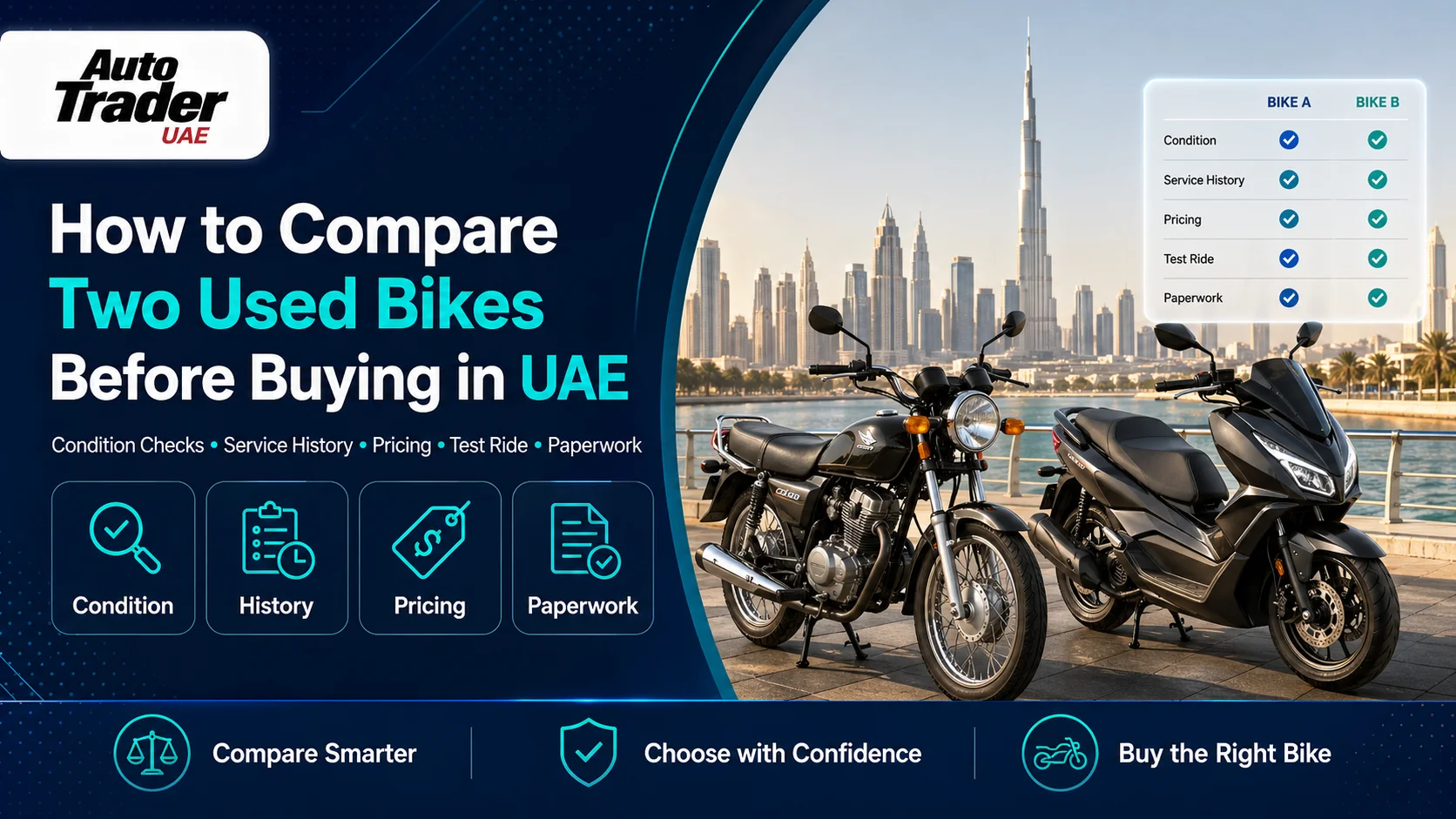
How to Compare Two Used Bikes Before Buying in UAE
When you find two used bikes you like, choosing between them can be harder than finding them in the first place. This guide breaks down exactly how to compare two used motorcycles or scooters in the UAE so you can make a confident decision – and avoid costly mistakes.
1. Start With a Like‑for‑Like Comparison
Before you go deep into details, make sure you’re comparing similar bikes:
- Type: Sports bike vs sports bike, commuter vs commuter, adventure vs adventure, or scooter vs scooter.
- Engine size: 150 cc vs 600 cc will never feel the same or cost the same to run.
- Usage: Daily commuting, weekend rides, or long‑distance touring.
- Ownership costs: Insurance, fuel, tyres and service costs in the UAE.
If the two bikes are very different (e.g. 250 cc commuter vs 1000 cc superbike), focus first on which one truly fits your riding needs and experience level, then compare condition and price.
2. Check Basic Details and Documents First
Before inspecting the bikes, confirm the basics with each seller:
- Model year and trim – Many models receive important updates (ABS, ride modes, cooling improvements) in certain years.
- Odometer reading – Lower mileage is not always better if maintenance has been neglected.
- Number of owners – Fewer owners can mean more consistent care, but documentation matters more.
- Accident history – Ask directly about any crashes, insurance claims or major repairs.
- Service history – Prefer bikes with stamped service books or invoices from reputable UAE workshops.
- RTA and registration status – Check that the bike can be transferred and is free of fines or blocks.
Make a simple comparison table with these details for Bike A and Bike B so you can see differences instantly.
3. Compare Overall Condition at a Glance
A quick visual check often tells you which bike has been loved and which has been abused.
- Cleanliness: A regularly cleaned bike usually means a caring owner. Heavy dirt, oil and dust can hide problems.
- Storage signs: Faded paint, cracked plastics and rust points can mean long hours in direct UAE sun or salty coastal air.
- Alignment: Stand in front and rear of each bike. The front wheel, rear wheel and handlebars should all line up properly.
- Levers and pegs: Bent levers, scratched bar ends or foot pegs can indicate drops or crashes.
If one bike clearly looks better cared for overall, it already has an advantage – but you still need a detailed inspection.
4. Inspect Frame and Chassis Carefully
The frame is the backbone of the bike. Damage here is serious and expensive to fix.
- Frame welds: Look for cracks, fresh paint, grinding marks or uneven welds – signs of repair after an accident.
- Steering head area: Check for dents or ripples; this is a common impact zone in front-end crashes.
- Subframe: Inspect rear subframe where the seat and tail attach. Bent or misaligned sections suggest a drop or crash.
- Rust and corrosion: Some surface rust on bolts is normal, but heavy corrosion on the frame is a red flag, especially in coastal emirates.
Between two similar bikes, the one with the cleaner, original‑looking frame is usually the safer long‑term choice.
5. Compare Engine and Mechanical Health
You don’t need to be a mechanic to spot basic engine issues. Check both bikes with the same steps so the comparison is fair.
5.1 Cold start
- Ask sellers not to start the bikes before you arrive – cold starts reveal more.
- Ease of starting: Both bikes should start quickly without excessive cranking.
- Smoke: Watch the exhaust on startup and when revving gently.
- Blue smoke = possible oil burning.
- White smoke (when warm) = potential engine or coolant issue.
- Black smoke = running too rich or fuelling problem.
5.2 Engine sound and vibration
- Listen for knocking, ticking, rattling or metallic noises from the top or bottom of the engine.
- Compare idle smoothness between the two bikes – which one feels more stable?
- Check for excessive vibration through the handlebars and foot pegs.
5.3 Leaks and fluids
- Oil leaks: Check around engine covers, sump plug and gaskets.
- Coolant (if liquid‑cooled): Look around hoses, radiator and water pump.
- Brake fluid: Inspect master cylinders and callipers for leaks.
If one bike is dry and clean while the other shows oily patches or stains, the cleaner one is usually the better bet.
6. Suspension, Tyres and Brakes: Handling and Safety
These parts affect how the bike feels on UAE roads and how safe it is to ride.
6.1 Suspension
- Push down on the front and rear of each bike. The suspension should move smoothly and return without bouncing repeatedly.
- Check fork legs for oil. Leaking fork seals mean an immediate repair bill.
- Look for pitting or scratches on fork tubes – these damage seals.
6.2 Tyres
- Tread depth: Compare the tyre wear on both bikes. Worn or squared‑off tyres will need replacing soon.
- Age: Check the DOT code – anything older than 5–6 years is nearing replacement even if tread remains.
- Cracks and flat spots: Common on bikes stored for long periods in heat.
Newer, better tyres can easily be worth hundreds of dirhams – factor this into your comparison.
6.3 Brakes
- Check disc rotors for deep grooves, blue spots (overheating) or warping.
- Look at brake pads. If they are nearly worn out, include replacement cost.
- Squeeze the levers – they should feel firm, not spongy.
7. Compare Service History and Maintenance
In UAE conditions, regular servicing is critical due to heat, dust and stop‑start city riding.
- Service book & invoices: A fully stamped book from main dealer or trusted independent garage adds value.
- Major services: Check if key intervals (e.g. valve clearance checks, timing chain, belt changes) have been done.
- Wear items: Ask when the last oil change, chain/sprocket, brake pads and coolant changes were done.
Between two bikes, a slightly higher mileage example with complete maintenance records is often a safer choice than a low‑mileage bike with no history.
8. Modifications and Accessories
Many used bikes in the UAE come with aftermarket parts. Some are valuable, others are warning signs.
- Performance mods: Loud exhausts, air filters and engine tuning can indicate hard riding. Ensure any remap or tuning is done professionally.
- Safety upgrades: Quality brake lines, crash protection, better lighting or upgraded suspension can add genuine value.
- Cosmetic mods: Wraps, paint, decals or tinted screens are personal taste – they rarely increase value.
- Documentation: Prefer bikes where original parts are also included; this gives you flexibility and helps with resale.
Compare which bike offers more useful extras (panniers, top box, phone mount, crash bars) that match your intended use.
9. Side‑by‑Side Test Ride Comparison
If possible, test ride both bikes on a similar route and on the same day so your impressions are fresh.
- Riding position: Check comfort of seat, handlebar height and foot peg position. Can you imagine daily commuting or longer rides?
- Clutch and gearbox: Shifts should be smooth with no missed gears or heavy clunks.
- Power delivery: Look for flat spots, hesitation or surging.
- Straight‑line stability: At moderate speed, the bike should track straight with no pulling.
- Braking test: Gently test front and rear brakes individually; feel for vibration, noise or pulling to one side.
- Heat management: In UAE weather, notice how much heat reaches your legs and if the bike overheats in traffic.
Immediately after the rides, write brief notes for each bike: comfort, confidence, power, braking and any strange sounds. The bike that simply feels more natural and confidence‑inspiring often becomes the better long‑term partner.
10. Evaluate Running Costs in the UAE
Two used bikes can be similar in price but very different to live with. Compare:
- Fuel consumption: Smaller engines and commuters usually use less fuel than big sports bikes.
- Tyre costs: Wide, high‑performance tyres are more expensive than narrow commuter tyres.
- Insurance: Bigger engines and high‑value bikes usually mean higher premiums.
- Spare parts availability: Check how easy it is to find parts locally for each model and how much common items cost.
Consider how you will actually use the bike in the UAE – daily Sheikh Zayed Road commuting, short city hops, or weekend trips – and choose the bike that balances enjoyment with realistic costs.
11. Compare Prices and Negotiation Room
Once you’re satisfied with the condition, compare the asking prices fairly:
- Check typical prices for the same model, year and mileage on Auto Trader UAE and similar platforms.
- Adjust mentally for condition: tyres, brakes, service history, accessories and any upcoming major service.
- Note which seller seems more flexible and transparent – honest answers matter.
A bike with fresh tyres, recent major service and good extras can justify a slightly higher price, especially if you plan to keep it for several years.
12. Paperwork and RTA Transfer in UAE
Before choosing between the two used bikes, check which one will be easier to transfer into your name.
- Valid registration (Mulkiya): Confirm registration is current and in the seller’s name.
- Fines or blocks: The seller should settle any outstanding traffic fines before transfer.
- RTA test: Older bikes or those with expired registration may need inspection before transfer.
- Loan clearance: If the bike is under finance, the bank must clear the mortgage before sale.
If one bike has clean paperwork and the other has complications (loans, expired registration, missing documents), the simpler option often saves time and stress.
13. Create a Simple Comparison Score
To make your decision clearer, rate each category for both bikes from 1–5:
- Overall condition
- Engine & mechanicals
- Service history
- Tyres, brakes & suspension
- Comfort & ride feel
- Running costs
- Paperwork & transfer ease
- Price vs value
Add up the scores. Your personal feeling on the test ride still matters, but this simple system helps you see which bike is stronger on paper.
14. When to Walk Away From Both Bikes
Sometimes the right decision is to buy neither. Consider walking away if:
- Both bikes show signs of accident damage or frame repair.
- Service histories are missing for high‑mileage machines.
- There are obvious oil leaks, overheating or electrical issues.
- Sellers refuse reasonable checks or RTA inspection.
The UAE used bike market is active all year – another, better example will appear, especially if you keep checking listings on Auto Trader UAE.
15. Next Steps With Auto Trader UAE
Once you know how to compare two used bikes before buying in the UAE, put that knowledge into practice:
- Use Auto Trader UAE to shortlist similar models by budget, mileage and year.
- Save promising ads and compare photos, details and prices side by side.
- Contact sellers with clear questions about service history, modifications and RTA status before you visit.
When you’re ready to budget for your purchase and ownership costs, explore our money and ownership tips in the Auto Trader UAE finance and advice sections for guidance on insurance, running costs and smart budgeting. For more buying guides, ownership tips and UAE‑focused advice, visit the Auto Trader UAE blog and stay informed before you buy or sell your next bike.
Browse used bikes in UAE on Auto Trader UAE to compare live listings, prices, and current market activity more clearly.
Related Links
Buyer Takeaway
When buying a used car in the UAE, focus on vehicle condition, service history, inspection quality, paperwork, and total running costs rather than price alone. Compare options carefully and choose the option that best matches your budget and real needs.
Seller Takeaway
If you are selling a used car in the UAE, present the service history clearly, price the vehicle realistically, and highlight condition, specification, and ownership strengths honestly. A well-prepared listing with accurate details usually attracts more serious buyers.
Conclusion
A careful used car purchase in the UAE starts with research, proper inspection, and clear paperwork before making the final decision.