
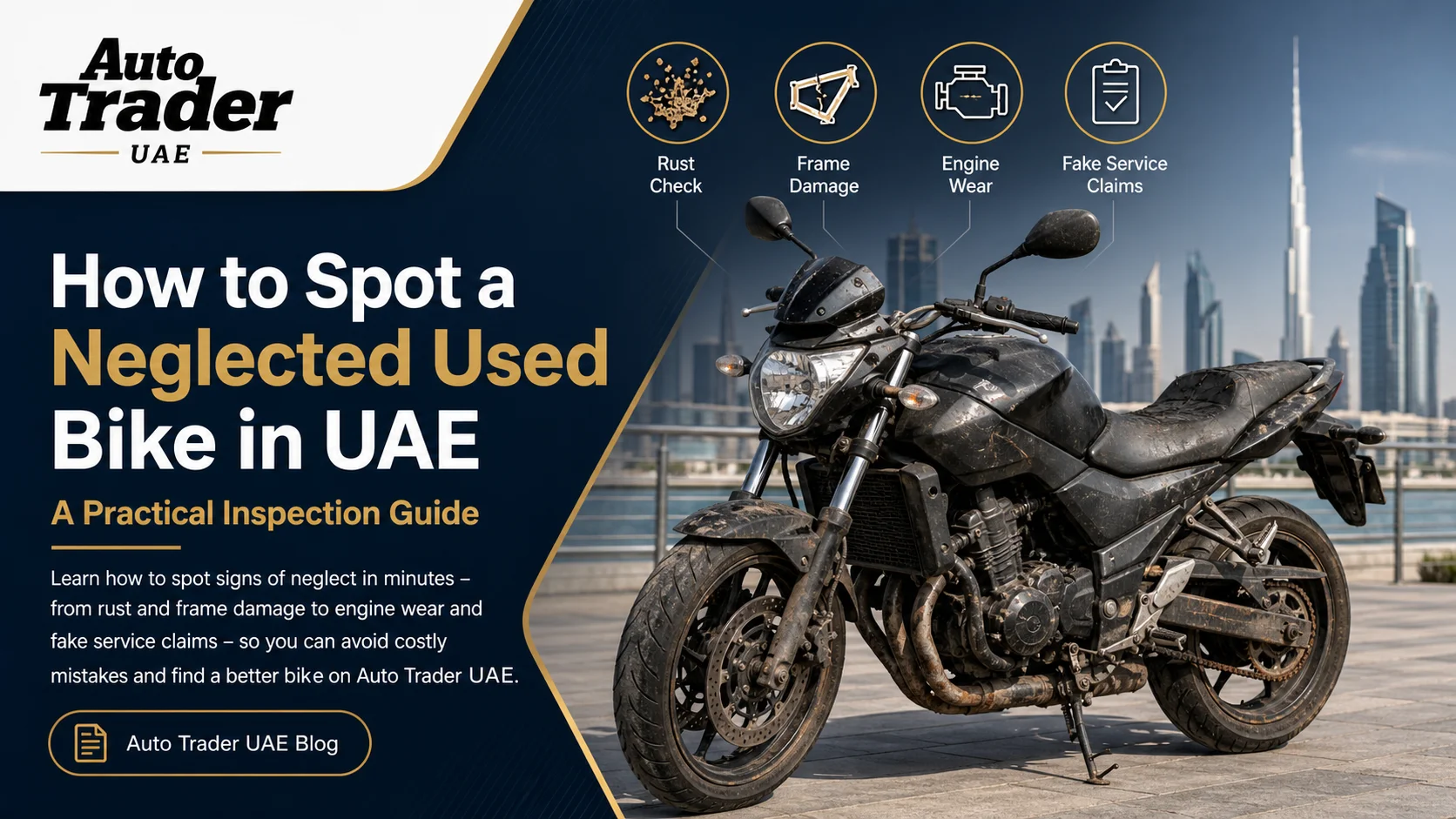
How to Spot a Neglected Used Bike in UAE: A Practical Inspection Guide
Buying a used motorbike in the UAE can save you serious money, but only if you avoid badly maintained bikes. Heat, sand and stop‑start traffic are tough on motorcycles, and neglect often shows up as expensive repair bills soon after purchase. This guide explains how to spot a neglected used bike in the UAE, with simple checks you can do yourself before you pay for an RTA test or independent inspection.
1. Start With the Basics: Paperwork and Story
Check the registration and ownership details
- ● Make sure the bike’s details on the registration card (mulkiya) match the frame/VIN and engine numbers.
- ● Confirm the seller’s Emirates ID matches the registered owner, especially for private sales.
- ● Look for recent ownership changes – a bike that’s changed hands many times in a short period can be a warning sign.
Service history and receipts
- ● Ask for service invoices, not just a stamped booklet. Real receipts show dates, mileage and work done.
- ● Check if services were done roughly every 5,000–10,000 km (or annually), depending on the bike and manufacturer guidance.
- ● Long gaps in mileage or time between services, especially in UAE heat, often indicate neglect.
Inconsistent story
Compare what the seller says with what you see:
- ● Seller claims “only weekend use”, but tyres and chain are heavily worn.
- ● Advertised as “always serviced at dealer”, but there are no main-dealer invoices.
- ● Odometer reading seems low, but foot pegs, controls and seat show heavy wear.
Any mismatch is a sign you should inspect even more carefully.
2. Quick Walk‑Around: First Impressions Matter
Overall condition
- ● Look for a clean but not overly “wet” bike – heavy fresh polish or engine degreaser can hide leaks.
- ● Check panel alignment and gaps; misaligned fairings or mismatched bolts can indicate crash repairs.
- ● Look for faded paint, peeling stickers and sun‑damaged plastics – common in UAE if the bike was stored outdoors.
Rust and corrosion
Even in a dry climate, neglected bikes in the UAE can show corrosion from sea air and condensation in basement parking:
- ● Inspect fasteners, handlebar clamps, brake disc carriers, spoke nipples and exhaust joints.
- ● Surface rust on a few bolts is normal; heavy flaking rust or pitting on structural parts suggests long‑term neglect.
Signs of long outdoor storage
- ● Oxidised aluminium (white chalky patches) on engine cases and wheels.
- ● Cracked or hardened rubber on grips, pegs and hoses.
- ● Brittle wiring insulation around the headstock and under the seat.
3. Frame, Forks and Alignment: Safety First
Frame
- ● Look down the length of the bike from front and rear – it should appear straight and symmetrical.
- ● Check frame welds and paint for fresh touch‑ups or ripples that can hide repairs.
- ● Any visible cracks, bends or major repairs are strong reasons to walk away.
Forks and suspension
- ● Inspect fork tubes for pitting, scratches or rust – damage here destroys fork seals and affects handling.
- ● Pump the front suspension; it should move smoothly without clunks or binding.
- ● Check rear shock for oil leaks and excessive sagging – a neglected shock often points to general poor maintenance.
Handlebar and wheel alignment
- ● Sit on the bike and point the front wheel straight. If the bars aren’t straight too, something may be bent or badly assembled.
- ● Roll the bike slowly and watch each wheel; side‑to‑side wobble suggests a bent rim or loose spokes.
4. Engine and Mechanical Red Flags
Cold start behaviour
Ask the seller not to start the bike before you arrive. A neglected engine is easiest to spot from cold:
- ● The bike should start reasonably quickly without excessive cranking.
- ● Listen for loud knocking, rattling or metallic tapping noises.
- ● Watch the exhaust on start‑up – heavy blue smoke means oil burning; white smoke that doesn’t clear can signal deeper issues.
Oil condition and leaks
- ● Check the oil level and colour. Very dark, thick or sludgy oil suggests long intervals between changes.
- ● Look for oil seepage around gaskets, covers and engine joints; fresh oil on a supposedly “dry” engine is a warning.
- ● Under the bike, inspect the sump plug and drain areas for stripped threads or messy sealant.
Cooling system (for liquid‑cooled bikes)
- ● Check coolant level and colour (usually green, orange or pink, depending on type). Brown or milky coolant is a bad sign.
- ● Look for dried coolant stains around the radiator, hoses and water pump.
- ● In UAE heat, neglected coolant or blocked radiators quickly lead to overheating and engine wear.
Transmission and clutch
- ● On the test ride, gears should engage cleanly without crunching or popping out.
- ● A clutch that bites right at the end of the lever travel, or slips under acceleration, may have been abused.
- ● Listen for whining or grinding under load – these can indicate neglected gearbox oil changes.
5. Chain, Sprockets and Drive System
Chain condition
- ● A healthy chain should be evenly lubricated but not dripping with fresh oil just for the viewing.
- ● Look for tight spots, rust and seized links. If the chain kinks when bent sideways, it’s worn.
- ● Excessively loose or very tight chain tension suggests poor maintenance.
Sprockets
- ● Inspect the teeth – they should be symmetrical, not hooked or razor‑sharp.
- ● Hooked teeth and worn chains together show the drive system has been neglected for many kilometres.
Replacing chain and sprockets isn’t unusual on a used bike, but if the seller hasn’t addressed obvious wear, assume other items may be neglected too.
6. Brakes, Tyres and Suspension: Wear That Tells a Story
Brakes
- ● Look at brake pads – if they’re almost metal‑to‑metal, the bike hasn’t been maintained properly.
- ● Check discs for deep grooves, blue heat marks or heavy rust around the braking surface.
- ● Squeeze the levers – they should feel firm, not spongy. Old brake fluid and poorly bled lines are signs of skipped servicing.
Tyres
- ● Check the date code (four‑digit DOT code) – tyres older than five or six years are past their best, even if tread remains.
- ● Look for flat spots, cracks on the sidewalls, or uneven wear that could indicate misalignment or poor suspension.
- ● Mismatched front and rear tyres (different brands or very different ages) suggest budgeting over safety.
Suspension leaks and adjustment
- ● Inspect fork seals for oil; oily fork legs mean neglected maintenance.
- ● Check rear shock for rust on the spring and body – a dirty, corroded shock usually hasn’t been serviced.
- ● If the bike has adjustable suspension, check that adjusters move and aren’t seized from never being touched.
7. Electrical System and Electronics
Basic electrical checks
- ● Test all lights, indicators, horn and brake switches.
- ● Check the instrument cluster for any warning lights that stay on.
- ● Try both electric start and kill switches to confirm proper function.
Wiring and accessories
- ● Look under the seat and around the headlight for messy wiring, taped joints and exposed copper.
- ● Poorly installed accessories (LED lights, phone chargers, alarm systems) can cause battery drain and electrical faults.
- ● Corroded or loose battery terminals are a common sign of neglect, especially if the bike has been stored unused.
Battery health
- ● A bike that cranks slowly or needs a booster pack every time may need a new battery – not huge money, but a sign of poor upkeep.
- ● Ask how often the bike was ridden; in the UAE, long periods of non‑use in hot parking can kill batteries quickly.
8. Cosmetic Clues That Point to Neglect
Seat, grips and controls
- ● Torn or sun‑cracked seats show long outdoor parking without a cover.
- ● Extremely worn grips and pegs on a low‑mileage bike suggest the mileage may not reflect real use.
- ● Bent levers and scratched bar ends can indicate drops or crashes.
Fasteners and fixings
- ● Missing bolts, mismatched screws and cable ties instead of proper clips all hint at DIY shortcuts.
- ● Over‑tightened or rounded bolt heads on the engine or fairings show poor workmanship.
Paint and bodywork
- ● Overspray on rubber parts or decals points to cheap resprays.
- ● Different shades of paint on fairings and tank may hide crash damage.
Cosmetics alone aren’t a deal‑breaker, but when combined with mechanical or electrical issues, they strongly suggest overall neglect.
9. Test Ride: How a Neglected Bike Feels
If possible, arrange insurance cover or a short supervised ride. On the road, focus on:
- Steering and stability: The bike should track straight without pulling or shaking.
- Vibrations: Excessive vibration through bars or pegs can indicate engine or wheel issues.
- Braking performance: The bike should stop smoothly in a straight line, without pulsing or pulling.
- Gear changes: Shifts should be positive and clean; difficulty finding neutral is common on neglected bikes.
- Engine behaviour: Hesitation, misfires or surging under constant throttle suggest poor tuning or lack of servicing.
If the seller refuses any form of test ride or demonstration, consider it a red flag unless there is a very clear and reasonable explanation.
10. UAE‑Specific Neglect Signs
The UAE climate and roads create some specific issues to look for:
- Heat damage: Melted or warped plastics near the exhaust, discoloured paint from constant sun, and brittle plastics on switchgear.
- Sand and dust: Grit stuck in chain links, dusty air filter housing and sand around fork seals show the bike has been ridden in dusty areas without proper cleaning.
- Commuter abuse: Delivery and commuting bikes often have high mileage in stop‑start traffic. Look for heavy wear, cheap replacement parts and basic tyres.
When browsing bikes on Auto Trader UAE used bikes, use clear photos and detailed descriptions to shortlist bikes that appear well‑cared‑for before you visit in person.
11. When to Walk Away vs. When to Negotiate
Walk away if you see:
- ● Structural frame damage or bent forks.
- ● Persistent engine knocking, heavy smoke or severe oil leaks.
- ● No paperwork, mismatched numbers or unclear ownership.
- ● A seller who refuses basic checks, an RTA test or any independent inspection.
Negotiate if issues are minor and clear
- ● Worn chain and sprockets.
- ● Old tyres that need replacement.
- ● Minor cosmetic scratches that don’t affect safety.
Get quotes for any required work and factor them into your budget. A slightly higher‑priced, well‑maintained bike often costs less in the long run than a cheap, neglected one.
12. Tips for Sellers: How to Avoid Your Bike Looking Neglected
If you’re selling your bike in the UAE, a few simple steps can make it more attractive and justify your asking price:
- ● Service the bike and keep receipts to show buyers.
- ● Replace obviously worn items like brake pads or a badly stretched chain.
- ● Clean the bike properly (but don’t hide leaks with fresh oil or polish).
- ● Charge or replace the battery so the bike starts easily during viewings.
- ● Take clear, well‑lit photos from all angles when listing on Auto Trader UAE.
Being transparent about honest wear and any repairs builds trust and can help you sell faster.
Next Steps with Auto Trader UAE
Understanding how to spot a neglected used bike in the UAE helps you avoid bad purchases and focus on bikes that have been cared for properly. Combine the checks in this guide with a professional inspection where possible, especially for higher‑value motorcycles. You can start comparing options today on used bikes for sale in UAE on Auto Trader UAE. If you’re also considering four wheels, explore a wide range of used cars in UAE and used cars in Dubai to find the vehicle that suits your budget and lifestyle.
Browse used bikes in UAE on Auto Trader UAE to compare live listings, prices, and current market activity more clearly.
Related Links
Buyer Takeaway
When buying a used car in the UAE, focus on vehicle condition, service history, inspection quality, paperwork, and total running costs rather than price alone. Compare options carefully and choose the option that best matches your budget and real needs.
Seller Takeaway
If you are selling a used car in the UAE, present the service history clearly, price the vehicle realistically, and highlight condition, specification, and ownership strengths honestly. A well-prepared listing with accurate details usually attracts more serious buyers.
Conclusion
A careful used car purchase in the UAE starts with research, proper inspection, and clear paperwork before making the final decision.