
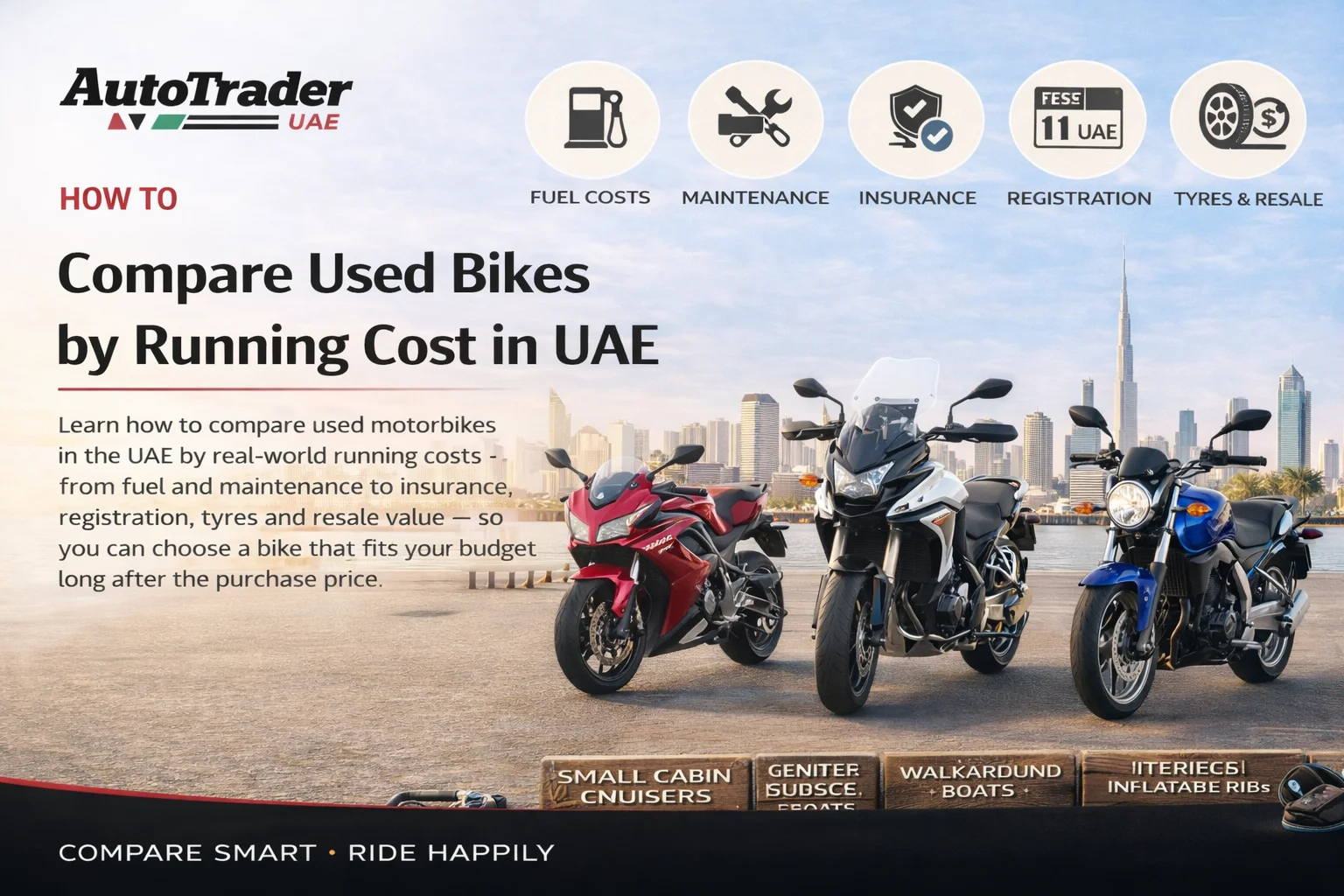
How to Compare Used Bikes by Running Cost in UAE
In the UAE, a used bike can be one of the smartest and most affordable ways to get around – especially with rising fuel and parking costs. But the purchase price is only the beginning. What really matters is how much the bike will cost you to run every month and every year.
This guide from Auto Trader UAE explains how to compare used bikes by running cost, so you can quickly see which model will be cheaper to own in the long term, not just cheaper to buy today.
What “Running Cost” Really Means for Used Bikes
When you compare used motorbikes in the UAE, think beyond the price on the advert. Total running cost typically includes:
- Fuel consumption (especially important for daily commuters and delivery riders)
- Routine maintenance & servicing
- Wear items such as tyres, chain and sprockets, brake pads and fluids
- Insurance and registration (RTA / traffic authority fees)
- Repairs & reliability (likelihood and cost of fixing issues)
- Depreciation & resale value
- Day-to-day practicality (how the bike actually fits your life and can save or cost you money)
Two bikes with similar prices can have very different total ownership costs once you add all of these factors.
Step 1: Shortlist Bikes by Use and Engine Size
Before comparing costs, be clear on how you will use the bike:
- City commuting – 125–300cc bikes and scooters are usually cheapest to run.
- Delivery work – durable, simple 125–200cc models with proven reliability and good parts availability.
- Weekend rides & touring – 400–900cc, often higher fuel use and tyre wear.
- Big adventure / superbikes – 1000cc+ with significantly higher fuel, tyre and insurance costs.
In the UAE, smaller displacement bikes usually win on fuel and basic running costs, while larger premium models cost more to maintain and insure. Use Auto Trader UAE search filters to compare engine size, mileage and year to narrow your shortlist.
Step 2: Compare Fuel Consumption in Real UAE Conditions
Fuel is still one of the biggest monthly costs for high-mileage riders. Brochure figures don’t always match real-world UAE use (high temperatures, highway speeds, stop–go traffic). To compare bikes realistically:
Check realistic fuel economy
- Look for owner reports, forums and UAE-based reviews that mention km per litre or litres per 100 km.
- Remember that highway riding at 120–140 km/h can increase consumption sharply on bigger bikes.
- Fuel-injected 150–300cc bikes often deliver strong economy even in traffic.
Estimate your monthly fuel cost
- Estimate your average distance (for example, 1,500 km per month for a daily commute).
- Check typical fuel consumption (for example, 30 km/L vs. 18 km/L).
- Use current petrol prices in the UAE to estimate your spend.
Even a small difference in km/L can add up to thousands of dirhams over a few years, especially for delivery riders clocking high mileage.
Step 3: Maintenance Schedules and Service Costs
Routine servicing keeps your bike safe and reliable – but some models are much cheaper to maintain than others.
Know the service intervals
When comparing used bikes, check the manufacturer’s recommended:
- Oil and filter change interval (often every 5,000–8,000 km)
- Valve clearance checks and major services (can be 24,000–48,000 km or more)
- Coolant, brake fluid, air filter and spark plug intervals
Shorter intervals can mean more frequent workshop visits and higher long-term cost, especially if you ride daily.
Compare service and parts prices in UAE
Before buying, it’s wise to call a couple of UAE workshops or authorised dealers for approximate prices on:
- Basic service (oil, filter, general check)
- Major service (valve inspection, plugs, fluids)
- Common parts like brake pads and air filter
Popular Japanese commuter models usually have excellent parts availability and reasonably priced labour. Some premium European or American bikes may have higher costs and longer waits for specific parts.
On Auto Trader UAE listings, look for phrases like “full service history”, “recent major service” or “serviced at authorised dealer”. A bike that just had a major service completed may save you a significant amount in the first year of ownership.
Step 4: Tyres, Chain, and Other Wear Items
Wear items can quietly turn an affordable bike into an expensive one if you don’t factor them in when comparing options.
Tyres
- Commuter / small bikes use smaller, cheaper tyres and can often run 15,000–25,000 km per set.
- Sport and big adventure bikes use wider, softer tyres that can cost more and wear faster, especially in UAE heat.
- Check tyre age and condition in the listing photos or during inspection – cracked or worn tyres will need immediate replacement.
Chain and sprockets
- Improperly lubricated or adjusted chains wear quickly, especially with dusty conditions and high mileage.
- During inspection, look for tight spots, rust or worn teeth.
- Budget for a replacement if the bike has high mileage and no recent chain/sprocket change documented.
Brakes and other consumables
- Brake pads, discs, clutch plates, coolant, brake fluid and air filters all add to running costs.
- A well-maintained used bike with recent receipts for these items is often the better value, even if it’s priced slightly higher.
Step 5: Reliability and Common Issues
Reliability directly affects running cost. A bike that breaks down or suffers from known issues will cost you in repairs, towing and lost time.
Research reliability history
- Search for the specific model and year plus keywords like “common problems” or “issues” in forums and owner groups.
- Pay attention to overheating reports, especially for bikes used in hot city traffic.
- Check if recall work or known fixes have already been done on the bike you’re viewing.
Inspect the individual bike carefully
- Look for oil leaks, coolant leaks, smoke from exhaust and abnormal engine noise.
- Check that all electronics work properly: lights, indicators, horn, display, radiator fan.
- Review any service history or invoices to see if the bike has a pattern of repeated repairs.
A professional inspection before purchase can be a very smart investment, especially on larger or higher-performance bikes. Fixing one major issue can quickly exceed the cost of a pre-purchase check.
Step 6: Insurance and Registration Costs in the UAE
Insurance is often overlooked when comparing used bikes, but premiums can vary by:
- Engine capacity
- Rider age and licence history
- Type of bike (commuter, sports, cruiser, adventure)
- Claim history and coverage level (third-party vs. comprehensive where available)
How to compare insurance cost
- Get online quotes or call a couple of UAE insurers for the models you’re considering.
- Ask how the premium changes with engine size or bike type.
- Factor in possible extras like roadside assistance or personal accident cover.
Registration and testing fees for motorcycles are generally lower than for cars, but they still add up. When you compare two used bikes with similar prices, include:
- Registration renewal fees
- Annual inspection fees (if applicable)
- Any transfer of ownership charges
Step 7: Depreciation and Resale Value
Even with bikes, depreciation and resale value affect your long-term running cost – especially if you plan to upgrade later.
Models that hold value better in the UAE
- Well-known brands with strong dealer and parts support tend to retain value better.
- Popular commuter and delivery models often have strong demand in the used market.
- Heavily customised or rare models can be harder to sell and may require more discount.
How to judge resale potential
- Search the same model and year on Auto Trader UAE and compare asking prices.
- Check how many similar bikes are listed; a healthy number usually means a liquid market.
- Bikes with full service history, original parts and no accident record are easier to resell and lose less value.
When you factor in resale, a slightly more expensive bike that keeps its value can be cheaper to own than a cheaper bike that depreciates quickly.
Step 8: Day-to-Day Practicality and Hidden Savings
Practicality has a direct impact on what your bike costs you to run and how much you actually enjoy owning it.
Comfort and ergonomics
- If you ride long distances, a more comfortable seat and relaxed riding position can reduce fatigue and make you less likely to switch bikes soon.
- Good wind protection on highways can reduce rider strain and encourage smoother, more efficient riding.
Storage and usability
- Factory or aftermarket top boxes and panniers make daily use easier and may reduce your need for paid delivery services.
- Scooters with under-seat storage or hooks are extremely practical for city life.
Cooling system and heat management
- In UAE summer, an efficient liquid-cooled bike with a reliable fan can avoid overheating and costly repairs.
- Some air-cooled engines cope fine, but constant stop–start traffic in high heat can shorten component life if the bike is not designed for it.
DIY friendliness
- Bikes with easy access to oil filter, air filter and chain adjustment allow basic DIY maintenance, reducing your spend.
- Abundant online tutorials and owner communities for popular models can help you safely handle simple tasks.
Putting It All Together: A Simple Running-Cost Checklist
When you compare two or three used bikes on Auto Trader UAE, run through this checklist and give each bike a simple rating (Low / Medium / High) for each point:
- Fuel consumption – based on realistic km/L
- Service interval and cost – how often and how expensive
- Tyres and wear items – current condition + future replacement cost
- Reliability – model’s track record + the condition of the individual bike
- Insurance premium – quotes for your profile
- Registration and testing – annual cost
- Resale value – how well similar bikes hold their price
- Practicality – how well the bike fits your daily life and can help you avoid extra costs
Then compare the overall picture, not just the purchase price or the brand badge.
How Auto Trader UAE Helps You Compare Running Costs
Auto Trader UAE is designed to make used bike comparison easier and more transparent:
- Use filters to narrow bikes by price, year, mileage, engine size and location.
- Check photos and descriptions for service history, tyre condition and accessories that may save you money.
- Browse other ownership and maintenance guides in our blog to understand specific brands and models before you buy.
- Shortlist several bikes and compare them side by side on total expected running cost, not just purchase price.
Conclusion: Choose the Bike That’s Cheapest to Own, Not Just to Buy
In the UAE, used bikes can deliver excellent value, fast commuting and low parking hassle – but only if you choose a model that’s affordable to run in your real daily life.
By looking carefully at fuel use, maintenance, wear items, insurance, reliability, resale and practicality, you can avoid expensive surprises and enjoy predictable ownership costs.
When you’re ready to compare real bikes, explore the latest used bike listings on Auto Trader UAE. Use this guide as your checklist, shortlist the models that fit your budget and riding style, and move forward with confidence towards a bike that’s truly affordable to own long term.
Before deciding, browse used cars in Dubai and across the UAE on Auto Trader UAE to compare condition, mileage, pricing, and seller details for models that fit your ownership goals.
Related Links
Buyer Takeaway
When buying a used car in the UAE, focus on vehicle condition, service history, inspection quality, paperwork, and total running costs rather than price alone. Compare options carefully and choose the option that best matches your budget and real needs.
Seller Takeaway
If you are selling a used car in the UAE, present the service history clearly, price the vehicle realistically, and highlight condition, specification, and ownership strengths honestly. A well-prepared listing with accurate details usually attracts more serious buyers.