
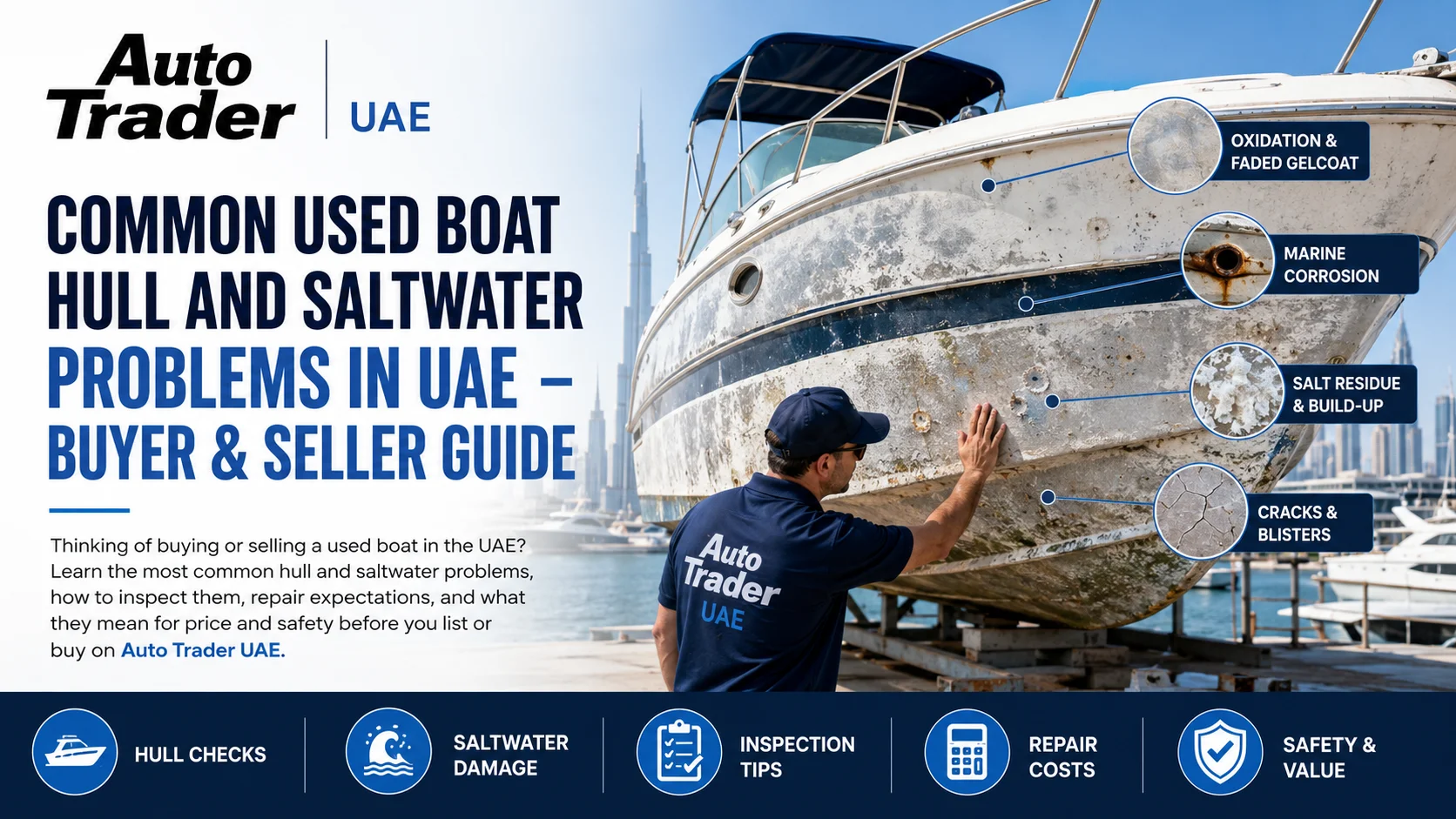
Common Used Boat Hull and Saltwater Problems in UAE – Buyer & Seller Guide
The UAE is a fantastic market for used boats, from small fishing craft to luxury cruisers. But the same warm climate and salt-rich Gulf waters that make boating so enjoyable are also tough on hulls, engines and hardware. If you are buying or selling a used boat on Auto Trader UAE, understanding common hull and saltwater problems in the UAE will help you avoid bad surprises, price correctly and close deals faster.
Why Saltwater Is So Tough on Used Boats in the UAE
Compared with many other regions, the Arabian Gulf has:
- High salinity levels
- Strong UV exposure and high ambient temperatures
- Frequent mooring in marinas and berths with limited circulation
This combination accelerates corrosion, blistering, fading and wear. Even a well-built boat that is not rinsed, maintained and anti-fouled regularly can develop expensive hull and running-gear problems in only a few seasons.
Main Hull Types You’ll See in the UAE
Most used boats in UAE marinas will fall into one of four main hull material categories:
- Fiberglass (GRP) hulls – common on leisure boats, fishing boats and cruisers.
- Aluminium hulls – used for light fishing boats and some workboats.
- Steel hulls – on some commercial and larger custom vessels.
- Inflatable and RIB hulls – with GRP or aluminium hulls and inflatable tubes.
Each material has its own typical saltwater and age-related problems. As a UAE buyer or seller, you should understand what to look for on each type.
Common Saltwater Problems on Fiberglass (GRP) Hulls
1. Osmosis and Gelcoat Blistering
What it is: Small bubbles or blisters on the underwater part of the hull, caused by water penetrating the gelcoat and reacting with resins beneath.
Why it matters in UAE: Warm water temperatures speed up chemical reactions inside the laminate, so osmosis is a familiar issue on older Gulf-based GRP boats.
How to spot it:
- Run your hand along the hull below the waterline; feel for small bumps.
- Look for clusters of bubbles, often 5–20 mm in diameter.
- Tap gently with a small plastic mallet; hollow sounds can indicate delamination.
Buyer tips:
- Light, isolated blisters are common and not always a deal-breaker.
- Widespread blistering or areas of flaking gelcoat can require professional treatment and may justify a price reduction.
- Insist on a survey if the boat has been berthed in water year-round.
Seller tips:
- Get a professional inspection and quote if osmosis is visible; buyers will ask.
- Be transparent in your Auto Trader UAE listing description to build trust.
- Show records of any previous hull treatment, peeling or epoxy barrier coat.
2. UV-Faded Gelcoat and Chalky Surfaces
What it is: Dull, chalky gelcoat, especially on topsides and decks, caused by UV breaking down the surface.
Why it matters: Strong UAE sun quickly fades coloured hulls and oxidises white gelcoat. It’s mostly cosmetic, but severe neglect can hide deeper cracking.
What buyers should do:
- Look for uneven colour or patches where polishing has cut through the gelcoat.
- Check stress areas (around cleats, rails, hatches) for fine cracks or crazing.
What sellers should do:
- Have the hull polished and waxed before photos and viewings.
- Highlight any professional detailing in your advert; appearance sells.
3. Structural Cracks and Impact Damage
What it is: Cracks in the gelcoat or laminate, often around high-stress points or impact areas.
High-risk zones on used UAE boats:
- Bow area (previous groundings or hitting floating debris)
- Keel and chines (repeated beaching or trailer damage)
- Transom around outboards or sterndrives (engine weight and power)
Buyer advice:
- Hairline gelcoat cracks in low-stress areas are common with age; focus on larger or branching cracks.
- Push gently next to cracks; any flexing or movement is a red flag.
- Budget for a survey to confirm if the damage is cosmetic or structural.
Seller advice:
- Repair visible chips and deep scratches professionally before listing.
- Photograph repaired areas clearly and mention the work completed.
Common Saltwater Problems on Aluminium Hulls
1. Electrolysis and Galvanic Corrosion
What it is: Pitting and white, powdery corrosion caused by electrical currents and dissimilar metals reacting in saltwater.
Why it’s common in UAE: Many aluminium boats share marinas with boats using shore power, mixed metal fittings and sometimes poor electrical bonding.
How to inspect:
- Check below waterline for small pits, especially near stainless fittings.
- Inspect around anodes, trim tabs and transducers.
- Look at the engine bracket and outboard mount for paint bubbling.
Buyer checklist:
- Confirm sacrificial anodes are the correct type and not completely consumed.
- If you see heavy pitting, ask for a report from a marine electrician or surveyor.
Seller checklist:
- Replace worn anodes before viewings; it’s inexpensive and reassuring.
- Provide any documents about electrical system checks or bonding upgrades.
2. Paint Peeling and Filiform Corrosion
What it is: Bubbling, lifting or filiform (thread-like) corrosion under paint coatings.
Inspection tips:
- Look closely at chines, edges, welds and around rivets.
- Press suspicious bubbles gently; soft coating may hide corrosion.
Negotiation angle: Moderate paint failure is usually cosmetic but time-consuming to fix. Buyers can use this to negotiate, while sellers may decide between a partial repaint or a realistic, as-is price.
Common Saltwater Problems on Steel Hulls
1. Rust, Pitting and Plating Thickness
What it is: Surface rust, scabs and deeper pitting caused by long-term exposure to saltwater and poor coating maintenance.
Why it matters: Steel can be strong and long-lasting if maintained, but neglected UAE-based steel boats can suffer serious plate thinning.
Inspection tips for buyers:
- Pay attention to bilges, frames and internal hull where moisture collects.
- Check weld seams around keel, chines and through-hull fittings.
- Ask if any ultrasonic thickness testing has been done recently.
Seller tips:
- Remove loose rust and apply primer where practical before listing.
- Keep thickness reports and any professional survey handy for serious buyers.
Inflatable and RIB Hull Problems in Saltwater
1. Tube Leaks and UV Damage
What to look for:
- Soft sections when tubes are fully inflated.
- Patches and repairs – multiple patches may indicate chronic leaks.
- Cracking or stickiness on PVC tubes from intense sun exposure.
Buyer advice: Inflate the tubes to recommended pressure and leave them while you inspect the rest of the boat. If you return to noticeably softer tubes in a short time, suspect leaks.
Seller advice: Fix slow leaks before advertising, and mention new tubes or recent professional tube repairs in your Auto Trader UAE description – they can be a positive selling point in the UAE climate.
Underwater Gear: The Hidden Saltwater Trouble Spots
Many costly issues on used UAE boats are not on the visible hull but on the underwater equipment.
1. Propellers, Shafts and Sterndrives
- Corrosion: Look for pitting and missing metal on prop blades.
- Bent or damaged props: Caused by hitting sandbars or floating debris.
- Worn seals: Oil leaks from sterndrive bellows or shaft seals are serious and must be fixed quickly.
2. Through-Hulls and Seacocks
- Check any bronze or brass fittings for dezincification (pink colour).
- Operate seacocks – they should move but not be loose or seized.
- Look for salt crusts that indicate slow leaks.
3. Anodes (Zincs)
- Anodes protect key metal parts by sacrificing themselves to corrosion.
- In UAE marinas, anodes can wear quickly; if they are almost gone, expect the rest of the running gear to have been under-protected.
How the UAE Environment Accelerates Boat Problems
When considering Common Used Boat Hull and Saltwater Problems in UAE, keep in mind:
- High salinity: Speeds up corrosion and electrolysis.
- Warm water: Promotes osmosis in GRP and marine growth on hulls.
- Intense UV: Fades gelcoat, soft furnishings, covers and inflatable tubes.
- Sand and dust: Wears moving parts and scratches surfaces.
Boats kept in-water at marinas year-round, or rarely rinsed, will show these effects much sooner than trailer-stored boats that are flushed with fresh water.
Inspection Checklist for Used Boats in the UAE
Use this quick checklist during viewings before you commit to a marine survey:
External Hull
- Walk the full length of the hull on both sides; note blisters, cracks or repairs.
- Look along the hull in low-angle light to reveal waves or uneven repairs.
- Check the keel area and chines for scrapes, exposed laminate or dings.
Deck, Transom and Fittings
- Press around cleats, handrails and windlass for any flexing or soft spots.
- Inspect the transom inside and out for cracks, water stains or swelling.
- Check for leaks around hatches and windows (stains on headliners).
Below the Waterline and Running Gear
- If the boat is ashore, visually inspect the entire underwater section.
- Look at anodes – if they are untouched and old, the boat may not have been in the water much; if they are heavily wasted, corrosion load is high.
- Check propellers, shafts, rudders and trim tabs for corrosion and damage.
Engine and Cooling System
- Ask how often the engine has been flushed with fresh water after use.
- Check service records for impeller, thermostat and anode replacement.
- Look for salt buildup on hose connections and around heat exchangers.
What These Problems Mean for Value and Negotiation
Common Used Boat Hull and Saltwater Problems in UAE do not automatically mean you should walk away. They affect price and risk differently:
- Cosmetic issues: faded gelcoat, light osmosis, minor paint blisters. These can reduce visual appeal but may be manageable.
- Moderate issues: worn anodes, early-stage corrosion, localised cracks, small tube leaks on RIBs.
- Serious issues: structural hull damage, heavy galvanic corrosion, thinning steel plates, badly corroded sterndrives or shafts.
As a buyer, use professional repair quotes and survey findings to adjust your offer. As a seller, decide whether to fix issues first or market the boat at a realistic price with full disclosure.
Maintenance Habits UAE Buyers Should Look For
A well-maintained boat in the UAE will usually show:
- Regular antifouling and hull inspection history.
- Engine flushed with fresh water after each saltwater use (especially outboards).
- Covers or shade used when berthed to reduce UV damage.
- Routine anode replacement, cleaned strainers and serviced seacocks.
Ask the owner:
- Where the boat is usually stored (water berth, dry stack, trailer).
- How often it is washed with fresh water.
- If they have invoices from UAE marinas or service centres.
How Sellers in the UAE Can Prepare a Boat for Sale
Before listing your boat on Auto Trader UAE:
- Clean and inspect the hull: Remove marine growth and give the hull a thorough wash and polish.
- Fix obvious issues: Replace anodes, repair obvious chips or cracks, address slow tube leaks.
- Gather paperwork: Service history, survey reports, hull treatment invoices, marina records.
- Take clear photos: Show the underwater gear if the boat is ashore; include close-ups of good condition areas.
When to Call a Marine Surveyor
Professional surveys are especially important when:
- Buying larger cruisers, offshore fishing boats or imported yachts.
- You notice osmosis, corrosion or past collision repairs.
- Financing or insurance requires a condition report.
A surveyor in the UAE will understand local saltwater conditions and typical problems on regional brands, giving you a realistic view of risk and future maintenance costs.
Next Steps: Find or List Your Used Boat on Auto Trader UAE
Whether you are upgrading, downsizing, or entering boating for the first time, knowing the Common Used Boat Hull and Saltwater Problems in UAE puts you in a stronger position to buy or sell with confidence.
On Auto Trader UAE you can:
- Browse a wide range of used boats for sale in the UAE with detailed photos and descriptions.
- Compare different hull types and sizes to match your budget and usage.
- List your own boat with clear information about hull condition and maintenance history to attract serious buyers.
If you also drive to your marina or launch ramp, you can find great deals on a used car in the UAE or a used car in Dubai to tow your boat or handle weekend trips. Understanding the UAE environment, choosing carefully and using trusted platforms like Auto Trader UAE will help you enjoy many seasons on the water with fewer surprises.
Browse used boats in UAE on Auto Trader UAE to compare live listings, prices, and current market activity more clearly.
Related Links
Buyer Takeaway
When buying a used car in the UAE, focus on vehicle condition, service history, inspection quality, paperwork, and total running costs rather than price alone. Compare options carefully and choose the option that best matches your budget and real needs.
Seller Takeaway
If you are selling a used car in the UAE, present the service history clearly, price the vehicle realistically, and highlight condition, specification, and ownership strengths honestly. A well-prepared listing with accurate details usually attracts more serious buyers.
Conclusion
A careful used car purchase in the UAE starts with research, proper inspection, and clear paperwork before making the final decision.