
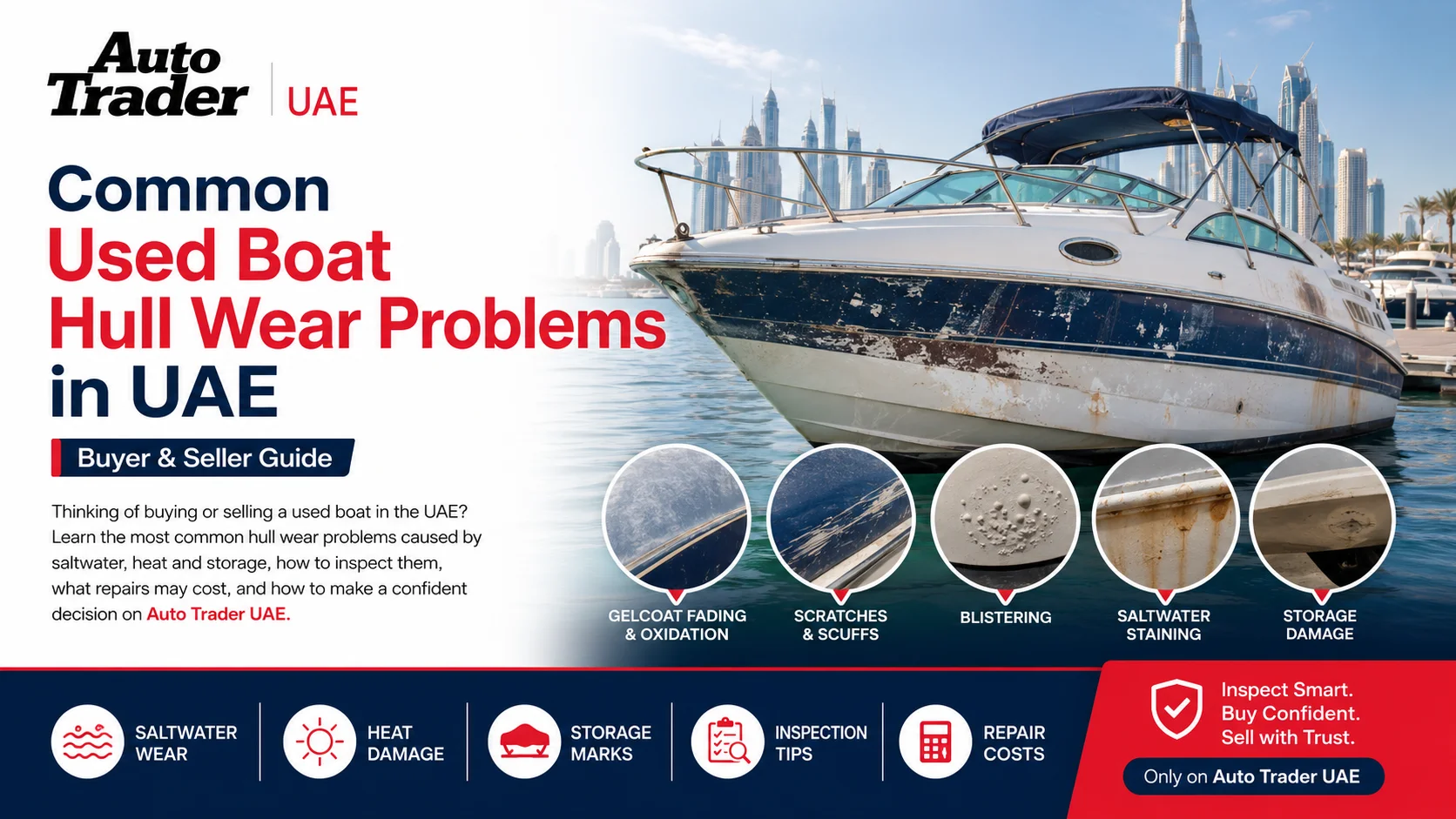
Common Used Boat Hull Wear Problems in UAE: Buyer & Seller Guide
Buying a used boat in the UAE is a smart way to enjoy the water without paying new-boat prices. But the hull lives a hard life here: strong sun, warm saltwater, marina growth, and storage issues all accelerate wear. This guide explains the most common used boat hull wear problems in the UAE, how to spot them during an inspection, what they might cost to fix, and how buyers and sellers can protect themselves when dealing on Auto Trader UAE.
Why Hull Condition Matters in the UAE
The hull is the boat’s foundation. In UAE conditions, hull wear isn’t just cosmetic:
- Safety: Hidden damage can lead to leaks, loss of buoyancy, or structural failure in rough Gulf waters.
- Performance: A fouled or damaged hull slows the boat, increases fuel consumption, and stresses the engine.
- Resale value: Boats with clean, solid hulls are easier to sell and achieve better prices on Auto Trader UAE.
Key local factors that speed up hull wear:
- High salinity in the Arabian Gulf and Arabian Sea
- Intense UV exposure that breaks down gelcoat and paint
- Warm water temperatures that accelerate marine growth
- Dry storage vs. water berths impacting how and where damage appears
Main Types of Used Boat Hulls You’ll See in the UAE
Before looking at common problems, it helps to know what type of hull you’re dealing with. Each has its own typical wear pattern:
- Fiberglass (GRP) hulls: Most leisure and fishing boats. Issues: gelcoat cracking, osmotic blisters, laminate damage.
- Aluminium hulls: Common on workboats and some fishing boats. Issues: corrosion, pitting, weld fatigue.
- Steel hulls: Mainly larger commercial or custom craft. Issues: rust, plate thinning, weld corrosion.
- RIBs (rigid inflatable boats): Solid hull with inflatable tubes. Hull issues similar to fiberglass, but tubes bring extra wear concerns.
When browsing used boats on Auto Trader UAE, check the description for hull material and age. This will tell you what kind of wear to expect before you even arrange a viewing.
Common Used Boat Hull Wear Problems in UAE
Below are the most frequent hull wear issues you’ll see in the UAE, with practical inspection tips for buyers and preparation tips for sellers.
1. Gelcoat Fading, Oxidation & Chalkiness
Typical on: Fiberglass pleasure boats left uncovered or moored outside. UAE-specific cause: Strong sun and UV exposure cause gelcoat to fade, turn dull, or become chalky to the touch. How to spot it:
- Dull, flat finish with little or no shine
- White powder or chalk on your hand when you rub the surface
- Heavy colour fade along the waterline and on exposed sides
Is it serious?
- Mainly cosmetic at first.
- Long-term neglect can thin the protective layer, making deeper cracks and water ingress more likely.
Buyer tips:
- Use oxidation as a negotiation point, but don’t panic unless you see deep cracks.
- Ask how the boat was stored (covered, in a shed, under shade, or uncovered in a marina).
- Check if the condition is uniform; extreme fading on one side may indicate long-term sun on one berth.
Seller tips:
- Invest in a professional polish and wax before listing. It’s often cheaper than the price reduction buyers expect for a chalky hull.
- Show maintenance receipts to prove you’ve protected the gelcoat.
2. Spider Cracks & Gelcoat Crazing
Typical on: Older fiberglass boats or heavily used fishing boats. What it is: Fine cracks in the gelcoat that look like spider webs. Often form around fittings, corners, and high-stress areas. Causes in the UAE:
- Repeated pounding in choppy seas
- Harsh sun causing expansion and contraction over years
- Over-tightening screws or fittings on deck or hull
How to inspect:
- Look closely around bow, transom, cleats, and along chines.
- Use your phone’s flashlight from an angle to highlight fine cracks.
- Check inside the hull (where visible) to see if cracks are limited to the surface or go deeper.
Is it structural?
- Most minor spider cracks are cosmetic, especially if they don’t continue through the fiberglass laminate.
- However, clusters of cracks around stringers, transom, or keel may signal stress or flexing. Get these checked by a surveyor.
Buyer tips:
- Isolated hairline cracks: usually manageable, factor in a cosmetic repair later.
- Widespread cracking or soft areas around cracks: walk away or get a professional hull survey before committing.
Seller tips:
- Don’t try to hide structural problems with paint. Serious buyers in the UAE often use surveyors.
- Cosmetic cracks can be spot-repaired; well-done repairs increase buyer confidence and listing appeal on Auto Trader UAE.
3. Osmosis & Blistering (Fiberglass Boats)
What it is: Osmosis occurs when water slowly penetrates the gelcoat and reacts within the fiberglass, forming blisters under the surface. UAE’s warm water can speed it up. How to spot osmotic blisters:
- Small, raised bubbles or pimples on the underwater hull
- Blisters that vary in size; some may feel soft when pressed
- Vinegar-like or foul-smelling liquid if a blister is opened (usually a job for a professional)
Where to look:
- Along the keel and near the waterline
- Areas that are constantly wet: under bunks in wet berths, behind fouling
Why it matters:
- Early-stage blisters are mostly cosmetic but indicate long-term moisture.
- Severe osmosis can weaken the hull laminate and significantly reduce resale value.
Buyer tips:
- Ask for any previous osmosis treatment invoices.
- If you see many blisters or uneven patches, budget for a full hull treatment or negotiate a substantial price discount.
- For higher-value boats, insist on a professional survey and moisture readings.
Seller tips:
- If osmosis is known, be upfront and price the boat accordingly.
- Completing a professional osmosis treatment and keeping the report can help your boat stand out among used boats in UAE.
4. Impact Damage: Docks, Trailers & Grounding
Typical in: Busy marinas, shallow creeks, beach launches, and trailer-launched boats. Common damage points:
- Keel and bow: From grounding, beaching, or hitting submerged objects.
- Chines and corners: From docking or raft-ups.
- Transom: From incorrect trailer support or engine mounting stress.
How to inspect for impact damage:
- Look for gouges, deep scratches, or exposed fiberglass or metal.
- Check for repaired sections that look different in texture or colour.
- Use a bright light along the hull to see distortions or flat spots.
- From inside, inspect for cracks around bulkheads, stringers, and under the deck.
Why it matters:
- Minor cosmetic scrapes are normal on used boats and easy to repair.
- Deep impacts can break the laminate, cause water ingress, and compromise structural integrity.
Buyer tips:
- Ask directly about any groundings or accidents.
- Focus on the keel, especially on boats used for fishing near reefs or in shallow areas.
- If repairs look fresh, ask who did them and if there’s a warranty or invoice.
Seller tips:
- Have any significant damage repaired by a reputable yard; DIY, visible filler may scare buyers.
- Include clear photos of the hull in your Auto Trader UAE listing to build trust.
5. Marine Growth, Fouling & Antifoul Paint Problems
Common on: Boats kept in-water at UAE marinas or moorings. What you’ll see:
- Barnacles, algae, and shell growth on the hull and transom
- Rough, sandpaper-like underwater sections
- Peeling or patchy antifouling paint
Issues caused:
- Reduced top speed and acceleration
- Higher fuel consumption and engine load
- Risk of corrosion under thick growth on metal components
Buyer tips:
- If the boat is in the water, ask for recent hull cleaning records or lift-out photos.
- Factor the cost of a lift, pressure wash, and new antifoul into your budget.
- Inspect the propeller, shafts, and trim tabs; heavy growth here is a red flag for poor maintenance.
Seller tips:
- Cleaning and re-antifouling the hull before sale can make your boat stand out among used boats in UAE listings.
- Keep receipts for hull maintenance; they help justify your asking price.
6. Corrosion: Aluminium & Steel Hull Concerns
Aluminium hulls In UAE saltwater, aluminium is vulnerable to galvanic corrosion if not protected. Look for:
- White, powdery corrosion spots
- Pitting (small craters) below the waterline
- Bubbling paint over metal
- Corrosion near dissimilar metals (steel fittings, copper-based antifoul, etc.)
Steel hulls Steel is strong but can rust and thin over time. Look for:
- Rust streaks running from welds, fittings, or scratches
- Blistered or flaking paint with rust underneath
- Hammer test (by a professional) to check for thin spots on older hulls
Why corrosion is serious:
- Advanced corrosion can reduce hull thickness and strength.
- Repairs can be labour-intensive and expensive.
Buyer tips:
- Check anodes (sacrificial zincs); if they’re badly wasted or missing, suspect neglect.
- For commercial or older metal boats, get a professional survey including thickness measurements.
Seller tips:
- Replace anodes and touch up paint before listing.
- Be ready to show recent yard invoices for blasting, priming, or plating work.
7. Transom Fatigue & Engine Mount Issues
On outboard-powered boats, the transom takes heavy loads, especially in rough Gulf chop. Warning signs:
- Cracks radiating from the engine mounting bolts
- Soft or spongy feel when pressing inside the transom area
- Water stains or rot around transom cores on older fiberglass boats
- Flexing of the engine when you push it up and down by hand (engine off)
Why it matters:
- Weak transoms are a serious safety issue.
- Repairs can require cutting out and rebuilding the core – a significant job.
Buyer tips:
- Pay extra attention to transoms on boats with oversized or upgraded engines.
- If you suspect internal rot or weakness, consult a surveyor before purchase.
Seller tips:
- Don’t ignore early signs; minor repairs early cost less than a full rebuild later.
- Highlight any professional transom reinforcement or rebuilds as a selling point.
How to Inspect a Used Boat Hull in the UAE
Whether you’re viewing a boat in Abu Dhabi, Dubai, Sharjah, or Ras Al Khaimah, follow a simple inspection routine.
1. Try to View the Boat Out of the Water
A full hull inspection is much easier when the boat is on a trailer, cradle, or dry dock.
- Ask the seller if recent lift-out photos are available.
- For higher-value boats, arranging a haul-out at your cost is often worthwhile.
2. Walk Around the Hull Methodically
Circle the boat at least twice:
- First pass: look for obvious damage, cracks, and mismatched paint.
- Second pass: use a torch or your phone light at an angle to highlight dips or inconsistencies.
3. Inspect Key High-Risk Areas
- Keel: Check for grounding damage, deep scrapes, and repairs.
- Chines and strakes: Look for impact marks and cracks.
- Transom: Check around engine mounts, trims, and drains.
- Through-hull fittings: Look for leaks, corrosion, or poorly sealed fittings.
4. Check Inside the Hull
Open access hatches and lockers:
- Look for water staining, rot, or delamination.
- Tap lightly with a small plastic mallet or knuckles; a dull sound can indicate wet or damaged core areas on cored hulls.
- Smell for stale, mouldy odours that may indicate long-term water intrusion.
5. Consider a Professional Marine Survey
For more expensive boats, a survey is a smart investment:
- Confirms the true condition of the hull and structure.
- Helps with valuation and negotiation.
- Some insurers or finance providers may require it.
When you find a promising listing on Auto Trader UAE, agree with the seller in advance that your offer is subject to a satisfactory survey.
Typical Repair Considerations (UAE Context)
Repair costs vary by boat size, yard rates, and damage severity, but it’s useful to understand what you’re committing to.
- Polishing and waxing: Relatively affordable; improves appearance and protection significantly.
- Gelcoat touch-ups: Small repairs are manageable; colour-matching on older faded hulls can be trickier.
- Osmosis treatment: Can be a major job (stripping gelcoat, drying, re-laminating, barrier coating).
- Structural hull repairs: Reinforcing stringers, transoms, or damaged sections is specialist work.
- Antifouling and hull cleaning: Regular, predictable expense for boats kept afloat.
- Corrosion repairs on metal hulls: May require cutting and welding new plate, then blasting and repainting.
In the UAE, labour and yard access can add up, so always factor repair potential into your offer when buying, and into your asking price when selling.
Documentation & Questions to Ask the Seller
When you enquire about a used boat on Auto Trader UAE, ask for:
- Service history: Engine and hull maintenance records, especially antifouling and lift-outs.
- Storage details: Was the boat kept on a trailer, in dry stack, or in-water?
- Accident or damage history: Any groundings, collisions, or major repairs?
- Survey reports: Previous surveys can provide a good baseline.
- Recent photos: Especially of the hull out of water, propellers, and transom.
Clear documentation builds trust and makes negotiations smoother for both parties.
Buyer Takeaways: Choosing the Right Used Boat in the UAE
- Accept that minor cosmetic hull wear is normal; focus on structural soundness.
- Always inspect for cracking, osmosis, impact damage, and corrosion.
- Budget realistically for hull cleaning and antifouling if the boat lives in a marina.
- Use professional surveys on higher-value or older boats.
- Choose boats with clear maintenance records and recent hull care.
Then shortlist boats that match your needs on Auto Trader UAE and arrange viewings with hull inspection in mind.
Seller Takeaways: Presenting Your Boat’s Hull with Confidence
- Clean, polish, and if needed, re-antifoul the hull before listing.
- Photograph the hull from multiple angles, including close-ups of key areas.
- Gather all maintenance records and any survey reports.
- Be honest about previous repairs and show invoices for professional work.
- Price realistically according to hull condition and be prepared to discuss it openly with buyers.
Transparent sellers attract more serious buyers and achieve smoother transactions.
Next Steps on Auto Trader UAE
Whether you’re a first-time buyer or an experienced owner upgrading your boat, understanding Common Used Boat Hull Wear Problems in UAE will help you make better decisions. Use Auto Trader UAE to:
- Browse a wide range of used boats for sale in UAE.
- Compare listings by age, hull material, and maintenance history.
- Shortlist boats, contact sellers, and arrange professional inspections where needed.
If you’re also looking to upgrade your transport on land, you can explore our full stock of used cars in UAE and city-focused deals on used cars in Dubai. By pairing careful hull inspection with smart online search, you can buy or sell a used boat in the UAE with far more confidence and far fewer surprises once you’re out on the water.
Browse used boats in UAE on Auto Trader UAE to compare live listings, prices, and current market activity more clearly.
Related Links
Conclusion
A careful used car purchase in the UAE starts with research, proper inspection, and clear paperwork before making the final decision.