
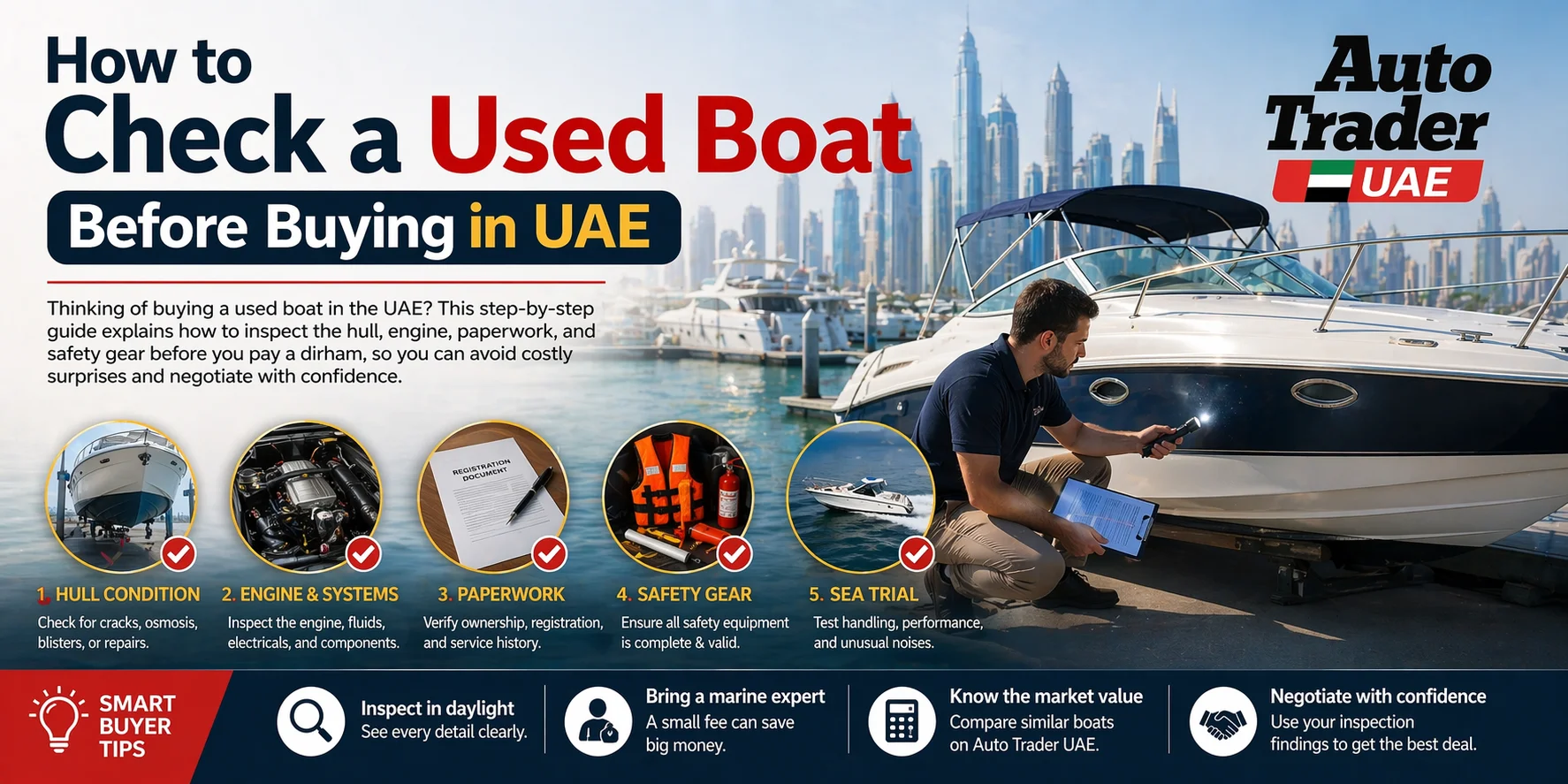
How to Check a Used Boat Before Buying in UAE
Buying a used boat in the UAE can be an amazing way to enjoy the water without paying new‑boat prices. But marine repairs are expensive, and a rushed decision can turn your dream into a money pit. This guide from Auto Trader UAE walks you through how to check a used boat before buying in UAE waters, so you can spot issues early, budget realistically, and negotiate the right price.
1. Start with the Right Paperwork
Before you fall in love with the boat, make sure the documents are in order. In the UAE, a clean, complete paper trail is just as important as a clean hull.
1.1 Key documents to check
- Ownership documents – Ask for proof that the seller is the legal owner (title/registration in their name).
- Registration card – For Dubai, Abu Dhabi, and other emirates, confirm the marine authority registration is valid and matches the hull and engine numbers.
- VAT / purchase invoice (if available) – Useful to confirm the original purchase and options/engine size.
- Service history – Look for stamped invoices or service logs from recognised workshops or marinas.
- Modification records – Any engine swaps, major repairs, or structural work should be documented.
- Insurance history – Past claims may indicate accidents, fire, or serious damage.
1.2 Red flags in paperwork
- Owner’s name doesn’t match the ID or registration.
- Gaps in service history, especially for engines and outdrives.
- Recent registration in a different emirate with no clear reason.
- Reluctance to share invoices or previous survey reports.
2. Inspect the Hull and Structure
The hull is the core of the boat. Structural issues can be extremely costly to fix and, in some cases, unsafe.
2.1 Outside hull check (ashore)
Ideally, inspect the boat out of the water on a trailer or cradle.
- Overall condition – Walk around the boat. Look for mismatched paint or gelcoat, which may show repairs.
- Cracks and crazing – Hairline cracks in gelcoat are common; long, deep, or radiating cracks near the keel, chines, or transom are serious.
- Blisters or bubbles – Blistering in the hull can indicate osmosis (water in the laminate).
- Keel and chines – Check for grounding damage, deep scrapes, or filler patches.
- Transom (stern) – Critical on outboard and sterndrive boats. Look for flexing, cracks around the engine mount, or water stains.
- Through‑hulls and fittings – Ensure seacocks and fittings are tight, not corroded or loose.
2.2 Inside structure
- Floor / deck – Walk firmly across the deck and cockpit. Soft spots or spongy areas can mean rotten core or stringers.
- Bulkheads and stringers – Where visible, check for signs of delamination, moisture, or crude repairs.
- Bilge area – Look for standing water, oil, fuel, or damaged frames.
3. Check the Engine and Mechanical Systems
In the UAE market, the engine is often the most expensive single component on a used boat. A careful mechanical inspection can save you tens of thousands of dirhams.
3.1 Visual engine inspection
- Cleanliness – A spotless engine doesn’t guarantee health, but heavy oil, rust, or salt deposits are warning signs.
- Hoses and belts – Check for cracks, bulges, and hardened rubber.
- Corrosion – Surface rust is common, but heavy corrosion on blocks, mounts, or electrical connections is a concern.
- Oil leaks – Look around gaskets, sump, and filters.
- Exhaust system – Check manifolds and risers for rust, leaks, or poor repairs.
3.2 Fluids and basic checks
- Engine oil – Pull the dipstick. Milky oil suggests water contamination; black and thick oil may mean poor maintenance.
- Gear oil (outboard/sterndrive) – Milky or metallic oil indicates internal wear or water ingress.
- Coolant (if closed‑cooling) – Should be clean and at the correct level.
- Hydraulic fluid – For power steering and trim, ensure adequate levels and no leaks.
3.3 Start‑up and idle test
- The engine should start reasonably quickly (cold) without excessive cranking.
- Listen for knocking, rattling, or loud ticking.
- Exhaust should be relatively clean: brief smoke at start can be normal, continuous blue or white smoke is not.
- Check for consistent water flow from the cooling outlet on outboards.
- Watch engine temperature and oil pressure gauges for stable readings.
4. Conduct a Proper Sea Trial
Never buy a used boat in the UAE without a sea trial. Conditions on the water reveal problems that are invisible at the dock.
4.1 What to look for during the sea trial
- Starting & warm‑up – The engine should restart easily when warm.
- Acceleration – The boat should plane relatively quickly without excessive bow rise.
- Top speed & RPM – Confirm that the engine reaches the manufacturer’s recommended RPM range at full throttle.
- Steering – No heavy pulling to one side, unusual stiffness, or play.
- Vibration – Excessive vibration can indicate prop damage, bent shaft, or engine mount issues.
- Handling – Test turns at different speeds; the hull should feel predictable and stable.
- Bilge check – After running, inspect the bilge for new water, oil, or fuel leaks.
4.2 Comfort and noise
Also assess:
- Noise levels at cruising speed.
- Spray and dryness of ride in local chop (e.g. Dubai Marina, Abu Dhabi Corniche conditions).
- Comfort of seating and helm ergonomics for typical UAE day‑trip distances.
5. Electrical and Onboard Systems
Electrical issues are common on boats, especially in hot, salty environments like the Arabian Gulf.
5.1 Basic electrical checks
- Batteries – Check age, secure mounting, corrosion on terminals, and that the engine cranks easily.
- Switch panel – Turn each circuit on and off (lights, pumps, horn, navigation equipment).
- Navigation lights – Ensure all required lights work properly for night use.
- Bilge pumps – Manually test float switches and pump operation.
- Charging system – With the engine running, confirm voltage increase at battery terminals.
5.2 Electronics and accessories
- GPS/plotter, fishfinder, VHF – Check power‑on, basic functions, and screen condition.
- Sound system – In the UAE leisure market, sound quality matters; test all speakers.
- Trim tabs and power trim – Ensure smooth operation and no hydraulic leaks.
- Windlass (if fitted) – Test anchor up/down functions under load.
6. Interior, Deck, and Safety Gear
Comfort and safety equipment strongly affect usability and value, especially for family and weekend use around Dubai, Abu Dhabi, Sharjah, and Ras Al Khaimah.
6.1 Interior and deck condition
- Seats and upholstery – Look for UV damage, cracks, and mould from heat and humidity.
- Bimini tops and covers – Check stitching, fabric tears, and frame corrosion.
- Cabin (if any) – Smell for dampness; inspect headlining, cushions, and storage areas.
- Non‑skid surfaces – Ensure good grip, no peeling or dangerous wear.
- Rails and cleats – Shake firmly; they should be solid with no movement.
6.2 Safety equipment checks
For UAE waters, safety gear is essential and often required by local regulations. Confirm:
- Life jackets – Adequate number, correct sizes, and in good condition.
- Fire extinguishers – Correct type, in-date, and accessible.
- Flares and signaling devices – Check expiry dates and storage.
- First‑aid kit – Complete and not expired.
- Anchor, chain, and rope – Appropriate size and length for coastal use.
- Throw ring / buoy – In good condition, attached to a line.
7. Consider UAE‑Specific Factors
The UAE marine environment is harsh: high temperatures, strong sun, and salty water accelerate wear.
7.1 Sun and heat damage
- Gelcoat fading – Heavy chalking or dull colour indicates long, unshaded storage.
- Plastic fittings – Check for brittleness or cracking.
- Electronics – Confirm screens haven’t darkened or failed due to heat.
7.2 Salt‑water effects
- Corrosion on metals – Look at stainless rails, hinges, latches, and engine mounts.
- Anodes (zincs) – Very worn anodes may indicate poor maintenance; completely clean anodes on a used boat might mean replacements were just fitted for sale.
- Cooling system – Boats not regularly flushed after salt‑water use can suffer internal corrosion.
7.3 Storage history
- Ask where the boat has been kept: marina berth, dry rack, trailer, or beach.
- Covered storage usually means less UV and interior damage.
- Boats left in the water year‑round may have more growth, corrosion, and possible osmosis.
8. When to Hire a Marine Surveyor
For higher‑value boats or if you’re new to boating, paying for a professional survey is usually money well spent.
8.1 What a surveyor does
- Checks hull integrity with specialised tools.
- Assesses engines and mechanicals in more detail.
- Reviews safety compliance with local regulations.
- Provides a written report you can use in negotiations or for insurance.
8.2 When it’s worth it
- For larger offshore boats, cruisers, and yachts.
- When you suspect previous damage or poor repairs.
- If the boat has been imported or re‑registered.
9. Pricing, Negotiation, and Test‑Driving the Market
9.1 Research realistic pricing
Before you make an offer, compare similar used boats on major UAE marketplaces such as Auto Trader UAE. Look at:
- Year, engine hours, and engine type.
- Brand reputation and availability of parts locally.
- Service history and included equipment (electronics, trailer, covers, etc.).
9.2 Use inspection findings to negotiate
- List any issues you found: tyres on the trailer, old safety gear, faded upholstery, upcoming major service.
- Obtain rough quotes from local marinas or workshops for bigger repairs.
- Adjust your offer to reflect those costs or ask the seller to address critical items before sale.
9.3 Don’t forget running costs
Factor in:
- Fuel consumption for your typical trips.
- Annual servicing and haul‑out fees.
- Marina berth or dry‑stack storage.
- Insurance and registration renewals in your emirate.
10. Buyer Takeaway: A Simple Checklist Before You Pay
Use this short checklist when checking a used boat before buying in the UAE:
- All documents and registration in seller’s name.
- Hull inspected ashore: no serious cracks, blisters, or soft spots.
- Engine starts easily, runs smoothly, no worrying smoke.
- Sea trial completed: good acceleration, steering, and stability.
- Electrical systems and pumps working correctly.
- Safety equipment complete and in date.
- Realistic price compared with similar listings on Auto Trader UAE.
11. Seller Takeaway: How to Prepare Your Used Boat for Sale
If you’re selling your boat in the UAE, a little preparation can help you stand out and achieve a better price.
- Gather all documents, service receipts, and manuals in one folder.
- Have the boat professionally cleaned and polished.
- Fix obvious issues (burnt‑out bulbs, broken latches, minor upholstery tears).
- Ensure the engine is serviced and starts reliably.
- Photograph the boat in good light, from all angles, including engine and helm.
- Be honest in your Auto Trader UAE listing about any known defects.
12. Conclusion: Buy with Confidence in the UAE
Knowing exactly how to check a used boat before buying in UAE waters helps you avoid hidden problems, budget for realistic running costs, and negotiate a fair deal. Take your time, insist on a sea trial, and don’t hesitate to involve a professional surveyor for higher‑value purchases. When you’re ready to browse what’s available, explore the latest used boats—and even tow vehicles and 4x4s to match—on Auto Trader UAE, where you can compare multiple listings, shortlist favourites, and move from research to ownership with confidence.
If you are exploring used cars in Dubai or elsewhere in the UAE, Auto Trader UAE makes it easier to compare listings, prices, trims, mileage, and seller details in one place.