
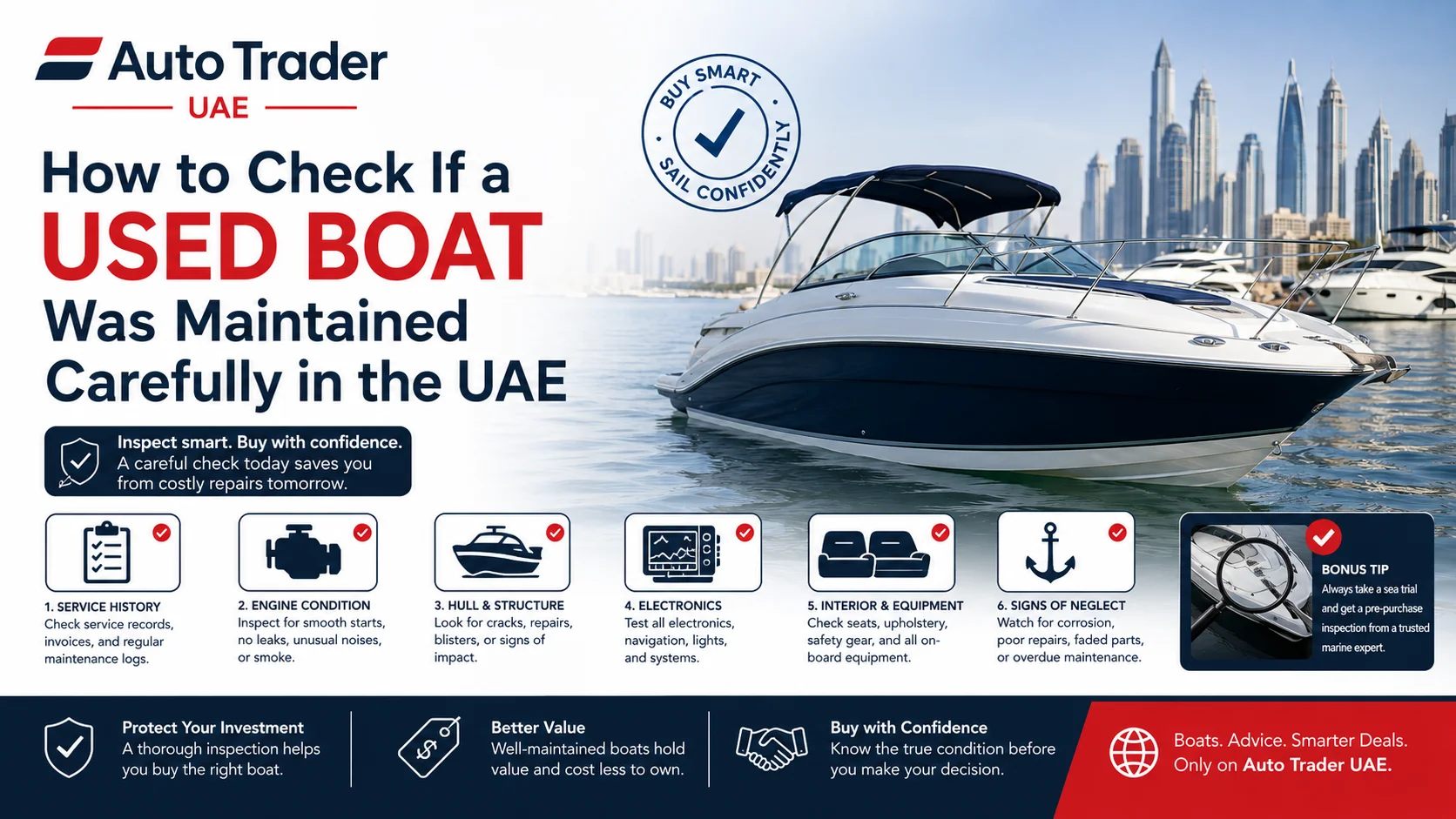
How to Check If a Used Boat Was Maintained Carefully in the UAE
Buying a used boat in the UAE can save you a lot of money, but only if the previous owner took proper care of it. Saltwater, heat, and humidity are tough on boats, so knowing how to spot real maintenance (and hidden neglect) is critical before you transfer a single dirham. This guide explains how to check if a used boat was maintained carefully, with practical steps you can use at Dubai Marina, Abu Dhabi, Sharjah, Ras Al Khaimah and beyond.
1. Start With the Paper Trail: Service History & Documentation
A well‑maintained boat usually has a tidy paper trail.
Ask for these documents
- Original purchase invoice – indicates boat age and first owner.
- Service invoices and receipts – especially for engines, gearboxes, and major systems.
- Logbook or maintenance log – some careful owners log every service and trip.
- Warranty papers (if still valid) – for engines, electronics, or hull.
- Registration documents – to verify ownership and matching hull/engine numbers.
What good maintenance records look like
- Services done annually or by engine-hours, whichever comes first.
- Regular oil and filter changes, impeller replacement, and cooling-system checks.
- Work carried out by recognised marinas or workshops in the UAE.
- Receipts that match the seller’s story on age, use, and upgrades.
Be cautious if the seller claims “always serviced” but cannot show any proof, especially for high-value boats.
2. Inspect the Engine and Mechanical Systems
Engines are usually the most expensive part of a used boat. Careful maintenance should be clear when you open the engine bay.
Visual checks
- Clean, dry engine bay – light dust or salt haze is normal; heavy oil, fuel, or coolant leaks are not.
- Hoses and belts – flexible, no deep cracks, no severe hardening from heat.
- Wiring – neat runs, proper clips and terminals, no loose, twisted-together wires.
- Corrosion – minor surface corrosion is normal; heavy flaking, rust, or green crust on fittings suggests neglect.
- Engine mounts – no cracks, separation, or excessive rust.
Fluids and filters
- Engine oil – correct level, no burnt smell, not milky (which could indicate water contamination).
- Gear oil – clean, no metal shavings.
- Coolant (if applicable) – proper level, not rusty or dirty.
- Fuel and oil filters – reasonably clean and not years out of date.
Engine start-up and test
- Engine should start easily from cold without excessive cranking.
- Idle smoothly with no loud knocking or metallic noises.
- Minimal smoke – a brief puff on start-up can be normal; continuous smoke is a red flag.
- Responsive throttle – no hesitation or cutting out.
- Steering and controls – smooth, no stiffness or free play.
If you are not confident, consider paying for a pre-purchase inspection by a marine surveyor or reputable UAE boat workshop. A small fee can save you from a serious engine rebuild later.
3. Check the Hull and Structure for Hidden Damage
A carefully maintained hull is your best protection on the water.
Exterior hull inspection
- Look along the hull sides for waves, ripples, or uneven repairs.
- Check the gelcoat – small cosmetic marks are common, but watch for deep cracks, exposed fibres, or mismatched patches of paint.
- Inspect the keel and chines – these areas take the most impact when beaching or trailering.
- Examine fittings (cleats, rails, ladders) – firmly mounted, no soft spots around bolts.
Signs of good care
- Hull kept reasonably clean, without heavy layers of barnacles or algae.
- Regular antifouling paint if the boat is stored in the water.
- Trailer pads or rollers that match the hull correctly, reducing pressure points.
Interior structure
- Walk around the deck – feel for soft or springy spots that might suggest rotten core material.
- Check around hatches and windows – stains or soft spots often point to leaks.
- Inspect bulkheads and stringers where accessible – they should be solid with no obvious cracks or separation.
4. Look for Corrosion and Salt Damage (Critical in the UAE)
The Gulf environment is harsh: high salinity, intense sun, and heat.
Where to look for corrosion
- Metal fittings – cleats, hinges, latches, railings, and screws should not be heavily pitted or discoloured.
- Engine and drive components – check outdrives, propellers, trim tabs, and anodes.
- Battery terminals and electrical connections – minimal white or green build-up.
Anodes and anti-corrosion care
- Boat should have sacrificial anodes (zinc or aluminium) on drives and other metal parts.
- Anodes should be present and not completely wasted away; heavily corroded or missing anodes suggest neglect.
- Look for signs of fresh anti‑corrosion spray or coatings in the engine bay and under the boat.
If the boat has lived its life in UAE saltwater and still looks reasonably clean underneath, that’s a positive indicator of regular rinsing and haul-outs.
5. Evaluate the Electrical System and Electronics
Modern boats rely heavily on electronics, especially in the UAE where many owners add navigation, sound systems, fish‑finders, and lighting.
Wiring and panels
- Main switch panel – labelled circuits, no taped-over fuses or burnt switches.
- Behind the dashboard (if accessible) – neat wiring, proper connectors, no loose or dangling wires.
- Battery installation – secure mounts, proper covers, and clean terminals.
Test every system
- Navigation lights
- Bilge pumps (manual and automatic)
- Horn
- GPS/plotter, depth sounder
- Cabin lights, fans, and pumps (if equipped)
- Entertainment system – speakers, head unit, and any amplifiers
Multiple dead or non-functioning systems can signal poor maintenance or wiring issues that may be expensive to fix.
6. Check the Interior, Upholstery, and Safety Gear
The condition of the interior often reflects how an owner looks after the boat overall.
Upholstery and deck
- Seats and cushions – tears, mould, and severe fading point to constant sun exposure without covers.
- Carpets or non‑slip flooring – look for heavy staining, mould, or delamination.
- Storage lockers – clean, mostly dry, and free of strong fuel or sewage odours.
Cabin (if applicable)
- Check for musty smells, water stains, or soft wood around windows and hatches.
- Open all cupboards and bilge access panels to check for leaks or hidden damp.
Safety equipment
- Life jackets – in good condition, of appropriate size and quantity.
- Fire extinguishers – check expiry dates and mounting.
- Flares and signalling devices – if included, verify expiry dates.
- First-aid kit – present and not entirely expired.
An owner who keeps safety gear current has usually paid attention to the rest of the boat as well.
7. Understand How the Boat Was Used and Stored
Use and storage in the UAE climate affect long-term condition as much as the number of hours on the engine.
Key questions to ask the seller
- Was the boat kept in the water, on a dry berth, or on a trailer?
- Was it flushed with fresh water after each saltwater use?
- Was the boat used mostly for fishing, cruising, water sports, or charter?
- How many engine hours does it have, and how were they accumulated (short trips vs long runs)?
Positive signs
- Stored under cover or with high-quality boat covers when not in use.
- Regular rinsing of hull and engines with fresh water.
- Seasonal servicing before or after summer lay‑up.
A higher‑hour boat with strong evidence of proper storage and servicing is often a safer choice than a low‑hour boat that sat neglected in the sun or in the water.
8. Trailer, Accessories, and Extras
If the boat comes with a trailer or additional equipment, inspect those as well.
Trailer checks
- Frame – no serious rust, cracks, or bent sections.
- Tyres – decent tread, no severe cracking from sun damage.
- Wheel bearings – spin the wheels and listen for grinding.
- Lights and brakes (if fitted) – working and correctly wired.
Accessories
- Bimini tops and covers – no major tears, mould, or missing fittings.
- Fenders, ropes, and anchors – enough for safe use in UAE marinas.
- Water-sports gear – wakeboard towers, rod holders, or tow hooks mounted securely.
Well‑maintained accessories show that the owner cared about every part of the boat, not just the main systems.
9. When to Call a Marine Surveyor
For higher‑value boats or if you’re new to boating, a professional survey in the UAE is often worth the cost.
Consider a survey if:
- The boat is larger (e.g. cabin cruisers, yachts, or high‑performance models).
- You see old repairs on the hull or structure.
- Engine hours are high or service history is incomplete.
- You plan to finance or insure the boat, and the lender or insurer requires a report.
A surveyor can perform moisture readings, hull tapping, sea trials, and engine diagnostics that go beyond a visual check.
10. Negotiating and Closing the Deal in the UAE
Once you’ve evaluated how carefully the boat was maintained, you can negotiate based on real findings.
Use your inspection to guide price
- Well‑maintained boats with strong records deserve a firmer price and are usually cheaper to own long‑term.
- Minor issues (worn cushions, small gelcoat chips) can be used for reasonable negotiation.
- Major defects (structural damage, engine problems, severe corrosion) are either deal-breakers or require a significant discount.
Paperwork and transfer
- Confirm registration details match the hull and engine numbers.
- Make sure any outstanding finance has been cleared.
- Get a written bill of sale specifying boat details, agreed price, and any included equipment.
Next Steps: Find a Carefully Maintained Used Boat in the UAE
Understanding how to check if a used boat was maintained carefully gives you a big advantage in the UAE market. You’ll be able to spot boats that have been loved and looked after, and walk away from those hiding expensive problems. On Auto Trader UAE, you can browse a wide range of used boats with photos and details that help you shortlist the best‑cared‑for options before you even arrange a viewing. Many sellers highlight service history, dry‑dock storage, and upgrades in their listings, making it easier to focus on quality examples. If you’re also considering a tow vehicle for your boat, you can explore a wide choice of used cars in UAE and, if you’re based in the emirate, browse dedicated listings for used cars in Dubai. This way, you can find both the right boat and the right vehicle to enjoy the UAE’s coastline and waterways with confidence.
Browse used boats in UAE on Auto Trader UAE to compare live listings, prices, and current market activity more clearly.
Related Links
Buyer Takeaway
When buying a used car in the UAE, focus on vehicle condition, service history, inspection quality, paperwork, and total running costs rather than price alone. Compare options carefully and choose the option that best matches your budget and real needs.
Seller Takeaway
If you are selling a used car in the UAE, present the service history clearly, price the vehicle realistically, and highlight condition, specification, and ownership strengths honestly. A well-prepared listing with accurate details usually attracts more serious buyers.
Conclusion
A careful used car purchase in the UAE starts with research, proper inspection, and clear paperwork before making the final decision.