
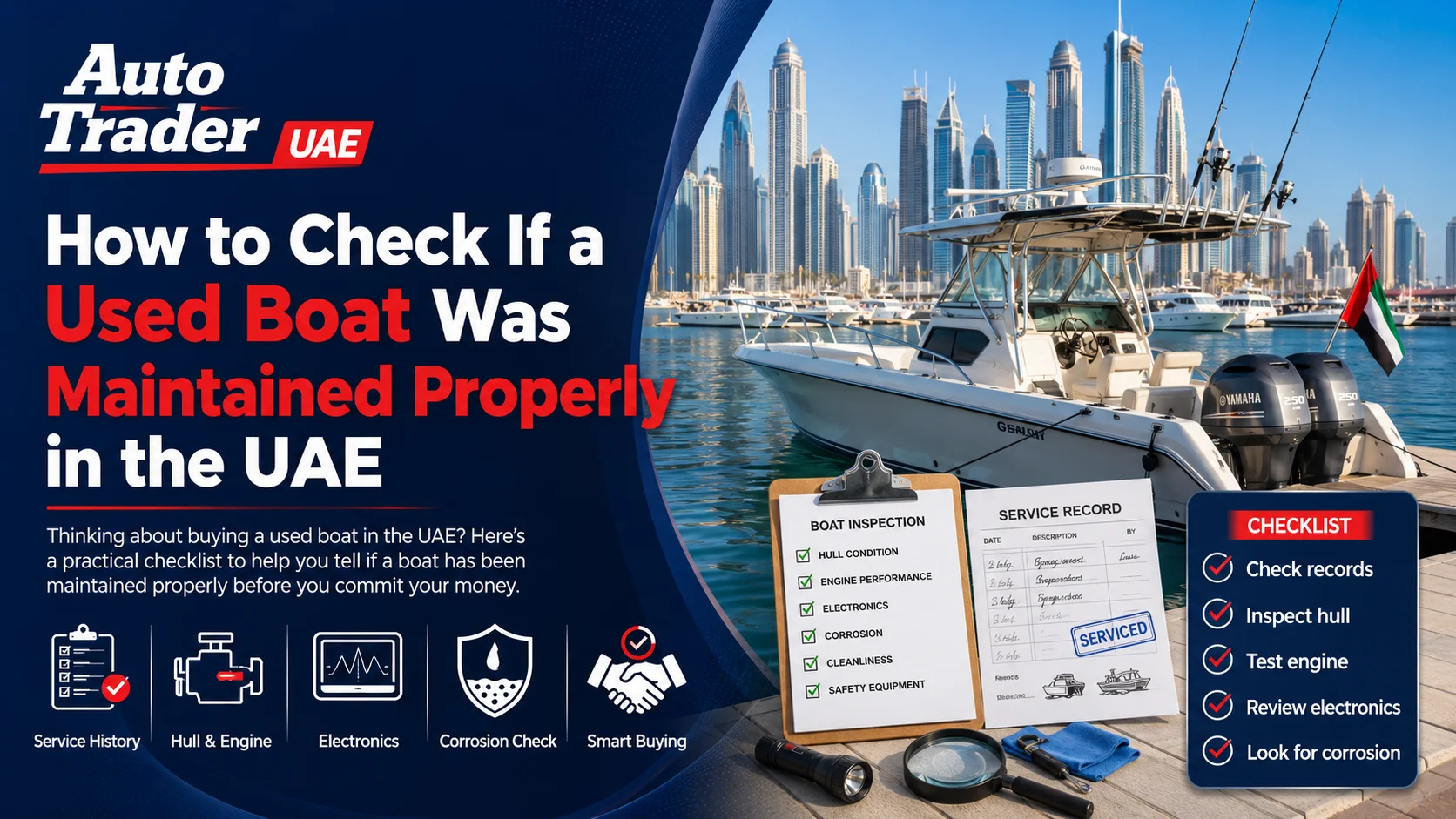
How to Check If a Used Boat Was Maintained Properly in the UAE
Buying a used boat in the UAE can save you a lot of money compared with a new one, but only if the previous owner has looked after it properly. Poor maintenance can quickly turn your dream weekend cruiser or fishing boat into a very expensive headache. This guide walks you through how to check if a used boat was maintained properly, with practical tips tailored to UAE conditions and marinas.
Why Boat Maintenance Matters So Much in the UAE
Boats in the UAE work in tough conditions:
- Warm saltwater that accelerates corrosion
- Intense sun and UV that damage gelcoat, upholstery, and plastics
- High humidity that encourages mold and electrical issues
- Long idle periods during hotter months for some owners
A well-maintained boat will:
- Start easily and run reliably
- Use less fuel
- Need fewer surprise repairs
- Hold its value better when you decide to sell
On Auto Trader UAE you’ll find everything from compact fishing boats to luxury cruisers. Knowing how to judge maintenance lets you sort the well-kept boats from the expensive projects.
1. Start With the Paper Trail: Service History & Records
A properly maintained boat almost always has a paper (or digital) trail.
What to ask the seller for
- Service invoices from marinas or workshops
- Engine service records (oil changes, filters, impellers, spark plugs, timing belts, etc.)
- Hull maintenance records (antifouling, polishing, fiberglass repairs)
- Electrical and electronics work (wiring, batteries, upgrades)
- Any warranty work done by official agents
Good signs in the paperwork
- Services done at regular intervals (typically every 50–100 hours or annually, depending on engine recommendations)
- Same workshop or marina used consistently
- Receipts from recognised local names in UAE marine service
- Notes of preventive maintenance, not just breakdown repairs
Red flags in the paperwork
- No records at all – only “verbal history”
- Very long gaps between engine services
- Repeated repairs of the same issue (may point to deeper problems)
- Major accident or structural repair with no detailed report
If the service history is weak, you must rely more heavily on your physical inspection and a professional marine survey.
2. Inspect the Hull and Structure
The hull is the foundation of the boat. Serious issues here can be extremely costly.
Exterior hull inspection
Walk around the boat on land, if possible.
- Look for obvious damage: cracks, deep gouges, impact marks around the bow or chines.
- Check for blisters or bubbles in the gelcoat, especially below the waterline (signs of osmosis or water intrusion).
- Look at previous repairs or patches – are they smooth, well-finished, and colour-matched, or rough and uneven?
- Check keel, strakes and chines for repairs from grounding.
- Assess the antifouling paint – is it even, recent, and not flaking excessively?
Deck and structure
- Walk on the deck, foredeck, and around the helm – feel for soft spots or flexing under your feet (may mean core rot or delamination).
- Inspect around cleats, rails, windlass and T-top/bimini mounts for cracks in the gelcoat, which may point to stress or loose fittings.
- Open storage lockers: check for standing water, mold, or signs of long-term leak issues.
Signs of good maintenance
- Hull looks clean, regularly washed and polished.
- Antifouling appears to have been reapplied on a sensible schedule.
- Repairs, if any, look professional and are fully finished.
- Deck hardware is tight with no movement or stress cracks.
3. Check the Engine and Mechanical Systems
The engine is often the most expensive single component. In UAE marinas, many boats use outboard engines, but you’ll also see inboards and sterndrives.
Visual checks before starting
- Engine cleanliness: A clean engine bay or outboard doesn’t prove perfect care, but heavy oil leaks, corrosion, and grime are bad signs.
- Corrosion: Look at engine mounts, brackets, anodes, exhaust parts, and any exposed bolts.
- Hoses and belts: Check for cracks, bulges, or obvious age.
- Oil level and condition: Oil should be at the correct level and not milky (water contamination) or extremely dirty.
- Gear oil (for outboards/sterndrives): Ask if it has been changed regularly.
Starting and running the engine
Ideally, arrange a sea trial in UAE waters.
- Engine should start easily from cold without excessive cranking.
- Listen for unusual knocks, rattles, or metallic sounds.
- Watch for smoke – a little on cold start can be normal on some engines, but continuous heavy smoke is a concern.
- At cruise, the engine should run smoothly at the correct RPM and temperature with no warning lights.
- Check steering and throttle for smooth, precise response.
Service history clues
Ask for:
- Regular oil and filter changes
- Cooling system service (impellers, thermostats)
- Timing belt/chain replacements where applicable
- Gearbox or lower unit services
- Any major rebuilds or replacements
If you’re not confident judging engine health yourself, bring a marine mechanic or surveyor. The cost is often small compared with a possible engine rebuild.
4. Look Closely at Electrical and Electronics
UAE heat and salt air are hard on electrics. Poorly maintained electrical systems can be frustrating and dangerous.
Wiring and connections
- Look for neat, organised wiring, ideally loomed and supported – not a tangled mess.
- Check for corroded terminals, especially near the transom, bilge, and batteries.
- Test navigation lights, bilge pumps, horn, freshwater pump, and other basic systems.
- Open the switch panel if possible and look for signs of DIY modifications.
Electronics
Most UAE boats will have at least a VHF radio, depth sounder, or GPS/plotter.
- Turn on all navigation electronics and check that they power up and seem to work.
- Test the VHF radio (with permission) and ensure antenna connections look solid.
- Check for water intrusion behind dashboards or in instrument clusters.
Well-maintained boats usually have tidy wiring, labelled circuits, and fully functioning basic systems.
5. Inspect the Interior, Upholstery, and Covers
The way an owner treats the interior and soft materials often reflects how they treat the rest of the boat.
Cabin and seating
- Look for mold or mildew on headliners, cushions, and inside lockers.
- Check for water stains around windows, hatches, and the cabin roof.
- Inspect upholstery for cracking from UV or neglect.
- Open under-seat storage to check for ventilation and dryness.
Covers, bimini, and T-top
- Examine bimini fabric and stitching for UV damage.
- Check zippers and clips function smoothly.
- Look at any full boat covers – a boat stored under cover in the UAE sun typically ages far better.
Clean, fresh-smelling interiors and intact upholstery suggest regular cleaning and protective care.
6. Check Safety Gear and Bilge Areas
Responsible owners usually keep safety equipment up to date and bilges clean.
Safety equipment
- Check the presence and condition of life jackets, fire extinguishers, flares (where applicable), and first-aid kit.
- Look at the expiry dates on extinguishers and flares.
- Confirm the anchor, chain, and rope are suitable for typical UAE coastal conditions.
Bilge and hidden areas
- Open bilge access panels and inspect for oil, fuel, or standing water.
- Check bilge pumps and float switches operate by using the test switch or gently lifting the float.
- Look for rust, corrosion, and delamination in structural elements you can access.
A clean, dry bilge with working pumps is a very positive sign of ongoing care.
7. Understand How and Where the Boat Was Used in the UAE
Ask the owner detailed questions about usage and storage:
- Where was it kept? On a trailer, dry stack, or in the water at a marina?
- Freshwater flushing: For outboards, was the engine flushed with fresh water after each saltwater trip?
- How often was it used? Regular, moderate use is usually better than long periods of neglect.
- Who did the servicing? Reputable UAE marine service centres are a good sign.
- Any groundings or accidents? Honest owners should be willing to explain what happened and how it was repaired.
Boats stored on trailers or in dry stacks, covered and flushed after each use, generally show lower corrosion and hull fouling than boats left in the water full-time.
8. When You Should Call a Professional Surveyor
For higher-value boats or if you’re new to boating, a professional marine survey is strongly recommended. A surveyor can:
- Use specialised tools (like moisture meters) to find hidden structural issues
- Check compliance with local safety expectations
- Give you an independent valuation to compare with the asking price
- Highlight upcoming maintenance you should budget for
The survey cost can often be negotiated with the seller or factored into your final offer.
9. Negotiating Based on Maintenance Condition
Once you understand the boat’s real condition, you can negotiate more confidently.
Use your inspection findings
- List any immediate repairs or services needed (engine service, antifouling, upholstery repair, electronics replacement).
- Get ballpark quotes from local UAE marine service providers.
- Use this as a basis to request a price adjustment or have work completed before purchase.
When to walk away
Consider moving on to another boat if you find:
- Serious structural damage or extensive moisture in the hull
- Neglected engines with obvious internal problems
- No service history combined with visible corrosion and poor electrics
- Seller unwilling to allow inspection or sea trial
With plenty of used boats available on Auto Trader UAE, you rarely need to accept a boat with major doubts over its maintenance.
10. Next Steps: Finding a Well-Maintained Used Boat in the UAE
To increase your chances of getting a properly maintained boat:
- Shortlist boats with clear, detailed listings and photos.
- Prioritise sellers who can show complete service histories.
- Arrange in-person inspections and sea trials whenever possible.
- Use a marine surveyor for higher-value purchases.
You can start comparing used boats across the UAE today on Auto Trader UAE, then apply this maintenance checklist when you go to view them. If you’re also considering a tow vehicle for your boat, explore the wide range of used cars in UAE available on Auto Trader UAE, including powerful SUVs and pickups that are ideal for boat trailers.
Summary: How to Check If a Used Boat Was Maintained Properly
- Review service records for regular, professional care.
- Inspect the hull and structure for damage, blisters, and poor repairs.
- Check the engine, electrics, and bilge for signs of neglect or corrosion.
- Evaluate interior condition, covers, and safety gear.
- Ask detailed questions about storage, usage, and flushing habits.
- Use a professional survey for extra peace of mind on valuable boats.
Using this checklist will help you confidently judge whether a used boat was maintained properly and whether the asking price truly reflects its condition in the UAE market.
Browse used boats in UAE on Auto Trader UAE to compare live listings, prices, and current market activity more clearly.
Related Links
Buyer Takeaway
When buying a used car in the UAE, focus on vehicle condition, service history, inspection quality, paperwork, and total running costs rather than price alone. Compare options carefully and choose the option that best matches your budget and real needs.
Seller Takeaway
If you are selling a used car in the UAE, present the service history clearly, price the vehicle realistically, and highlight condition, specification, and ownership strengths honestly. A well-prepared listing with accurate details usually attracts more serious buyers.
Conclusion
A careful used car purchase in the UAE starts with research, proper inspection, and clear paperwork before making the final decision.