
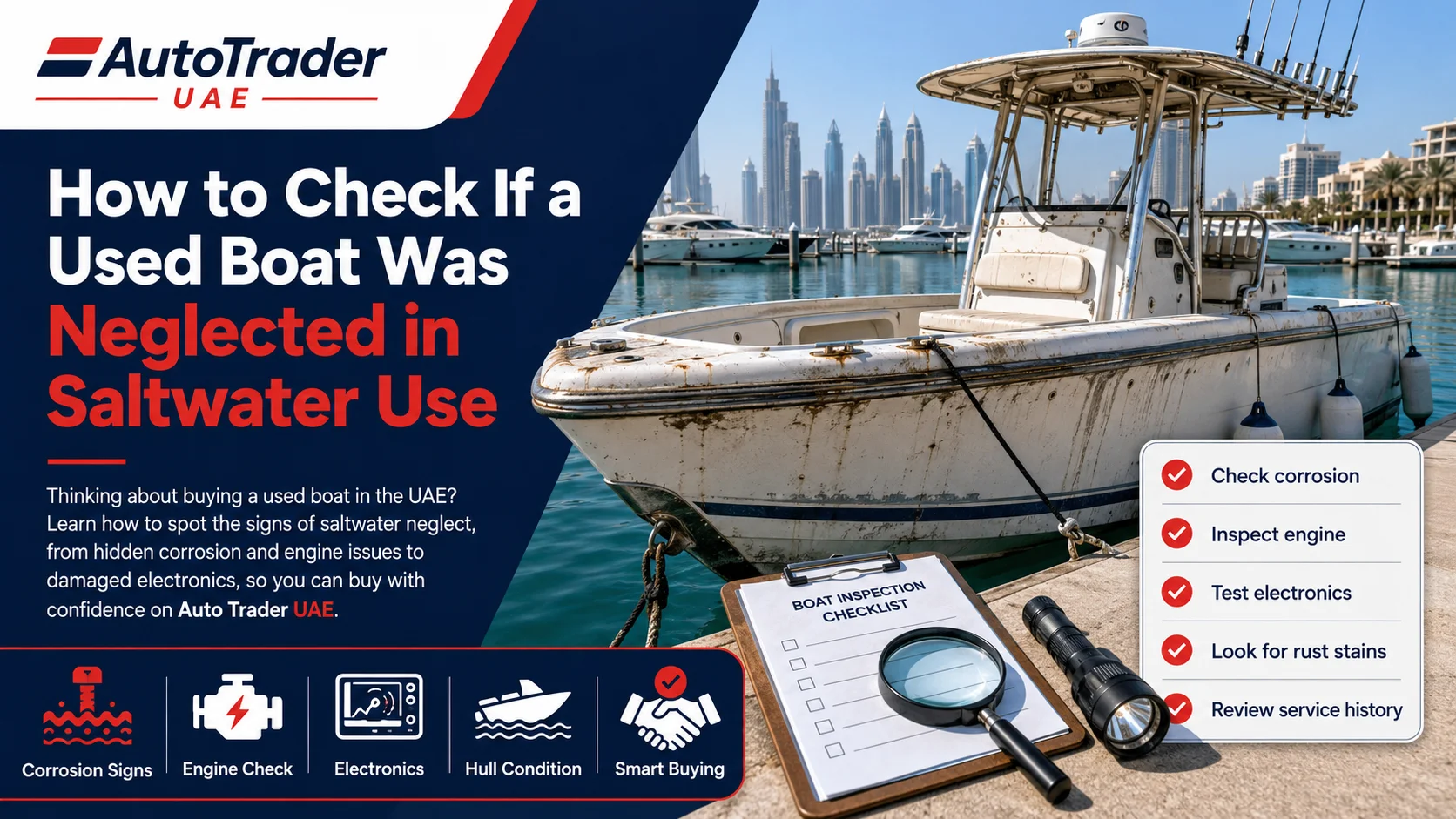
How to Check If a Used Boat Was Neglected in Saltwater Use
Buying a used boat in the UAE often means buying a boat that has spent most of its life in saltwater. That’s perfectly fine if it has been properly rinsed, serviced, and protected. If it hasn’t, corrosion and hidden damage can quickly turn your new weekend toy into an expensive repair project. This guide explains how to check if a used boat has been neglected in saltwater use before you commit to buying it on Auto Trader UAE or anywhere else in the region.
Why Saltwater Neglect Matters in the UAE
Saltwater is highly corrosive. Combined with strong sun, high humidity, and year-round heat in the UAE, it accelerates wear on:
- Engines and drives
- Steering and control systems
- Electrical wiring and electronics
- Hull fittings and hardware
- Trailers and braking systems
A boat that looks shiny from a distance can still have:
- Corroded engine internals
- Seized steering or trim systems
- Compromised safety gear
- Electronics damaged by salt and moisture
The good news: most signs of saltwater neglect are visible if you know where and how to look.
Quick Checklist: Signs a Boat Was Neglected in Saltwater
Use this quick list as a first filter when viewing used boats:
- Heavy corrosion on metal parts above and below deck
- Pitted or blistered outboard/sterndrive casings
- Flaking paint on the engine block or mounts
- White or green salt deposits around fittings and wiring
- Stiff steering or stuck trim/tilt
- Rusty screws, hinges, and seat frames
- Soft or spongy deck areas
- Electronics with fogged screens or intermittent power
- No proof of regular servicing, flushing, or anode replacement
If several of these appear together, proceed with caution and factor potential repairs into your offer, or walk away.
Step 1: Ask the Right Questions Before Viewing
Before you even travel to inspect the boat, contact the seller (private seller or dealer) and ask:
- Where was the boat mainly used? Open sea, marinas, creeks, mixed fresh/salt? In the UAE, assume saltwater unless proven otherwise.
- How often was it rinsed with fresh water after trips? Rinsing after every saltwater outing is ideal.
- Was the engine flushed with fresh water after each use? Especially important for outboards and sterndrives.
- Where was it stored? Dry stack, trailer, marina berth, or on a mooring.
- How often were anodes replaced? Typically annually or sooner in harsh environments.
- Is there a service history? Ask for stamped invoices, not only a verbal claim.
Red flags at this stage:
- Vague answers like “Whenever I had time” about flushing and washing
- No proof of servicing despite years of marine use
- Boat permanently berthed in saltwater without evidence of regular haul-outs
Step 2: Exterior Walkaround – Look for Corrosion & UV Damage
Start with a slow walkaround of the hull and deck.
Check the Hull and Gelcoat
- Faded, chalky gelcoat is normal for older UAE boats, but heavy oxidation with uneven patches can indicate long-term outdoor storage and limited care.
- Blisters, bubbles, or bumps below the waterline can suggest osmotic issues or poor antifouling maintenance when kept in the water full time.
- Cracks around through-hull fittings or transom areas may point to water intrusion or stress damage.
Inspect Metal Fittings
Look at rails, cleats, screws, hinges, and latches:
- Surface corrosion is common, but deep pitting, missing metal, or rust streaking down from fittings indicate prolonged salt exposure without proper rinsing.
- Green or white crust around stainless fittings can indicate galvanic corrosion and trapped salt.
- Loose or wobbly fittings suggest the core or backing plates may be compromised.
Canvas, Upholstery, and Plastics
In the UAE climate, neglect shows quickly:
- Seat vinyl that is cracked, brittle, or discoloured
- Stitching that has failed or turned to powder
- Canvas covers with salt stains, mould, or tears
- Plastic windows that are yellowed or heavily scratched
While some cosmetic wear is expected, severely damaged soft materials often indicate the owner didn’t regularly clean or cover the boat.
Step 3: Below the Waterline – Serious Saltwater Clues
If the boat is on a trailer or lift, take your time inspecting below the waterline. If it’s in the water, ask the seller for haul-out photos or a recent survey.
Check the Propeller and Drive
For outboards and sterndrives:
- Look for pitting, bubbling paint, or exposed bare metal on the lower unit.
- Inspect the propeller for chips, bends, and signs of impact or corrosion.
- Check the prop nut and shaft for heavy rust or frozen hardware.
- Excessive corrosion around the cavitation plate and trim tab suggests neglected anodes or poor electrical bonding.
For shaft-driven boats:
- Check shafts, struts, and props for pinkish, de-zincified bronze or pitted surfaces.
- Spinning the prop by hand should feel smooth, without grinding or wobble.
Anodes (Sacrificial Zincs)
Anodes protect underwater metal from corrosion. Warning signs:
- Anodes that are almost gone but not replaced
- Anodes that look brand new on a clearly used boat (could mean recent replacement to hide prior neglect)
- No anodes where they should be fitted
Healthy anodes should show even wear. Severely wasted anodes or corrosion on adjacent metal suggests the boat may have been left in the water without proper protection.
Hull Condition
- Heavy marine growth (barnacles, shells) remaining on the hull or around intake grates can mean long periods without cleaning.
- Many thick layers of antifouling paint, peeling or flaking off, can indicate a “paint over problems” approach rather than proper maintenance.
Step 4: Engine & Mechanical Systems – Where Neglect Gets Expensive
The engine is usually the most valuable single component of a used boat. Saltwater neglect here can be very costly.
Visual Engine Inspection
Remove the engine cover (for outboards) or open the engine bay (for inboards/sterndrives):
- Rusty engine mounts and brackets show that saltwater or spray has been sitting inside the compartment.
- Flaking paint on the block or head suggests previous overheating or corrosion.
- Salt crystals or dried white deposits around hoses, clamps, or fittings indicate leaks left unattended.
- Corroded electrical connectors or brittle wiring insulation are signs of long-term moisture exposure.
Hoses, Belts, and Clamps
- Squeeze coolant and fuel hoses: they should feel firm but flexible, not rock-hard or mushy.
- Look for rusty or missing hose clamps and any sign of dried leakage.
- Check belts for cracking or glazing.
Check Fluids (Where Possible)
- Engine oil should be reasonably clean and free of metal particles; milky oil can indicate water intrusion.
- Gear oil from the lower unit (if the seller agrees to a check) should not be milky or metallic.
- Coolant (for closed systems) should be the correct colour, not rust-brown.
Cold Start and Sea Trial
If the visual checks look acceptable, insist on a cold start and, ideally, a sea trial:
- Engine should start cleanly from cold without extended cranking.
- Watch for excessive smoke, rough idle, or alarming noises.
- Monitor the temperature gauge and alarm functions.
- Check thrust and acceleration: the boat should get on plane without hesitation.
- Listen for belt squeal, grinding, or whining from the drive.
If possible, have a qualified marine mechanic in the UAE perform a compression test and general inspection before purchase.
Step 5: Steering, Controls, and Trim
Salt and moisture often show up first in moving parts.
- Turn the steering wheel lock-to-lock at standstill. It should feel smooth and consistent, not notchy or stiff.
- Operate the throttle and gear controls. They should shift smoothly into forward and reverse without sticking.
- Test the trim and tilt on outboards and sterndrives. Jerky or reluctant movement may indicate corrosion or failing hydraulics.
- On boats with hydraulic steering, check fluid levels and inspect lines for leaks or corrosion.
Any stiffness, grinding, or resistance could be a sign of internal corrosion from lack of rinsing and maintenance.
Step 6: Electrical System and Electronics
Salt and electrics don’t mix. Neglect here can lead to frustrating ownership and safety issues.
Wiring and Connections
- Lift hatches and check behind panels for corroded connectors, exposed copper, or messy DIY wiring.
- Look for green or white corrosion on terminals and bus bars.
- Check that battery terminals are clean, tight, and free of heavy corrosion.
Test All Electrical Equipment
Turn on and test:
- Navigation lights and cabin lights
- Bilge pumps (automatic and manual)
- Horn
- Blower fans (for inboard/sterndrive petrol engines)
- GPS, fishfinder, VHF radio, stereo, and any other electronics
Fogged screens, intermittent power, or multiple non-functioning devices can be the result of moisture and salt ingress over time.
Step 7: Interior, Bilge, and Storage Areas
Neglect often shows where owners rarely look.
Bilge and Under-Deck Areas
- Lift every hatch you can.
- Look for standing water, oil residue, or fuel smells.
- Check for salt crust on stringers, frames, and bilge pumps.
- Inspect any visible wood for soft spots, dark staining, or rot.
A dirty, oily, salty bilge suggests the boat hasn’t been kept clean or dry between uses.
Cockpit and Cabin
- Walk the deck and cockpit barefoot to feel for soft or spongy sections.
- Look at interior panels and liners for staining, mildew, or peeling.
- Open lockers and storage compartments – they should be relatively dry and free of strong mould odours.
Paperwork and Service History: Proof of Care
In the UAE, serious owners usually work with established marine service centres. Ask for:
- Service invoices showing regular engine servicing, anode replacement, and any repairs.
- Registration and ownership documents to verify identity and avoid legal issues.
- Any previous survey reports if the boat has been surveyed for insurance or finance.
More proof of consistent care generally means a lower risk of hidden saltwater damage.
Common Saltwater Neglect Red Flags
Be extra cautious if you see combinations of these issues:
- Severely corroded drive or propeller plus wasted anodes
- Rust-stained engine bay and flaking paint on the block
- Multiple non-working electrical items and heavily corroded wiring
- Hull blisters, heavy growth traces, and thick flaking antifouling layers
- No recent service history and vague answers about flushing and rinsing
- Spongy transom or floors
Boats can be repaired, but at some point the costs may exceed the value. Use any red flags as leverage in negotiations, or consider walking away and choosing a better-maintained example.
Tips for Buying a Used Saltwater Boat in the UAE
- Prioritise maintenance history over age. A slightly older boat with clear records can be a better buy than a newer but neglected one.
- Use a marine surveyor or mechanic. For larger or higher-value boats, a professional inspection is money well spent.
- Budget for immediate maintenance. Even a well-kept saltwater boat may need fresh anodes, fluids, and detailing after purchase.
- Consider storage options. Dry stacking or a shaded trailer space can slow future corrosion.
- Verify parts and service access for your chosen engine brand in the UAE.
Next Steps: Find a Well-Maintained Used Boat on Auto Trader UAE
When you browse used boats on Auto Trader UAE, use this guide as your reference:
- Shortlist boats with clear photos of hull, engine, and interior.
- Contact sellers and ask specific saltwater care questions before viewing.
- Take your time during inspection or bring a professional.
A carefully chosen used saltwater boat can provide many years of safe, enjoyable use along the UAE coast, from weekend fishing trips to family cruising. With the right checks, you can avoid neglected examples and focus on boats that have been properly loved and maintained. Visit Auto Trader UAE to explore a wide range of used boats for sale in the UAE, and if you’re also considering a tow vehicle for your boat, browse our latest listings of used cars in the UAE and used cars in Dubai to find a capable SUV or pickup that suits your boating lifestyle.
Browse used boats in UAE on Auto Trader UAE to compare live listings, prices, and current market activity more clearly.
Related Links
Buyer Takeaway
When buying a used car in the UAE, focus on vehicle condition, service history, inspection quality, paperwork, and total running costs rather than price alone. Compare options carefully and choose the option that best matches your budget and real needs.
Seller Takeaway
If you are selling a used car in the UAE, present the service history clearly, price the vehicle realistically, and highlight condition, specification, and ownership strengths honestly. A well-prepared listing with accurate details usually attracts more serious buyers.
Conclusion
A careful used car purchase in the UAE starts with research, proper inspection, and clear paperwork before making the final decision.