
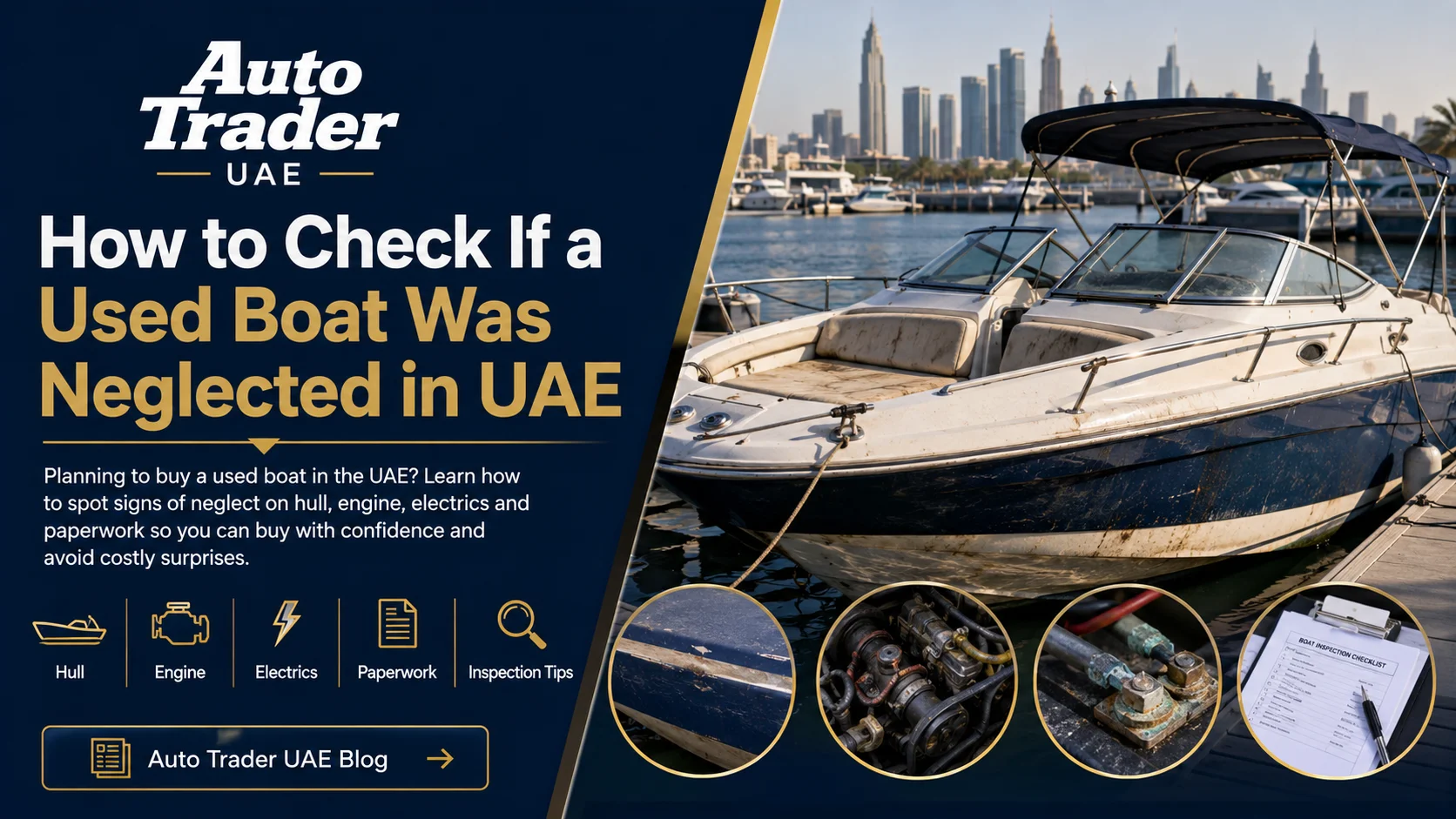
How to Check If a Used Boat Was Neglected in UAE
Buying a used boat in the UAE can save you a lot of money, but only if the boat has been cared for properly. Harsh sun, high temperatures, humidity and salty Gulf waters can quickly damage a neglected vessel. This guide from Auto Trader UAE explains how to check if a used boat was neglected in the UAE, so you can spot problems early and avoid a bad purchase.
Why Neglect Matters So Much in the UAE
The UAE environment is tough on boats:
- Intense sun and UV damage gelcoat, upholstery and plastics.
- Saltwater accelerates corrosion on engines, fittings and trailers.
- Heat and humidity encourage mould, mildew and electrical issues.
A boat that hasn’t been flushed, washed, covered, serviced and stored correctly will show clear signs of neglect. These signs usually mean higher running costs, safety risks and lower resale value.
Step 1: Inspect the Hull and Exterior
The hull will often tell you immediately if the boat has been cared for.
Check the Gelcoat and Paint
- Chalky or faded finish: Heavy oxidation suggests years in the sun without polishing or waxing.
- Uneven colour patches: Might indicate poor-quality repairs or sun damage from inconsistent covering.
- Cracks and crazing: Fine spider cracks around stress points (cleats, windscreen base, corners) can signal hard use or structural issues.
- Blisters or bubbles below the waterline: Possible osmotic blistering – a red flag for long-term moisture issues.
Look for Poor Repairs
- Mismatched paint or gelcoat colours.
- Rough, uneven surfaces that feel different to the original hull.
- Visible filler, putty or amateur fibreglass work.
Multiple cheap repairs can indicate previous damage and a history of cutting corners.
Inspect the Deck and Fittings
- Soft spots underfoot: Walk the deck, cockpit and around hatches; spongy areas may mean waterlogged core or rot.
- Loose or wobbly rails and cleats: Suggest poor maintenance or hidden structural problems.
- Heavy corrosion on stainless fittings: Brown streaks or pitting show neglect and poor washing after use.
Step 2: Check for Sun Damage and Interior Neglect
UAE sun and heat quickly reveal whether an owner has protected the boat.
Upholstery and Seating
- Cracked or brittle vinyl: Long-term UV exposure, often from being left uncovered.
- Faded or discoloured seats: Consistent with years outdoors without covers.
- Mould, mildew or bad odours: Signs of poor ventilation and cleaning; may indicate water leaks.
Cabin, Storage and Flooring
- Check inside lockers, under seats and in the bilge for standing water, mould or rust.
- Look for delaminated floor panels or soft spots in the cabin or cockpit.
- Lift carpets or mats where possible – look for stains and rot.
A clean, dry interior that smells fresh usually points to a careful owner who ventilated and cleaned the boat regularly.
Step 3: Evaluate the Engine and Mechanical Systems
The engine is usually the most expensive part of any used boat. Neglect here can completely kill the value of the deal.
Visual Engine Inspection
For outboards:
- Remove the cover and look for white salt deposits, flaking paint or rust on the block and lower unit.
- Check all hoses and wiring for cracks, dryness and DIY repairs with tape.
- Inspect the propeller for impacts, bent blades or fishing line wrapped around the shaft.
For inboard or sterndrive engines:
- Look for oil leaks, fuel smells or fluid stains in the engine bay.
- Check the exhaust manifolds for rust – saltwater neglect can destroy them.
- Inspect engine mounts for movement or corrosion.
Service History and Fluids
Ask for proof of regular servicing by a recognised marine workshop in the UAE.
- Engine oil: Should be clean and at the correct level, not milky or black and burnt.
- Gear oil (outboard/sterndrive): Milky oil can indicate water ingress.
- Coolant (if closed cooling): Should be clean, not rusty or low.
No service records, combined with visible corrosion and dirty fluids, often means poor maintenance and a strong risk of future failures.
Cold Start Test
If possible, ask to see the boat started from cold:
- Hard starting, long cranking or needing throttle to start can suggest neglect or tuning issues.
- Heavy smoke, knocking or rattling from the engine is a warning sign.
- Watch the temperature – overheating quickly may indicate salt-clogged cooling passages.
Always consider a professional marine survey and mechanical inspection before committing to a purchase, especially on larger or higher-value boats.
Step 4: Check the Electrical System
Marine electrics suffer badly if ignored, particularly in coastal UAE environments like Dubai, Abu Dhabi and Sharjah.
- Battery condition: Swollen cases, heavy corrosion on terminals, loose mounts or old, mismatched batteries suggest poor care.
- Wiring: Look for neat, labelled wiring looms, not messy tangles, twisted joints or exposed copper.
- Switches and panels: Press and test everything – lights, pumps, horn, navigation equipment and gauges.
- Corrosion on fuse blocks or behind the helm is a clear sign the boat has been damp and unmaintained.
A neglected electrical system can create safety risks on the water and is often expensive to put right.
Step 5: Examine Safety Equipment and Compliance
Responsible UAE boat owners keep safety gear up to date. Neglect here can reveal neglect everywhere else.
- Life jackets and throwables: Check condition, dates (if applicable) and availability for the rated capacity.
- Fire extinguishers: Look at expiry dates and pressure gauges.
- Flares and signalling devices: Expired or missing flares indicate poor attention to safety.
- Bilge pumps: Test that automatic and manual bilge pumps work.
If the owner hasn’t maintained basic safety gear, it’s unlikely they’ve stayed on top of mechanical and structural care.
Step 6: Look Underneath – Trailer and Underside
If the boat comes on a trailer or can be hauled out, inspect everything below the waterline.
Hull Underside
- Check for deep scratches, gouges or repairs around the keel and chines.
- Look for barnacle scars or heavy marine growth marks – signs it sat in the water for long periods.
- Inspect trim tabs, rudders, shafts and brackets for corrosion or damage.
Trailer Condition
- Rust on frame and axles suggests poor washing after saltwater launches.
- Check tyres, wheel bearings and winch for age, smooth operation and maintenance.
- Inspect trailer lights and wiring for corrosion and broken connections.
Bad trailer neglect can make even a good boat difficult and unsafe to transport.
Step 7: Paperwork, Ownership and Usage Pattern
The documents can tell you almost as much as the boat itself.
Registration and Ownership
Confirm current registration with the relevant UAE authority and check the seller’s ID matches the owner on record. Be cautious if:
- The seller cannot produce original registration or ownership documents.
- The hull identification number (HIN) or engine serial numbers look altered or covered.
Service and Storage History
Ask for:
- Service invoices and records from marine workshops in the UAE.
- Details of where the boat is usually kept – dry stack, marina berth or on trailer under cover.
- Frequency of use and typical locations (e.g. Dubai Creek, Abu Dhabi channels, Fujairah offshore).
A boat that has been flushed, washed and stored correctly after each trip will nearly always be in better condition than one that sat in the water or in open sun for years.
Red Flags That Suggest a Neglected Boat
Watch out for multiple signs stacking up together. Some of the strongest red flags in the UAE include:
- Heavily faded hull and interior from sun exposure.
- Serious corrosion on engine, trailer and stainless fittings.
- No proof of regular servicing or long gaps in records.
- Soft decks, damp cabin and constant mildew smell.
- Electrical systems that work intermittently or not at all.
- Owner unwilling to allow a sea trial or professional inspection.
If you see several of these together, it’s wise to walk away – there are plenty of better-maintained boats on the UAE market.
How Sellers in the UAE Can Prove Their Boat Was Not Neglected
If you are a seller, a little preparation can help your boat stand out on Auto Trader UAE and justify your asking price.
- Gather records: Service receipts, engine hours, upgrade invoices and registration documents.
- Deep clean: Wash, wax, polish metal, clean bilges and remove odours and clutter.
- Fix minor issues: Replace bulbs, tidy wiring, service the trailer, recharge or replace batteries.
- Update safety gear: Replace expired flares and fire extinguishers; ensure life jackets are presentable.
- Be honest: Disclose previous repairs and how they were done; buyers appreciate transparency.
A maintained, well-presented boat with clear documentation is far more attractive to serious buyers across the UAE.
Buying a Used Boat Safely in the UAE
To protect yourself:
- Use a trusted marketplace such as Auto Trader UAE to browse used boats from private sellers and dealers.
- Always view the boat in daylight and, where possible, remove covers and inspect thoroughly.
- Arrange a sea trial to check handling, performance and real-world behaviour.
- For larger or high-value boats, invest in a marine survey and mechanical inspection.
- Compare several boats and don’t rush – there is always another option.
Next Steps with Auto Trader UAE
Understanding how to check if a used boat was neglected in the UAE helps you avoid expensive mistakes and find a vessel you can enjoy for years. When you’re ready to start shopping:
- Browse a wide selection of used boats for sale in the UAE on Auto Trader UAE.
- Compare condition, price and specs, and contact sellers directly through the platform.
- If you’re upgrading from a car to a weekend toy, you can also explore used cars in the UAE or narrow your search to used cars in Dubai while you’re there.
Use this checklist during your inspections, take your time, and let Auto Trader UAE connect you with the best-maintained used boats and vehicles on the market.
Browse used boats in UAE on Auto Trader UAE to compare live listings, prices, and current market activity more clearly.
Related Links
Buyer Takeaway
When buying a used car in the UAE, focus on vehicle condition, service history, inspection quality, paperwork, and total running costs rather than price alone. Compare options carefully and choose the option that best matches your budget and real needs.
Seller Takeaway
If you are selling a used car in the UAE, present the service history clearly, price the vehicle realistically, and highlight condition, specification, and ownership strengths honestly. A well-prepared listing with accurate details usually attracts more serious buyers.
Conclusion
A careful used car purchase in the UAE starts with research, proper inspection, and clear paperwork before making the final decision.