
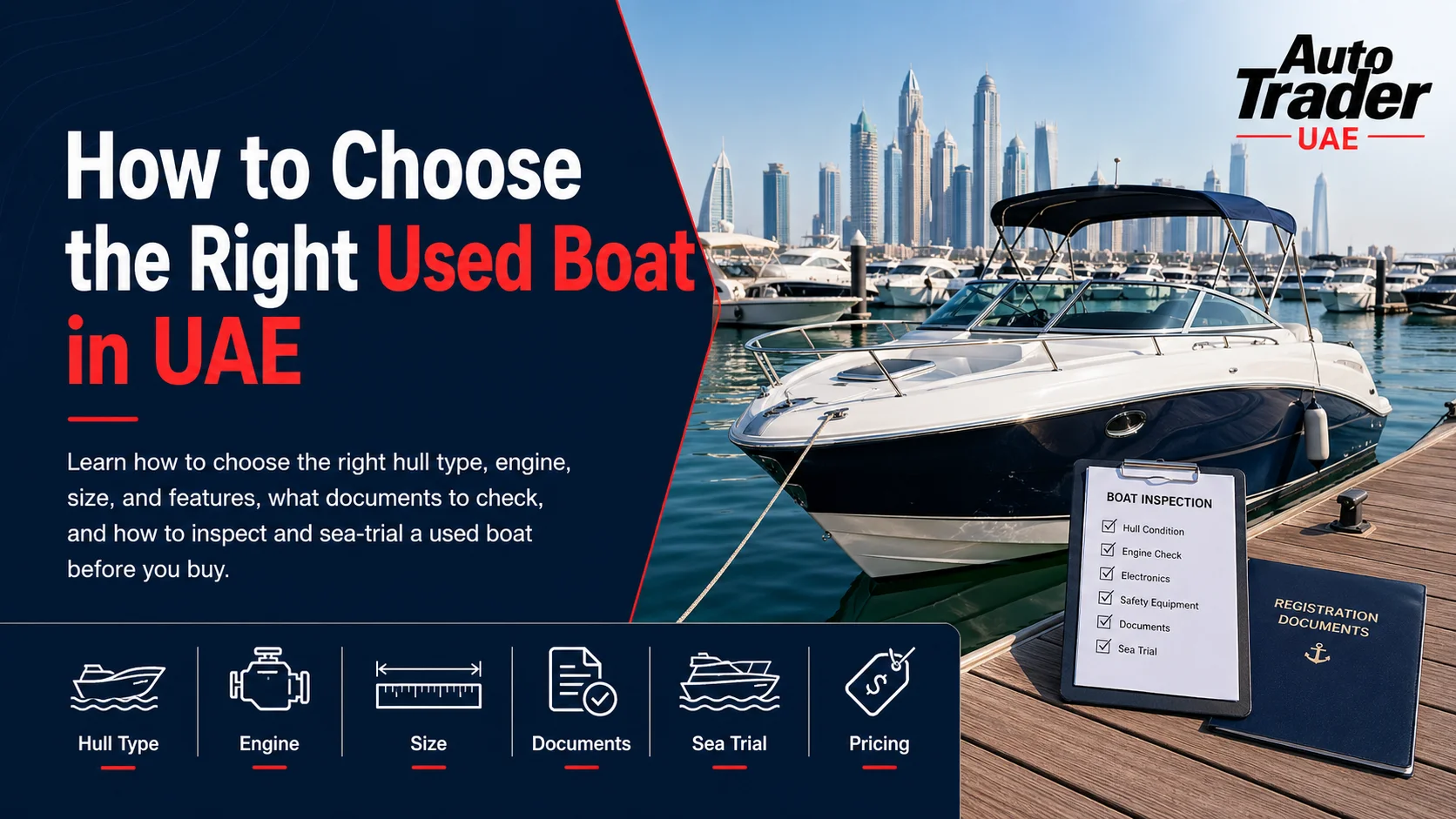
How to Choose the Right Used Boat in UAE
Buying a used boat in the UAE can be one of the best ways to enjoy the water without paying new-boat prices. Whether you’re cruising around Dubai Marina, fishing off Fujairah, or relaxing in Abu Dhabi’s mangroves, choosing the right used boat will determine how much you actually enjoy owning it.
This guide from Auto Trader UAE explains how to choose the right used boat in the UAE, what to inspect, which documents to check, and how to price, negotiate, buy, and sell safely.
1. Start With How You’ll Use the Boat
Before looking at any listing, be clear about how you want to use the boat. This will quickly narrow your search and help you avoid expensive mistakes.
Common boating uses in the UAE
- Coastal cruising & family trips
Ideal around Dubai, Abu Dhabi, Ajman and Ras Al Khaimah marinas.
Best suited boats: bowriders, small cabin cruisers, deck boats, mid-size yachts. - Fishing (inshore & offshore)
Popular off Fujairah, Umm Al Quwain, and Ras Al Khaimah.
Best suited boats: center consoles, walkarounds, small cuddy cabins, Gulf-style fishing boats. - Watersports
Wakeboarding, wakesurfing, and towing inflatables.
Best suited boats: bowriders, wake boats, jet boats, some jet skis and RIBs. - Day trips & entertainment
Hosting guests, parties, and corporate events.
Best suited boats: larger cabin cruisers and yachts with seating, cabins, and shade. - Island hopping & overnighting
Visiting islands and staying on board.
Best suited boats: cabin cruisers with air-conditioning, galley and sleeping berths.
Write down your top 2–3 uses and share them with sellers and brokers. It will keep your search focused and make conversations more productive.
2. Choose the Right Boat Type and Size
Popular used boat types in the UAE
- Center console fishing boats – Open deck, easy to clean, great for both leisure and serious fishing.
- Bowriders & deck boats – Open seating at the bow, ideal for family cruising and watersports.
- Cuddy cabins & small cruisers – Small cabin for storage or overnight stays, still easy to trailer and handle.
- Cabin cruisers & motor yachts – Multiple cabins, galley and saloon; better for entertaining and longer trips.
- Rigid Inflatable Boats (RIBs) – Lightweight, stable, very popular as tenders or for short coastal runs.
- Jet skis & personal watercraft – For pure fun and short rides; often stored on trailers or in racks.
How to choose the right size
Boat size affects price, running costs, and where you can keep it.
- Under 20 ft (6 m) – Easy to trailer, cheaper to run, best for short trips and watersports.
- 20–30 ft (6–9 m) – Very popular in the UAE; good compromise of comfort, sea-keeping and cost.
- 30–45 ft (9–14 m) – More comfort and cabins; higher mooring, fuel, and maintenance costs.
- 45 ft+ – For serious cruising or entertaining; consider crew, berthing, and ownership budget carefully.
Be honest about your experience and comfort level. In UAE waters, wind and chop can pick up quickly, so a slightly larger, more stable boat may be safer – but only if you can handle and afford it.
3. Understand Hull Types and Materials
Hull shape
- Deep-V hull – Better at cutting through waves, more comfortable in choppy Gulf conditions, often uses more fuel.
- Modified-V / semi-V – Balance of comfort and efficiency; common in family and fishing boats.
- Catamaran (twin hull) – Very stable, good for offshore, often more expensive and needs specific berths/trailers.
- Flat or shallow-V hull – More common in smaller boats and tenders; not ideal for rougher offshore days.
Hull materials in the UAE
- Fiberglass (GRP) – Most common; durable, easier to repair, and good for the hot, salty UAE climate.
- Aluminium – Strong, light, and resistant to impact; check for corrosion and proper electrical bonding.
- Traditional wooden / Gulf dhows – Beautiful but high-maintenance; consider only if you’re prepared for ongoing upkeep.
For most buyers in the UAE, a fiberglass hull with a moderate to deep-V shape offers the best mix of comfort, stability, and running costs.
4. Pick the Right Engine Type
The engine is often the most expensive single part of a boat. In UAE heat and salt, engine condition is critical.
Engine configurations
- Outboard engines
Very common in Gulf boats and fishing boats.
Pros: Easier to service/replace, more cockpit space, can tilt out of the water when not in use.
Cons: Exposed to sun and salt; require good flushing and maintenance. - Sterndrive (inboard/outboard)
Engine inside, drive unit outside.
Pros: Clean transom, low profile, good handling.
Cons: More moving parts, can suffer corrosion if not maintained, more complex repairs. - Inboard engines
Engine fully inside hull driving a shaft and propeller.
Pros: Common on larger yachts; often smoother running and quieter.
Cons: More complex to access and service; shaft and rudder alignment needs attention.
Fuel type
- Petrol (gasoline) – Common in smaller and mid-size boats; typically lower purchase cost, higher fuel consumption.
- Diesel – Common on larger cruisers and yachts; better fuel economy and torque, but usually higher upfront cost.
When inspecting a used boat in the UAE, assume the engine will need more attention than the cosmetics. A boat that is slightly older but with a well-maintained engine is usually a safer buy than a newer hull with a neglected engine.
5. Set a Realistic Total Budget
Your budget should cover more than the asking price. In the UAE, many buyers underestimate running and storage costs.
Key costs to include
- Purchase price – Benchmark against similar boats listed on Auto Trader UAE.
- Registration and transfer fees – RTA/DMCA/AD Ports or other local authorities, depending on the emirate.
- Marina berth or dry storage – Monthly or yearly; varies significantly by emirate and marina.
- Insurance – Third-party liability is often required by marinas; consider comprehensive coverage.
- Annual maintenance – Engine service, antifouling (if kept in water), polishing, minor repairs.
- Fuel – Large boats and high-horsepower engines can consume substantial fuel on each trip.
- Safety and gear upgrades – Lifejackets, fire extinguishers, flares, radio, GPS, and trailer (if needed).
Before you view any boat, know your maximum purchase price and your acceptable ongoing monthly cost. This will help you negotiate with confidence.
6. Where to Find the Right Used Boat in UAE
You can find used boats through:
- Online marketplaces – Platforms like Auto Trader UAE list a wide range of used boats, jet skis, trailers and marine-related vehicles. You can filter by price, size, brand, engine type and emirate.
- Dealers and brokers – Offer curated stock and can assist with paperwork and inspections, usually at a higher price.
- Marina notice boards & word of mouth – Some owners prefer to sell quietly; you may find well-maintained, privately used boats.
Use online listings to compare asking prices and specifications, similar to how you would research used cars in the UAE. Shortlist the best candidates, then book inspections and sea trials.
7. How to Inspect a Used Boat in UAE Conditions
Salt, heat, and sun in the Gulf can quickly age a poorly maintained boat. A structured inspection is essential.
Exterior and hull check
- Walk around the hull looking for cracks, blisters, repairs or mismatched paint/gelcoat.
- Check the keel, chines and transom carefully – these areas carry the most load.
- Inspect deck fittings (cleats, rails, windlass) for corrosion and solid mounting.
- Look at any previous accident or repair areas; ask the owner when and how repairs were done.
Interior and fittings
- Check upholstery, seats and carpets for UV damage, cracks and mould.
- Open all lockers and compartments – look for signs of leaks, water staining, or strong odours.
- Test doors, hatches and windows; they should open and seal smoothly.
- On cabin boats, test air-conditioning, lighting, pumps and toilets (if fitted).
Electrical and electronics
- Switch on all electronics: navigation lights, GPS, chartplotter, VHF radio, stereo, bilge pumps.
- Check battery age and condition where possible; multiple batteries are common on larger boats.
- Look for DIY wiring, loose cables or corroded terminals.
Engine and mechanical systems
- Inspect the engine bay for oil leaks, corrosion, damaged hoses or belts.
- Ask for service records – especially for work done on cooling systems, fuel systems and major overhauls.
- On outboards, check the trim/tilt function, propeller condition and lower unit for corrosion.
- On inboards/sterndrives, inspect shafts, propellers and bellows (where accessible).
If you’re not confident inspecting a boat yourself, consider hiring a marine surveyor. A professional survey can identify structural or mechanical issues that might cost much more than the survey fee.
8. Always Do a Sea Trial
Never buy a used boat in the UAE without a proper sea trial – it’s the equivalent of a test drive for a car.
What to check on a sea trial
- Engine starts easily from cold and hot, with no excessive smoke or unusual noises.
- Boat planes smoothly and reaches reasonable speed for its size and engine.
- Steering is responsive and straight; no heavy pull to one side.
- Gears (forward, neutral, reverse) engage smoothly without harsh clunks.
- Vibrations are minimal; excessive vibration can indicate prop or alignment issues.
- Bilge remains mostly dry; no significant water ingress during normal running.
- Electronics function properly under way – particularly navigation and engine instruments.
Use the sea trial to decide if you feel comfortable handling the boat in typical UAE conditions.
9. Paperwork, Registration and Legal Checks
Each emirate has its own rules, but some general documentation points apply across the UAE:
- Proof of ownership – Registration card or certificate in the seller’s name.
- Hull Identification Number (HIN) – Check that it matches the documents.
- Engine serial numbers – Useful for service history and theft checks.
- Service records and invoices – From reputable workshops or agencies where possible.
- Compliance with local regulations – Safety gear, registration, and licensing must meet the rules of Dubai, Abu Dhabi, or the relevant emirate.
- Outstanding finance – Ensure there are no loans or liens attached to the boat that could transfer to you.
If you are unsure about the paperwork, consider using a broker or legal advisor familiar with marine transactions in the UAE.
10. Pricing, Negotiation and Offers
Used boat pricing in the UAE is influenced by brand, age, engine hours, maintenance history, and demand for specific types (for example, fishing boats or family cruisers).
How to judge the asking price
- Compare similar listings on Auto Trader UAE by size, age, brand and condition.
- Consider engine hours like mileage on a car – fewer hours with strong service history is more valuable.
- Factor in any immediate work needed (e.g. new upholstery, electronics, antifouling, engine service).
Negotiation tips
- Arrive informed; bring evidence of similar listings.
- Prioritise big issues for negotiation – engine, hull repairs, major electronics – not small cosmetic items.
- Be realistic; well-maintained boats in high demand areas like Dubai Marina will hold their value.
- Consider making your offer subject to a satisfactory survey and sea trial.
11. Safety First: Essential Gear for UAE Waters
Once you find the right used boat, make sure it’s properly equipped for local conditions.
- Approved lifejackets for all passengers.
- Fire extinguishers in date and accessible.
- First-aid kit and basic tools.
- VHF radio for communication.
- Navigation lights that comply with local regulations.
- Anchors, ropes and fenders suitable for your boat size.
- Sunshade/bimini and adequate drinking water – summer heat can be extreme.
Check local authority requirements in your emirate to ensure your boat meets minimum legal safety standards.
12. Selling Your Used Boat in UAE
If you’re upgrading or leaving the country, selling your used boat efficiently will help you free up capital for your next purchase – whether it’s another boat or a used car on Auto Trader UAE.
Steps to sell smart
- Gather documents: registration, service history, manuals, and receipts.
- Have the boat cleaned, polished and presentable for photos and viewings.
- Fix obvious issues that will worry buyers (e.g. non-working lights, very worn cushions).
- Take clear, high-quality photos from multiple angles, including engine, helm, cabin and hull.
- Write an honest, detailed description highlighting usage, maintenance and upgrades.
- List your boat on Auto Trader UAE to reach serious buyers across all emirates.
13. Conclusion: Buy With Confidence on Auto Trader UAE
Choosing the right used boat in the UAE starts with understanding how you’ll use it, then matching the right type, size, engine and budget. A careful inspection, proper sea trial and correct paperwork will protect you from most expensive surprises.
When you are ready to buy or sell, use Auto Trader UAE to:
- Browse a wide range of used boats and watercraft across the UAE.
- Compare prices, specifications and conditions to find fair value.
- Reach serious buyers and sellers who understand both marine and automotive markets.
Start your search today, shortlist your favourites, book a sea trial, and enjoy the UAE waters in a used boat that truly fits your lifestyle and budget.
If you are exploring used cars in Dubai or elsewhere in the UAE, Auto Trader UAE makes it easier to compare listings, prices, trims, mileage, and seller details in one place.
Related Links
Buyer Takeaway
When buying a used car in the UAE, focus on vehicle condition, service history, inspection quality, paperwork, and total running costs rather than price alone. Compare options carefully and choose the option that best matches your budget and real needs.
Seller Takeaway
If you are selling a used car in the UAE, present the service history clearly, price the vehicle realistically, and highlight condition, specification, and ownership strengths honestly. A well-prepared listing with accurate details usually attracts more serious buyers.