
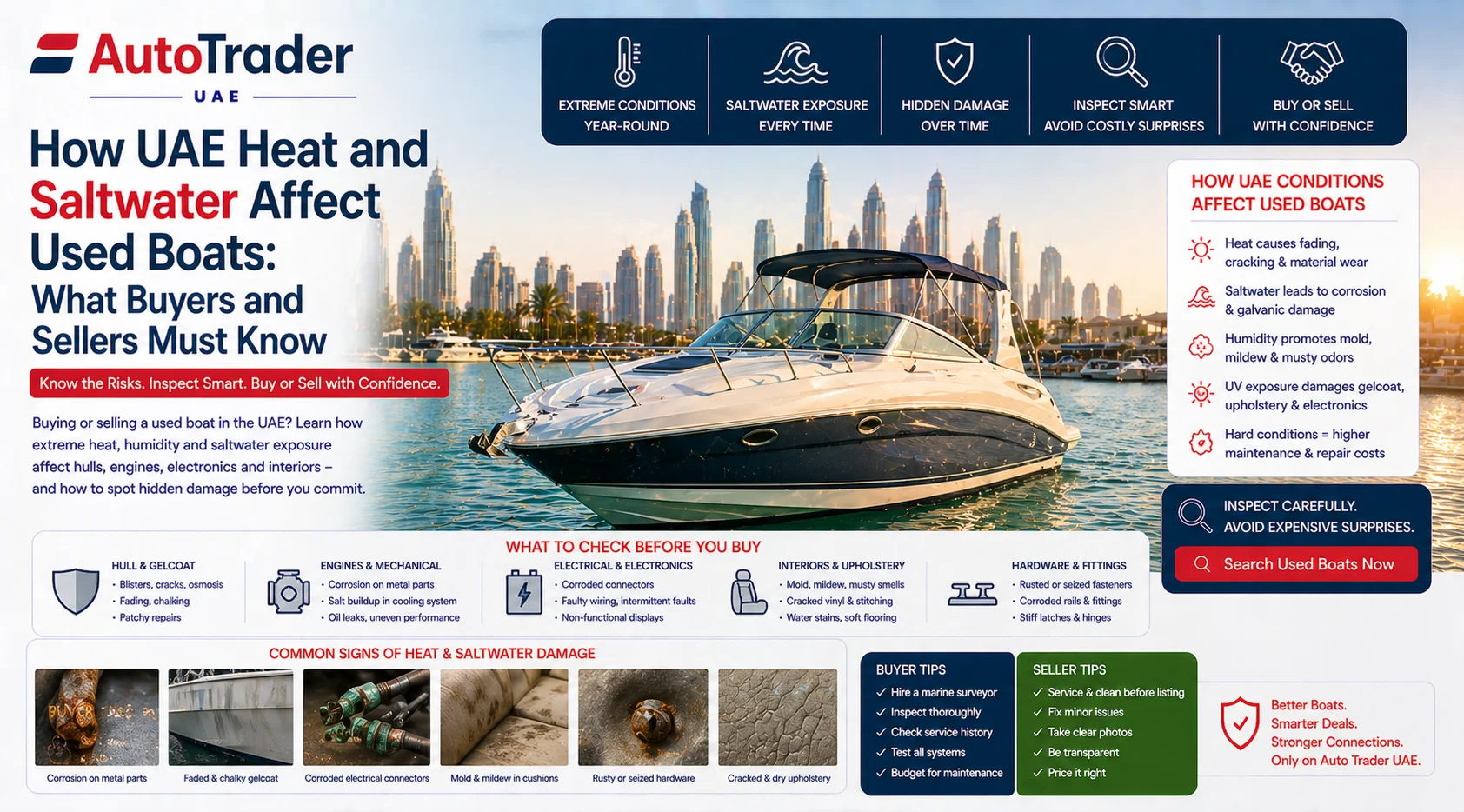
How UAE Heat and Saltwater Affect Used Boats: What Buyers and Sellers Must Know
The UAE is one of the best places in the world to own a boat – but it’s also one of the toughest environments for boats to survive in. Intense heat, strong sun, high humidity and constant saltwater exposure all accelerate wear, especially on used boats.
This guide from Auto Trader UAE explains exactly how UAE heat and saltwater affect used boats, what to look for when you inspect a boat, and how both buyers and sellers can protect their investment.
Why the UAE Climate Is Tough on Boats
Most boats are designed for marine use, but the combination of factors in the Gulf region is extreme:
- Summer heat regularly above 40–45°C
- Strong UV radiation that bakes paint, gelcoat and fabrics
- Warm, salty Gulf waters that increase corrosion and marine growth
- High humidity that encourages mould, mildew and electrical issues
On a used boat, this can mean problems appear earlier and progress faster than in milder climates – which is why careful inspection is essential in the UAE.
How Heat and Sun Affect Used Boats in the UAE
1. Gelcoat, Paint and Exterior Finish
Constant direct sun damages a boat’s exterior over time:
- Fading and chalking of gelcoat and paint
- Hairline cracks around corners, fittings and stress points
- Oxidation that makes surfaces look dull and feel powdery
What buyers should check:
- Colour consistency – big patches of fading may show long-term, uncovered storage.
- Spider cracks around cleats, rails, windscreen mounts and transom – heavy cracking may suggest stress or flex, not just age.
- Professional vs. DIY paint repairs – mismatched paint or overspray can hide past damage.
What sellers should do:
- Polish and wax the hull and topsides before listing.
- Fix obvious cracks and chips, or be ready to explain them honestly.
- Mention any regular detailing or ceramic coating in your listing.
2. Plastics, Rubber and Sealants
In high heat, plastics and rubbers age faster:
- Hardened or cracked rubber on window seals, hatches and rub rails
- Brittle plastic parts on covers, latches and fittings
- Dried or shrinking sealant around windows and deck fittings
What buyers should check:
- Press gently on window and hatch seals – they should still feel flexible.
- Look for water stains below windows or in the cabin – possible signs of leaks.
- Check around screws and bolts on deck for cracked sealant or gaps.
3. Upholstery and Interior Trim
UAE sun and heat are especially harsh on soft surfaces:
- Faded, cracked vinyl seats and sun pads
- Discolored stitching that can weaken and split
- Warped panels or cracked dashboards exposed through the windscreen
What buyers should check:
- Lift seat cushions and inspect the underside for mould, mildew and soft wood.
- Look at the top of backrests and sun pads – the most sun-exposed areas will show the worst wear.
- Check the helm seat and dashboard for cracks where the sun hits most directly.
What sellers should do:
- Clean and treat vinyl with a marine UV protectant.
- Repair or replace badly damaged cushions – it noticeably improves resale value.
- Photograph the boat with covers removed in good light to show condition clearly.
How Saltwater and Humidity Affect Used Boats in the UAE
1. Corrosion of Metals and Fasteners
Saltwater and salty air are the main long-term threat to any boat in the UAE. Corrosion can affect:
- Engine components – especially on inboards and sterndrives
- Trim tabs, propellers and shafts
- Stainless-steel rails and fittings (pitting and rust stains)
- Aluminium parts such as T-tops, towers and outboard brackets
What buyers should check:
- Look closely at anodes (sacrificial zincs) – heavily eaten but regularly replaced anodes suggest the owner understands corrosion and maintenance.
- Check propellers for corrosion, pitting or bent blades.
- Inspect stainless rails and screws for rust streaks around the bases – this can show where water sits and leaks.
- On aluminium structures, look for bubbles under the paint or white powder – signs of corrosion.
2. Engines and Cooling Systems
Engines working in warm, salty water need more care, especially if they are:
- Raw-water cooled (drawing seawater directly through the engine)
- Not flushed properly with fresh water after each use
Common issues include:
- Internal corrosion in cooling passages
- Blocked or restricted water flow from salt build-up
- Overheating in hot ambient conditions
What buyers should ask and inspect:
- Service history – look for regular servicing by a marine workshop, including cooling system checks.
- Evidence of fresh-water flushing after use (for outboards, ask to see the flush port and hoses).
- Engine bay cleanliness – excessive rust, flaking paint or heavy salt deposits are red flags.
- Cold start and running temperature – an engine that runs hot at idle or under load may have restricted cooling.
3. Electrical and Electronics Issues
Salt and humidity attack anything electrical:
- Corroded connectors, causing intermittent faults
- Fogged or failed displays on chartplotters and engine screens
- Batteries that age faster in high heat
What buyers should check:
- Turn on every electronic system: navigation, sound system, pumps, lights and gauges.
- Open electrical panels where possible and look for green or white corrosion on terminals.
- Check the age of the batteries (date stamp) and ask if they are stored with a charger.
4. Hull, Keel and Underwater Hardware
Boats left in the water for long periods in the Gulf can suffer from:
- Marine growth on the hull and running gear
- Osmosis (blistering) on some older fibreglass hulls
- Wear on antifouling paint or protective coatings
What buyers should check:
- Inspect the hull out of water if possible – look for blisters, flaking antifoul and exposed fibreglass.
- Check the keel, strakes and chines for past repairs or impacts.
- Inspect transducers, trim tabs and intake grates for corrosion and growth.
Special Considerations for Different Boat Types
1. Fibreglass (GRP) Boats
Most leisure boats in the UAE are fibreglass. In this climate:
- UV can damage gelcoat if not waxed or covered.
- Poorly repaired impacts can crack again with heat and flex.
- Dark-coloured hulls may show heat distortion more easily.
2. Aluminium Boats
Aluminium is light and strong but vulnerable to:
- Electrolysis and pitting if not protected and earthed correctly.
- Corrosion where dissimilar metals contact (e.g. stainless screws in aluminium).
Tip: Check for bubbling paint, white powder and unusual pitting below the waterline.
3. Rigid-Inflatable Boats (RIBs)
RIBs are popular for watersports and tenders, but in UAE conditions:
- Tubes suffer from UV damage, especially on the upper surfaces.
- Seams can weaken with heat and pressure changes.
- Valves and patches can fail if not maintained.
What buyers should do: Look for fading, cracking, or sticky surfaces on tubes; check all chambers hold pressure overnight; inspect any patches carefully.
Storage, Mooring and Their Impact on Condition
1. Dry Stack or Trailer Storage
Boats stored out of the water usually suffer less from hull growth and underwater corrosion, but still face heat and UV exposure.
Good signs for buyers:
- Evidence of regular covers used on deck and upholstery.
- Hull in clean condition with minimal marine growth.
2. Marina Berths
Boats kept in the water in UAE marinas face:
- More marine growth and potential osmosis if not protected.
- Greater exposure to stray electrical currents that can increase corrosion.
What to ask:
- How often is antifouling renewed?
- Is the shore power system properly protected and regularly checked?
Maintenance Red Flags on Used Boats in the UAE
In a harsh climate, a boat’s maintenance history matters more than its age. When shopping used, be cautious if you see:
- No service records for engines or major systems
- Heavy corrosion in the engine bay or on electrical components
- Severe fading and cracking on all exposed surfaces
- Mouldy or damp cabins with strong odours – a sign of leaks and poor ventilation
- Multiple quick fixes (taped wiring, mismatched fittings, low-quality patches)
How Buyers Can Protect Themselves
1. Always Get a Professional Marine Survey
A qualified marine surveyor familiar with UAE conditions can:
- Check moisture levels in the hull and decks.
- Inspect structural areas, transom and stringers.
- Assess engine and electrical systems under load.
- Highlight any heat- or salt-related issues you might miss.
2. Insist on a Sea Trial
On-water testing in local conditions will show:
- Engine temperature behaviour in real UAE heat.
- How the boat rides and sounds at different speeds.
- Any overheating, vibration, steering or trim problems.
3. Plan for Immediate Post-Purchase Maintenance
Even a well-kept used boat benefits from:
- Fresh engine service and new anodes.
- Electrical system check and battery test.
- Detailing, polishing and new protective coatings.
How Sellers Can Maximise Value in UAE Conditions
If you’re selling a boat in the UAE, the climate can work against you visually – but with some preparation, you can turn that around:
- Service before listing: A fresh service and clean service record build trust.
- Detail the boat: Professional cleaning, polishing and interior treatment make age-related wear look far better.
- Fix the small things: Replace worn anodes, corroded screws and broken covers – buyers notice these as signs of care.
- Be transparent: Be upfront about storage history, marina berths and how often the boat is used.
Protecting Your Boat from UAE Heat and Saltwater After Purchase
Once you own the boat, a few habits dramatically slow down climate damage:
- Rinse with fresh water after every saltwater use – hull, deck, engine (where possible) and trailer.
- Flush engines with fresh water as per manufacturer instructions.
- Use quality covers for consoles, seats and the boat itself when stored.
- Apply UV protectants to vinyl, rubber and plastics regularly.
- Schedule regular inspections of anodes, hull, and underwater hardware.
Buyer Takeaway: What to Prioritise in the UAE
When you search for a used boat in the UAE, prioritise:
- Maintenance history over age – a slightly older, well-cared-for boat can be a much better buy than a newer, neglected one.
- Evidence of protection – storage under cover, regular flushing and waxing.
- Professional inspection – especially for hull integrity and engines.
Use these checks while browsing listings and viewing boats in person so the UAE climate works as part of your evaluation, not as a surprise after you buy.
Seller Takeaway: Turn Harsh Conditions into Selling Points
As a seller, you can stand out on Auto Trader UAE by:
- Highlighting covered storage, regular detailing and flushing routines.
- Uploading clear photos that show clean bilges, tidy wiring and healthy upholstery.
- Sharing recent service invoices and any upgrades made to cope with heat and salt.
Next Steps with Auto Trader UAE
When you’re ready to buy or sell, use Auto Trader UAE to browse a wide range of used boats, compare specifications and shortlist models that suit your budget and usage. A clear understanding of how UAE heat and saltwater affect used boats will help you ask better questions and recognise well-maintained examples.
For more practical ownership tips – from budgeting for marine maintenance to understanding running costs – explore the money and advice articles available in the Auto Trader UAE finance and guides sections, and keep an eye on the latest insights on our Auto Trader UAE blog. With the right knowledge and preparation, you can enjoy boating in the UAE while protecting both your time on the water and your long-term resale value.
Browse used boats in UAE on Auto Trader UAE to compare live listings, prices, and current market activity more clearly.
Related Links
Conclusion
A careful used car purchase in the UAE starts with research, proper inspection, and clear paperwork before making the final decision.