
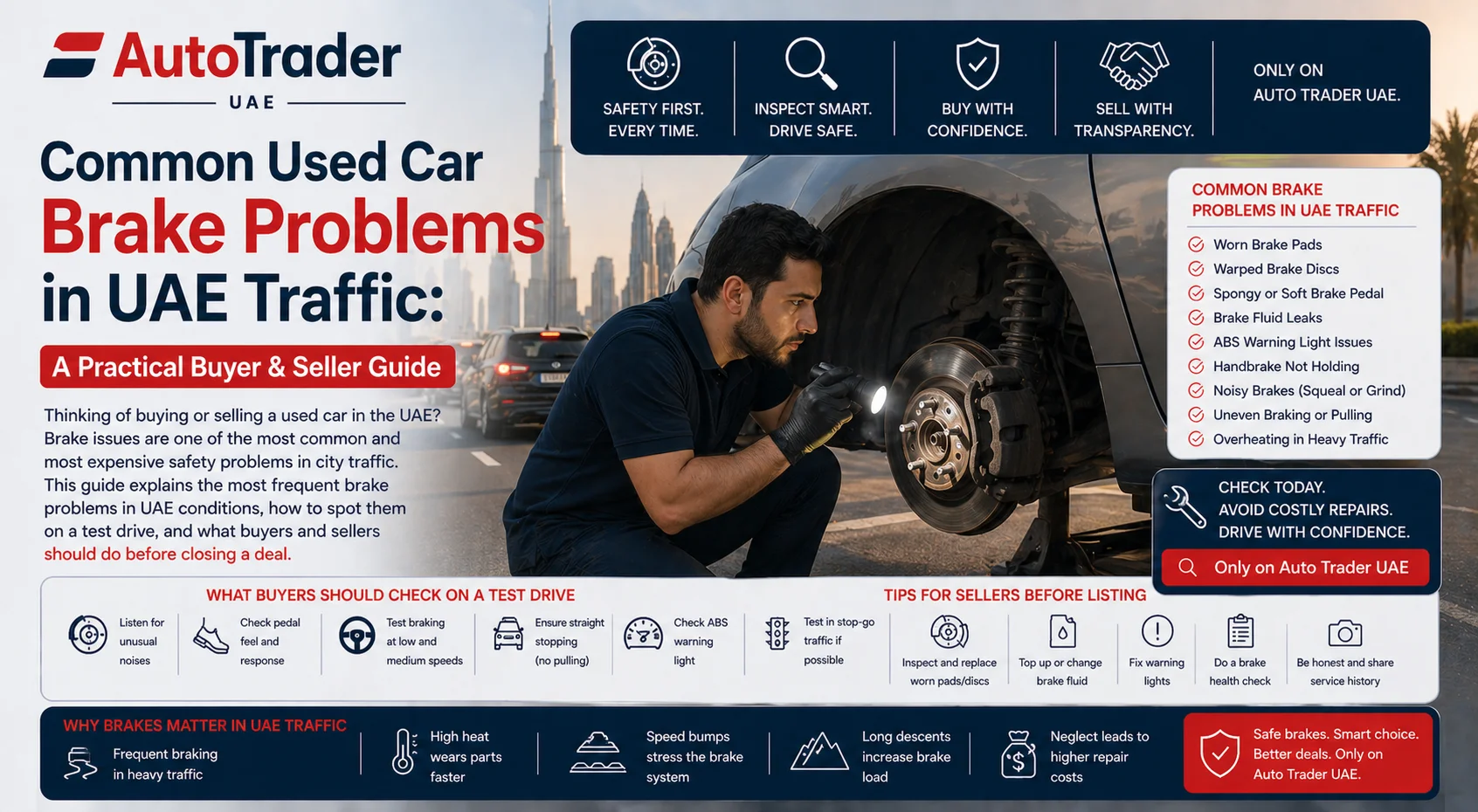
Common Used Car Brake Problems in UAE Traffic: A Practical Buyer & Seller Guide
In busy UAE traffic, your car’s brakes work harder than almost any other part. Stop–start congestion, high speeds on Sheikh Zayed Road and Emirates Road, plus extreme heat and dust all accelerate brake wear. For used car buyers and sellers on Auto Trader UAE, understanding common used car brake problems in UAE traffic is essential for safety, negotiation, and long-term running costs.
Why Brake Problems Are So Common in UAE Used Cars
Several UAE-specific factors make brake issues more frequent, especially on pre-owned cars:
- Heavy stop–go traffic: Daily commutes in Dubai, Abu Dhabi, Sharjah and other emirates mean constant braking, which wears pads and discs faster.
- High ambient temperatures: Heat reduces brake efficiency, can cause fluid to degrade quicker, and accelerates pad and disc wear.
- Dust and sand: Dust acts like sandpaper between pads and discs, and can block ABS sensors and cause noises.
- Speed humps and sudden stops: Common in residential areas and near malls, these lead to frequent hard braking.
- Mixed driving styles: A used car may have been driven gently by one owner and harshly by another, so wear history can be unpredictable.
Because brakes are a primary safety system, ignoring these issues can put you and your passengers at risk – and can also lead to MOT/RTA inspection failures and unexpected repair bills.
Most Common Used Car Brake Problems in UAE Traffic
1. Worn Brake Pads
What it is: Brake pads press against the discs (rotors) to slow the car. Over time they wear down and need replacing.
Why it’s common in UAE: Continuous stop–start driving, especially in city centres and during peak hours, eats through pads quickly.
Warning signs for buyers:
- High-pitched squealing when braking (often a built-in wear indicator).
- Grinding noise – this can mean pads are completely worn and metal is contacting metal.
- Car takes longer distance to stop than expected.
- Brake warning light on the dashboard (on some models).
What it means for your wallet: Pad replacement is usually a mid-range cost repair, but if ignored, it damages discs and becomes much more expensive.
2. Grooved or Warped Brake Discs (Rotors)
What it is: Brake discs can become uneven, grooved, or warped due to heat and wear.
Why it’s common in UAE: Repeated braking from high speeds in hot conditions can overheat discs, especially on heavier SUVs and performance cars.
Warning signs for buyers:
- Vibration or pulsing felt through the brake pedal or steering wheel when braking from speed.
- Grooves or lips visible on the disc edge if you look through the wheel spokes.
- Shuddering when slowing down on highways or from 100–120 km/h.
What it means for your wallet: Discs can sometimes be skimmed, but often need replacement along with pads. Costs vary by car type – larger, premium models are more expensive.
3. Overheated Brakes and Brake Fade
What it is: Brake fade is a temporary loss of braking power when the system overheats.
Why it’s common in UAE: High-speed driving followed by sudden hard braking, plus steep descents in mountain areas (Hatta, Jebel Jais, Jebel Hafeet) in hot weather, can overheat brakes.
Warning signs for buyers:
- Brakes feel less responsive after repeated hard stops.
- You need to press the pedal harder than usual to get the same stopping power.
- Burning smell from the wheels after heavy braking.
What it means for your wallet: Often linked to worn pads, old brake fluid, or under-sized brakes on a heavily loaded vehicle. May require pads, discs and fluid service.
4. Spongy or Soft Brake Pedal (Hydraulic Issues)
What it is: A soft pedal usually indicates air or moisture in the brake lines, deteriorated brake fluid, or sometimes a failing master cylinder.
Why it’s common in UAE: Brake fluid can absorb moisture over time, and high heat accelerates fluid degradation if regular servicing is skipped.
Warning signs for buyers:
- Brake pedal feels spongy or sinks too easily.
- Pedal travels unusually far before the brakes really bite.
- Car needs extra distance to come to a stop.
What it means for your wallet: At minimum, a full brake fluid flush; at worst, replacement of key hydraulic components. This is a serious safety concern that should be fixed immediately.
5. Pulling to One Side Under Braking
What it is: The car veers left or right when you apply the brakes.
Why it’s common in UAE: Heat, dust, and infrequent servicing can cause calipers to stick, pads to wear unevenly, or brake lines to weaken on one side.
Warning signs for buyers:
- Car drifts to one side when braking in a straight line.
- Steering wheel pulls even with light brake pedal pressure.
- Uneven brake dust on front wheels (one very dusty, one relatively clean).
What it means for your wallet: Could mean uneven pad wear, seized caliper, or suspension/alignment problems. Budget for a detailed inspection and potential brake and alignment work.
6. ABS and Brake Warning Lights
What it is: Dashboard lights for ABS or general brakes indicate that the system has detected a fault.
Why it’s common in UAE: Dust and sand can affect ABS wheel sensors; age and heat can damage wiring or sensors; some used cars may have pending electronic issues.
Warning signs for buyers:
- ABS warning light on or flashing.
- Brake system warning light stays on after starting the car.
- Traction control or stability control lights may also appear.
What it means for your wallet: Can be as simple as a sensor replacement or as complex as ABS module failure. Always scan the car with an OBD diagnostic tool before purchase.
7. Noisy Brakes – Squeaks, Squeals and Grinding
What it is: Unusual noises during braking or even at low speeds.
Why it’s common in UAE: Dust and sand between pads and discs, cheaper aftermarket pads, or neglected maintenance.
Warning signs for buyers:
- Squeaking at low speeds can be dust or glazing.
- Constant loud squeal often indicates worn pads needing replacement.
- Grinding is a serious sign that pads may be worn through and damaging discs.
What it means for your wallet: May just need cleaning and fresh pads, but grinding will almost always mean new discs too.
8. Handbrake / Parking Brake Problems
What it is: Parking brake not holding properly, especially on slopes.
Why it’s common in UAE: Many drivers rely only on ‘P’ (park) on the automatic gearbox, so handbrakes are underused and can seize or go out of adjustment. Electronic parking brakes can suffer from dust and infrequent use.
Warning signs for buyers:
- Car rolls slightly when parked on a slope with handbrake engaged.
- Handbrake lever pulls up very high or feels loose.
- Warning message for electric parking brake faults.
What it means for your wallet: Usually cable adjustment or shoe/pad replacement. For electronic systems, repairs can be more expensive.
How to Check Brakes When Buying a Used Car in the UAE
Whether you’re shopping via Auto Trader UAE or inspecting a car from a private seller, build a quick brake check into every viewing.
Before the Test Drive
- Visual inspection through the wheels: Look at pad thickness and the surface of the discs. Deep grooves or heavy rust rings are warning signs.
- Check brake fluid level: It should be between MIN and MAX. Dark, dirty fluid suggests a long time since the last service.
- Dashboard lights: Turn the ignition on and confirm ABS and brake warning lights illuminate then go out. A light that never comes on at startup could have been disabled – that’s a red flag.
During the Test Drive
- Low-speed braking: In a quiet area, apply the brakes gently and listen for squeaks or grinding.
- Emergency-style stop: When safe, perform a firm stop from 50–60 km/h. Does the car stay straight? Any vibration or pulling?
- Pedal feel: Note if the pedal is firm and consistent, or soft and sinking.
- Repeated braking: After a few moderate stops, check for fading performance or burning smells.
- Parking brake test: On a slope, gently check if the handbrake holds (with the driver inside and safe conditions).
After the Test Drive
- Wheel temperature: Carefully feel near (not directly on) each wheel. One wheel much hotter than the others can indicate a sticking caliper.
- Listen while rolling slowly: Any scraping or grinding noises with light brake pressure?
Red Flags: When to Walk Away or Renegotiate
Some brake problems are normal wear and can be used for negotiation. Others suggest poor maintenance or safety risks. As a buyer, consider:
- Minor wear items (pads near the end of life, mild squeaks) – often acceptable if the price reflects upcoming maintenance.
- Severe issues (grinding, heavy pulling, ABS faults, very soft pedal) – treat these as serious problems. Either insist on repairs before purchase or negotiate a significant discount and get a written inspection from a trusted workshop.
- Multiple warning lights and electrical faults – can become expensive quickly; check diagnostic codes before committing.
What Sellers in the UAE Should Do Before Listing a Car
If you’re planning to list your car on Auto Trader UAE, healthy brakes can help you achieve a better price and a faster sale.
- Service history: Gather invoices or service stamps showing past brake pad, disc and fluid changes.
- Pre-sale inspection: Have a workshop check pad thickness, disc condition and brake fluid. Fix obvious problems like grinding or warning lights.
- Honest description: If pads are 60–70% worn but still safe, mention this in the ad so buyers know what to expect.
- Clean presentation: Wash wheels; excessive brake dust can make buyers worry about neglect.
Transparency builds trust. A buyer who feels confident about the car’s safety is more likely to pay your asking price.
Estimated Brake Lifespan in UAE Conditions
Actual life depends on driving style, car weight, and usage, but as a rough guide for UAE traffic:
- Front brake pads: often 30,000–50,000 km in busy city driving, longer on mainly highway use.
- Rear brake pads: may last 50,000–80,000 km or more.
- Brake discs: often last through 2–3 sets of pads if not overheated or damaged.
- Brake fluid: typically recommended every 2 years, or as per manufacturer schedule.
When reviewing a used car’s odometer and service records, compare these rough ranges with documented brake work to judge how soon you’ll face costs.
Safe Ownership: Brake Care Tips for UAE Drivers
Once you’ve bought your used car, a few habits can keep your brakes safer and cheaper to maintain:
- Avoid aggressive driving: Gentle, anticipatory braking extends pad and disc life.
- Rinse wheels regularly: Occasional washing helps remove dust and sand from brakes and calipers.
- Follow service intervals: Don’t skip brake inspections during routine servicing.
- Use quality parts: Opt for reputable brands or original parts, especially for heavier SUVs and family cars.
Buyer Takeaway: Using Brake Condition in Negotiation
When viewing a used car in the UAE, always factor brake condition into your offer:
- Use visible wear and any noises as leverage to reduce the price or request repairs.
- Ask for recent invoices if the seller claims pads and discs were “just changed”.
- Consider the total cost of bringing the brakes up to standard, especially if you have a family or drive long distances between emirates.
Seller Takeaway: Brakes as a Selling Point
If you invest in fixing worn brakes before listing, highlight it in your Auto Trader UAE advert:
- “New front pads and discs fitted in 2024 with invoice.”
- “Recent full service including brake fluid change.”
These details reassure buyers that your car is safe and well maintained, and can help justify your asking price.
Next Steps with Auto Trader UAE
Understanding common used car brake problems in UAE traffic helps you buy and sell more confidently. Before you commit to any car, plan for a proper inspection and include brake condition in your budget.
When you’re ready to move forward, browse the latest used car listings on Auto Trader UAE, compare prices, and plan your total cost of ownership. For more tips on budgeting for maintenance, insurance, and running costs, explore our finance and money advice in the Auto Trader UAE money section. You can also visit the Auto Trader UAE blog for more practical buying guides tailored to UAE drivers.
Browse used cars in UAE on Auto Trader UAE to compare live listings, prices, and current market activity more clearly.
Related Links
Conclusion
A careful used car purchase in the UAE starts with research, proper inspection, and clear paperwork before making the final decision.