
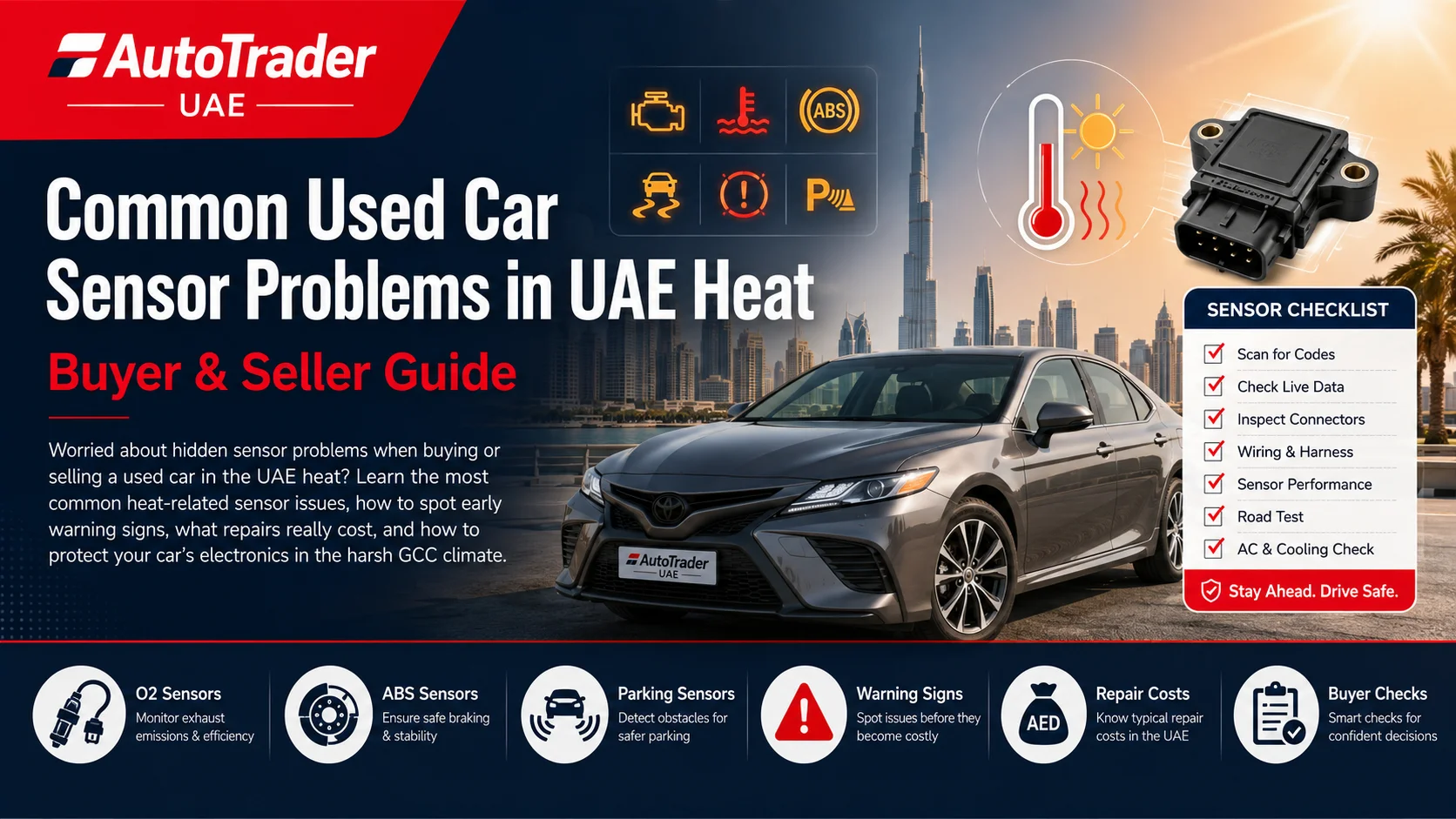
Common Used Car Sensor Problems in UAE Heat: Buyer & Seller Guide
The UAE’s extreme heat is tough on every part of a car – and modern vehicles rely heavily on sensors. When these sensors start failing, you can get poor performance, high fuel bills, warning lights, and even sudden breakdowns.
This guide from Auto Trader UAE explains the most common used car sensor problems in UAE heat, what warning signs to watch for, how to test a car before buying, and how both buyers and sellers can protect themselves.
Why UAE Heat Is Hard on Car Sensors
Sensors are small electronic devices fitted around the engine, exhaust, transmission and cabin. In the UAE, they face:
- Extreme temperatures – engine bay temperatures can be far higher than the outside 45–50°C heat
- Thermal cycling – hot days, cooler nights, repeated heating and cooling cause solder joints and plastics to fatigue
- Sand and dust – abrasive particles can get into connectors and seals
- Humidity and coastal air – salt and moisture encourage corrosion in sensor plugs and wiring
Over time, this can cause sensors to give inaccurate readings or fail completely – especially on older or poorly maintained used cars.
Most Common Heat‑Related Sensor Issues in UAE
1. Engine Coolant Temperature Sensor (ECT)
Why it fails in UAE heat: Constant high temperature, coolant quality issues, and aging plastic housings can damage the sensor tip and wiring.
Typical symptoms:
- Hard starting when the engine is hot
- Radiator fans running all the time, or not coming on when they should
- Poor fuel economy and rough idle
- Temperature gauge behaving strangely (sudden jumps or staying cold)
- Check Engine Light (CEL) with temperature-related codes
Why buyers should care: A faulty ECT can hide overheating problems and lead to head gasket damage if ignored – a very expensive repair on a used car.
2. Mass Air Flow (MAF) Sensor
Why it fails in UAE heat: Sand, dust and oily vapours contaminate the sensor element. High intake air temperatures also stress the electronics.
Typical symptoms:
- Sluggish acceleration – especially with the A/C on
- Engine hesitation or jerking on light throttle
- Black smoke or fuel smell from the exhaust
- Poor fuel economy
- Check Engine Light with air/fuel mixture codes
Why buyers should care: A dirty or failing MAF is common on UAE cars, but can often be cleaned or replaced at reasonable cost. However, long-term running with wrong air readings may affect the catalytic converter.
3. Oxygen (O2) / Lambda Sensors
Why they fail in heat: High exhaust temperatures in heavy traffic, stop‑start driving with A/C on, and poor fuel quality can shorten sensor life.
Typical symptoms:
- Noticeably higher fuel consumption
- Uneven idle and occasional stalling
- Emission test failures
- Check Engine Light with mixture or catalyst efficiency codes
Why buyers should care: O2 sensors aren’t the most expensive parts, but ignored faults can damage the catalytic converter – significantly increasing repair cost on a used car.
4. Knock Sensor
Why it fails in UAE heat: High combustion temperatures, engine knocking due to wrong fuel octane or overheating, and aging rubber mounts around the sensor.
Typical symptoms:
- Reduced power – the engine computer retards timing as a safety measure
- Metallic pinging or knocking noise under acceleration (danger sign)
- Poor acceleration when overtaking or on highway on‑ramps
- Check Engine Light with knock sensor‑related codes
Why buyers should care: An inactive knock sensor may allow real engine knock to go undetected, leading to piston or valve damage – serious for any used car purchase.
5. Crankshaft and Camshaft Position Sensors
Why they fail in heat: High engine bay heat and age can cause internal sensor breakdown or wiring insulation cracks.
Typical symptoms:
- Intermittent stalling when hot, then restarting after cooling
- Extended cranking before the engine starts
- Sudden engine cut‑out at low speeds or in traffic
- Check Engine Light with crank or cam sensor codes
Why buyers should care: These sensors are common failure points in older cars. Intermittent failures can be hard to diagnose and may cause safety concerns if the engine cuts out in traffic.
6. Throttle Position Sensor (TPS) and Electronic Throttle Body
Why they fail in UAE heat: Heat and dust affect the moving parts and electronics in the throttle body. On some models, plastic gears and tracks inside wear faster in hot climates.
Typical symptoms:
- Unstable idle speed or engine revs “hunting” up and down
- Poor response when you press the accelerator
- Sudden limp mode – car won’t rev past a certain point
- Multiple throttle or pedal‑related fault codes
Why buyers should care: Some throttle bodies can be cleaned and reset; others require replacement which can be costly, especially on certain European or premium brands.
7. ABS Wheel Speed Sensors
Why they fail: Heat, sand, and minor impacts from kerbs or off‑road use damage the sensor or its wiring. Corrosion can build up in the sensor housing on coastal cars.
Typical symptoms:
- ABS and/or traction control warning lights on the dashboard
- ABS engaging too early or inconsistently during braking
- Speedometer issues (in some vehicles)
Why buyers should care: A simple sensor issue can disable ABS and stability systems – a safety concern. On some models, sensors are integrated into wheel bearings, increasing cost.
8. Air‑Conditioning / Cabin Temperature Sensors
Why they fail in UAE heat: Constant use of A/C, hot interiors when parked in the sun, and dust entering through vents.
Typical symptoms:
- A/C not cooling effectively or cutting in and out
- Big temperature difference between driver and passenger sides
- Automatic climate control not matching the set temperature
Why buyers should care: A/C performance is critical in the UAE. Sensor issues might be cheap to fix, but they can also mask deeper A/C system problems if not properly diagnosed.
9. Parking Sensors and Reversing Radar
Why they fail in heat: Sun exposure, minor parking bumps, pressure washing and moisture intrusion behind the bumper.
Typical symptoms:
- Continuous tone when engaging reverse
- Some sensors always show “obstacle” even when nothing is there
- Intermittent operation on hot days
Why buyers should care: Parking sensors are convenient and improve resale value. Multiple failed sensors can add up in cost, especially on premium models.
How to Spot Sensor Problems When Viewing a Used Car
When you inspect a used car in the UAE, you can’t see every sensor directly, but you can use a simple checklist:
1. Cold Start and Warm‑Up Test
- Start the car from cold if possible – note any long cranking, rough idle, or smoke.
- Let it reach normal operating temperature – watch the temperature gauge for sudden movements.
- Listen for cooling fans coming on and off normally.
2. Dashboard Warning Lights
- Turn the ignition on: all warning lights should briefly appear, then go out once the engine starts.
- Walk away if the Check Engine, ABS, airbag, or traction control lights remain on or have been obviously covered.
3. Short Road Test in Real Conditions
- Drive with A/C on, in city conditions, and if possible a short highway run.
- Check for flat spots in acceleration, delayed throttle response, or stalling.
- Do a few strong but safe braking tests to see if ABS feels normal and no new warnings appear.
4. Scan for Fault Codes
If you’re serious about a car, consider:
- Taking it to a trusted independent workshop for a pre‑purchase inspection
- Or using a simple OBD scanner (in many modern cars) to check for stored and pending codes
Many hidden sensor issues show up here even if the dashboard is clear.
Cost Impact: Minor Fix or Deal‑Breaker?
Not every sensor fault should kill a deal. What matters is which sensor, how many, and whether there are deeper issues behind the codes.
Generally lower‑impact issues
- Dirty MAF sensor that can be cleaned
- Single O2 sensor needing replacement on a high‑mileage car
- One faulty parking sensor
- Cabin temperature or sunload sensors affecting auto climate, but A/C is otherwise healthy
Potential deal‑breakers or strong negotiation points
- Repeated overheating or temperature sensor issues with signs of coolant loss
- Multiple misfire, knock or timing‑related codes pointing to possible internal engine problems
- Intermittent stalling or total engine cut‑out related to crank/cam sensors
- ABS and stability system faults combined with accident history
Use serious sensor problems as a reason to walk away, or to negotiate a price that realistically covers professional diagnostics and repairs.
Tips for Buyers in the UAE
- Favour full service history: Cars with regular dealer or specialist servicing often have sensors cleaned or replaced before they fail.
- Check the A/C thoroughly: Poor cooling can indicate climate sensors, fans, or deeper A/C issues – critical in UAE conditions.
- Ask about previous repairs: A car with a recent sensor replacement and no recurring codes can be a safer bet than one with ignored faults.
- Compare several options: Use Auto Trader UAE to compare similar used cars in the UAE so you can judge if a car with sensor warnings is really worth the risk.
Tips for Sellers in the UAE
- Fix obvious sensor faults before listing: Clearing a simple MAF or O2 sensor issue can make your car drive better on test and help justify your asking price.
- Keep receipts: Show recent invoices for sensor or A/C work to build buyer confidence, especially for older vehicles.
- Be honest about warning lights: Buyers today are informed; transparency helps close deals faster.
- Detail the engine bay: A clean, tidy engine bay (without heavy dressing hiding leaks) suggests better care and helps reassure buyers about electronics and wiring.
Preventing Sensor Problems in UAE Climate
Whether you already own a car or just bought one, a few habits can extend sensor life in the GCC heat:
- Stick to quality fluids and filters: Good oil, genuine or OEM‑quality air filters, and correct coolant reduce stress on sensors.
- Service on time – not late: In UAE conditions, late servicing accelerates deposits and heat‑related wear.
- Protect the car from the sun: Whenever possible, park in shade or use a sunshade to reduce cabin electronics stress.
- Avoid aggressive pressure washing: High‑pressure water in the engine bay can force moisture into sensors and connectors.
Next Steps with Auto Trader UAE
Understanding common used car sensor problems in UAE heat helps you choose better cars, avoid expensive surprises, and negotiate confidently.
When you’re ready to start shortlisting:
- Browse a wide range of used cars for sale in the UAE with different budgets and brands.
- If you’re based in the city, explore used cars in Dubai to compare options close to you.
- Use detailed listings, photos, and descriptions on Auto Trader UAE to spot cars that have been clearly maintained and cared for in the local climate.
With the right checks and a clear idea of how heat affects sensors, you can buy or sell more confidently – and enjoy a smoother ownership experience in the UAE.
Browse used cars in UAE on Auto Trader UAE to compare live listings, prices, and current market activity more clearly.
Related Links
Buyer Takeaway
When buying a used car in the UAE, focus on vehicle condition, service history, inspection quality, paperwork, and total running costs rather than price alone. Compare options carefully and choose the option that best matches your budget and real needs.
Seller Takeaway
If you are selling a used car in the UAE, present the service history clearly, price the vehicle realistically, and highlight condition, specification, and ownership strengths honestly. A well-prepared listing with accurate details usually attracts more serious buyers.
Conclusion
A careful used car purchase in the UAE starts with research, proper inspection, and clear paperwork before making the final decision.