
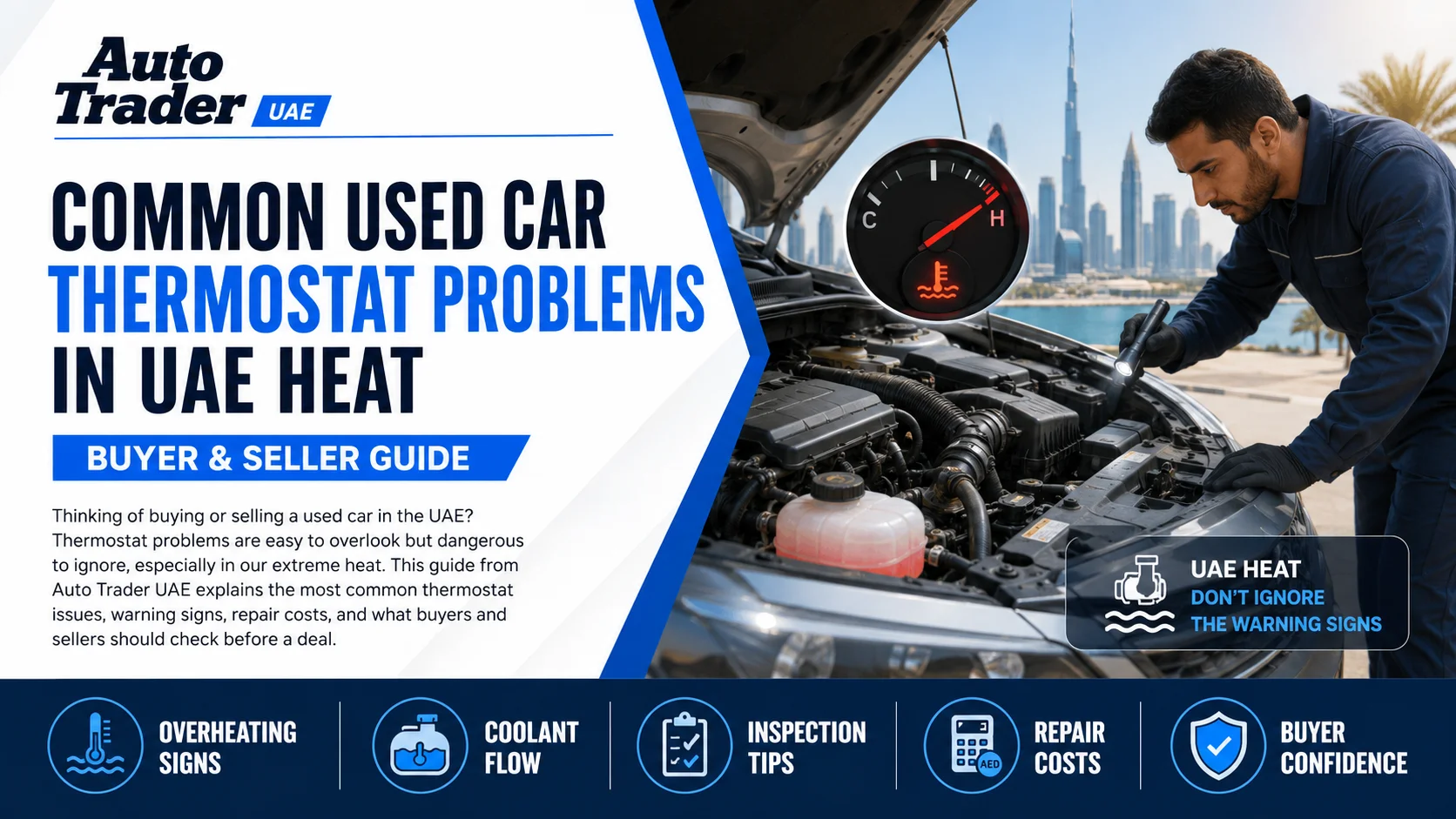
Common Used Car Thermostat Problems in UAE Heat: Buyer & Seller Guide
In the UAE, summer temperatures routinely punish engines and cooling systems. One small part works harder than almost anything else: the thermostat. When it sticks, leaks, or fails, you quickly move from a smooth commute to an overheated engine and a big repair bill.
This guide explains the most Common Used Car Thermostat Problems in UAE Heat, how to spot them on a test drive, and what buyers and sellers in the UAE should do before closing a deal.
What Does a Thermostat Do – And Why It Matters in UAE Heat
The engine thermostat is a temperature-controlled valve that regulates coolant flow between the engine and the radiator. In simple terms, it:
- Helps the engine warm up quickly from cold
- Keeps the engine in its ideal temperature range
- Prevents overheating by sending hot coolant to the radiator
In the UAE, where ambient temperatures are high even at night, thermostats endure:
- Constant high-load driving (AC on full, traffic, highway speeds)
- Very hot coolant temperatures for long periods
- Thermal fatigue from heat cycles and stop‑start traffic
That makes thermostat wear and failure more common on used cars in the UAE than in cooler markets. Ignoring early signs can lead to warped cylinder heads, blown head gaskets, and even complete engine failure.
Most Common Thermostat Problems in UAE Heat
1. Thermostat Stuck Closed
What happens: The valve fails in the closed position and blocks coolant from flowing to the radiator.
Typical symptoms:
- Temperature gauge climbs rapidly after a short drive
- Engine bay feels extremely hot; radiator fan on almost constantly
- Coolant boiling in the reservoir, sometimes with a sweet smell
- Warning lights: engine temperature or “check engine”
Why it’s serious in the UAE: With 40–50°C ambient temperatures, an engine can overheat in minutes if the thermostat is stuck closed, especially in traffic or when climbing bridges and ramps.
2. Thermostat Stuck Open
What happens: The valve fails in the open position, so coolant flows constantly through the radiator.
Typical symptoms:
- Engine takes very long to reach normal temperature
- Temperature gauge sits unusually low, especially on highway
- Fuel consumption increases slightly over time
- AC performance at idle may feel weaker because the engine is not in its ideal temperature range
Why it matters in the UAE: In our climate, many drivers assume “running cool” is always good. But a stuck‑open thermostat can increase fuel use, emissions, and long‑term engine wear. It’s easy for buyers to miss on a short test drive.
3. Thermostat Housing Leaks
What happens: The plastic or metal housing that holds the thermostat develops cracks or gasket leaks.
Typical symptoms:
- Coolant level in the reservoir keeps dropping
- Visible coolant stains or crust around the thermostat housing
- Occasional overheating in traffic but not always
- Sweet smell near the front of the engine after a drive
UAE‑specific cause: High heat and age can make plastic housings brittle. Many used cars in the UAE run with strong AC and frequent hot‑cold cycles, which accelerates cracking.
4. Intermittent or Slow Thermostat Operation
What happens: The thermostat still moves, but slowly or inconsistently. It may open late or not fully.
Typical symptoms:
- Temperature gauge fluctuates up and down more than normal
- Overheating only in certain conditions (e.g., going uphill, heavy load, or with AC on)
- Some days the car runs fine; other days it gets hot quickly
Why this is tricky for buyers: A short city test drive may show no issues, but the car could overheat on the first Sharjah–Dubai commute or Abu Dhabi weekend trip.
5. Using the Wrong Thermostat or Coolant
What happens: After an earlier repair, a previous owner or workshop installed a cheap or incorrect thermostat, or mixed incompatible coolants.
Typical symptoms:
- Cooling system problems soon after a recent repair
- Rusty, dirty, or oily coolant in the reservoir
- Temperature gauge not staying steady in normal driving
UAE angle: In budget repairs, some garages use universal or low‑quality thermostats that are not ideal for high‑heat markets. Over time, that can mean more overheating issues and extra expenses for the next owner.
Warning Signs of Thermostat Trouble in a Used Car
Whether you are buying or selling on Auto Trader UAE, watch for these practical signs:
On Startup
- Temperature gauge jumps up unusually quickly within a few minutes
- Gauge does not move from cold even after 10–15 minutes
On a Short Test Drive
- Temperature gauge goes above the middle and stays there
- Gauge constantly moves up and down instead of staying steady
- AC suddenly blows warmer air when temperature rises
- Engine fan runs at full speed very often
Visual Checks Under the Bonnet
- Low coolant level, or coolant that looks rusty, milky, or very dark
- Wet or stained areas around the thermostat housing or nearby hoses
- Obvious coolant leaks on the ground after parking
How UAE Heat Makes Thermostat Problems Worse
- Higher baseline temperatures: Even early‑morning drives start with a hot engine bay.
- Heavy AC use: The engine works harder constantly, adding more heat into the cooling system.
- Stop‑start traffic: Less airflow through the radiator, more reliance on fans and thermostat responsiveness.
- Fast highway runs: High speeds and hot ambient air can expose marginal thermostats that seem fine in the city.
For used cars that have spent years in the region, the thermostat and cooling system should always be treated as a priority inspection area.
Buyer Checklist: How to Spot Thermostat Issues Before You Buy
When viewing a used car in the UAE, use this simple checklist:
1. Start the Car Cold
- Ask the seller not to warm up the car before you arrive.
- Watch how fast the temperature gauge moves – it should rise gradually and settle around the middle.
2. Drive in Mixed Conditions
- Include a short highway stretch and some stop‑start traffic if possible.
- Turn the AC on and off and watch the temperature gauge – it should remain stable.
3. Check Under the Bonnet After Driving
- Look for leaks around the thermostat housing, radiator, and hoses.
- Check coolant level and condition in the reservoir.
- Listen for boiling or gurgling noises after shutdown.
4. Scan for History and Codes
- Review service invoices for cooling system work: thermostat, water pump, radiator, coolant flush.
- If possible, have a workshop scan for stored fault codes related to coolant temperature.
For added peace of mind, consider a pre‑purchase inspection, especially for higher‑value vehicles like used SUVs in the UAE that see more heavy‑load use.
Seller Guide: Preparing Your Car’s Cooling System Before Listing
If you’re planning to list your car on Auto Trader UAE, addressing potential thermostat and cooling issues upfront can help you sell faster and with fewer negotiations.
1. Fix Obvious Cooling Problems
- Repair visible leaks and replace cracked thermostat housings or hoses.
- If the car has a history of overheating, have a trusted workshop inspect the thermostat, radiator, water pump, and fans.
2. Refresh Coolant if Needed
- Use the manufacturer‑recommended coolant type and concentration.
- A fresh coolant flush with proof of work is a strong selling point in the UAE climate.
3. Disclose Honest Service History
- Keep invoices for any thermostat or cooling system repairs.
- Be transparent about previous overheating incidents and how they were fixed.
4. Price Realistically if Issues Exist
- If the car has minor cooling quirks you don’t want to repair, expect buyers to factor this into the price.
- Consider a slightly lower asking price rather than waiting longer for a sale.
Typical Thermostat Replacement Costs in the UAE
Exact prices vary by brand, model, and workshop, but generally:
- Standard cars: Thermostat replacement is usually a relatively low‑to‑moderate cost job.
- Luxury and performance models: Labour may be higher if the thermostat is harder to access or integrated into a larger housing.
- Thermostat housing units: On some modern engines, the thermostat is part of a complete housing with sensors and multiple hoses, which is more expensive than just the valve.
Compared with the risk of major engine damage from overheating, proactively replacing a worn thermostat is usually good value – especially for vehicles that have already done several summers in the UAE.
Best Practices to Protect Your Engine in UAE Heat
- Stick to regular coolant changes as per the owner’s manual.
- Use the correct coolant type and never top up with plain tap water unless it’s an emergency.
- Watch the temperature gauge, especially on long highway trips or when climbing steep roads.
- Stop safely and switch off if the engine overheats – do not keep driving “a bit further”.
- Have any overheating or temperature fluctuation checked quickly before it causes wider damage.
Choosing a Used Car That Can Handle UAE Temperatures
When browsing used cars in the UAE, prioritise:
- Clear cooling system history: Evidence of coolant changes and any thermostat or radiator work.
- Stable temperature behaviour: During your test drive, the gauge should reach normal and stay there.
- Reputable maintenance: Cars serviced by recognised workshops tend to have better‑documented cooling system care.
If you need more space or plan long trips, explore used SUVs in Dubai and across the UAE that are known for strong cooling systems and desert‑friendly design.
Key Takeaways for UAE Buyers
- Thermostats are small parts with big consequences in our climate.
- Many thermostat problems show up first as subtle gauge changes – don’t ignore them.
- Always test a used car in real‑world UAE conditions: AC on, some traffic, some highway.
- Consider a pre‑purchase inspection focusing on the entire cooling system.
Key Takeaways for UAE Sellers
- Fixing obvious cooling issues can make your listing more attractive and defend your asking price.
- Clean, correct coolant and documented service history build buyer confidence.
- Be open about any past overheating and provide invoices for repairs.
Next Steps with Auto Trader UAE
Understanding Common Used Car Thermostat Problems in UAE Heat puts you in a stronger position whether you’re buying or selling.
- Browse used cars for sale in the UAE and shortlist models with strong reliability and good service history.
- If you’re selling, prepare your car’s cooling system, gather your invoices, and create a detailed listing on Auto Trader UAE.
- For Dubai buyers and sellers, explore current used cars in Dubai to compare prices and specifications.
With the right checks and a bit of cooling‑system awareness, you can confidently buy or sell a used car that will cope with UAE heat for many summers to come.
Browse used cars in UAE on Auto Trader UAE to compare live listings, prices, and current market activity more clearly.
Related Links
Buyer Takeaway
When buying a used car in the UAE, focus on vehicle condition, service history, inspection quality, paperwork, and total running costs rather than price alone. Compare options carefully and choose the option that best matches your budget and real needs.
Seller Takeaway
If you are selling a used car in the UAE, present the service history clearly, price the vehicle realistically, and highlight condition, specification, and ownership strengths honestly. A well-prepared listing with accurate details usually attracts more serious buyers.
Conclusion
A careful used car purchase in the UAE starts with research, proper inspection, and clear paperwork before making the final decision.