
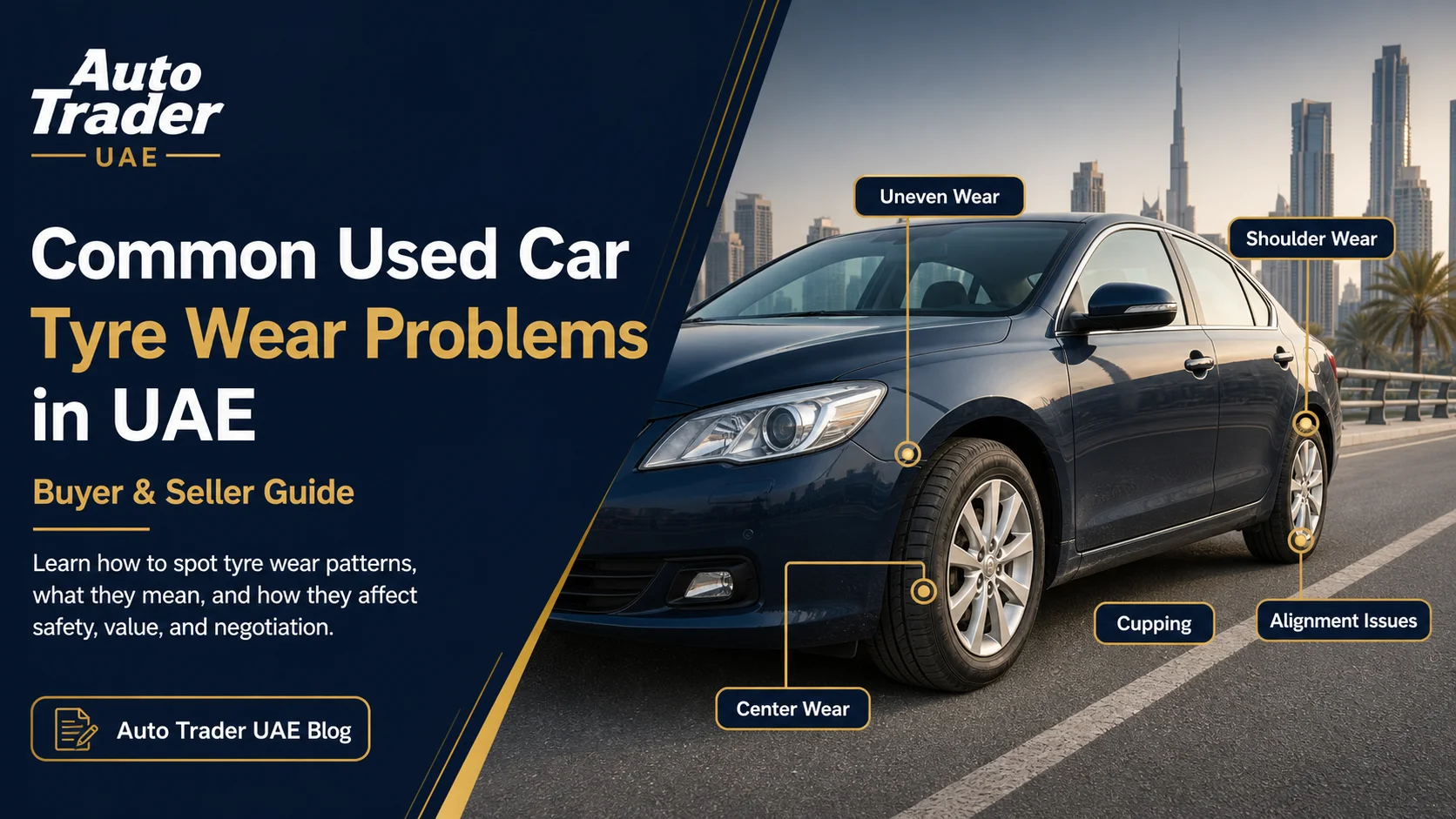
Common Used Car Tyre Wear Problems in UAE: Buyer & Seller Guide
Tyres are one of the fastest-wearing parts of any car in the UAE. Extreme heat, high-speed highway driving, and frequent curb parking all combine to punish tyre rubber. Whether you’re buying or selling a used car on Auto Trader UAE, understanding tyre wear can save you real money and help you avoid safety risks.
Why Tyre Wear Matters So Much in the UAE
In the UAE, tyres face tougher conditions than in many other markets:
- High temperatures that dry and crack rubber.
- Long, high-speed runs on Sheikh Zayed Road and other highways.
- Speed bumps, kerbs, and sand that damage sidewalls and tread.
- Stop–go city traffic that wears the front tyres quickly on FWD cars.
Because of this, tyre condition is one of the first things serious buyers check on a used car. Worn or mismatched tyres are a powerful negotiation point, and in some cases a sign of poor maintenance.
Quick Checklist: What to Look For in Used Car Tyres
When you view a used car in the UAE, always walk around and check all four tyres (and the spare, if possible). Look for:
- Tread depth
- Even vs. uneven wear
- Cracks and dryness
- Bulges, cuts, or sidewall damage
- Tyre age (DOT date)
- Matching brand, size, and pattern on each axle
Below are the most common used car tyre wear problems in the UAE and what they mean for buyers and sellers.
1. Worn-Out Tread (Overall Low Tread Depth)
This is the most common problem on used cars. The tread is simply worn close to the legal limit.
How to Spot It
- Use a tread depth gauge if you have one, or compare with the built-in tread wear indicators inside the grooves.
- If the tread is nearly level with the wear bars, the tyres are close to the end of their life.
- In the UAE, many owners replace tyres before they are completely bald because of RTA testing and safety checks.
Why It Happens in the UAE
- High annual mileage from Dubai–Abu Dhabi or Sharjah–Dubai commuting.
- Frequent aggressive acceleration and braking.
- Delaying tyre replacement to save cost.
What It Means for Buyers
- Budget for a full set of replacement tyres soon after purchase.
- Use the cost of a new set as a negotiation point in the price.
- If the car otherwise looks well maintained, worn tyres may simply reflect high use rather than neglect.
What It Means for Sellers
- If tread is very low, buyers will almost certainly ask for a discount.
- On higher-value cars and used SUVs in the UAE, replacing tyres before listing can make your ad more attractive.
- Be honest in your ad description about tyre condition to build trust.
2. Uneven Wear on One Side (Inner or Outer Edge)
Uneven wear on the inner or outer edge of the tyre is a red flag for alignment or suspension issues.
How to Spot It
- Kneel beside each tyre and look along the tread from the front.
- Check if one edge (inner or outer) is significantly more worn than the other.
- Run your hand gently over the tread to feel any obvious step or slope towards one side.
Why It Happens in the UAE
- Hitting potholes, speed bumps, or kerbs at speed.
- Lowered cars or modified suspension without proper alignment.
- Long-distance highway driving with poor wheel alignment.
What It Means for Buyers
- Plan for a full alignment immediately after purchase.
- Have a mechanic inspect suspension arms, bushings, and steering components.
- Use this as a strong negotiation point, as it indicates extra costs beyond just tyres.
What It Means for Sellers
- Get an alignment and suspension check before listing the car, especially for performance models or modified cars.
- Replacing just the worst tyre without fixing alignment is a short-term solution; experienced buyers will notice fresh tyres with obvious alignment wear patterns beginning.
3. Centre Wear (Over-Inflation)
Tyres worn more in the centre than at the edges usually indicate over-inflation.
How to Spot It
- The centre rib of the tread is noticeably shallower than the outer ribs.
- Edges still have decent tread, but the middle is close to the wear bars.
Why It Happens in the UAE
- Pumping tyres to very high pressures at petrol stations to "improve fuel economy" or compensate for heavy loads.
- Relying on inaccurate air machines or not checking pressure when tyres are cold.
What It Means for Buyers
- Tyres may still be usable if tread depth is safe, but ride comfort and grip may be compromised.
- Expect slightly harsher ride and longer braking distances, especially on hot roads.
- Factor in the cost of future replacement if the centre is significantly worn.
What It Means for Sellers
- Ensure tyres are inflated to the manufacturer’s recommended pressures before viewings.
- Mention in your ad that the car has recently been checked and tyre pressures adjusted, especially for long-distance drivers.
4. Shoulder Wear (Under-Inflation)
When both edges (shoulders) of the tyre are more worn than the centre, the car has likely been driven on under-inflated tyres.
How to Spot It
- Both shoulders show low tread, while the centre looks relatively deeper.
- Tyre may look "squashed" when the car is parked.
Why It Happens in the UAE
- Owners not checking pressures regularly, especially in hot months when pressure fluctuates.
- Slow leaks that go unnoticed because drivers rely on visual checks only.
What It Means for Buyers
- Possible impact on fuel economy and more heat build-up in the tyre’s sidewall over its life.
- Tyres may need replacement sooner than the remaining tread suggests.
- Check for any sidewall damage from running soft over speed bumps or kerbs.
What It Means for Sellers
- Keep proof of regular servicing and tyre pressure checks; service invoices from reputable workshops in Dubai, Abu Dhabi, or Sharjah can help reassure buyers.
- Consider rotating or replacing tyres if shoulder wear is obvious and the car is in an otherwise good condition.
5. Cupping, Scalloping, or Patchy Wear
Cupping or scalloping looks like a series of dips and high spots around the tyre, causing vibration and noise.
How to Spot It
- Run your hand around the tread; you’ll feel alternating high and low spots.
- You may hear a humming or droning noise at speed during the test drive.
Why It Happens in the UAE
- Worn shock absorbers or suspension components, especially on older SUVs that have done a lot of off-road or desert driving.
- Driving for long distances on poorly balanced wheels.
What It Means for Buyers
- Plan a suspension inspection, especially on used SUVs and 4x4s in the UAE.
- You will likely need new tyres and possibly new shocks/struts.
- Use this as a serious bargaining point; this is not just a cosmetic issue.
What It Means for Sellers
- Fix suspension issues before listing; vibration on a test drive is one of the fastest ways to lose a buyer.
- Once suspension is sorted, consider replacing the worst-affected tyres or adjusting the price to reflect their condition.
6. Cracks, Dry Rot, and Heat Damage
Because of the UAE climate, tyres often age out before the tread is fully used. Heat and UV cause the rubber to dry and crack.
How to Spot It
- Fine cracks in the sidewall or between tread blocks.
- Rubber looks dull, grey, or chalky instead of flexible and black.
- Tyre may feel harder to the touch than expected.
Why It Happens in the UAE
- Intense sun and heat in open parking areas.
- Tyres older than 4–5 years, even with low mileage.
- Long-term storage of cars that are rarely driven.
What It Means for Buyers
- Always check the DOT date code on the tyre sidewall to know its age.
- Tyres with visible cracking should be replaced, even if they have good tread.
- Budget for a new set if the tyres are approaching 5 years old or show heat damage.
What It Means for Sellers
- If your car has low mileage but very old tyres, consider replacing them to support your asking price.
- Buyers in the UAE are increasingly aware of tyre age due to safety campaigns and RTA testing.
7. Bulges, Bubbles, and Sidewall Cuts
Bulges and bubbles on the tyre sidewall are serious safety issues and must not be ignored.
How to Spot It
- Walk around the car and inspect the sidewalls carefully.
- Look for any visible bumps, bubbles, or areas that stick out.
- Check for cuts, exposed cords, or deep scrapes from kerbs.
Why It Happens in the UAE
- Hitting sharp kerbs while parking in tight spaces.
- Impact with potholes or debris at speed.
- Driving with low tyre pressure, especially in hot weather.
What It Means for Buyers
- Any sidewall bulge means the tyre is unsafe and must be replaced immediately.
- Factor in the cost of new tyres and a full inspection for suspension or wheel damage.
- If the seller refuses to acknowledge this, consider walking away.
What It Means for Sellers
- Replace damaged tyres before taking photos or offering test drives.
- Driving on a tyre with a bulge can lead to blowouts, especially on highways in summer.
8. Mismatched Tyres and Incorrect Sizes
Many used cars in the UAE run mismatched tyres due to staged replacements or budget constraints.
How to Spot It
- Look at the brand, pattern, and size markings on each tyre.
- Front and rear can sometimes be different sizes on performance cars, but left and right on the same axle should match.
- Check your vehicle’s recommended size on the door jamb sticker or owner’s manual.
Why It Happens in the UAE
- Owners replacing just one or two tyres when damaged.
- Fitting cheaper brands or different sizes to save cost.
- Upgrading wheels without adjusting tyre size correctly.
What It Means for Buyers
- Minor brand differences front-to-back are usually acceptable if sizes and load/speed ratings are correct.
- Different sizes or patterns on the same axle can affect handling and braking, especially in emergency situations.
- Plan for a matching set on each axle to restore predictable handling.
What It Means for Sellers
- Matching, quality tyres make a strong first impression and suggest proper maintenance.
- On premium saloons, sports cars, and luxury SUVs, buyers expect correct, matching tyres; mismatches can quickly reduce serious interest.
Tyre Age: Understanding the DOT Code
In the UAE, tyre age is as important as tread depth. Even with low mileage, tyres older than 5 years can become hard and less safe.
How to Read the DOT Code
- Find the DOT stamp on the tyre sidewall.
- The last four digits show the week and year of manufacture (e.g., 2622 = week 26 of 2022).
- Check all four tyres; sometimes a car has newer tyres only on the front or rear.
Buyer Tips
- Prefer tyres less than 4–5 years old for daily driving in UAE heat.
- If tread is good but tyres are older than 5 years, treat them as near end-of-life.
Seller Tips
- Mention recent tyre replacement and brand in your listing on Auto Trader UAE.
- Keep purchase receipts or service records to show tyre age where possible.
How Tyre Condition Affects Used Car Value in the UAE
Tyres are one of the easiest areas for buyers to use in negotiations, because replacement cost is clear and immediate.
Typical Impact on Price
- One or two tyres near end of life: Minor discount, but still a point to discuss.
- All four tyres worn or aged: Significant discount justified; a full set for many sedans and SUVs can be a notable cost.
- Visible damage or safety issues: Buyers may insist tyres are replaced before purchase or demand a strong price reduction.
Practical Inspection Steps for Buyers
When viewing a used car in the UAE, follow this quick tyre inspection routine:
- Walk around the car and visually check every tyre, inside and outside edges if possible.
- Look for uneven wear, bulges, cracks, or cuts.
- Check tyre brand, model, and size on each corner.
- Find the DOT date code and confirm tyre age.
- During the test drive, listen for tyre noise and feel for vibration through the steering wheel.
If anything feels wrong, ask for an independent inspection or adjust your offer to reflect potential replacement costs.
Preparation Tips for Sellers
Before listing your car on Auto Trader UAE:
- Have tyre pressures checked and adjusted to the manufacturer’s specification.
- Clean the wheels and tyres; clean tyres photograph better and highlight remaining tread clearly.
- Decide whether to replace old or damaged tyres or reduce your asking price.
- Mention any recent tyre replacement in your listing description to differentiate your car from others.
When to Walk Away
Some tyre issues suggest wider problems with the car:
- Severe, uneven wear on several tyres, especially combined with pulling to one side.
- Multiple bulges or deep cuts that haven’t been addressed.
- Very old tyres (6+ years) on a car otherwise advertised as "fully maintained".
If the seller is unwilling to discuss or adjust the price for serious tyre problems, it may be safer to walk away and focus on another listing.
Next Steps: Finding Safer Used Cars in the UAE
Understanding Common Used Car Tyre Wear Problems in UAE helps you:
- Spot potential safety issues in seconds.
- Negotiate more confidently as a buyer.
- Present a well-maintained car as a seller.
Ready to upgrade or sell? Browse a wide range of used cars in the UAE, from daily commuter hatchbacks to family SUVs, on Auto Trader UAE. If you’re focused on the country’s biggest market, explore used cars in Dubai and filter by price, mileage, and year to find a car that matches your needs and budget.
By checking tyre wear carefully before you buy or sell, you protect your safety, your wallet, and the long-term value of your car in the UAE.
Browse used cars in UAE on Auto Trader UAE to compare live listings, prices, and current market activity more clearly.
Related Links
Buyer Takeaway
When buying a used car in the UAE, focus on vehicle condition, service history, inspection quality, paperwork, and total running costs rather than price alone. Compare options carefully and choose the option that best matches your budget and real needs.
Seller Takeaway
If you are selling a used car in the UAE, present the service history clearly, price the vehicle realistically, and highlight condition, specification, and ownership strengths honestly. A well-prepared listing with accurate details usually attracts more serious buyers.
Conclusion
A careful used car purchase in the UAE starts with research, proper inspection, and clear paperwork before making the final decision.