
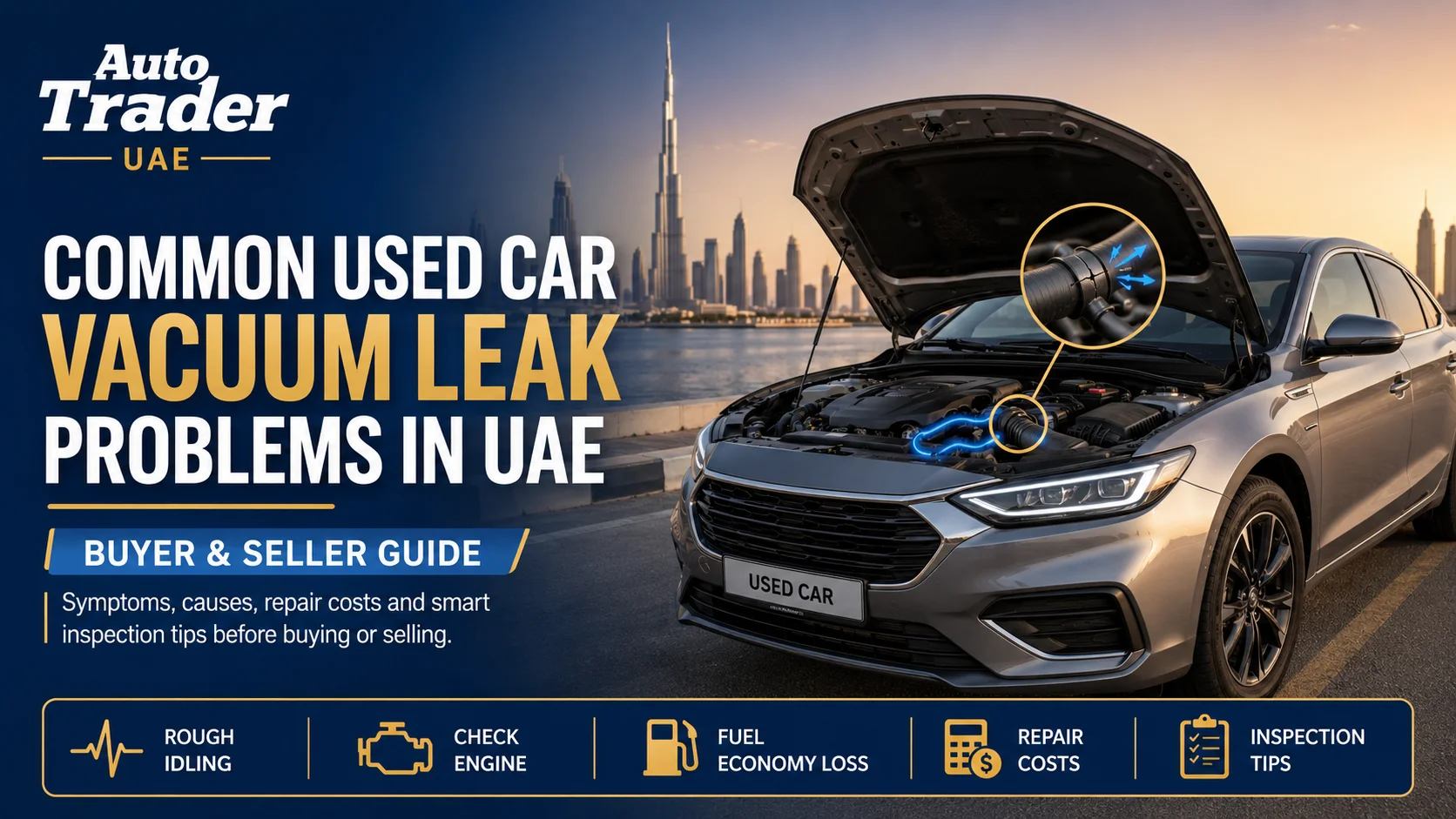
Common Used Car Vacuum Leak Problems in UAE: Buyer & Seller Guide
Vacuum leaks are one of the most common hidden issues in used cars – especially in hot climates like the UAE. They can cause rough idling, poor fuel economy, and even failed registration tests if emissions are affected. Whether you’re buying or selling on Auto Trader UAE, understanding vacuum leak problems can save you time and money.
What Is a Vacuum Leak in a Car?
Modern petrol engines use vacuum (low pressure) created in the intake system to control many functions. A vacuum leak happens when unmetered air enters the engine or vacuum system from a crack, loose hose, or faulty gasket.
This extra, unmeasured air confuses the engine control unit (ECU), leading to poor running and error codes.
Why Vacuum Leaks Are Common in the UAE
- Extreme heat: Constant high temperatures and engine bay heat harden and crack rubber hoses and plastic fittings.
- Stop–go traffic: City driving in Dubai, Abu Dhabi, and Sharjah means more idling, more heat cycles, and more stress on intake components.
- Dust and sand: Fine sand can damage seals and gaskets over time.
- Age and mileage: Many imported or fleet cars in the UAE have higher mileage, so hoses, seals, and intake manifolds are already worn.
Typical Symptoms of Vacuum Leaks
If you’re inspecting a used car, look out for these warning signs:
- Rough idle: Engine shakes or fluctuates at idle, especially with AC on.
- Engine stalls: Car may stall at traffic lights or when shifting into gear.
- Hissing noise: A noticeable hissing or whistling sound from the engine bay.
- Poor acceleration: Sluggish response or hesitation when you press the throttle.
- High fuel consumption: More frequent refuelling without obvious reason.
- Check engine light (CEL): Often with codes related to lean mixture or idle control.
- Failed emissions or registration test: Excess emissions or unstable idle during tests.
Common Vacuum Leak Sources in Used Cars
When you’re buying or selling a used car in the UAE, these are the most frequent problem areas:
1. Intake Manifold Gaskets
Heat and age cause the intake manifold gasket to harden and crack, allowing air to leak between the manifold and engine.
Signs: Rough idle, lean mixture codes, and sometimes coolant loss on some engines.
2. Rubber Vacuum Hoses and Lines
Thin rubber hoses that control various engine components become brittle in UAE heat, then crack or split.
Signs: Hissing sound, intermittent idle issues, and small but persistent vacuum leaks.
3. PCV (Positive Crankcase Ventilation) System
The PCV valve and related hoses help manage engine blow-by gases. If blocked or leaking, they can cause vacuum problems.
Signs: Rough idle, oil residue around hoses, and sometimes increased oil consumption.
4. Brake Booster and Hose
The brake booster relies on vacuum from the engine. A leak can affect both braking feel and engine performance.
Signs: Hard brake pedal, hissing when pressing the brake, and idle changes when braking.
5. Throttle Body Gasket and Mounting
The gasket between the throttle body and intake can leak if over-tightened or aged.
Signs: Whistling near the throttle body, idle issues, and CEL codes.
6. EVAP System Hoses and Valves
The evaporative emissions (EVAP) system controls fuel vapours. Cracked EVAP lines or faulty purge valves can cause minor vacuum leaks.
Signs: Fuel smell, EVAP-related CEL codes, and sometimes starting issues after refuelling.
7. Turbocharged Engine Plumbing
On turbocharged cars popular in the UAE, there are many additional pipes, clamps, and seals for boost and vacuum control.
Signs: Loss of power, overboost/underboost codes, whistling, and surging under acceleration.
How Vacuum Leaks Affect Performance and Costs
- Fuel economy: The ECU often adds more fuel to compensate for excess air, so the car consumes more petrol.
- Engine wear: Running lean (too much air vs fuel) can raise combustion temperatures and stress engine components.
- Driveability: Hesitation, stalling, and rough idle make daily driving in UAE traffic frustrating and unsafe.
- Resale value: Noticeable rough running or a lit check engine light will reduce buyer confidence and final price.
Quick Checks for Buyers: Spotting Vacuum Leaks During Inspection
When viewing a used car listed on Auto Trader UAE, use these simple checks:
- Cold start test: Ask the seller to start the car from cold. Listen for high idle, hunting revs, or stalling.
- Listen for hissing: With the bonnet open and engine running, listen carefully around the intake manifold, throttle body, and hoses.
- Check idle with AC on: Switch on the air conditioning. Idle should remain stable with only a small RPM change.
- Light brake test: Gently press the brake pedal while idling. If the engine speed changes or you hear extra hissing, the brake booster hose may leak.
- Visual hose inspection: Look for cracked, collapsed, or oily hoses. Any tape repairs are a red flag.
- Dashboard warning lights: Ensure the check engine light comes on during ignition ON and then goes off after starting. If it stays on, scan codes before buying.
Diagnosis and Repair: What Buyers and Sellers Should Expect
Vacuum leaks can range from a simple hose replacement to more complex intake manifold repairs. For most mainstream models in the UAE:
- Minor hose replacement: Typically low-cost parts and quick labour.
- PCV valve and hoses: Usually affordable, but can be labour-intensive on some engines.
- Intake manifold gasket: Medium-level job; labour cost depends on engine layout and access.
- Turbo/boost leak: Cost depends on whether it’s a hose, clamp, or intercooler issue.
A proper workshop will often use smoke machines or diagnostic sprays to find small leaks accurately.
Advice for Used Car Buyers in the UAE
1. Always Test Drive Properly
Drive in both city and highway conditions if possible. Check for hesitation, jerking, or stalling. Pay attention to how the car behaves at low speed, in traffic, and when parking.
2. Get a Pre‑Purchase Inspection
Ask a trusted workshop to perform a pre‑purchase inspection focusing on engine performance, vacuum hoses, and intake components. A small inspection fee is far cheaper than unexpected repair bills.
3. Scan for Error Codes
If the seller agrees, plug in an OBD-II scanner. Look out for lean mixture, misfire, idle control, or EVAP system codes, which may indicate vacuum issues.
4. Factor Potential Repairs into Your Offer
If the car runs well but shows minor signs of vacuum leakage (aged hoses, small cracks), you can negotiate on price to allow for future maintenance.
5. Choose Cars with Documented Maintenance
Service history from reputable UAE workshops or dealers, especially with intake and hose replacements recorded, reduces your risk.
When you’re ready to search, browse used cars in UAE on Auto Trader UAE and shortlist models known for reliability and simple maintenance.
Advice for Used Car Sellers in the UAE
1. Fix Obvious Vacuum Problems Before Listing
Repairing rough idle or hissing noises before advertising your car can increase buyer confidence and help you achieve a better price and faster sale.
2. Clear Warning Lights Professionally
Do not just reset the check engine light. Fix the root cause first – buyers increasingly bring scanners and will notice recurring codes.
3. Highlight Recent Engine and Intake Work
If you have replaced intake gaskets, PCV valves, or hoses, mention it in your Auto Trader UAE listing and keep receipts ready. This positions your car as well-maintained.
4. Clean the Engine Bay Safely
A tidy engine bay helps, but avoid high‑pressure washing directly on sensors and hoses, which can create new vacuum leaks.
5. Be Honest During Viewings
If there is a minor, known vacuum-related issue you have not fixed, be upfront and adjust the price accordingly. Transparent sellers often close deals faster.
Which Cars in the UAE Are More Prone to Vacuum Leaks?
Generally, you can expect more vacuum-related issues on:
- Older cars (8+ years): Rubber and plastic components naturally degrade over time in desert heat.
- High‑mileage imports: Vehicles imported from other regions may already have wear before facing UAE conditions.
- Turbocharged performance models: More piping, clamps, and valves mean more potential leak points.
- Cars with complex emissions systems: More EVAP and vacuum-dependent components raise the chance of leaks as the car ages.
This doesn’t mean you should avoid these cars, but you should inspect them more carefully and budget accordingly.
Preventing Vacuum Leaks: Tips for UAE Owners
- Regular inspections: Ask your workshop to check intake hoses and gaskets during service.
- Replace hoses proactively: If hoses show cracks or are very hard to the touch, replace them before they fail.
- Use quality parts: Cheap, low‑quality rubber may not survive UAE heat for long.
- Avoid fluid spills: Oil and fuel on hoses can accelerate degradation.
- Keep filters clean: Clogged air filters can change airflow and put extra strain on the intake system.
How Vacuum Leaks Affect RTA Testing and Registration
In the UAE, vacuum leaks can indirectly cause a car to fail inspection if they lead to high emissions, unstable idle, or a lit check engine light. Fixing vacuum leaks before your test can help avoid delays and retest fees.
Next Steps: Finding and Selling Cars on Auto Trader UAE
Understanding Common Used Car Vacuum Leak Problems in UAE helps you make smarter decisions when buying or selling.
- Browse a wide range of used cars in UAE and compare options.
- If you’re in Dubai, explore used cars in Dubai and book viewings with trusted sellers.
- As a seller, prepare your car properly and list it with clear details on recent engine and intake work.
Take your time, ask the right questions, and use Auto Trader UAE to connect with serious buyers and quality used cars across the country.
Browse used cars in UAE on Auto Trader UAE to compare live listings, prices, and current market activity more clearly.
Related Links
Buyer Takeaway
When buying a used car in the UAE, focus on vehicle condition, service history, inspection quality, paperwork, and total running costs rather than price alone. Compare options carefully and choose the option that best matches your budget and real needs.
Seller Takeaway
If you are selling a used car in the UAE, present the service history clearly, price the vehicle realistically, and highlight condition, specification, and ownership strengths honestly. A well-prepared listing with accurate details usually attracts more serious buyers.
Conclusion
A careful used car purchase in the UAE starts with research, proper inspection, and clear paperwork before making the final decision.