
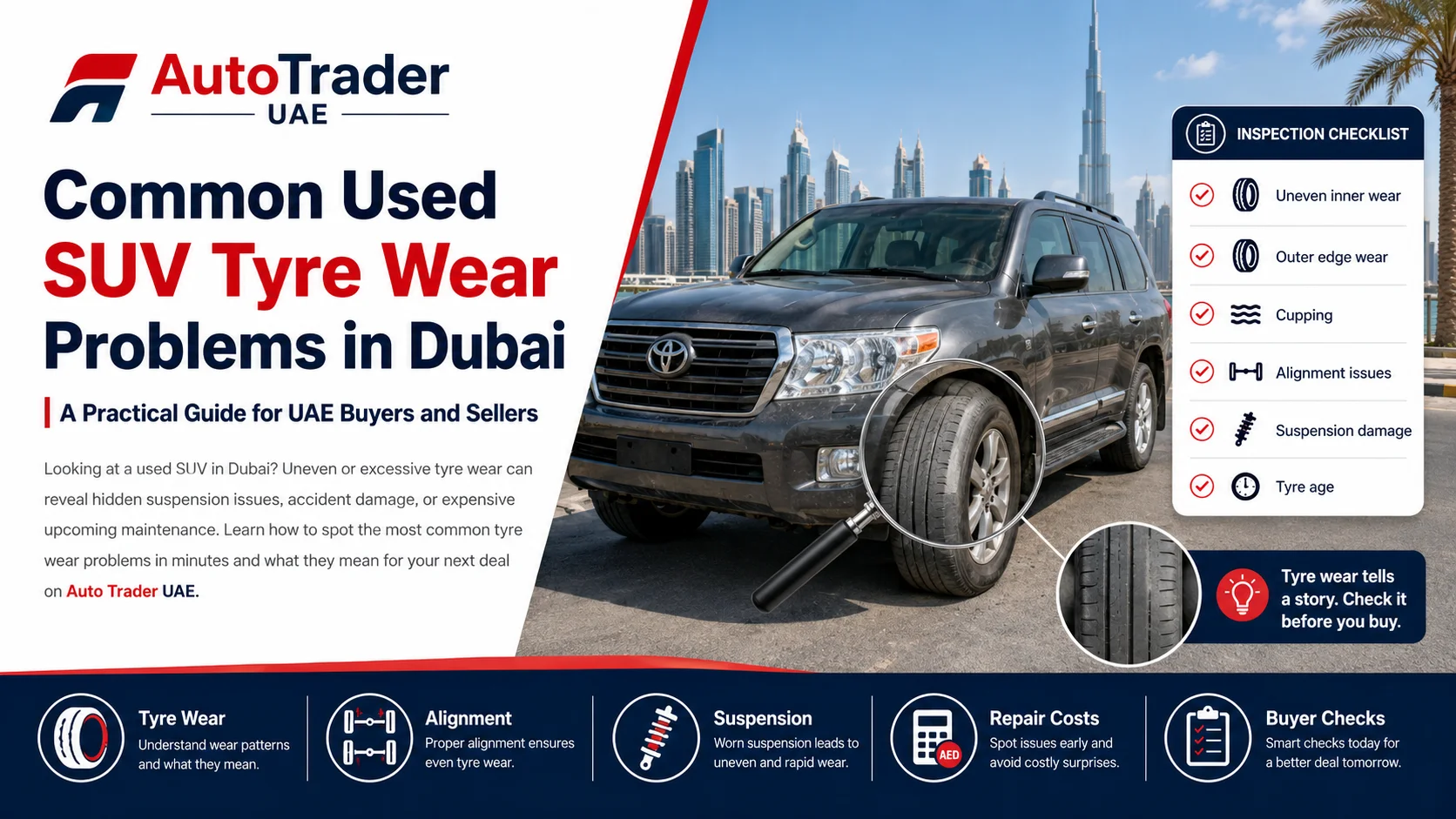
Common Used SUV Tyre Wear Problems in Dubai: A Practical Guide
If you are shopping for a used SUV in the UAE, tyres are one of the fastest ways to judge how the vehicle has really been treated. Heat, sand, speed humps and high-speed highway driving all leave clear traces on SUV tyres in Dubai and across the Emirates.
This guide from Auto Trader UAE explains the most common used SUV tyre wear problems in Dubai, what they usually mean, and how buyers and sellers can use this knowledge to negotiate confidently.
Why SUV tyre wear matters so much in Dubai
- Safety: Tyres are your only contact with the road. Worn, cracked or uneven tyres can seriously reduce grip, especially during sudden braking or sand on the road.
- Running costs: A full set of SUV tyres in the UAE can be expensive. Hidden tyre problems turn a "good deal" into an immediate bill.
- Hidden mechanical issues: Uneven tyre wear can reveal problems with wheel alignment, suspension damage from kerbs or off-road use, or even previous accident repairs.
- RTA testing: Severely worn or damaged tyres can cause a vehicle to fail registration or transfer tests.
Spending five minutes checking tyre wear before buying a used SUV listed on Auto Trader UAE can protect you from costly surprises.
How to do a quick tyre check on a used SUV
- Check tyre age: Find the DOT code on the sidewall (four digits like 2321 = week 23 of 2021). In the UAE climate, tyres older than five years often harden and crack even if the tread seems OK.
- Look at all four tyres: Walk around the SUV, comparing tread depth and wear pattern on each tyre. Different brands or very different wear patterns can be a warning sign.
- Use a simple depth check: Most modern tyres have wear bars between tread blocks. If the tread is close to or level with the bars, tyres are near the end of their life.
- Check the spare tyre: Many SUVs in the UAE still have original spare tyres that are over-aged and unsafe for regular use.
- Scan for damage: Look for sidewall bulges, cuts, visible cords, or flat spots from emergency braking.
Now let’s explore the most common used SUV tyre wear problems in Dubai and what they usually indicate.
1. Centre wear – too much highway air pressure
What it looks like:
- Tread is noticeably more worn in the middle than on the inner and outer edges.
- Often found on powerful SUVs that do long highway runs between emirates.
Common causes in Dubai:
- Tyres regularly overinflated for fuel economy or to carry heavy loads.
- Drivers using high "max load" pressures all the time instead of the manufacturer’s recommended setting.
What it means for buyers:
- Tyres will need replacing sooner than expected, even if edges look OK.
- Overinflation can reduce comfort and grip on uneven or sandy surfaces.
Buyer tip: Check the recommended pressure on the driver’s door sticker and compare it with the current pressure at a petrol station. If the centre is heavily worn, negotiate the cost of a new set of tyres into the price.
2. Edge wear – underinflation and city driving
What it looks like:
- Both inner and outer edges of the tread are more worn than the centre.
- Tread may feel softer and hotter after a short drive.
Common causes in the UAE:
- Tyres consistently underinflated, especially on SUVs driven mostly in the city.
- Frequent short trips, speed bumps and stop-start traffic in areas like Dubai Marina, JLT or Downtown.
What it means for buyers:
- Tyres have seen extra heat and stress, reducing their remaining life.
- Possible extra fuel consumption and heavier steering.
Buyer tip: Ask the seller where they usually drive (city vs highway) and how often they check tyre pressures. If edges are badly worn, factor in replacement costs and get the suspension inspected if the wear is uneven side-to-side.
3. Inner shoulder wear – alignment or lowered suspension
What it looks like:
- Inside edge of the tyre (the side facing under the car) is clearly more worn than the rest.
- From outside, the tyre may look acceptable; the damage is visible only when you look from under or behind the SUV.
Common causes in Dubai:
- Poor wheel alignment from hitting kerbs or deep potholes.
- Lowered or modified suspension on performance SUVs.
- Worn suspension bushes or ball joints.
What it means for buyers:
- You may need a full alignment and possibly suspension repairs.
- Tyres that look fine from outside may actually be at the limit of safe wear.
Buyer tip: Always run your hand across the inside shoulder of each tyre. If you feel sharp wear or almost bald rubber, budget for both tyres and alignment. This pattern can be a strong sign the SUV has hit something hard or has worn suspension parts.
4. One-sided wear – camber or accident history
What it looks like:
- Only one side of the tread (inner or outer) on a tyre is worn, and other tyres look more normal.
- Sometimes combined with a slight pull to one side while driving.
Common causes in the UAE:
- Incorrect camber or toe angles after a poor alignment job.
- Chassis or suspension damage from accidents or heavy kerb impacts.
- Chronic overloading on one side of the vehicle.
What it means for buyers:
- Possible hidden accident repair or bent suspension components.
- Likely need for advanced alignment and possible part replacement.
Buyer tip: One-sided wear is a red flag. Combine your tyre inspection with a professional pre-purchase check before you buy any used SUV, especially performance or luxury models listed on Auto Trader UAE.
5. Cupping or scalloping – worn suspension parts
What it looks like:
- Uneven "scalloped" patterns around the tread, like alternating high and low spots.
- Often accompanied by a humming or droning noise at highway speeds.
Common causes in Dubai:
- Worn shock absorbers struggling to control the heavy weight of an SUV.
- Loose suspension components after years of speed bumps and rough roads.
- Imbalanced wheels or poor-quality aftermarket suspension.
What it means for buyers:
- Not just a tyre issue: usually indicates suspension parts need replacing.
- Expect costs for shocks/struts, alignment and new tyres.
Buyer tip: During a test drive, listen for vibration or humming that changes with road speed, not engine speed. If you see cupping, insist on a suspension inspection before agreeing a final price.
6. Flat spots – hard braking and emergency stops
What it looks like:
- One or more areas of the tyre look and feel flatter than the rest.
- Steering wheel vibration at certain speeds, even after balancing.
Common causes in the UAE:
- ABS-free panic braking or long emergency stops from high highway speeds.
- Hard braking on hot asphalt, especially with loaded SUVs.
- Leaving SUVs parked for long periods in the same position in extreme heat.
What it means for buyers:
- Tyres may be structurally stressed and will wear faster.
- May indicate the SUV has been driven aggressively or has had a serious emergency stop.
Buyer tip: Feel the tread by hand, slowly rotating each wheel if possible. If you notice a repeated flat area, expect to replace that tyre even if the rest of the tread appears acceptable.
7. Cracking and dry rot – UAE heat and ageing
What it looks like:
- Fine cracks on the sidewalls or between the tread blocks.
- Dull, dry-looking rubber instead of deep black and flexible.
Common causes in Dubai and the wider UAE:
- Intense sun and heat degrading the rubber over time.
- Tyres older than five to six years, even with low mileage.
- Vehicles parked outside for long periods.
What it means for buyers:
- Rubber may be brittle and prone to sudden failure, especially at highway speeds.
- Tyres are often near the end of their safe life regardless of tread depth.
Buyer tip: Always check the DOT date code. On a used SUV in Dubai, be wary of tyres older than five years; negotiate for a discount to cover replacement, especially for heavy 4x4 SUVs expected to drive at high speeds.
8. Uneven wear between front and rear tyres
What it looks like:
- Front tyres significantly more worn than the rears, or vice versa.
- Sometimes different brands or sizes fitted front and rear.
Common causes in the UAE:
- No regular tyre rotation despite heavy SUV weight over the front axle.
- Aggressive driving, strong braking and U-turns wearing fronts faster.
- Owners replacing only two tyres at a time with a different brand or pattern.
What it means for buyers:
- Different wear may feel normal, but mismatched tyres can affect stability and ABS/traction control systems.
- On AWD/4x4 SUVs, big differences in tyre circumference can stress the drivetrain.
Buyer tip: On any AWD or 4x4 SUV in the UAE, ask if the tyres were replaced as a full set. Significant difference in tread depth front-to-rear can be a concern; budget for bringing all four tyres to a matched, safe condition.
9. Off-road damage – cuts, chunks and sidewall bruises
What it looks like:
- Chips or chunks missing from tread blocks.
- Sidewall cuts, bruises, or visible cords.
- Sand-blasted appearance on tyres used frequently in the desert.
Common causes around Dubai and the Northern Emirates:
- Regular off-roading in the dunes, wadi driving or rocky tracks.
- Driving on underinflated tyres off-road without proper technique.
- Hitting hidden rocks or debris when exiting the desert onto tarmac.
What it means for buyers:
- The SUV may have been used heavily off-road, even if the seller claims “light use only”.
- Sidewall damage is often not repairable and can be dangerous at speed.
Buyer tip: If you see clear off-road damage but like the SUV, factor in a new set of tyres and a thorough underbody inspection for off-road wear and tear.
What sellers in Dubai should do before listing a used SUV
If you are planning to sell your SUV on Auto Trader UAE, tyre condition can strongly influence how quickly you get serious enquiries and the price you achieve.
1. Inspect and document tyre condition honestly
- Measure tread depth and note the brand, size and year of manufacture.
- Take clear photos of each tyre, including close-ups of any wear or damage.
2. Fix easy issues before listing
- Correct tyre pressures to the manufacturer’s recommendation.
- Rotate tyres if appropriate to even out minor differences.
- Consider a wheel alignment if you notice uneven wear or pulling.
3. Be upfront about upcoming tyre costs
- If tyres are nearing the wear bars or older than five years, expect buyers to negotiate.
- Pricing your SUV realistically with tyre condition in mind often results in a faster, smoother sale.
What buyers should ask about tyres when viewing a used SUV
- "When were these tyres fitted?" – Compare the answer with the date codes on the tyres.
- "Do you have receipts for the tyres or alignment?" – Service history helps confirm regular care.
- "How often do you check tyre pressures?" – Consistent maintenance suggests responsible ownership.
- "Do you use the SUV off-road or tow regularly?" – Heavier use accelerates tyre and suspension wear.
Combine these questions with a visual inspection and a test drive to build a clear picture of the SUV’s real condition.
When to walk away from a used SUV deal
Tyres alone rarely justify walking away from a good SUV, but certain patterns are strong warning signs:
- Severe one-sided wear suggesting accident damage or bent suspension.
- Multiple tyres with deep cuts, bulges or exposed cords.
- Very old tyres (6–8+ years) on a powerful SUV that has clearly done high speeds.
- Seller unwilling to allow an independent inspection after you point out serious tyre issues.
In these cases, the tyre wear may be telling you a bigger story about how the SUV has been driven and maintained.
Using Auto Trader UAE to find better-maintained used SUVs
On Auto Trader UAE, you can compare multiple used SUVs side by side, focusing not only on price and mileage but also on condition, service history and how openly the seller presents details like tyres, brakes and suspension.
- Look for listings that clearly mention recent tyre replacement or alignment.
- Favour sellers who provide close-up photos of their tyres and wheels.
- Use filters to narrow your search by year, mileage, and budget, then inspect tyre details carefully when viewing in person.
For a wide selection of options, explore:
Conclusion: Turn tyre wear into negotiation power
Understanding common used SUV tyre wear problems in Dubai gives you a real advantage in the UAE used car market. Tyres tell a clear story about how a vehicle has been driven, maintained and possibly damaged.
As a buyer, a careful tyre inspection helps you avoid hidden suspension issues and budget realistically. As a seller, fixing simple tyre-related problems and being transparent about condition can make your SUV stand out on Auto Trader UAE.
When you are ready to buy or sell, start with the wide choice of used cars in UAE and used cars in Dubai on Auto Trader UAE, and use tyre wear as one of your smartest tools for getting the best deal.
Browse used cars in UAE on Auto Trader UAE to compare live listings, prices, and current market activity more clearly.
Related Links
Buyer Takeaway
When buying a used car in the UAE, focus on vehicle condition, service history, inspection quality, paperwork, and total running costs rather than price alone. Compare options carefully and choose the option that best matches your budget and real needs.
Seller Takeaway
If you are selling a used car in the UAE, present the service history clearly, price the vehicle realistically, and highlight condition, specification, and ownership strengths honestly. A well-prepared listing with accurate details usually attracts more serious buyers.