
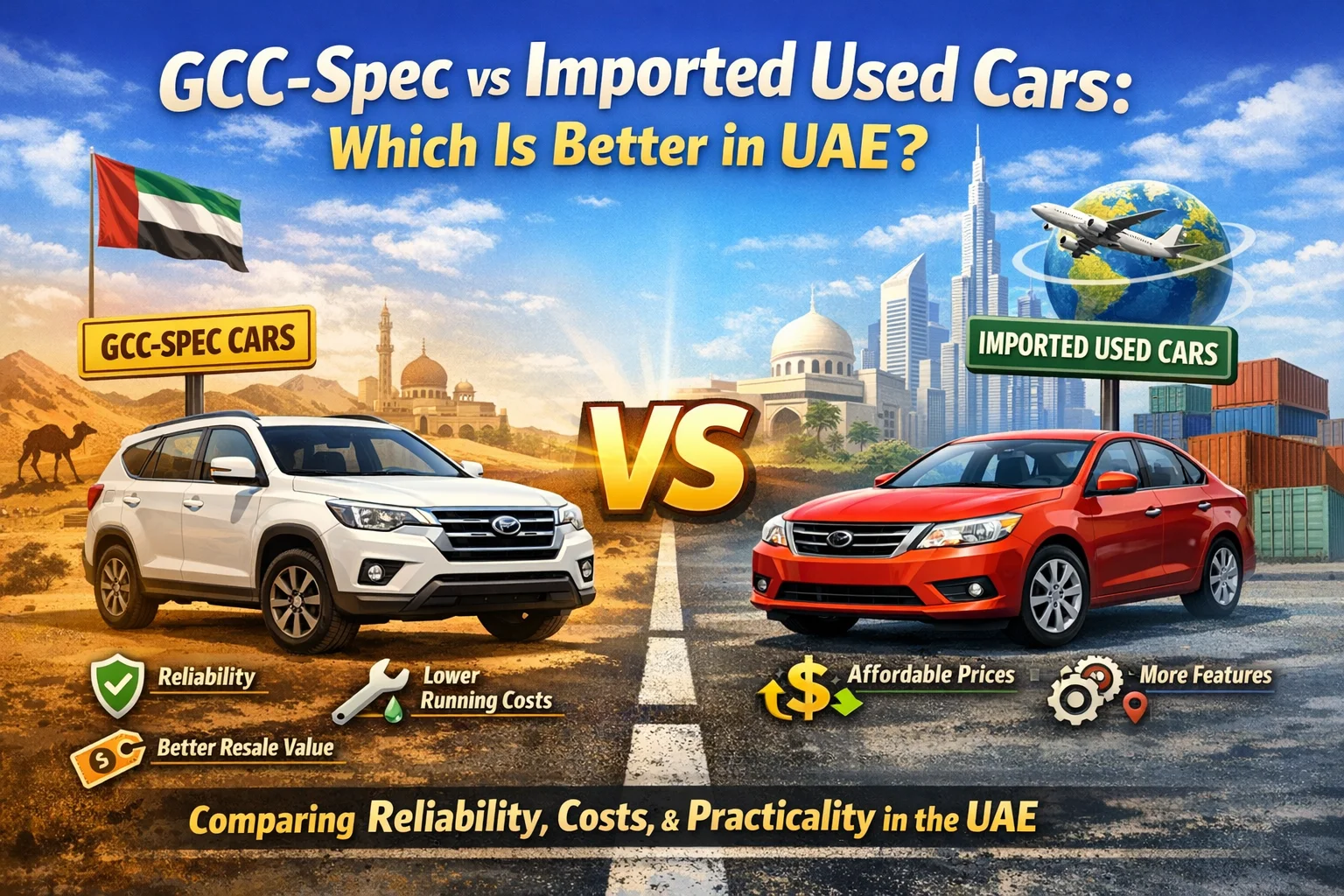
GCC-Spec vs Imported Used Cars: Which Is Better in UAE?
Buying a used car in the UAE almost always leads to one big question: GCC-spec or import? On Auto Trader UAE you’ll see both options, often at very different prices. Understanding what you really get with each can save you money, headaches, and time at the garage. This guide compares GCC-spec vs imported used cars in the UAE across design, interior space, practicality, performance, running costs, resale value, and buyer fit, so you can decide what suits you best.
What Does GCC-Spec Mean?
“GCC-spec” (or Gulf-spec) describes vehicles that are built or configured for Gulf countries like the UAE, Saudi Arabia, Oman, Kuwait, Qatar, and Bahrain. Typical GCC-spec features include:
- Cooling systems upgraded for high temperatures and long idling in traffic
- Air conditioning tuned for desert climates, often with stronger compressors
- Dust and sand protection such as extra filters and better sealing
- Region-compatible navigation and infotainment (depending on brand/model)
- Warranty and service history with local dealerships (if still within age/mileage)
These cars are normally sold new through UAE dealers and then appear on the used market through platforms like Auto Trader UAE.
What Is an Imported Used Car in the UAE?
An imported used car is a vehicle that was originally sold new in another country (for example, the US, Europe, Japan, or Korea) and later brought into the UAE. Common types of imports include:
- US-spec cars (often with Carfax or similar reports)
- European-spec cars (Germany, UK, etc.)
- Japanese imports (sometimes low mileage, auction-grade)
Some imports are clean and accident-free; others may be salvage, repaired, or flood-damaged. This is why proper inspection and documentation are critical when considering an imported used car.
Design & Features: GCC-Spec vs Imported Used Cars
From the outside, a GCC-spec car and an imported car of the same model can look almost identical. The differences usually sit in the details.
GCC-Spec Cars
- Tailored for local use: Headlights, indicators, and instrument clusters are typically configured for GCC regulations.
- Equipment levels: Many GCC-spec cars are sold with mid-to-high trims, especially SUVs and family sedans.
- Infotainment: Navigation and radio bands are usually set up for the Middle East, which can make daily use smoother.
Imported Used Cars
- More variety: You can find rare trims, special editions, and option packages not officially sold in the GCC.
- Potentially better safety tech: In some markets, advanced driver-assist systems were standard earlier than in the GCC.
- Compatibility issues: Maps, radio frequencies, or language settings may need reprogramming; some features may not work perfectly in the UAE.
Verdict on design & features:
- Choose GCC-spec if you want hassle-free use with systems designed for the UAE.
- Choose an import if you’re hunting for a specific trim, rare spec, or advanced options not sold here.
Interior Space & Practicality
When comparing identical models, interior space is usually the same between GCC-spec and imported cars. Practicality differences generally come from how the car is configured.
GCC-Spec Cars
- Seat materials: Often specified with fabrics and leathers that cope better with heat and sun.
- AC performance: Rear AC vents and stronger cooling are common, which matters for families and ride-hailing drivers.
- Convenience features: Popular GCC configurations often include parking sensors, rear cameras, and sometimes remote start.
Imported Used Cars
- Different seat trims: For example, lighter cloth interiors from cooler markets may age faster in the UAE climate.
- Heated seats, sunroofs: Common in colder countries but less useful here, and sunroofs can add heat if tinting isn’t ideal.
- Practical extras: Some imports come with power tailgates, larger infotainment screens, or electric seat adjustment as standard.
Verdict on space & practicality: If you’re focused on family comfort and strong AC, GCC-spec cars tend to be better aligned with UAE usage. Imports can be more feature-rich, but some of those features are designed for very different climates.
Performance & Reliability in UAE Conditions
The UAE’s combination of high heat, humidity, dust, and stop-start traffic can be harsh on cars. This is where GCC-spec vehicles often gain a clear advantage.
GCC-Spec Cars
- Cooling systems: Radiators, fans, and coolers are often upgraded for high temperatures and extensive AC use.
- Engine tuning: Some engines are calibrated for regional fuel qualities and climate, improving reliability.
- Proven track record: Many workshops and dealers are very familiar with GCC-spec configurations.
Imported Used Cars
- Standard cooling setups: Designed for moderate climates, which can struggle in peak UAE summer if not maintained perfectly.
- Unknown history: Some imports may have been flood-damaged, accident-repaired, or heavily modified before export.
- Parts differences: Certain components (sensors, ECUs, AC systems) can differ from GCC versions, affecting repairs and diagnostics.
Verdict on performance & reliability:
- GCC-spec is usually more dependable for long-term UAE use, especially if you drive daily, commute far, or keep cars for many years.
- Imports can be fine if you verify history, inspect thoroughly, and maintain cooling/AC systems carefully.
Running Costs: Fuel, Maintenance & Insurance
Total cost of ownership in the UAE goes beyond just the purchase price. You’ll want to consider fuel economy, parts availability, maintenance, and insurance.
Fuel Economy
Fuel consumption is mostly determined by the engine and transmission, not whether the car is GCC-spec or imported. However,
- Some imported trims may have different gearboxes or engine tunes, affecting real-world economy.
- Cars with oversized wheels or added weight (sound systems, body kits) may consume more fuel.
Maintenance & Parts
GCC-Spec Cars:
- Generally easier and cheaper to service as local workshops know them well.
- Parts availability is usually better, with more options from dealers and independent suppliers.
Imported Used Cars:
- Some parts may need to be special-ordered, causing delays or higher prices.
- Electronics and software differences can complicate diagnostics and repairs.
Insurance
Insurance companies in the UAE often look at spec, history, and repairability.
- Clean, GCC-spec cars with clear service records are usually straightforward to insure.
- Imports, especially salvage or heavily repaired cars, may face higher premiums or limited coverage options.
Verdict on running costs: If you want predictable, manageable running costs, GCC-spec cars tend to be safer. Imports can still be cost-effective if you buy smart, but you must budget for potential surprises.
Resale Value in the UAE
Resale value is where GCC-spec cars usually win clearly.
GCC-Spec Cars
- Higher demand locally, especially for popular brands and SUVs.
- Seen as more trustworthy thanks to climate-appropriate spec and often easier-to-verify history.
- Dealers and private buyers usually prioritise GCC-spec when searching for used cars.
Imported Used Cars
- Lower starting price can be attractive but resale may be more difficult.
- Many buyers in the UAE are cautious about imports due to concerns about accidents, floods, or heavy repairs.
- You may have to price the car more aggressively to sell it quickly.
Verdict on resale value: If you plan to resell in a few years, GCC-spec is usually the smarter choice. Imports make more sense if you buy cheap, keep the car longer, or don’t mind slower resale.
Price & Value for Money
GCC-Spec Cars
- Typically more expensive to buy on the used market.
- The higher price reflects better resale, easier maintenance, and market demand.
Imported Used Cars
- Often cheaper for similar model years and mileage.
- Can offer more features for the same money (panoramic roof, premium audio, advanced safety tech).
- But the savings may be offset if you encounter hidden repair costs or weaker resale.
Verdict on price: For pure upfront savings, imports win. For long-term value and peace of mind, GCC-spec often balances cost and security better.
Which Type of Buyer Suits GCC-Spec vs Imported Used Cars?
Your lifestyle and risk tolerance should guide your choice. Here’s a simple breakdown.
GCC-Spec Cars Might Suit You If:
- You want a reliable daily driver that can handle UAE summers.
- You plan to keep the car for several years or care about resale value.
- You prefer predictable maintenance and easy parts availability.
- You’re buying a family car, work car, or fleet vehicle.
Imported Used Cars Might Suit You If:
- You are price-sensitive and want the lowest entry cost.
- You’re looking for a specific spec, engine, or rare model not sold as GCC-spec.
- You’re an enthusiast willing to do proper inspections, check history reports, and accept some risk.
- You don’t mind potentially more complex resale later.
How to Shop Safely for Both GCC-Spec and Imported Used Cars
Whether you choose GCC-spec or import, the buying basics are the same. When browsing listings on Auto Trader UAE, use these checks:
1. Verify the Spec and Origin
- Ask for the VIN (chassis number) and decode it or request a report.
- Confirm whether it’s genuinely GCC-spec (not just claimed in the ad).
- For imports, request Carfax/AutoCheck or auction sheets where available.
2. Inspect the Car Thoroughly
- Use a reputable inspection centre or independent mechanic.
- Check cooling and AC performance – critical in the UAE.
- Look for signs of accident repairs, rust, flood damage, or repainting.
3. Review Service History
- Prefer cars with stamped service books or digital history.
- For GCC-spec cars, dealership history is a strong plus.
- For imports, match service records to the country of origin and mileage.
4. Estimate Total Cost of Ownership
- Get insurance quotes for the specific VIN and spec.
- Ask workshops about parts prices and availability for your chosen model and spec.
- Consider fuel consumption, tyres, and known issues for that particular car.
GCC-Spec vs Imported Used Cars in the UAE: Quick Comparison
| Factor | GCC-Spec Used Cars | Imported Used Cars |
|---|---|---|
| Climate suitability | Optimised for GCC heat, dust, and AC use | Depends on origin; some may struggle in extreme heat |
| Purchase price | Usually higher | Often lower for same year/mileage |
| Running costs | More predictable, easier to service | Can be higher if parts are special-order |
| Resale value | Generally stronger and faster to sell | Typically lower; resale can be slower |
| Specs & options | Configured for regional needs; good AC and cooling | More variety, rare trims and extra features possible |
| Risk level | Lower if history is clear | Higher; must check history and condition carefully |
| Best for | Everyday users, families, fleets, long-term owners | Enthusiasts, budget buyers, seekers of specific specs |
Conclusion: GCC-Spec vs Imported Used Cars – Which Is Better in UAE?
There is no single answer that suits every driver. Overall, for most buyers in the UAE, GCC-spec used cars are the safer, more straightforward choice thanks to their climate-ready engineering, easier maintenance, and stronger resale value. However, well-chosen imported used cars can offer more features and a lower purchase price if you’re willing to do the homework: verify history, get a full inspection, and accept a bit more risk at resale time. When you’re ready to shop, use Auto Trader UAE to compare GCC-spec and imported used cars side by side. Filter by budget, body type, and location, then speak directly with sellers and dealers. With careful checks and the right information, you can find a used car in the UAE that fits your lifestyle, your risk comfort, and your long-term budget—whether it’s GCC-spec or a quality import.