
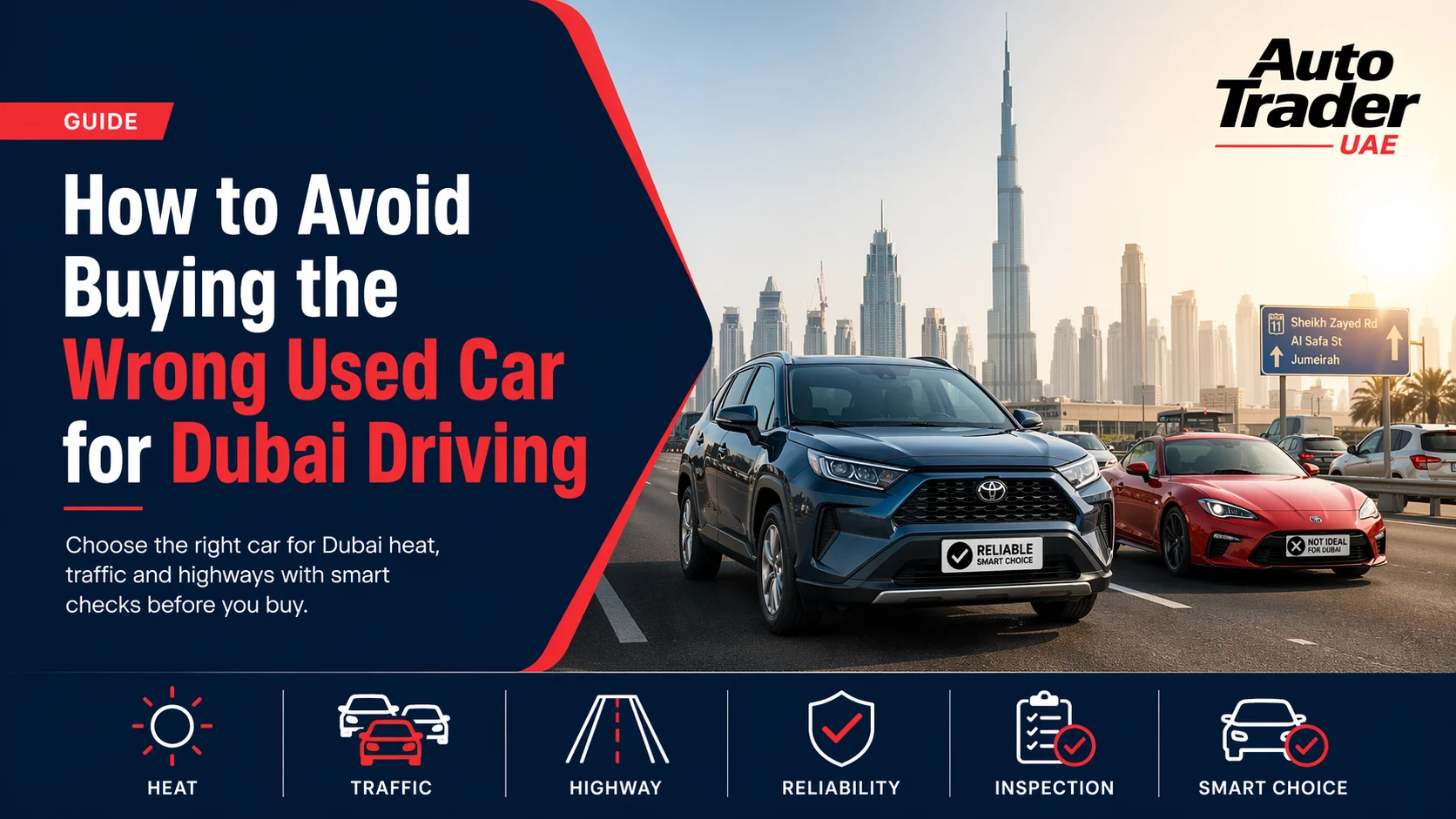
How to Avoid Buying the Wrong Used Car for Dubai Driving
Dubai is one of the best places in the world to enjoy driving, but it’s also a tough environment for cars. Extreme heat, heavy traffic, fast highways, and regular desert dust all put extra stress on any vehicle. That makes it especially important to avoid buying the wrong used car.
This guide from Auto Trader UAE explains how to choose a used car that truly suits Dubai driving – and how to avoid expensive mistakes.
Why “Dubai-Suitable” Matters When Buying Used
A car that looks perfect in photos can be completely wrong for daily life in Dubai. Common problems include:
- Small, underpowered engines that struggle on highways and with full loads
- Poor air-conditioning that can’t cope with summer heat
- Cars not built for GCC specs or hot climates
- High fuel consumption that hurts your monthly budget
- Cars with hidden accident or flood damage from past rains
- Imported cars with incomplete history and unknown issues
To avoid buying the wrong used car for Dubai driving, you need to think about your real daily use, not just the price and the photos.
Step 1: Match the Car to Your Dubai Driving Style
Start with how and where you actually drive. Ask yourself:
1. Your main driving pattern
- Mostly city & traffic (Sheikh Zayed Road, Downtown, Marina, Deira)
Look for: compact sedans, crossovers, or hatchbacks with good fuel economy, strong A/C, and easy parking. - Daily long commutes (Sharjah–Dubai, Abu Dhabi–Dubai)
Look for: comfortable, stable sedans or SUVs with cruise control, good highway safety ratings, and low engine noise. - Family use (school runs, malls, weekend trips)
Look for: crossovers or SUVs with 5–7 seats, good boot space, rear A/C vents, and ISOFIX child-seat mounts. - Occasional off-road / desert drives
Look for: proper 4x4 with low-range (if you’re serious about dunes), high ground clearance, and proper underbody protection. Avoid low-clearance sedans for regular desert trips.
2. Engine and performance for Dubai roads
- Underpowered cars can be unsafe when merging onto fast roads or overtaking trucks.
- Overpowered, thirsty engines can kill your fuel budget and may be overkill if you don’t use the performance.
For most Dubai drivers, a 1.6–2.5L petrol engine (or equivalent hybrid) in a sedan or crossover is a good balance between power and economy. For larger SUVs or 7-seaters, a slightly bigger engine can make sense.
Step 2: Check if the Car Is Truly GCC-Spec & Heat-Suitable
Not every car in the market is built for the Gulf climate. Non-GCC imports can suffer from overheating, weak A/C, or electronics issues.
How to confirm GCC-spec or hot-climate suitability
- Ask the seller clearly: “Is the car GCC-spec?” and get it in writing on the sales agreement.
- Look at the service book / user manual: GCC dealers and service stamps (UAE, KSA, Oman, etc.) are a good sign.
- Check the VIN plate / sticker: Some cars show GCC markets or local dealer codes.
- Test the A/C thoroughly: It should cool quickly and strongly, even at idle.
If a car is an import from a colder country, budget extra for potential A/C and cooling system upgrades – or consider another car better suited to Dubai.
Step 3: Avoid Hidden Damage from Heat, Sand, and Flooding
Dubai’s climate can damage a car in ways that are not obvious in photos or a quick viewing.
1. Heat & sun damage
- Faded paint, cracked dashboard, brittle rubber seals can indicate long-term outdoor parking.
- Headlight yellowing is common but can also hint at age and UV exposure.
2. Sand and dust damage
- Check around door seals, boot lining, and engine bay for thick dust build-up.
- Excess dust in the cabin filter area or A/C vents can indicate poor maintenance.
3. Flood or water damage
Heavy rains in the UAE have flooded some areas in recent years, and a few flood-affected cars end up in the used market.
- Lift carpets and check for dampness, water lines, or unusual rust.
- Inspect seat rails and under the dashboard for mud traces or corrosion.
- Smell for musty or mouldy odours even if the interior looks clean.
If you suspect flood damage, walk away. Electrical issues from water can be endless and expensive.
Step 4: Understand Common Used Car Red Flags in Dubai
Dubai’s used car market is large and active, which is great for choice – but you must stay alert for warning signs.
Major red flags
- Unusually low price compared to similar cars on Auto Trader UAE
- No service history or missing stamps for long periods
- Multiple colour shades on body panels
- Airbag warning light on, or airbag covers that look tampered with
- Fresh paint or body filler in limited areas only
- Seller refuses inspection by an independent workshop
- Odometer reading that doesn’t match wear on steering wheel, pedals, and seats
Documents to always check in the UAE
- Mulkiya (registration card) – in the seller’s name and matching the car’s VIN.
- Valid RTA test (if required) – check the date and any advisory notes.
- Service history – dealer or trusted workshop invoices are a big plus.
- Any finance / loan clearance – ensure there are no outstanding bank liabilities.
Step 5: Choose the Right Body Style for Dubai Life
Picking the wrong type of car is one of the easiest ways to regret your purchase. Think about space, practicality, and where you drive.
Sedan
Best for: daily commuting, couples, small families, city and highway use.
- Usually more fuel-efficient than large SUVs
- Comfortable and stable at highway speeds
- Boot space is separate from cabin, useful in the heat
Crossover / Compact SUV
Best for: families, mixed city and occasional light off-road or beach use.
- Higher seating position and ground clearance
- Easier to park than big SUVs
- Flexible boot space
Full-size SUV / 4x4
Best for: large families, regular desert trips, towing, long road trips.
- Strong engines, 4x4 systems, good for dunes and wadis
- More expensive to fuel, insure, and maintain
Hatchback
Best for: single drivers or couples focused on city driving and parking ease.
- Easy to manoeuvre in tight Dubai parking
- Boot space is limited but flexible with folding seats
Step 6: Check Ownership Costs – Not Just the Price
The wrong used car is often one that looked affordable at first but turns out expensive to run in Dubai.
Key cost factors in the UAE
- Fuel consumption: Compare litres per 100km or km per litre. Dubai traffic plus A/C always on can increase real-world use.
- Insurance: Sports cars, luxury brands, and large SUVs are usually more expensive to insure.
- Tyres: Large wheels and low-profile tyres cost more to replace; Dubai heat also shortens tyre life.
- Spare parts availability: Popular models usually have cheaper parts and more workshop options.
- Depreciation: Some models hold value better in the UAE market; check current used prices on Auto Trader UAE.
Before deciding, search similar models on Auto Trader UAE to see the going market price and how well the model holds its value.
Step 7: Inspect the Car Properly (Or Get It Inspected)
Never buy a used car in Dubai without a proper inspection – especially if you’re new to the UAE market.
DIY checks during viewing
- Inspect body panels in daylight for colour mismatch, dents, or uneven gaps.
- Check all windows, mirrors, lights, and electronics.
- Look for warning lights on the dashboard when starting the car.
- Listen for unusual engine noises at idle and while revving gently.
- Test A/C in multiple fan and temperature settings, including rear vents.
- Do a proper test drive: city roads plus a short highway run if possible.
Professional inspection
For extra peace of mind:
- Use an RTA-approved testing centre or reputable workshop for a full pre-purchase inspection.
- Ask for a report that covers chassis condition, accident history signs, engine health, suspension, brakes, and electronics.
The cost of inspection is small compared with the risk of buying a car with hidden issues in Dubai’s demanding conditions.
Step 8: Cross-Check History and Mileage
Odometer tampering and incomplete histories do occur in busy markets. To avoid buying the wrong used car, verify as much as you can.
- Compare service intervals in the book with current mileage.
- Ask for dealer or workshop invoices with mileage and dates.
- Look at the RTA test history where available.
- Check wear on steering wheel, gear knob, and seats vs. claimed mileage.
A car with slightly higher genuine mileage but a full, honest history is often better than a low-kilometre car with gaps and unanswered questions.
Step 9: Avoid Rushing the Deal
Many buyers in Dubai regret purchases made in a hurry – for example, when a job starts soon or a rental contract is ending.
To stay in control:
- View more than one car in the same budget and category.
- Compare at least 3–5 listings on Auto Trader UAE before committing.
- Walk away if a seller pressures you with “today only” prices.
- Keep some budget aside for immediate maintenance (tyres, fluids, minor repairs).
How Auto Trader UAE Helps You Avoid the Wrong Car
Using a trusted platform like Auto Trader UAE significantly reduces your risk when shopping for a used car in Dubai.
Benefits of searching on Auto Trader UAE
- Wide choice of used cars across all budgets, brands, and body styles.
- Smart filters to narrow down by year, price, mileage, body type, fuel type, and more.
- Dealer and private listings you can compare in one place.
- Links to model guides and buying articles to help you research before you view.
Start by shortlisting a few models that match your Dubai driving needs, then use Auto Trader UAE’s used car listings and make/model pages to compare prices, specs, and typical running costs.
Buyer Takeaway: Checklist Before You Commit
Before you transfer any money or sign anything, run through this quick checklist:
- Does this car truly fit my daily Dubai driving pattern (city, commute, family, off-road)?
- Is it confirmed GCC-spec or suitable for hot climates?
- Did I check for heat, sand, and flood damage myself and/or via inspection?
- Do I have service history and are the documents clean (mulkiya, RTA test, finance clearance)?
- Have I compared prices with similar listings on Auto Trader UAE?
- Can I comfortably manage fuel, insurance, and maintenance costs?
Seller Takeaway: How to Attract the Right Dubai Buyer
If you are selling, you can also avoid problems by presenting your car honestly and clearly.
- Be upfront about whether the car is GCC-spec and how it has been used (city, family, off-road).
- Gather service records, RTA test, and repair invoices to show serious buyers.
- Fix small issues (bulbs, basic service, interior cleaning) before listing.
- List your car on Auto Trader UAE with clear photos, detailed description, and realistic pricing based on similar listings.
Conclusion: Make Dubai’s Used Car Market Work for You
Dubai’s used car market offers excellent value and choice – but only if you pick a car that suits the city’s roads, climate, and your lifestyle. By focusing on GCC suitability, real running costs, careful inspection, and proper documentation, you can confidently avoid buying the wrong used car for Dubai driving.
When you’re ready to start shopping or selling, use Auto Trader UAE to find, compare, and list cars across the UAE market. Combine a smart online search with sensible on-the-ground checks, and you’ll end up with a used car that feels right at home on Dubai’s roads.
If you are exploring used cars in Dubai or elsewhere in the UAE, Auto Trader UAE makes it easier to compare listings, prices, trims, mileage, and seller details in one place.