
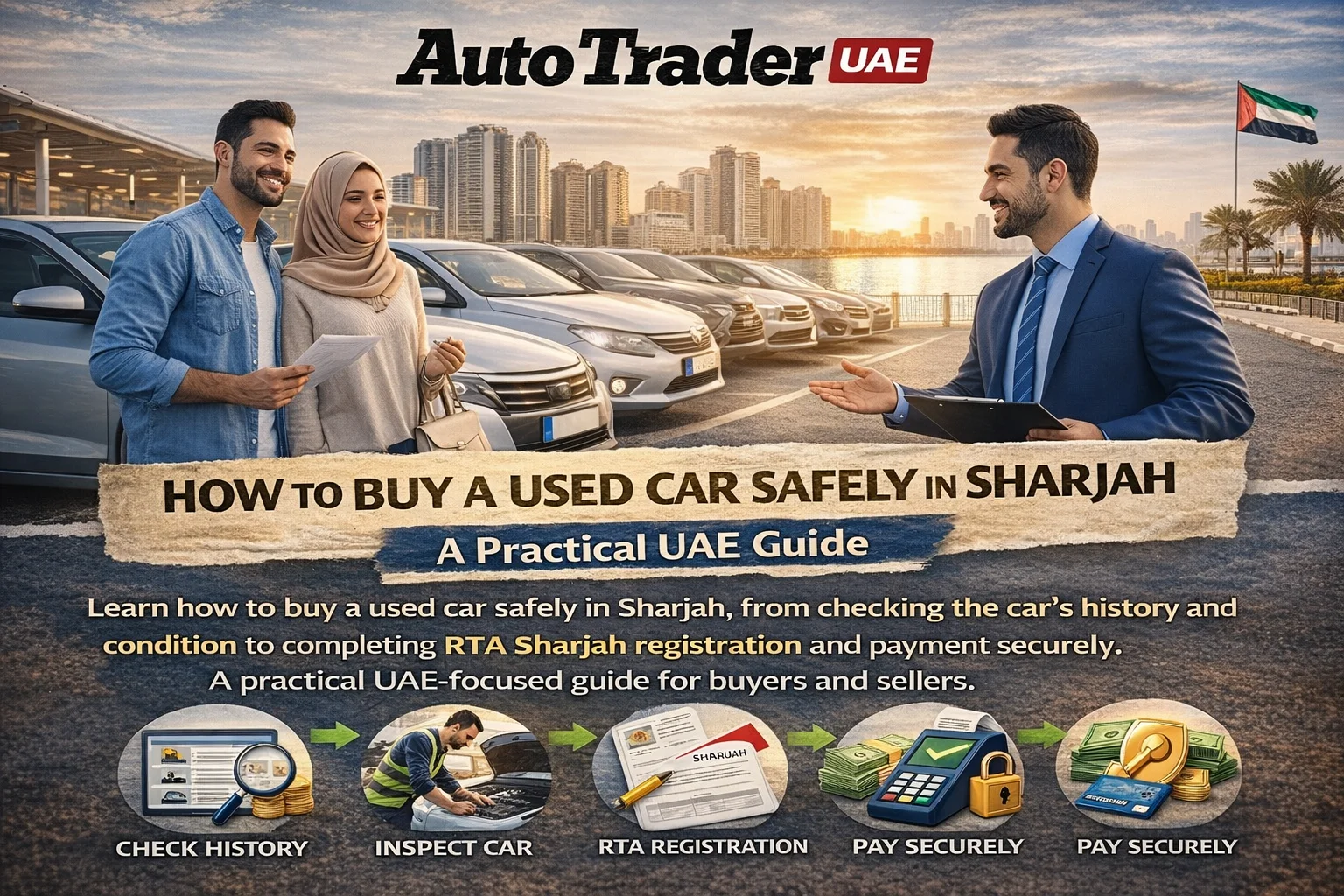
How to Buy a Used Car Safely in Sharjah: A Practical UAE Guide
Buying a used car in Sharjah can save you a lot of money compared with a brand‑new model, but only if you do it safely and smartly. This guide walks you step‑by‑step through how to buy a used car safely in Sharjah, with tips tailored to UAE laws, RTA Sharjah processes, and the way the local market works. Whether you are a first‑time buyer or upgrading your current car, use this as a checklist from shortlisting cars on Auto Trader UAE all the way to ownership transfer.
1. Start With a Clear Budget and Purpose
Before you even start searching online:
- Set a realistic total budget: Include insurance, registration, inspection, minor repairs, and possible loan down payment.
- Decide your main usage: Daily city commute, family car, long‑distance Abu Dhabi/Dubai runs, or occasional weekend use.
- Estimate running costs: Fuel type and efficiency, service intervals, tyre size, and typical maintenance costs for the brand.
This will help you narrow down the right type of car – small hatchbacks, saloons, crossovers, SUVs, or 7‑seaters – and avoid being distracted by cars outside your real price range.
2. Shortlist Cars Using Trusted Online Platforms
In Sharjah and across the UAE, most used car searches now start online. To stay safe:
- Use reputable platforms: Search used cars listed through established marketplaces such as Auto Trader UAE rather than random social media posts.
- Filter smartly: Set filters for price, mileage, year, body type, fuel type, and location (Sharjah, Dubai, Ajman, etc.).
- Compare similar models: Open multiple tabs for the same make, model, and year to understand the normal market price range.
- Be cautious of prices far below market: A very cheap car compared with similar listings can be a red flag for accident damage, major mechanical issues, or outstanding finance.
As you browse, save a shortlist of 3–6 cars from different sellers to compare condition, price, and history.
3. Spot Red Flags in Online Listings
Before you call any seller, look closely at the ad itself. Healthy signs in a listing:
- Clear photos from multiple angles, inside and outside
- Visible number plate (not blurred in every photo)
- Service history mentioned (agency or independent)
- Mileage disclosed and reasonable for age
- Detailed description of any minor scratches or cosmetic issues
Potential red flags:
- Only 1–2 photos or heavily edited images
- No mileage shown or “mileage upon request”
- Seller avoids mentioning accident history at all
- Car is advertised as “perfect” but very underpriced
- Pressure in the description such as “urgent sale, must sell today” with no reason
If you see multiple red flags, move on. There are plenty of used cars available in Sharjah; you don’t need to take unnecessary risk.
4. Verify the Seller Before Meeting
Sharjah’s used‑car market includes private owners, independent dealers, and showrooms. Always confirm who you are dealing with:
- Ask if the seller is the owner or a dealer: If a private seller, the name on the Emirates ID should match the registration card (Mulkiya).
- Get basic details by phone or chat: Reason for selling, how long they owned the car, average daily use, where it was serviced.
- Be careful with overseas or “friend selling” claims: Avoid deals where the actual owner is not easily reachable or documents are “not available right now”.
- Avoid sending deposits to strangers: Do not transfer any money before you physically inspect the car and documents.
Use secure communication via trusted platforms when possible instead of sharing personal contact details too early.
5. Inspect the Car in Daylight and in a Safe Location
Always inspect the car in person before making any commitment. Choose the right time and place:
- Meet during daylight to see paint, body, and interior clearly.
- Arrange to meet at a public place, ideally near a known inspection centre or at the used‑car market area in Sharjah.
- Bring a friend or family member if possible, especially if you are not experienced with cars.
Basic exterior checks:
- Look for colour differences between body panels (may indicate repairs).
- Check for over‑spray paint on rubber seals, lights, and trims.
- Inspect gaps between doors, bonnet, and boot – uneven gaps can mean previous accident damage.
- Check tyres for even wear and enough tread depth; mismatched tyres can signal poor maintenance.
Interior checks:
- Condition of steering wheel, seats, buttons, and gear lever (heavy wear on a “low mileage” car is suspicious).
- All electronics: AC, infotainment, reverse camera, windows, mirrors, lights, sunroof.
- Check for dashboard warning lights that stay on after starting.
6. Test Drive Properly – Don’t Skip This Step
A careful test drive is essential to buying a used car safely in Sharjah. Before moving:
- Start the engine from cold if possible – listen for rattles or difficult starting.
- Check idle smoothness and note any strange smells or visible smoke from the exhaust.
During the drive:
- Accelerate gently and firmly to feel for hesitation or jerks.
- Test brakes gradually and in a firm stop; the car should not pull strongly to one side.
- Drive at different speeds (city and short highway stretch) and listen for humming, wind noise, or vibration.
- On automatics, shifts should be smooth without heavy jolts or delay.
If the seller refuses a test drive or tries to limit it to a very short lap around a car park, consider that a warning sign.
7. Check the Car’s History and Documents
Paperwork is as important as the physical condition of the car. Key documents to check:
- Mulkiya (registration card): Confirm the chassis number (VIN), plate number, and owner name.
- Emirates ID and driving licence: The seller’s ID should match the name on the Mulkiya if it is a private sale.
- Service history: Stamped service book or invoices from agency or trusted workshops.
- Recent passing certificate: If available, it shows the car recently passed technical inspection.
Accident and history checks in the UAE:
- Use official UAE portals where available to check for reported accidents using the chassis number.
- Ask if the car was imported; imported salvage or accident cars can be cheaper but higher risk.
Avoid cars with unclear history, missing documents, or inconsistent information between the seller’s story and the paperwork.
8. Get a Professional Inspection in Sharjah
Even if the car looks perfect, a professional inspection gives you peace of mind and negotiating power.
- Use a reputable inspection centre or dealer facility: Many garages in Sharjah and nearby emirates offer pre‑purchase inspections that cover engine, gearbox, suspension, chassis, and electronics.
- Ask for a written report: Get a printed or digital report listing current issues and upcoming maintenance.
- Be present during inspection: If allowed, stay with the inspector to ask questions and see issues directly.
If the seller refuses to allow an independent inspection, it is safer to walk away.
9. Check for Outstanding Fines, Loans, and Impound Issues
In the UAE, cars may have outstanding fines or loans attached. To buy safely in Sharjah:
- Ask the seller directly about any existing loans: If the car is financed, the bank must clear the loan or provide a release letter before transfer.
- Check traffic fines: Use official portals or RTA/Sharjah Police systems to check if the car has unpaid fines; these must be settled before registration transfer.
- Ensure the car is not reported stolen or under police case: Purchasing such a vehicle can cause serious legal problems.
Always complete payment only after confirming that fines and loans have been cleared or a clear process is agreed at the transfer centre.
10. Negotiate Based on Facts, Not Emotion
Negotiation is normal in Sharjah’s used‑car market, especially in private sales and smaller showrooms.
- Use your inspection report: Highlight upcoming service items (tyres, brake pads, timing belt, battery) and any repair costs to justify your offer.
- Know the market price: Compare similar listings on Auto Trader UAE so you don’t overpay or make unrealistic offers.
- Be respectful: Honest, polite negotiation often gets you a better deal than aggressive bargaining.
- Be ready to walk away: If the seller will not move and the price is above what the market and condition justify, move on to the next car.
11. Pay Safely – Avoid Risky Payment Methods
When buying a used car safely in Sharjah, payment method is critical.
- Avoid carrying large amounts of cash: If cash is necessary, meet in a bank branch so cash can be counted and deposited immediately.
- Prefer secure bank transfers or manager’s cheque: These provide a record of payment and are widely accepted in the UAE.
- Never pay the full amount before transfer: Ideally, you and the seller complete payment and vehicle transfer together at the Sharjah registration/transfer centre.
- Get a signed sale agreement: Write a simple contract with buyer and seller details, car details (VIN, plate, mileage), price, and date.
Be especially careful with any seller who insists on full payment before you visit the transfer centre.
12. Complete Ownership Transfer in Sharjah Properly
To legally own and drive the car, you must complete transfer and registration through the proper Sharjah authorities. Typical steps include:
- Technical inspection: The car must pass a technical test (if due) at an approved testing centre.
- Insurance: Arrange valid insurance in your name; most insurers can issue a policy quickly once you share the car details.
- Clear fines and loans: Ensure all outstanding fines are paid and finance cleared (or bank release obtained).
- Visit the registration/transfer centre: Buyer and seller attend with original IDs, Mulkiya, insurance, and test results.
- Pay transfer and registration fees: Fees are due at the time of transfer and can be paid by card in most centres.
After transfer, you receive a new Mulkiya in your name and (if applicable) new number plates. Only then is the car officially yours.
13. Protect Yourself as a Seller in Sharjah
This guide also helps sellers who want a safe transaction. For sellers:
- Prepare all documents in advance: Mulkiya, service records, ID copy.
- Advertise honestly on Auto Trader UAE with clear photos and full details.
- Meet buyers in safe, public locations and accompany them to inspection centres.
- Do not hand over the car or keys permanently until transfer and payment are fully completed.
- Once sold, keep a copy of the sale agreement and transfer receipt for your records.
14. Common Scams and How to Avoid Them
Being aware of typical scams helps you avoid trouble when buying a used car in Sharjah.
- “Too good to be true” pricing: If the price is far below market, be suspicious. The car might be accident‑repaired, flood‑damaged, or have legal issues.
- Fake deposits and reservation fees: Do not pay any reservation or viewing fee to unknown individuals.
- Odometer tampering: Compare interior wear with stated mileage, check service records, and consider a professional scan where possible.
- Seller not present at transfer: Always insist that the legal owner attends the transfer in person with original ID.
- Rushed deals: Pressure to buy “today only” often hides problems. Take your time and follow your checklist.
15. Buyer Takeaway: A Safe, Smart Purchase in Sharjah
To summarise how to buy a used car safely in Sharjah:
- Define your budget and needs clearly before you start.
- Use trusted platforms like Auto Trader UAE to find and compare cars.
- Inspect in person, test drive, and always get a professional check.
- Confirm history, fines, and finance status before paying anything.
- Complete payment and ownership transfer together at the official centre.
Following these basics reduces your risk and increases your chances of finding a reliable car that suits both your lifestyle and your budget.
16. How Auto Trader UAE Helps You Buy and Sell Safely
Auto Trader UAE is built to make the UAE used‑car journey safer and easier for both buyers and sellers:
- Wide selection of used cars: Browse thousands of listings from Sharjah, Dubai, Ajman, Abu Dhabi, and across the Emirates.
- Search by make and model: Quickly find specific cars, from economical daily drivers to premium SUVs and performance models.
- Informed decisions: Use our buying guides, ownership tips, and model reviews to understand running costs and reliability before you commit.
- Better visibility for sellers: List your used car on Auto Trader UAE to reach serious, informed buyers across the country.
When you are ready for your next car, start by browsing used car listings on Auto Trader UAE, shortlist the best options, and then use this guide as your safety checklist from first viewing to final transfer.
Conclusion
Buying a used car safely in Sharjah is all about combining the right research, careful inspection, secure payment, and proper registration. With a clear process and a trusted platform like Auto Trader UAE to help you find and compare cars, you can enjoy the value of the used‑car market without unnecessary risk. Use this guide as your step‑by‑step reference, and you’ll be well prepared to choose the right car, negotiate confidently, and drive away legally and safely on Sharjah’s roads.
If you are exploring used cars in Dubai or elsewhere in the UAE, Auto Trader UAE makes it easier to compare listings, prices, trims, mileage, and seller details in one place.
Related Links
Buyer Takeaway
When buying a used car in the UAE, focus on vehicle condition, service history, inspection quality, paperwork, and total running costs rather than price alone.