
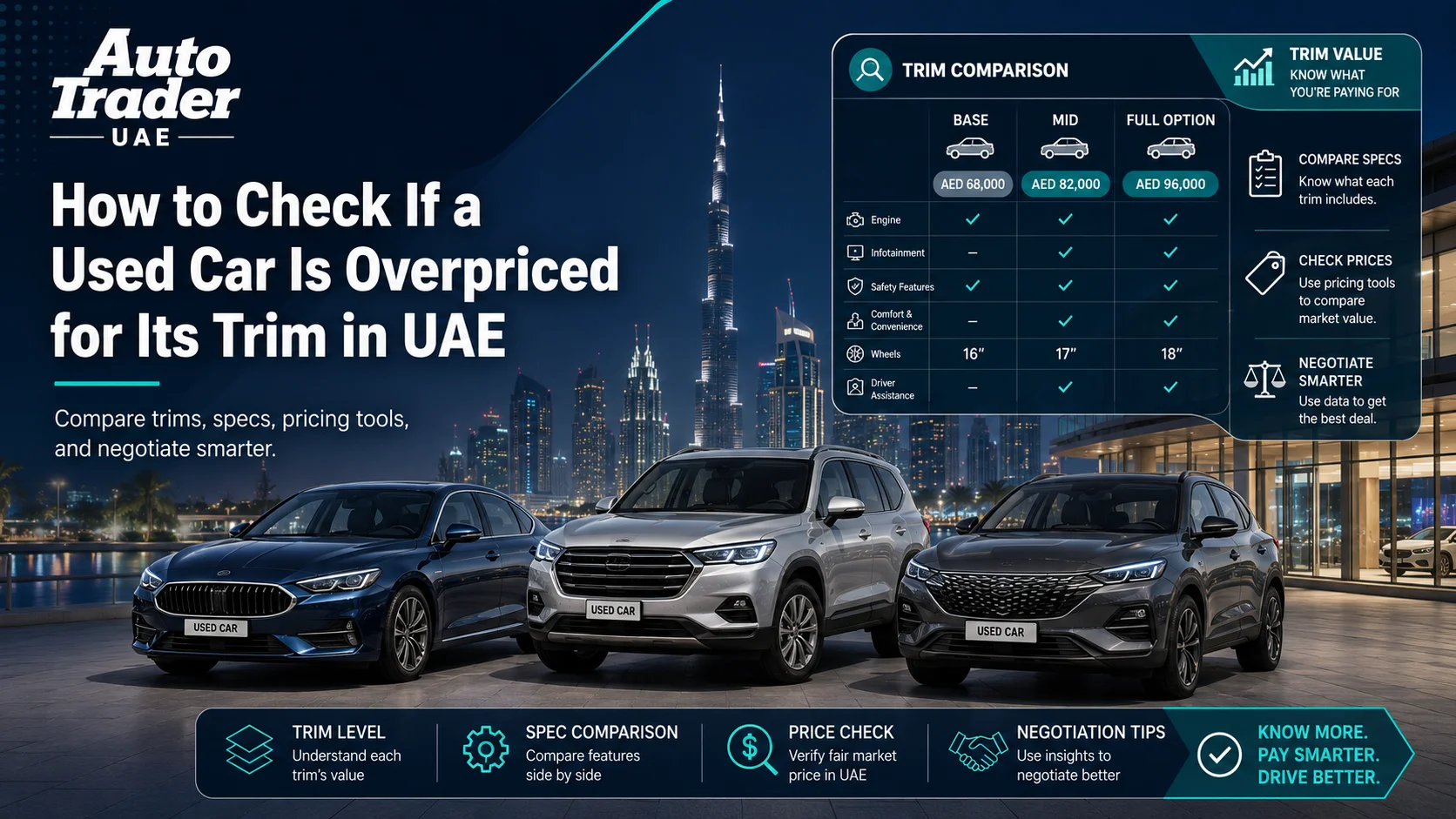
How to Check If a Used Car Is Overpriced for Its Trim in UAE
Buying used in the UAE can save you a lot of money, but only if you pay the right price for the right trim. Two cars with the same model year can be tens of thousands of dirhams apart simply because of trim level, options, and condition. This guide explains how to check if a used car is overpriced for its trim in the UAE market, using real‑world steps you can apply directly when browsing listings on Auto Trader UAE.
1. Understand What “Trim” Really Means
Before you can judge whether a car is overpriced, you need to be clear on what you’re comparing.
What is a trim level?
A trim is a specific configuration of a model – usually combining engine, gearbox, interior features, safety tech, and styling. Common trim names in the UAE include:
- Base / S / SE
- Sport / SR / R-Line / M Sport / AMG Line
- Luxury / Premium / Platinum / Titanium
- Off‑road packages for 4x4 and SUV models
Different trims can mean big differences in price and desirability. A top trim often has:
- More powerful or more efficient engine
- Leather seats, sunroof, better sound system
- Advanced driver‑assistance (adaptive cruise, lane assist, 360 camera)
- Bigger wheels and body kits
Why trim matters to price
In the UAE, trims strongly influence resale value because:
- Top specs are more in demand when buyers want “full option” cars
- Base trims may be harder to sell later, so buyers expect a lower price
- Fleet and rental cars are often basic spec, which keeps their value down
If you don’t correctly identify the trim, you can easily overpay for a low‑spec car that just “looks” similar in photos.
2. Decode the Trim: Never Trust the Title Only
Many listings in the UAE use words like “full option” or “top of the range” without clear proof. Always verify.
Step‑by‑step: How to confirm the trim
- Check the registration card (Mulkiya)
It often shows engine size and sometimes trim code. If you’re viewing the car in person, ask to see it. - Use the VIN (chassis number)
The VIN can be decoded through manufacturer websites or online VIN decoders to confirm exact trim, engine, and factory options. - Compare visible features
Look at the features listed and visible in photos:- Headlights: halogen vs LED vs matrix
- Seats: cloth vs part‑leather vs full leather, manual vs electric, with or without memory
- Dashboard: basic instrument cluster vs digital, presence of heads‑up display
- Infotainment: screen size, navigation, Android Auto / Apple CarPlay
- Safety: front + side + curtain airbags, parking sensors, 360 camera
- Look for trim badges and wheel designs
Many trims have specific badges (e.g. “SE”, “Sport”, “Limited”) and unique rims. If the car’s badge doesn’t match the advertised trim, treat the price with caution.
If what you see doesn’t match what is advertised, there’s a good chance the asking price is based on a higher trim than the car actually is.
3. Build a Like‑for‑Like Comparison in the UAE Market
The best way to check if a used car is overpriced for its trim is to compare it to as many similar cars as possible.
Use Auto Trader UAE filters properly
On Auto Trader UAE, narrow down to:
- Exact make and model
- Model year or small range (±1 year)
- Trim / variant where available
- Similar kilometres (e.g. 80,000–120,000 km)
- Fuel type (petrol, diesel, hybrid, electric)
- Location (Dubai, Abu Dhabi, Sharjah, etc.)
This gives you a realistic price range for that trim in today’s UAE market.
Watch for region‑spec differences
The UAE market has Gulf‑spec, US‑spec, and occasionally European‑spec imports. These can price differently even for the same trim name.
- GCC / Gulf‑spec: usually worth more because they are built for regional climate and have warranty histories here.
- US‑spec / imports: often cheaper; may have accident or salvage history. Specs can be higher or lower depending on package.
Always compare a car with others of the same specification region when judging price.
4. Adjust for Mileage, Condition, and Service History
Even within the same trim, price can vary significantly based on how the car has been used and maintained.
Mileage
In the UAE, average private‑use mileage is roughly 15,000–25,000 km per year. When checking if a car is overpriced, ask:
- Is the mileage much lower than other similar trims? A moderate premium can be justified.
- Is the mileage significantly higher? Then the car should be discounted versus similar listings.
Condition and previous use
Consider whether the car appears to be:
- Privately used with careful ownership
- Ex‑rental or fleet – often base trim, high mileage, and more wear
- Modified – body kits, engine tuning, aftermarket wheels; this may reduce or increase value depending on buyer preference
Look closely at interior photos: worn steering wheel, torn seats, or faded buttons can signal heavy use, even if mileage looks reasonable.
Service history
A complete service history can justify a higher price within the same trim. Ask for:
- Stamped dealer or specialist service book
- Invoices for major work (timing belt, brakes, tyres, battery)
- Evidence of recalls performed
A car advertised at the top of the price range for its trim should come with strong paperwork.
5. Check for Accident, Repair, and Flood History
Hidden damage can make a car overpriced even if the trim and mileage look correct.
What to do in the UAE
- Request a pre‑purchase inspection from a trusted workshop or agency service centre. They can spot repainted panels, chassis damage, and poor repairs.
- Use official history checks where available (for example, RTA and police channels for Dubai and other Emirates) to confirm no major accident records.
- Be careful with US‑spec imports – many are repaired after accidents or floods. Use a US history check (Carfax, Autocheck, etc.) if possible.
If a car has a serious accident history, its price should be clearly below clean‑history cars of the same trim.
6. Compare Against Lower and Higher Trims
A smart way to spot an overpriced car is to compare its asking price to neighbouring trims of the same model.
How to do it
On Auto Trader UAE:
- Filter by same model and year.
- Note the average asking price for the trim you’re interested in.
- Then check the trim below and the trim above with similar mileage and condition.
If the price of your chosen car:
- Is very close to the higher trim with more options – it’s likely overpriced.
- Is higher than some better‑equipped trims – walk away or negotiate hard.
This also helps you see whether stretching slightly to a higher trim could make more sense for long‑term satisfaction and resale.
7. Factor in Options, Packages, and Aftermarket Add‑Ons
Many cars in the UAE have optional packages that don’t change the trim name but do affect value.
Factory options that can justify a higher price
Examples that can add genuine value compared to the same trim without them:
- Panoramic roof or sunroof
- Upgraded sound system (Bose, Harman Kardon, etc.)
- Advanced safety pack (adaptive cruise, blind‑spot monitoring, lane keep, 360 camera)
- Adaptive suspension or off‑road package on 4x4 and SUV models
- Factory leather and electric seats
Aftermarket extras with limited price impact
Sellers sometimes overestimate the value of:
- Aftermarket wheels and tyres
- Body kits and wraps
- Sound systems and screens
- Tinting and small cosmetic add‑ons
These rarely justify a major premium over other cars of the same trim. They may be nice to have, but they don’t usually recover what the owner spent.
8. Use Simple Price‑Check Methods Before You Call
Before you invest time visiting a car, do some quick checks.
A. Compare against the median asking price
From your Auto Trader UAE search results:
- Ignore the very cheapest (often high mileage or accident cars).
- Ignore the very highest (often unrealistic or glorified “showroom condition” claims).
- Focus on the middle group of prices for the same trim and mileage band.
If the car you’re viewing is 10–15% above that middle group, the seller should have a strong reason (very low km, full dealer history, extended warranty). If not, it’s likely overpriced.
B. Cross‑check with new‑car pricing
Visit the brand’s UAE website or contact dealers to get an idea of current new‑car figures for the same model or newer generation. If a 4‑year‑old mid‑trim car is priced dangerously close to a brand‑new model with warranty and updated tech, the used one is probably too expensive.
9. Recognise Red Flags in Listings and Conversations
Some signs that a car may be overpriced for its trim:
- Vague descriptions: “Full option” without listing actual features.
- Trim mismatch: Advertised as “Top of the range” but photos show basic seats, halogen lights, or missing features.
- Rushed pressure: “Price not negotiable, many buyers waiting” when the car has been listed for weeks or months.
- No documentation: Top‑price asking with no full service history, no inspection, and unclear number of previous owners.
Any of these should push you to either negotiate strongly or move on to better‑priced alternatives.
10. How to Negotiate When a Car Is Overpriced for Its Trim
If you like the car but believe the price is too high, use your research as leverage.
Prepare your evidence
Before calling or meeting the seller, have:
- 3–5 comparable listings on Auto Trader UAE showing similar or better trims at lower prices.
- Notes on missing options vs what the seller is claiming.
- Any inspection points or services due soon (tyres, brakes, major service).
How to present your offer
Be polite and factual:
“I’ve checked similar [model + year + trim] on Auto Trader UAE in Dubai and Abu Dhabi. Most with similar mileage and options are around AED [X]. Because this car is missing [list features] and needs [service/tyres], a fair price in today’s market is AED [your offer].”
If the seller won’t move and the gap is large, be ready to walk away. There are always more cars, especially for popular models.
11. Tips for Sellers: How Not to Overprice Your Car
If you’re selling your car in the UAE, realistic pricing is the fastest way to attract serious buyers.
Know your real trim and spec
- Confirm the exact trim from your Mulkiya, VIN, or original invoice.
- List your options clearly: sunroof, navigation, safety pack, wheel size, sound system, etc.
Price within the right range
- Search Auto Trader UAE for your exact trim and year.
- Note the middle range of asking prices for similar km and condition.
- Price fairly within that band; add a small margin if you have exceptional mileage and full dealer history.
Realistic pricing and clear trim information will bring more views, more calls, and a quicker sale.
12. When It Makes Sense to Pay a Little Extra
Not every “overpriced” car is a bad deal. Sometimes paying slightly above the average for a trim is smart, especially if the car offers:
- Verified low mileage with full dealer history
- Remaining manufacturer warranty or extended warranty
- GCC‑spec private ownership with clear accident‑free inspection
- High‑demand colour and options that will help resale later
In these cases, a modest premium may be justified because you’ll likely save on maintenance and enjoy stronger resale value.
13. Next Steps on Auto Trader UAE
When you’re ready to check if a used car is overpriced for its trim in the UAE, use this article as a checklist:
- Identify the exact trim and spec, not just the model.
- Compare like‑for‑like listings on Auto Trader UAE.
- Adjust for mileage, condition, history, and options.
- Watch for red flags and be prepared to negotiate or walk away.
Browse thousands of used cars in UAE on Auto Trader UAE, from budget‑friendly compacts to premium SUV and luxury models. If you’re shopping in the emirate’s busiest market, explore our latest used cars in Dubai to compare trims, prices, and specs side by side. Whether you’re buying or selling, understanding how trim affects price will help you move faster, negotiate smarter, and get the best value in the UAE’s competitive used‑car market.
Browse used cars in UAE on Auto Trader UAE to compare live listings, prices, and current market activity more clearly.
Related Links
Buyer Takeaway
When buying a used car in the UAE, focus on vehicle condition, service history, inspection quality, paperwork, and total running costs rather than price alone. Compare options carefully and choose the option that best matches your budget and real needs.
Seller Takeaway
If you are selling a used car in the UAE, present the service history clearly, price the vehicle realistically, and highlight condition, specification, and ownership strengths honestly. A well-prepared listing with accurate details usually attracts more serious buyers.
Conclusion
A careful used car purchase in the UAE starts with research, proper inspection, and clear paperwork before making the final decision.