
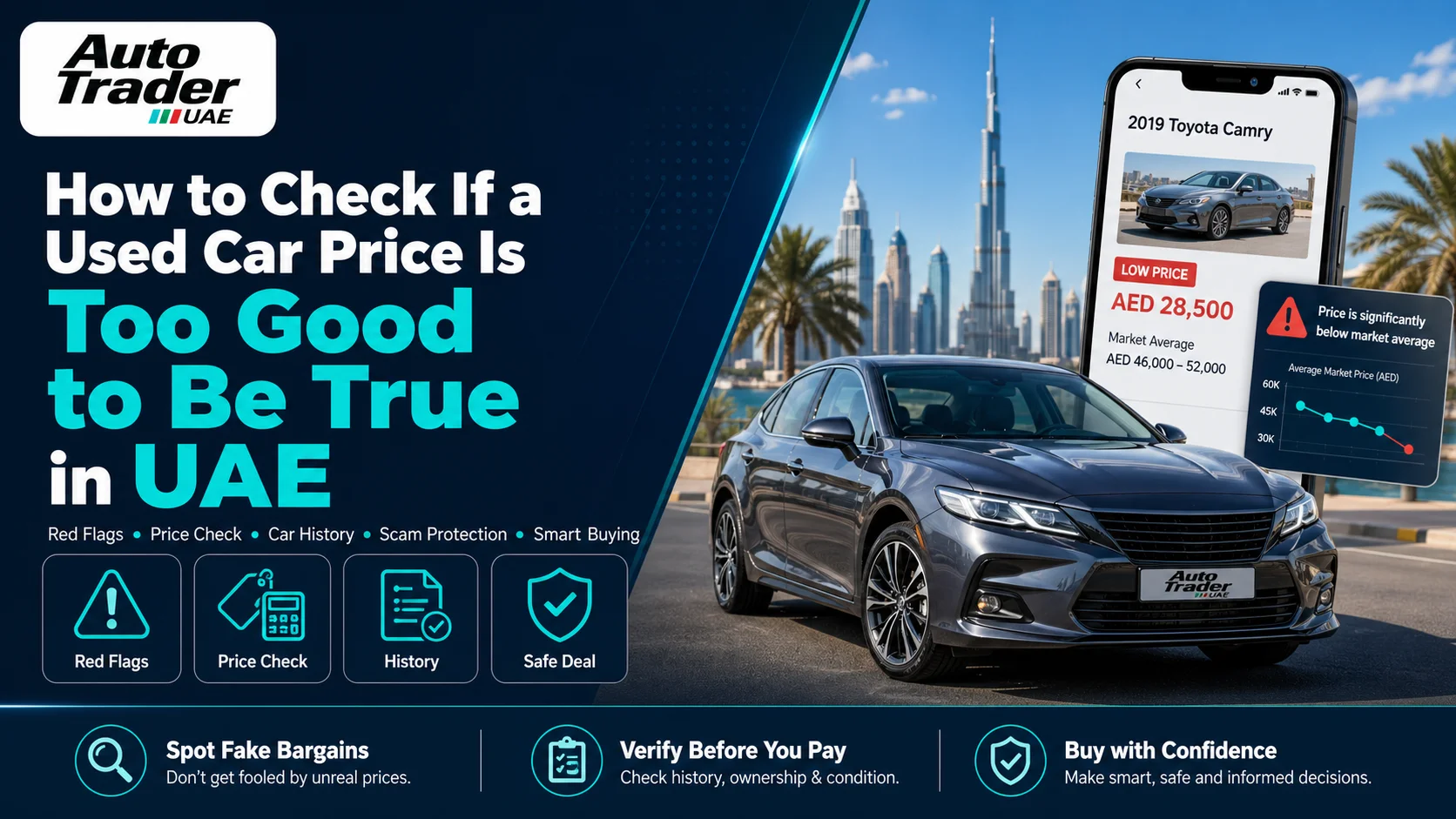
How to Check If a Used Car Price Is Too Good to Be True in UAE
Finding a used car in the UAE at a bargain price feels great – until you start wondering what’s wrong with it. With so many listings across Dubai, Abu Dhabi, Sharjah and beyond, it can be hard to know whether you’ve found a genuine deal or a costly mistake waiting to happen.
This guide explains how to check if a used car price is too good to be true in the UAE, with practical steps you can follow before you send a deposit, sign a contract, or transfer ownership.
How to estimate a fair used car price in the UAE
- Compare multiple listings: Search for the same make, model, year, trim and similar mileage on major UAE classifieds and dealer platforms. A single cheap ad means nothing – look at the overall range.
- Check dealer vs private seller prices: Dealer cars usually cost more due to warranty, inspection and overheads. A private seller should be cheaper – but not unrealistically cheaper.
- Notice mileage and options: Higher mileage, base trim, or missing features can legitimately reduce the price, but big drops need an explanation.
As a rule of thumb, if a car is 20–30% below the typical market range for similar cars in the UAE, treat it as a potential red flag and inspect it very carefully.
2. Common Reasons a Used Car Is Genuinely Cheaper
Not every low price is a scam. Some cars are fairly priced lower for understandable reasons. Ask the seller directly about:
- High mileage: Cars regularly driven between Emirates or for work (e.g. sales reps, delivery) will have higher mileage and lower resale value.
- Basic specifications: GCC vs import, base trim vs full option, cloth vs leather, small screen vs big infotainment – all affect price.
- Cosmetic damage: Faded paint, small dents, scratched interior, or worn tyres can bring the price down, especially if the seller wants a quick sale.
- Urgent relocation or upgrade: Owners leaving the UAE or upgrading to a new car may price aggressively to sell quickly.
- Older model years: Even if the car looks modern, a couple of extra years in age can cut the price significantly.
These are valid reasons for a lower asking price – as long as the seller is transparent and the story matches the car’s condition and paperwork.
3. Red Flags That a Used Car Price Is Too Good to Be True
When the price is far below market and the seller’s explanation feels weak or unclear, look for these warning signs:
- No physical viewing allowed: The seller claims they are abroad, offshore, or in a restricted area and asks for a deposit before you see the car.
- Pressure to pay quickly: “First come, first served”, “I have many buyers waiting”, or “Pay a small deposit now or I’ll give it to someone else”.
- Refusal to share key documents: The seller avoids sending the Mulkiya (registration card) photo, service records, or Emirates ID.
- Suspicious story about location: The car is supposedly in another emirate, free zone, or even another country, but “shipping is easy” if you transfer money first.
- Payment only via bank transfer or cash courier: No willingness to meet at RTA, Tasjeel, or a trusted location; insisting on advance payment or remote deal.
- Photos don’t match reality: Different number plates in each image, strange cropping, or photos that appear copied from other ads.
- Seller avoids inspection: Refuses to take the car to RTA/Tasjeel testing or a recognised workshop.
One red flag alone doesn’t always mean a scam – but multiple red flags combined with an unrealistically low price usually do.
4. Verify the Car’s Identity and Ownership
Always confirm that the car you’re viewing is the car being advertised, and that the seller is authorised to sell it.
Check these details carefully:
- Chassis/VIN number: Make sure the VIN on the car (engine bay, under windshield, driver’s door pillar) matches the number on the Mulkiya and any inspection report.
- Engine number: For higher-value cars, confirm that the engine number matches the records (especially if the price is surprisingly low).
- Name on the Mulkiya: It should match the seller’s Emirates ID. If it doesn’t, ask for a documented authorisation (e.g. company letter or signed power of attorney).
- Outstanding fines or loans: In many Emirates, you can check fines online by plate number. For loans, the seller should confirm that the car is clear or explain the finance settlement process.
If the seller refuses to show the original Mulkiya or claims it is “lost” but wants payment now, walk away.
5. Use Official UAE Tools to Check Car History
The UAE provides several ways to verify a car’s background. These checks are especially important when a price looks too low.
What to look for in a history report
- Accident history: Major accidents, structural damage, or airbag deployments should significantly affect value – if the seller doesn’t mention them, be cautious.
- Odometer consistency: Compare recorded mileage with the current odometer reading. Huge gaps or sudden drops may indicate tampering.
- Import/salvage status: Some imported cars were previously declared total loss or salvage abroad, then repaired and sold in the region at low prices.
- Usage type: Ex-rental, fleet, or taxi vehicles often see heavier use and should be cheaper – but this must be disclosed honestly.
If a history report reveals heavy accident damage or salvage status that the seller never mentioned, it often explains the “too good to be true” price – and gives you strong reason to walk away or renegotiate.
6. Inspect the Car: Mechanical and Structural Checks
A proper inspection is non‑negotiable, especially when the price is surprisingly low.
Basic checks you can do yourself
- Exterior: Look for uneven panel gaps, mismatched paint shades, overspray, or waves in the bodywork – possible signs of accident repairs.
- Tyres: Check all four tyres and the spare. Very cheap tyres or uneven wear might indicate suspension or alignment issues.
- Interior: Excessive wear on the steering wheel, gear knob and seats with low claimed mileage is suspicious.
- Lights and electronics: Test headlights, indicators, AC, windows, infotainment, and parking sensors. Fixing multiple electrical issues can be costly.
Why a professional inspection matters
For high-value or suspiciously cheap cars, always use:
- RTA/Tasjeel or authorised testing centres for a full mechanical and chassis report where available.
- Independent workshops experienced with the specific brand for a pre‑purchase inspection.
A discounted car that needs major engine, gearbox, or chassis repairs will quickly erase any savings – and may even be unsafe.
7. Watch for Odometer and Service History Tricks
Low mileage is a major selling point in the UAE, which makes it a target for abuse when sellers want to justify a higher price – or distract you from other problems when the car is very cheap.
How to check if the mileage makes sense
- Service book and invoices: Look for regular stamps and invoices that show mileage at each visit.
- Dealer system check: For many brands, a dealer can confirm past service visits and recorded mileage based on VIN.
- Physical condition vs mileage: A car showing 60,000 km but with heavy seat wear, shiny steering wheel, and worn pedals may have more real use.
If the car’s mileage is unusually low for its age yet the price is still extremely low, something may be wrong – either hidden damage, a major mechanical issue, or manipulated records.
8. Understand “Too Good to Be True” Finance and Warranty Claims
Sometimes the car’s price looks normal, but the seller’s promises around finance or warranty are unrealistic.
- “Full dealer warranty”: Ask for written evidence, not just verbal claims. Confirm with the dealer directly using the VIN.
- “Zero down payment, we handle bank approval”: Only work with reputable dealers and banks you can verify. Avoid giving passport copies or bank details to unknown parties.
- Aftermarket warranties: Read what is actually covered and for how long. Many cheap warranties exclude the parts you care about most.
If a deal promises more benefits than others in the market – very low EMIs, long warranty, super low price – slow down and verify every detail.
9. Safe Payment and Transfer Practices in the UAE
Even if the price checks out, protect yourself during payment and transfer.
Best practices for a safe transaction
- Always meet in person in a public, secure place – ideally at RTA, Tasjeel, or a reputable dealer showroom.
- Do not pay full amount before transfer: Use a small, documented holding deposit only if necessary, and release the balance after ownership transfer is initiated.
- Use traceable payment methods: Bank transfer or cashier’s cheque is safer than large amounts of cash.
- Complete transfer officially: Do ownership transfer through the correct authority in your Emirate (e.g. RTA in Dubai), and ensure insurance is active before driving away.
If the seller resists meeting at an official centre or insists on full payment first because the “price is already very low”, reconsider the deal.
10. How Sellers Can Price Honestly Without Scaring Buyers
If you’re selling a car in the UAE and want to set a competitive price without making buyers suspicious, be transparent.
- Show your research: Mention that your price is based on mileage, model year and similar listings.
- Clearly list flaws: Mention any accident repairs, paintwork, scratches or mechanical issues in the ad description.
- Upload detailed photos: Include close-ups of tyres, interior, dashboard with mileage, and key documents (with sensitive details blurred).
- Offer inspection: State that you welcome pre‑purchase inspection at RTA/Tasjeel or a recognised workshop.
Honesty reduces time-wasting negotiations and attracts serious buyers who appreciate a fair, realistic price.
Next Steps With Auto Trader UAE
When you know how to check if a used car price is too good to be true in the UAE, you can move faster on genuine bargains and avoid expensive mistakes. Use trusted platforms like Auto Trader UAE to compare prices, review detailed listings, and connect with serious buyers and sellers across the country.
Before you commit to a used car purchase, it’s also smart to understand the full cost of ownership – from insurance to servicing and fuel. Explore the money and ownership guides on Auto Trader UAE to help you budget confidently and avoid surprises.
For more practical buying tips, selling advice, and up‑to‑date guides on the UAE car market, visit the Auto Trader UAE blog and our money and ownership sections for detailed breakdowns on finance, insurance and running costs.
Browse used cars in UAE on Auto Trader UAE to compare live listings, prices, and current market activity more clearly.
Related Links
Buyer Takeaway
When buying a used car in the UAE, focus on vehicle condition, service history, inspection quality, paperwork, and total running costs rather than price alone. Compare options carefully and choose the option that best matches your budget and real needs.
Seller Takeaway
If you are selling a used car in the UAE, present the service history clearly, price the vehicle realistically, and highlight condition, specification, and ownership strengths honestly. A well-prepared listing with accurate details usually attracts more serious buyers.
Conclusion
A careful used car purchase in the UAE starts with research, proper inspection, and clear paperwork before making the final decision.