
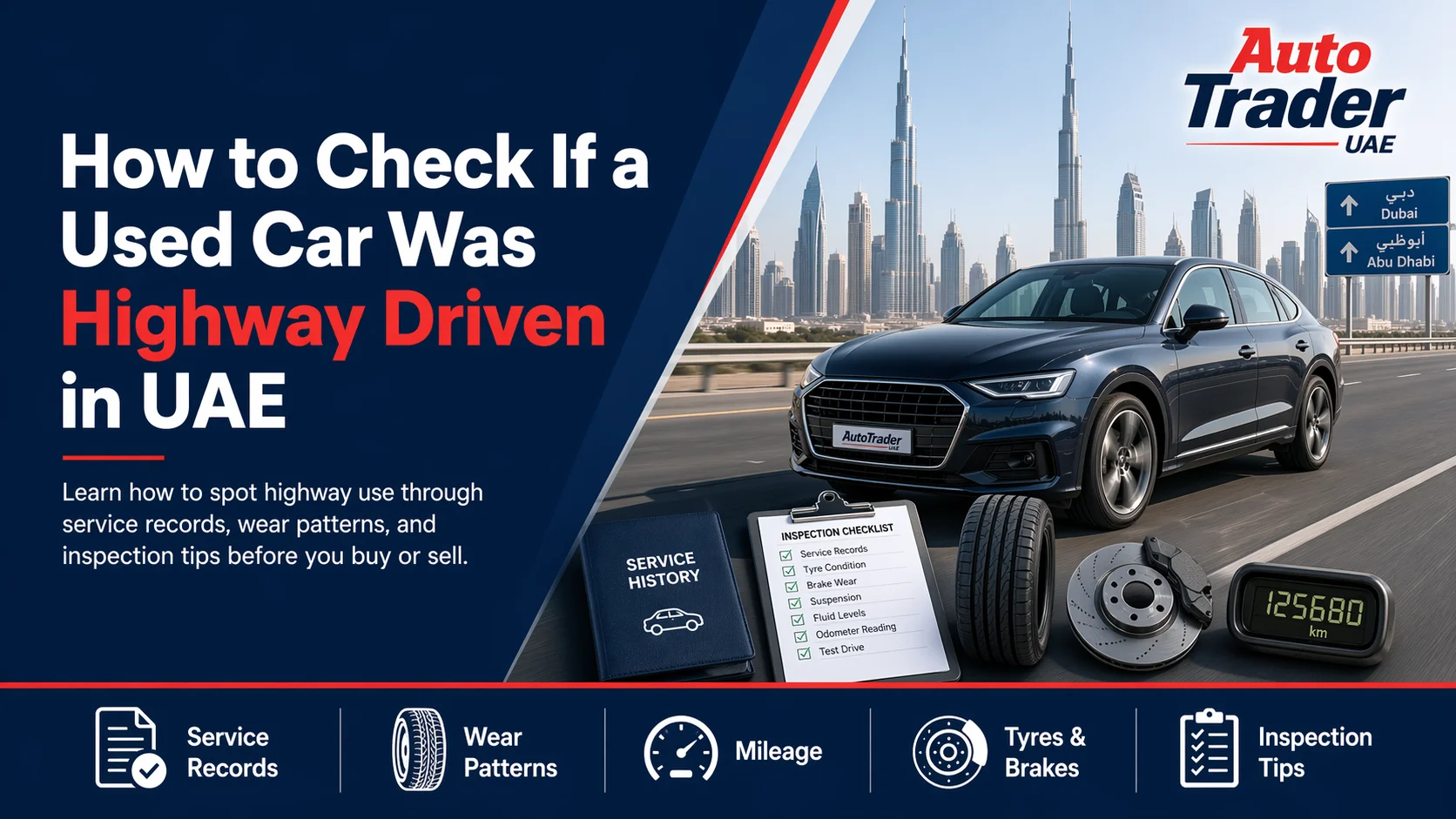
How to Check If a Used Car Was Highway Driven in UAE
Buying a used car in the UAE often comes with one familiar sales line: “Only driven on the highway, mostly between Dubai and Abu Dhabi.” Sometimes it’s true, sometimes it’s not. Knowing how to check if a used car was really highway driven can help you judge its condition, value, and long-term reliability. This guide explains what “highway driven” actually means, the signs to look for, and how both buyers and sellers in the UAE can use this information when negotiating on Auto Trader UAE or at the showroom.
Why Highway Driving Matters in the UAE
In the UAE, highway driving usually means long, steady-speed runs on roads like E11, E311, or between emirates. Compared to city driving in Dubai, Abu Dhabi, or Sharjah, highway driving can be easier on some parts of the car but tougher on others. Typical benefits of genuine highway mileage:
- Fewer start–stop cycles, less clutch and brake wear
- Often better fuel economy history
- Engine typically runs at stable temperatures instead of constant stop-and-go stress
But highway use in the UAE can also mean:
- Stone chips on the front bumper, bonnet, and windscreen
- Potential sun damage from long hours parked in open lots
- High annual mileage from daily inter-emirate commuting
So a “highway car” isn’t automatically better. You still need to inspect properly.
1. Start With the Basics: Mileage vs Age
The first clue is the car’s mileage compared to its age.
- High mileage, relatively young car (e.g. a 4-year-old car with 150,000+ km) often suggests regular long-distance highway use.
- Low mileage, older car (e.g. 8–10 years old with 60,000–80,000 km) usually points to city or occasional use.
In the UAE, it’s common for daily commuters between emirates to clock 30,000–40,000 km per year. That can be mostly highway, and the car can still be in decent mechanical condition if serviced on time. What to do:
- Compare the odometer reading with the year of manufacture.
- Ask the owner: “Where did you mostly drive? City or highway? Daily route?”
- Check if their story matches the mileage pattern and service records.
2. Check Service History and Records in the UAE
Service records can reveal both driving style and typical routes. What to look for in the service book or dealer history:
- Consistent, regular servicing at 10,000–15,000 km intervals (or according to manufacturer schedule) suggests continuous use – common for highway commuters.
- Large jumps in mileage between services, such as 80,000 km → 110,000 km → 140,000 km in a short time, may indicate long-distance highway travel.
- Workshop location (e.g. services done in Abu Dhabi for a car registered in Dubai) can hint at regular inter-emirate commuting.
How to verify in the UAE:
- Ask for dealer service printouts if the car was serviced at an official agency.
- Review invoices from independent garages for dates, mileage, and any major repairs.
- On Auto Trader UAE, carefully read the listing description and photos of the service book, if provided.
If the seller claims “only highway” but the mileage increases very slowly over the years, the story may not add up.
3. Inspect Wear Items That Reveal City vs Highway Use
Certain components wear out faster in stop‑start city traffic than on long highway runs. Comparing their condition to the car’s mileage can tell you a lot.
Tyres
- Evenly worn tyres with tread depth consistent across all four wheels can match highway use.
- Uneven wear (edges worn, one tyre far worse) may point to alignment issues or harsh city driving over curbs and speed bumps.
- Check the DOT manufacturing date on the sidewall – very old original tyres on a relatively low‑mileage car may suggest the car hasn’t travelled many highway kilometres.
Brakes
Highway driving tends to be easier on brakes than city traffic.
- If discs and pads were replaced early (e.g. around 40,000–60,000 km), that can indicate heavy city or aggressive driving.
- Well-maintained highway cars may keep original discs for longer, depending on driving habits and weight of the vehicle.
Clutch (for manual cars)
Manual cars driven mostly on highways usually have less clutch wear.
- Early clutch replacement or a slipping clutch at modest mileage often points to stop–start city driving or poor driving technique.
Ask the seller if and when these items were changed, and see if the timing matches genuine highway usage and overall mileage.
4. Look for Exterior Signs of Frequent Highway Use
Cars that live on UAE highways pick up a specific type of cosmetic wear. Front end and windscreen
- Multiple stone chips and small paint defects on the front bumper, grille, and bonnet are typical of regular high-speed motorway driving.
- Check the windscreen for tiny impact marks or chip repairs. That’s common on cars used often between emirates.
Headlights
- Long, sunny highway exposure can cause headlight yellowing or hazing.
- Very clear, new-looking headlights on a high-mileage car could indicate a recent replacement – ask why.
Body panels
- Highway cars may show fewer door dings and parking scratches than city cars used in tight parking areas and busy malls.
Taken together, these clues help confirm if the “highway driven” claim makes sense.
5. Check the Interior for Commuter Use Patterns
The cabin can tell you how the car was used every day.
- Driver’s seat wear: Highway commuters spend long hours in the driver’s seat. Look for moderate seat cushion wear and shiny steering wheel or gear knob on higher-mileage cars.
- Passenger seat & rear seats: If the car was mostly a solo commuter, front passenger and rear seats may look almost unused even with high mileage.
- Pedals: Excessive wear on the brake pedal for relatively low mileage can hint at heavy city stop–start use.
A car with high mileage, light steering wheel wear, and very fresh driver’s seat may have had interior parts refurbished – which is fine, but you should then rely more on records and a professional inspection.
6. Use Onboard Data: Trip Computer and Service Menus
Modern cars often store useful data in their infotainment and instrument clusters. Average fuel consumption
- Highway-heavy cars often show lower average fuel consumption than similar models used mainly in the city.
- Ask the owner not to reset the trip computer before your test drive so you can see typical values.
Average speed
- Many trip computers show average speed over a period. A consistently higher average speed can be a sign of highway usage.
Note that this data can be reset, so use it as supporting evidence, not absolute proof.
7. Use UAE-Specific Checks: Traffic, Insurance and Inspection Reports
In the UAE, you may be able to access extra information beyond the car itself.
- RTA / emirate authority inspection reports: When available, they show mileage at previous registration or passing tests – useful to confirm consistent high annual mileage.
- Insurance history: Ask if the seller has any comprehensive insurance repair reports; frequent highway use sometimes correlates with windscreen and front-end repairs.
- Previous owner profile: Fleet, company and sales rep vehicles often do a lot of inter-city driving.
When you search on Auto Trader UAE, look out for sellers who upload service stamps, RTA passing slips, and invoices – these increase transparency and make it easier to verify how the car was driven.
8. Test Drive: How Does a Highway-Driven Car Feel?
A proper test drive is still one of the best tools you have. On the move, pay attention to:
- Steering stability at speed: Highway cars should track straight. If the car feels nervous or pulls, it may have alignment or suspension wear.
- Wind and road noise: High-mileage highway cars sometimes develop extra wind noise from worn door rubbers or past windscreen replacements.
- Brake feel: Look for smooth, stable braking without vibrations – warped discs can come from repeated hard braking, whether city or highway.
Try to include a short stretch of higher-speed road during the test drive (within legal limits) so you can sense how the car behaves in the environment it was supposedly used in.
9. When to Call a Professional Inspector
Regardless of how a car was used, a professional inspection in the UAE is strongly recommended for any serious used-car purchase. Independent garages and inspection centres can:
- Check undercarriage, suspension and bushings for wear patterns.
- Inspect paint thickness to see if the front end was resprayed after stone chips or accidents.
- Scan the car’s ECU for stored fault codes and mileage consistency (where applicable).
If you’re buying through a dealer or seller you found on Auto Trader UAE, ask if they will allow a third-party inspection before finalising the deal.
Buyer Takeaway: How to Use This Information When Shopping
For buyers on Auto Trader UAE, whether the car was highway driven is just one part of the decision. Here’s how to use it practically:
- Don’t fear high mileage alone: A well-maintained, mostly highway-driven car can be a better buy than a low-mile, poorly serviced city car.
- Value service history over claims: Give more weight to documented maintenance than to verbal “highway only” promises.
- Adjust your expectations: Expect some front-end chips, windscreen marks, and cosmetic wear on genuine highway cars.
- Compare similar listings: Use Auto Trader UAE filters to compare same-model cars with different mileage and conditions to see realistic price differences.
Seller Takeaway: How to Present a Highway-Driven Car Honestly
If you’re selling a car that has genuinely been used mainly on UAE highways, you can turn this into a selling point – but it must be transparent and supported by proof. Tips for sellers listing on Auto Trader UAE:
- Mention realistic usage in the description: “Mainly driven between Dubai and Abu Dhabi for work, mostly highway km.”
- Upload clear photos of the service book, dealer stamps, RTA passing slips, and any major invoices.
- Acknowledge cosmetic wear like stone chips and windscreen marks; buyers appreciate honesty.
- Price correctly for mileage and condition – high mileage but full history can still command a strong, fair price.
A clear, honest listing on Auto Trader UAE often sells faster than one relying on vague marketing phrases.
Conclusion
Knowing how to check if a used car was highway driven in the UAE comes down to combining several clues:
- Mileage versus age and service history
- Wear on tyres, brakes, clutch and interior
- Exterior stone chips and windscreen condition
- Trip-computer data and official records
- How the car feels on a proper test drive
“Highway driven” alone doesn’t make a car good or bad – condition, maintenance, and accident history matter more. Use these checks to ask better questions, negotiate more confidently, and choose the right car for your needs. When you’re ready to start comparing real cars, visit Auto Trader UAE to browse a wide range of used cars, check detailed listings, and connect with sellers across all emirates. From daily commuters to family SUVs, you’ll find options with the mileage, history, and price that suit your budget – and you can apply everything from this guide to make a smarter choice.
If you are exploring used cars in Dubai or elsewhere in the UAE, Auto Trader UAE makes it easier to compare listings, prices, trims, mileage, and seller details in one place.