
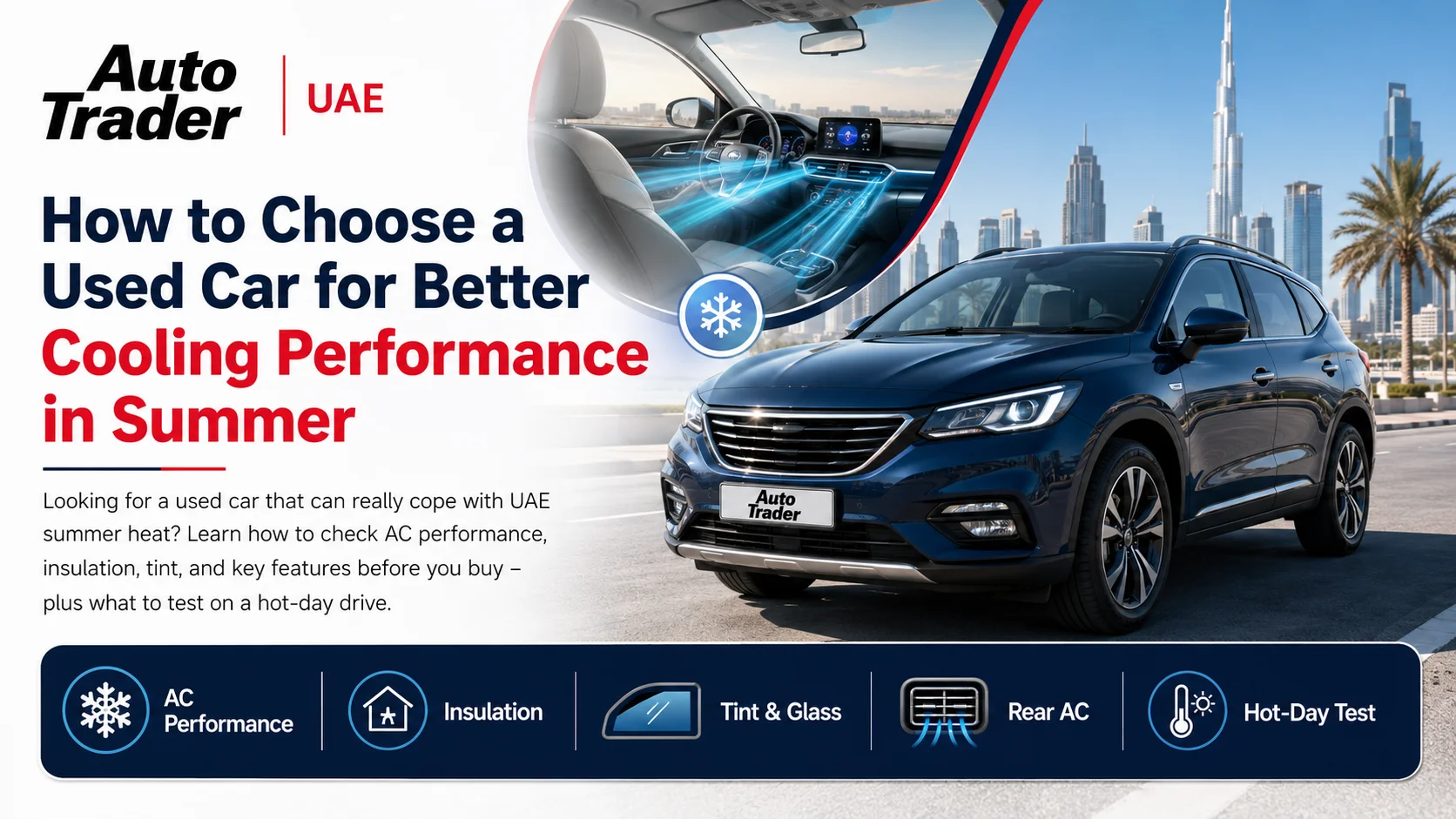
How to Choose a Used Car for Better Cooling Performance in Summer
In the UAE, a powerful, reliable air-conditioning system is not a luxury – it’s a must-have. If you’re shopping for a used car, cooling performance should be one of your top priorities, right alongside mileage, service history, and price.
This guide from Auto Trader UAE explains how to choose a used car that stays genuinely cool in summer, what to inspect, and how to test the AC on a viewing or test drive.
Why Cooling Performance Matters So Much in the UAE
- Extreme daytime heat: Sitting in heavy traffic under strong sun quickly exposes weak AC systems.
- Cabin comfort for families: Children, elderly passengers, and pets are more sensitive to heat and slow cooling.
- Resale value: Cars known for strong AC are easier to sell on platforms like Auto Trader UAE.
- Component stress: In hot climates, AC systems work harder, so build quality and maintenance matter more.
Step 1: Choose Body Style and Size with Cooling in Mind
The type and size of car you choose has a big impact on how quickly and evenly it cools down.
Smaller Cars vs Larger SUVs
- Small hatchbacks and sedans: Generally cool faster because there’s less cabin volume. Ideal for solo drivers and small families who spend a lot of time in city traffic.
- Crossovers and SUVs: Offer more space but take longer to cool, especially with three rows. Look for models with strong compressors, rear AC vents, and roof vents if available.
- Large MPVs and 7-seaters: Absolutely need effective multi-zone or rear AC to keep third-row passengers comfortable.
If you’re considering a larger vehicle, search for used cars in UAE with rear AC vents or dedicated rear controls mentioned in the listing.
Step 2: Prioritise Brands and Models Known for Strong AC
Some brands and regional-spec models sold in the UAE and GCC are better adapted for high temperatures. While this guide won’t rank individual cars, you can look for:
- GCC-spec vehicles: These usually have stronger AC systems, higher-capacity radiators, and better cooling calibration than generic “import” or “US-spec” versions.
- Models popular with taxi fleets: Cars widely used as taxis in the GCC are often chosen because their AC can handle long hours in harsh heat.
- Service records from UAE dealers: Indicate that the car has likely been maintained to suit local climate needs.
On Auto Trader UAE, always check the description for terms like “GCC spec”, “dealer maintained” and “full service history” when shortlisting cars with strong cooling potential.
Step 3: Understand the Key AC Features to Look For
When browsing used listings, pay attention to these cooling-related features:
1. Automatic Climate Control vs Manual AC
- Manual AC: You set the fan speed and temperature with simple knobs or sliders. Works fine, but you’ll adjust more often in changing conditions.
- Automatic climate control: You set a temperature (e.g. 22°C) and the system adjusts the fan and airflow automatically. Dual- or tri-zone systems let driver and passengers pick individual settings.
For UAE summers, automatic climate control with multiple zones is especially valuable in larger sedans and SUVs.
2. Rear AC Vents and Rear Controls
Rear vents dramatically improve comfort for passengers in the back.
- Look for rear console vents for second-row passengers.
- In larger SUVs or MPVs, aim for roof-mounted vents and separate rear AC controls.
- If you regularly carry passengers in the third row, rear roof vents are almost essential for quick cooling.
3. Vent Layout and Fan Speed
During a viewing, check:
- Number of front vents and how adjustable they are.
- Maximum fan speed – is it powerful enough to clear hot air quickly?
- If air is directed effectively towards driver, front passenger, and rear seats.
Step 4: Check Heat Rejection and Insulation
A strong AC system is only part of the story; how well the car keeps heat out makes a big difference.
1. Factory Tint and Sun Protection
- Factory or dealer-installed tint: Often offers better heat rejection and visibility than cheap aftermarket film.
- Legal limits: Make sure existing tint complies with UAE regulations – illegal tint may cause fines or force you to remove it.
- Check for bubbling, peeling, or discoloration in window film, which can reduce cooling efficiency and visibility.
2. Glass Area and Panoramic Roofs
- Cars with large glass areas or full panoramic roofs can get hotter inside.
- If you pick a car with a glass roof, ensure it has a solid sliding sunshade that fully blocks direct sunlight, not just a thin mesh.
3. Cabin Materials
- Light-coloured interiors (beige, light grey) absorb less heat than black interiors.
- Leather seats can heat up more than cloth, but ventilated seats (if available) help keep you cooler.
Step 5: Inspect AC System Condition Before You Buy
Even a well-designed AC system will underperform if it’s poorly maintained. When viewing a used car, follow these checks.
1. Visual Checks Under the Bonnet
With the engine off and cool:
- Look for signs of leaks around AC pipes and connections (oily residue or obvious dye traces).
- Check that belts driving the AC compressor are not cracked or excessively worn.
- Inspect the radiator and condenser for heavy damage, bent fins, or clogging with sand and debris.
2. Cabin Air Filter and Vents
- Ask when the cabin/pollen filter was last changed. A clogged filter reduces airflow and cooling.
- Look inside vents for dust build-up or mould; a strong mouldy smell when the AC turns on could mean the system needs cleaning.
3. Service History for AC Work
Ask the seller for invoices and dealer stamps:
- Regular AC servicing or inspection is a good sign.
- Repeated gas top-ups without clear repairs may point to a hidden leak.
- Major AC component replacement (compressor, condenser, evaporator) isn’t always bad – but should be done by a reputable workshop with proof.
Step 6: How to Test the AC on a Hot-Day Drive
Always plan at least one viewing or test drive during the heat of the day. Here’s a simple way to test real cooling performance:
- Start with a hot cabin: Park the car in the sun with windows closed for 15–20 minutes before your test, if possible.
- Initial blast: Start the engine, set AC to lowest temperature, fan to maximum, and recirculation ON. Cool air should begin within seconds and turn cold within a couple of minutes.
- Measure time to comfort: The cabin should become noticeably comfortable within about 5–10 minutes in city conditions.
- Check at idle: Leave the car idling with AC on for several minutes. The air should remain cold. If it suddenly becomes warm, the system may be weak or low on gas.
- Test while driving: Drive at both low and moderate speeds. Note any change in AC performance; if it only cools at higher speeds, the condenser fan or system may have issues.
- Check different vents and zones: Switch airflow between face, feet, and windscreen. Test rear vents and rear AC controls if equipped.
- Listen for noises: Loud clicks, squealing belts, or constant compressor cycling can indicate problems.
If you don’t feel confident judging AC performance alone, consider bringing a trusted mechanic to the viewing. This is especially useful when shopping higher-value sedans and SUVs from Auto Trader UAE’s used cars section.
Step 7: Red Flags That Suggest Future Cooling Problems
Walk away or negotiate very carefully if you notice:
- AC only cools slightly, even at maximum settings on a hot day.
- Strong mouldy or chemical smells when the system is turned on.
- Water dripping inside the cabin from under the dashboard.
- Error lights or warnings related to climate control systems.
- Seller mentions “just needs gas refill” with no repair invoice – repeated refills usually point to a leak.
Step 8: Budgeting for AC-Related Maintenance
When comparing used cars, factor AC maintenance into your budget:
- Routine service: Cabin filter change, AC cleaning, and gas top-up (when genuinely needed).
- Preventive maintenance: Periodic inspection of belts, hoses, radiator, and condenser.
- Potential repairs: Older, high-mileage cars may eventually need major AC work. Know that repairing compressors or evaporators can be costly, particularly on luxury models.
Sometimes it’s better to pay a bit more up front for a used car with strong, documented AC performance than to chase a cheaper car that might require expensive fixes later.
Best Types of Used Cars for Cooling Performance in UAE
When browsing inventory, consider prioritising:
- GCC-spec sedans with strong single- or dual-zone AC for daily commuting.
- Mid-size and large SUVs with rear AC vents and, ideally, roof vents for families.
- Popular fleet and taxi models known locally for robust AC performance and easy parts availability.
Use search filters on Auto Trader UAE to find used SUVs in UAE or used sedans in UAE that match your space and cooling requirements.
Buyer Tips: Staying Cool After You Purchase
Once you’ve chosen a car with good AC, these habits will help you stay cooler and protect the system:
- Use sunshades and park in shade whenever possible.
- On very hot days, open doors or windows briefly to release trapped hot air before turning AC to max.
- Keep AC on recirculation mode in extreme heat for better cooling.
- Service your cabin filter on schedule and clean vents when needed.
- Turn AC off a minute before you switch the engine off and let the fan run – this can help reduce moisture and odour inside the system.
Seller Tips: Preparing Your Car’s AC to Attract Buyers
If you’re selling through Auto Trader UAE, a strong, fresh-feeling AC can help you stand out and justify your asking price:
- Have the AC system checked and serviced before listing, especially before summer.
- Replace the cabin filter and clean vents to remove dust and odours.
- Fix obvious issues like weak cooling at idle or noisy fans.
- Mention AC features clearly in your listing: GCC spec, dual-zone climate, rear AC vents, sunshades, or ventilated seats.
- Be ready to demonstrate cooling performance during viewings on hot days.
Next Steps with Auto Trader UAE
Choosing a used car with strong cooling performance in summer is about more than just pressing the AC button. Pay attention to body style, GCC specification, cabin layout, insulation, and the real-world test-drive experience in UAE heat.
When you’re ready to start comparing options, browse thousands of listings on Auto Trader UAE, from fuel-efficient sedans to family SUVs and 7-seaters. Filter by body type, price, and features to find a car that keeps you and your passengers cool all summer long.
Begin your search now with used cars in UAE, and if you’re shopping in the emirate, explore used cars in Dubai to find models that are already proven in the local climate.
Browse used cars in UAE on Auto Trader UAE to compare live listings, prices, and current market activity more clearly.
Related Links
Buyer Takeaway
When buying a used car in the UAE, focus on vehicle condition, service history, inspection quality, paperwork, and total running costs rather than price alone. Compare options carefully and choose the option that best matches your budget and real needs.
Seller Takeaway
If you are selling a used car in the UAE, present the service history clearly, price the vehicle realistically, and highlight condition, specification, and ownership strengths honestly. A well-prepared listing with accurate details usually attracts more serious buyers.
Conclusion
A careful used car purchase in the UAE starts with research, proper inspection, and clear paperwork before making the final decision.