
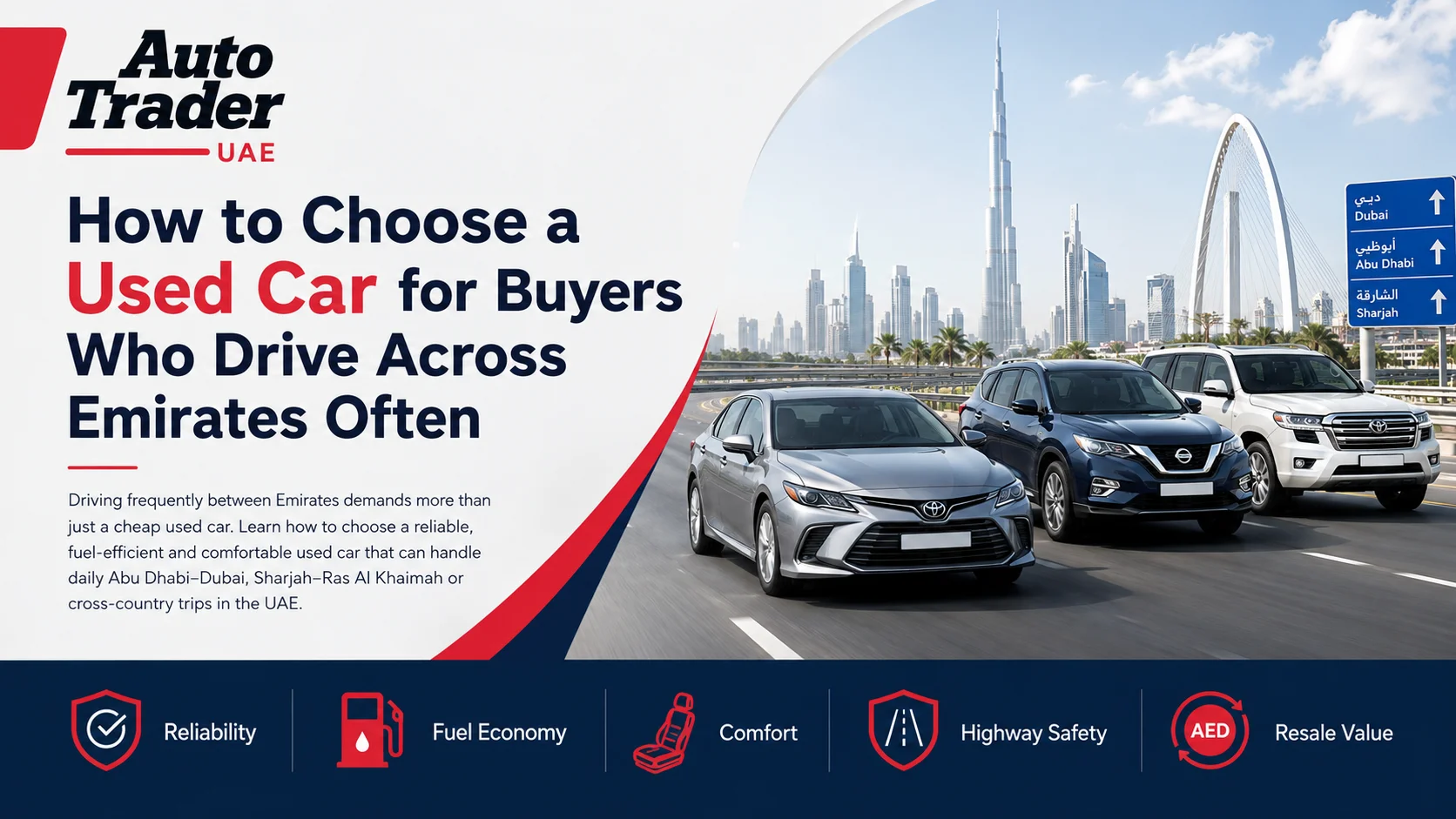
How to Choose a Used Car for Buyers Who Drive Across Emirates Often
If you regularly drive between emirates – Dubai to Abu Dhabi, Sharjah to Ras Al Khaimah, or long runs to Fujairah – you need a used car that can handle heat, distance and heavy traffic. This guide from Auto Trader UAE explains how to choose the right used car for high-mileage UAE driving, and how to shop smartly on the used market.
Key factors for long-distance UAE driving
1. Reliability and service history first
For frequent inter-emirate trips, reliability matters more than fancy features. A breakdown on E11 or E611 is not just inconvenient – it can be dangerous in high summer.
When checking a used car, focus on:
- Full service history – ideally with dealer or well-known independent workshops in the UAE.
- Regular oil changes – especially important for turbo engines doing high motorway speeds.
- Evidence of major services – timing belt/chain, transmission service, coolant and brake fluid changes.
- Accident history – avoid cars with major structural repairs if you plan to add high mileage.
Ask for invoices, stamped service books, or digital records. A car with higher mileage but strong history is usually a better long-distance buy than a low-mileage car with unknown maintenance.
2. Engine type and performance for highway use
Daily Abu Dhabi–Dubai or Sharjah–Abu Dhabi runs mean long periods at 120–140 km/h. You need an engine that is:
- Smooth at highway speeds – enough power so the engine is not constantly stressed.
- Reliable in high heat – proven cooling systems and no known overheating issues.
- Fuel efficient – to keep monthly costs under control.
For most buyers who drive across emirates often, balanced choices include:
- 2.0–2.5L petrol engines – common, reliable, and powerful enough for overtaking.
- Modern 1.4–1.6L turbo petrol – good mix of power and efficiency if maintained correctly.
- Diesel – less common in UAE passenger cars; more relevant for pickups and commercial use.
Avoid underpowered engines if you often carry passengers, luggage, or drive up to the Northern Emirates and mountain roads.
3. Transmission and cooling
Stop–go traffic at the Dubai–Sharjah stretch plus fast highway runs can be tough on gearboxes and cooling systems.
- Automatic transmissions – look for smooth shifting, no jerks, and proof of transmission service.
- CVT gearboxes – can be efficient but must be serviced correctly; listen for whining noises, judder, or hesitation.
- Cooling system health – ensure radiator, fans, hoses, and coolant are in good condition; overheating is a major risk in UAE summers.
4. Comfort for long drives
Two or three hours behind the wheel, multiple times a week, demands comfort:
- Supportive seats – adjustable lumbar support and good padding prevent back pain.
- Low cabin noise – good sound insulation makes long trips less tiring.
- Dual-zone climate control – very useful for front passengers on long sunny drives.
- Quality audio and connectivity – Bluetooth, Android Auto or Apple CarPlay help with navigation and calls.
During a test drive, stay in the car at least 20–30 minutes, simulating a portion of your usual route if possible.
5. Safety features for frequent highway users
Cross-emirate driving usually means fast lanes, heavy trucks, and changing traffic patterns. Prioritise used cars with:
- Multiple airbags – front, side, and curtain where available.
- Electronic Stability Program (ESP) – helps maintain control in emergency manoeuvres.
- ABS with Brake Assist – essential during sudden braking.
- Cruise control – reduces fatigue and helps maintain legal speeds.
- Tyre Pressure Monitoring System (TPMS) – important on long, hot highway runs.
- Modern driver aids (where budget allows) – lane-keep assist, blind-spot monitoring, adaptive cruise.
6. Fuel economy and total running costs
Frequent long trips quickly add fuel and maintenance costs. When comparing used cars:
- Look up real-world fuel economy from user reviews in the region, not just brochure figures.
- Check tyre size and cost – large wheels look good but are more expensive to replace.
- Compare service intervals and part prices – some brands have cheaper maintenance networks in the UAE.
- Estimate your monthly fuel spend based on your actual route and distance.
Best types of used cars for cross-emirate driving
1. Midsize sedans
For most drivers who regularly commute Abu Dhabi–Dubai or Sharjah–Dubai, a midsize sedan is a smart all-round choice. They usually offer:
- Comfortable seating for four or five adults.
- Good highway stability and quietness.
- Reasonable fuel economy for daily long distances.
Browse a wide selection of used cars in UAE on Auto Trader UAE to compare sedan models side by side.
2. Compact SUVs and crossovers
If you need extra ground clearance for occasional desert tracks, farm roads, or steep parking ramps, a compact SUV or crossover may suit you better than a sedan.
For cross-emirate use, look for:
- 2WD or AWD – 4WD is helpful only if you genuinely go off-road; otherwise it adds weight and cost.
- Comfort-focused suspensions – avoid very stiff off-road setups if most of your driving is on E11/E311.
- Efficient engines – SUVs are heavier, so engine choice matters for fuel use.
3. Large SUVs and 4x4s
Full-size SUVs and 4x4s are popular in the UAE, especially for families and those who drive to desert camps or mountains regularly. They offer:
- High seating position and visibility.
- Strong air-conditioning for all three rows.
- Serious off-road ability in many models.
But for long daily commutes between emirates they come with trade-offs: higher fuel use, more expensive tyres, and generally higher maintenance costs. Consider them if you genuinely need the space and capability, not just for image.
4. Hatchbacks and compact city cars
Hatchbacks can work for cross-emirate commuting if you mainly travel alone and want low running costs. Prioritise:
- Higher-output engine variants that can comfortably cruise at 120 km/h.
- Proper sound insulation – some small cars can be noisy on open highways.
- Good seat comfort and air-conditioning performance.
Checklist for inspecting a used car for long-distance UAE use
1. Exterior and body
- Check for uneven paint, panel gaps or overspray – signs of previous accident repairs.
- Inspect tyres for uneven wear – may indicate alignment or suspension issues.
- Look at the windscreen for chips and cracks – important for highway driving at higher speeds.
2. Engine bay
- Check for oil leaks around the engine, gearbox, and under the car.
- Look at coolant colour and level – no oil in coolant or vice versa.
- Listen for unusual ticking, knocking, or rattling when the engine is warm.
3. Suspension and steering
- Test over speed bumps – listen for knocking sounds.
- Drive at highway speed and check if the car pulls to one side.
- Feel for vibrations through the steering wheel or seat – could be wheel balance or worn components.
4. Air-conditioning
With long drives in 40–50°C heat, the A/C system is non-negotiable.
- Turn A/C to maximum and check how quickly the cabin cools.
- Test at idle and while driving – performance should be strong in both cases.
- Listen for compressor noise or bad smells from vents.
5. Electronics and features
- Test cruise control, audio, Bluetooth, and navigation where equipped.
- Check all windows, mirrors, and seat adjustments.
- Verify all warning lights go off after engine start.
Buying strategy for high-mileage UAE drivers
Choose mileage wisely
If you add 40,000–60,000 km per year with frequent cross-emirate trips, think ahead:
- A car already near 200,000 km may reach high mileages quickly and need more major repairs.
- A well-maintained car in the 60,000–140,000 km range is often a good balance of price and remaining life.
However, a slightly higher mileage car with full UAE service history is often better than a very low mileage car with patchy records.
Favour popular models with strong parts availability
For frequent drivers, downtime is lost time. Choose models with:
- Easy-to-source spare parts across different Emirates.
- Multiple authorised and independent service centres.
- Good reputation among UAE fleet operators and taxi companies.
These are usually the cars that handle heat, distance, and heavy use well.
Consider certified or inspected cars
If you are not confident inspecting a used car yourself, consider:
- Certified pre-owned (CPO) vehicles from dealers.
- Cars with independent inspection reports.
- Hiring a professional inspector before finalising a private deal.
Best features to have if you drive between Emirates daily
- Adaptive or standard cruise control – to reduce fatigue and support safer speeds.
- Automatic headlights – especially if you drive before sunrise or after sunset.
- Rear-view camera and parking sensors – helpful in tight city parking after a long highway run.
- Large fuel tank – fewer fuel stops between Emirates.
- Spare tyre and tools – essential for late-night runs on quieter roads.
Test-driving a used car for cross-emirate use
When you book a test drive through Auto Trader UAE or directly with a seller, try to:
- Include a section of highway driving at 100–120 km/h.
- Drive long enough (20–30 minutes) to see how comfortable you feel.
- Check how the car behaves during strong braking and quick lane changes.
- Listen for wind and tyre noise at speed.
Maintenance tips once you buy
Choosing the right used car is only half the story. To keep it reliable for years of cross-emirate trips:
- Follow shorter service intervals than minimum recommendations if you drive hard or in heavy heat.
- Use quality engine oil and coolant suitable for UAE climate.
- Rotate and balance tyres regularly – long straight highway runs can cause specific wear patterns.
- Keep A/C serviced – clean cabin filter and check gas levels before summer.
Finding the right used car on Auto Trader UAE
Auto Trader UAE makes it easier to apply all these criteria while you search:
- Use filters to set your budget, body type, engine size, and mileage.
- Compare sedans, SUVs and hatchbacks that match your cross-emirate routine.
- Shortlist cars with full service history and clear descriptions.
You can start by exploring a wide range of used cars in UAE, and if you often drive in and out of the city, focus on listings for used cars in Dubai as a central hub.
Buyer takeaway
For motorists who drive across Emirates often, the ideal used car is reliable, economical, and comfortable at highway speeds. Prioritise solid service history, strong A/C, safety features and comfort over cosmetic extras. Test cars thoroughly on real UAE roads and choose models with good parts support and proven durability in local conditions.
Seller takeaway
If you are selling a car that is well suited to cross-emirate driving – such as a comfortable sedan or efficient SUV – highlight its service history, fuel economy, A/C performance and long-distance comfort in your Auto Trader UAE listing. Buyers who commute between Emirates will pay attention to these points.
Conclusion
Choosing a used car for frequent cross-emirate driving in the UAE is about matching the car to your real daily routes, not just its looks or badge. Focus on reliability, comfort, safety, and running costs. With clear priorities and a structured inspection checklist, you can find a used car that makes every Dubai–Abu Dhabi or Sharjah–Ras Al Khaimah trip safer, easier, and more affordable. When you are ready to shortlist options, Auto Trader UAE is the natural place to compare and secure the right used car for your UAE lifestyle.
Browse used cars in UAE on Auto Trader UAE to compare live listings, prices, and current market activity more clearly.