
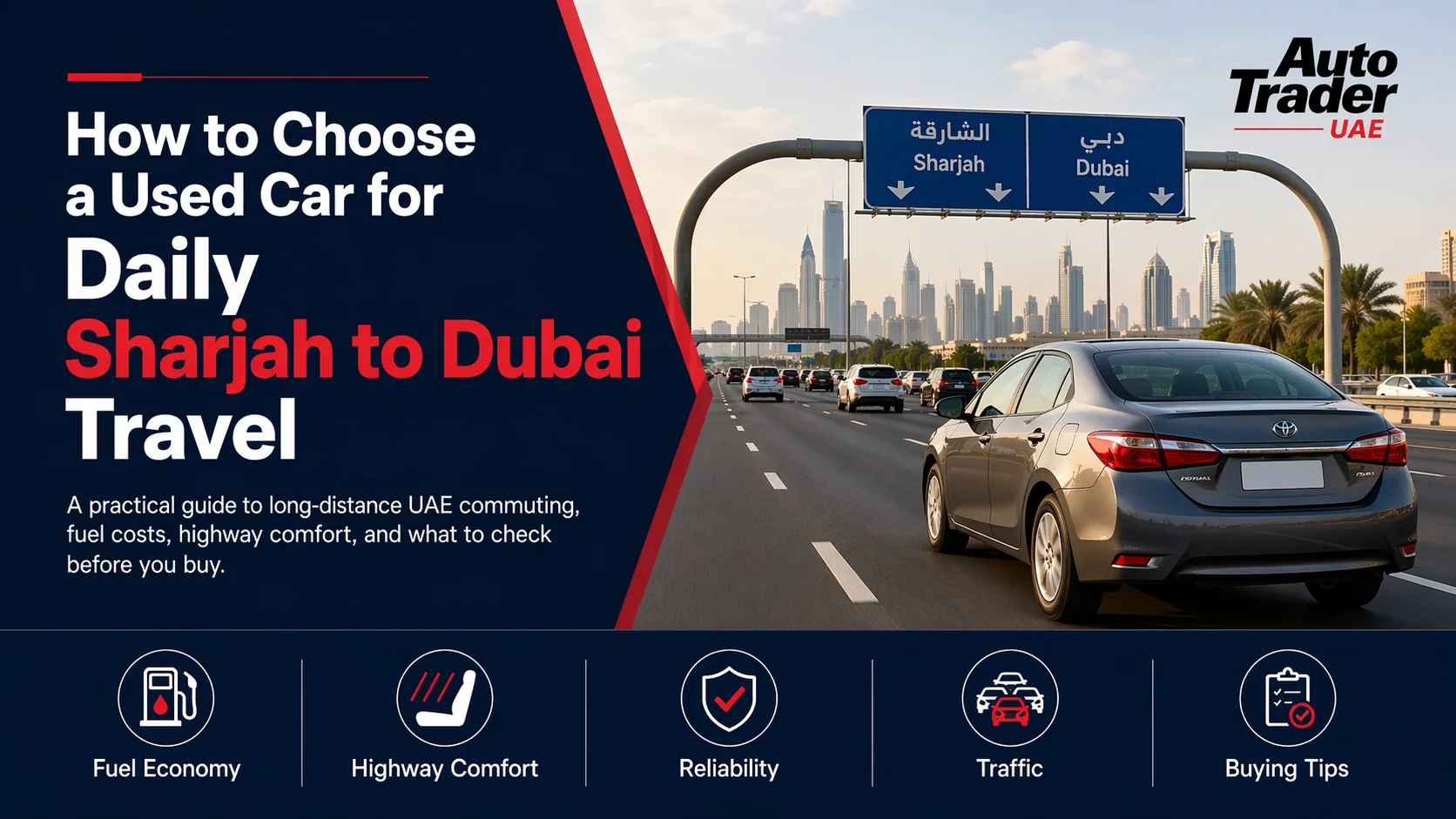
How to Choose a Used Car for Daily Sharjah to Dubai Travel
Commuting daily between Sharjah and Dubai means long distances, heavy traffic, and many hours behind the wheel. Choosing the right used car can save you money, reduce fatigue, and make your drive much safer and more comfortable. This guide from Auto Trader UAE walks you through how to choose a used car for daily Sharjah to Dubai travel, what to prioritise, what to avoid, and how to shop smart on the UAE used car market.
1. Understand Your Daily Sharjah–Dubai Commute
Before you even look at specific cars, define your real-world use:
- Distance: Many Sharjah–Dubai commuters easily cover 60–120 km per day, depending on starting point and destination.
- Driving pattern: Mix of highway (E11, E311) and heavy stop‑start traffic around peak hours.
- Passengers: Are you usually alone, with one passenger, or regularly carrying family or car‑pool colleagues?
- Luggage: Do you need boot space for work equipment, strollers, or weekly shopping?
- Parking: Tight building parking or easy open lots? This affects car size and manoeuvrability.
Once you know these details, you can prioritise what matters most to you: fuel economy, comfort, space, or performance.
2. Key Factors When Choosing a Used Car for Highway Commuting
For daily Sharjah–Dubai travel, some criteria matter more than others.
2.1 Fuel Economy and Running Costs
Fuel bills add up quickly with a long daily commute. Prioritise:
- Efficient engines: Typically 1.5L–2.0L petrol engines or modern diesels where available.
- Reasonable power: Enough power not to struggle when merging or overtaking on the highway.
- Service intervals: Longer service intervals and easy access to parts reduce total cost of ownership.
Avoid:
- Large, thirsty engines you don’t really need.
- Old, neglected cars with poor maintenance history, even if the price seems attractive.
2.2 Comfort for Long Commutes
One hour in bumper‑to‑bumper traffic twice a day will quickly reveal whether your car is truly comfortable. Look for:
- Supportive seats: Height adjustment and lumbar support reduce back pain.
- Good air conditioning: Essential in UAE summers; test it thoroughly.
- Low cabin noise: Check for wind and tyre noise at highway speeds.
- Smooth suspension: Comfortable over expansion joints and minor road imperfections.
2.3 Safety Features for Busy Highways
Daily highway use makes safety a priority. Aim for a car with at least:
- ABS (anti‑lock brakes)
- Front airbags (driver and passenger)
- Electronic stability control if available
- Good headlights for early starts and late returns
Helpful modern features include:
- Rear parking sensors or camera (useful in tight Sharjah/Dubai parking).
- Cruise control for long highway sections.
- Tyre pressure monitoring system if available.
2.4 Reliability and Maintenance in the UAE
For a daily commuter, downtime is expensive. Prefer models that are:
- Well known in the UAE market.
- Backed by strong dealer and independent workshop support.
- Known for reliability and inexpensive parts.
Before deciding, search for common issues of that make and model, and check that parts and service are widely available in Sharjah and Dubai.
3. Best Vehicle Types for Sharjah–Dubai Daily Travel
Different body styles suit different commuting needs.
3.1 Compact Sedans
Ideal for most solo commuters and small families. Pros:
- Generally fuel‑efficient.
- Affordable to buy and maintain.
- Easy to park in crowded areas.
Consider if you:
- Drive mostly on highway with occasional city traffic.
- Rarely carry more than 3–4 people.
3.2 Hatchbacks
Good choice if you want small size but flexible boot space. Pros:
- Very easy to park in tight Sharjah and Dubai locations.
- Rear seats usually fold to carry bigger items.
Consider if you:
- Mostly drive alone or with one passenger.
- Do not need a large boot every day.
3.3 Crossovers and Small SUVs
Popular in the UAE for families and shared commuting. Pros:
- Higher driving position for better visibility in heavy traffic.
- More space for passengers and luggage.
Points to note:
- Slightly higher fuel consumption than small sedans.
- Tyres and some parts may be more expensive.
3.4 Larger SUVs and Performance Cars
Tempting, but not always ideal for a daily Sharjah–Dubai commute. Pros:
- Very comfortable and powerful.
- Good for large families or frequent long‑distance trips.
Cons for commuting:
- Higher fuel costs.
- More expensive maintenance and parts.
Choose these only if you genuinely need the space, towing capacity, or performance.
4. What to Check When Inspecting a Used Commuter Car
Once you shortlist some cars on Auto Trader UAE, inspect them carefully. A car that looks good in photos may still need attention.
4.1 Service History and Mileage
- Service records: Look for regular servicing at recognised garages or dealers.
- Mileage vs age: In the UAE, higher annual mileage is common, especially for commuters. A well‑maintained higher‑mileage car can be better than a neglected low‑mileage one.
- Ask about usage: Highway kilometres are usually gentler on a car than constant city traffic.
4.2 Mechanical Condition
If possible, arrange a pre‑purchase inspection with a trusted mechanic in Sharjah or Dubai. Key areas:
- Engine condition: Listen for unusual noises, check for leaks and excessive smoke.
- Gearbox: Ensure smooth gear changes in both city and highway driving.
- Suspension and steering: The car should track straight with no vibrations at typical E11/E311 speeds.
- Brakes: No pulling to one side, no grinding noises.
4.3 AC Performance
In the UAE, air conditioning is not optional.
- Test AC in the middle of the day if possible.
- Check how quickly the cabin cools.
- Listen for strange noises from the compressor or blower.
4.4 Tyres and Alignment
Daily highway use puts stress on tyres.
- Check tyre tread depth and look for uneven wear (which can suggest alignment issues).
- Confirm that tyre sizes match manufacturer recommendations.
4.5 Interior Wear and Practicality
You will spend many hours inside this car.
- Check seat comfort, support, and adjustment.
- Test infotainment, Bluetooth, and steering‑wheel controls.
- Ensure all windows, mirrors, and locks work smoothly.
5. Budgeting for a Sharjah–Dubai Commuter Car
When choosing a used car for daily Sharjah to Dubai travel, think beyond the purchase price.
5.1 Total Cost of Ownership
Include:
- Insurance (higher for newer and more powerful cars).
- Fuel costs based on your actual daily distance.
- Regular service and the cost of common wear items (brakes, tyres, fluids).
- Salik and parking charges where applicable.
Sometimes paying slightly more for a reliable, efficient used car can save money over a cheaper but thirsty or unreliable option.
5.2 Setting a Realistic Price Range
- Check multiple listings for similar models and years on Auto Trader UAE to understand current market prices.
- Factor in an immediate service or minor repairs after purchase.
- Decide whether you prefer a newer car with higher instalments, or an older car with more maintenance potential.
6. Features That Make Daily Commuting Easier
Certain features can transform a long commute from tiring to manageable. Useful comfort and convenience features:
- Cruise control.
- Automatic transmission for heavy traffic.
- Bluetooth hands‑free calling and audio streaming.
- Steering wheel controls so you can adjust volume and calls safely.
- Rear parking sensors or camera.
For frequent highway driving, also consider:
- Automatic headlights.
- Rain‑sensing wipers.
- Lane departure warning or blind spot monitoring where available.
You don’t need every advanced feature, but a good balance can make your daily Sharjah–Dubai routine much less tiring.
7. Tips for Test‑Driving a Used Car on a Commute Route
A short test drive around the block isn’t enough for a commuter car. When possible, try to:
- Drive both in city traffic and on a highway section similar to your Sharjah–Dubai route.
- Test acceleration and braking at highway speeds.
- Listen for wind and road noise at the speed you usually travel.
- Check how comfortable you feel after 20–30 minutes behind the wheel.
If you regularly travel with passengers, bring one along to test rear seat comfort and space.
8. Choosing Between Private Sellers and Dealers
On Auto Trader UAE you’ll find both private listings and dealer cars. Buying from a private seller:
- Often a lower asking price.
- Direct conversation about how the car was used (for example, daily Sharjah–Dubai commuting).
Buying from a dealer:
- Wider selection in one place.
- Possibility of limited warranty or service package on some cars.
- Help with financing options where available.
Whichever route you choose, always verify the car’s documents, chassis number, and RTA/Muroor test status, and consider a professional inspection before committing.
9. Practical Buyer Checklist for Sharjah–Dubai Commuters
Use this quick checklist when viewing cars:
- Is fuel economy suitable for 60–120 km of daily driving?
- Are the seats and driving position comfortable for at least one hour at a time?
- Does the AC cool the cabin quickly in UAE heat?
- Are safety basics (ABS, airbags, stability control where available) present and functional?
- Is service history complete and believable?
- Do tyres, brakes, and suspension feel solid at highway speeds?
- Is there enough space for your regular passengers and luggage?
- Do insurance and fuel costs fit your monthly budget?
10. Next Steps with Auto Trader UAE
Once you know how to choose a used car for daily Sharjah to Dubai travel, you can use Auto Trader UAE to:
- Browse used car listings filtered by price, body type, mileage, fuel type, and location.
- Compare similar models side by side to see which offers the best balance of comfort, economy, and features.
- Explore guides and reviews on popular commuter cars to understand common strengths and weaknesses.
Take your time, shortlist a few options, arrange proper inspections and test drives, and choose the car that best fits your real daily commute—not just the one that looks good in photos. With a carefully chosen used car and a smart buying approach, your Sharjah–Dubai drive can become safer, more comfortable, and easier on your wallet.
If you are exploring used cars in Dubai or elsewhere in the UAE, Auto Trader UAE makes it easier to compare listings, prices, trims, mileage, and seller details in one place.
Related Links
Buyer Takeaway
When buying a used car in the UAE, focus on vehicle condition, service history, inspection quality, paperwork, and total running costs rather than price alone. Compare options carefully and choose the option that best matches your budget and real needs.
Seller Takeaway
If you are selling a used car in the UAE, present the service history clearly, price the vehicle realistically, and highlight condition, specification, and ownership strengths honestly. A well-prepared listing with accurate details usually attracts more serious buyers.
Conclusion
A careful used car purchase in the UAE starts with research, proper inspection, and clear paperwork before making the final decision.