
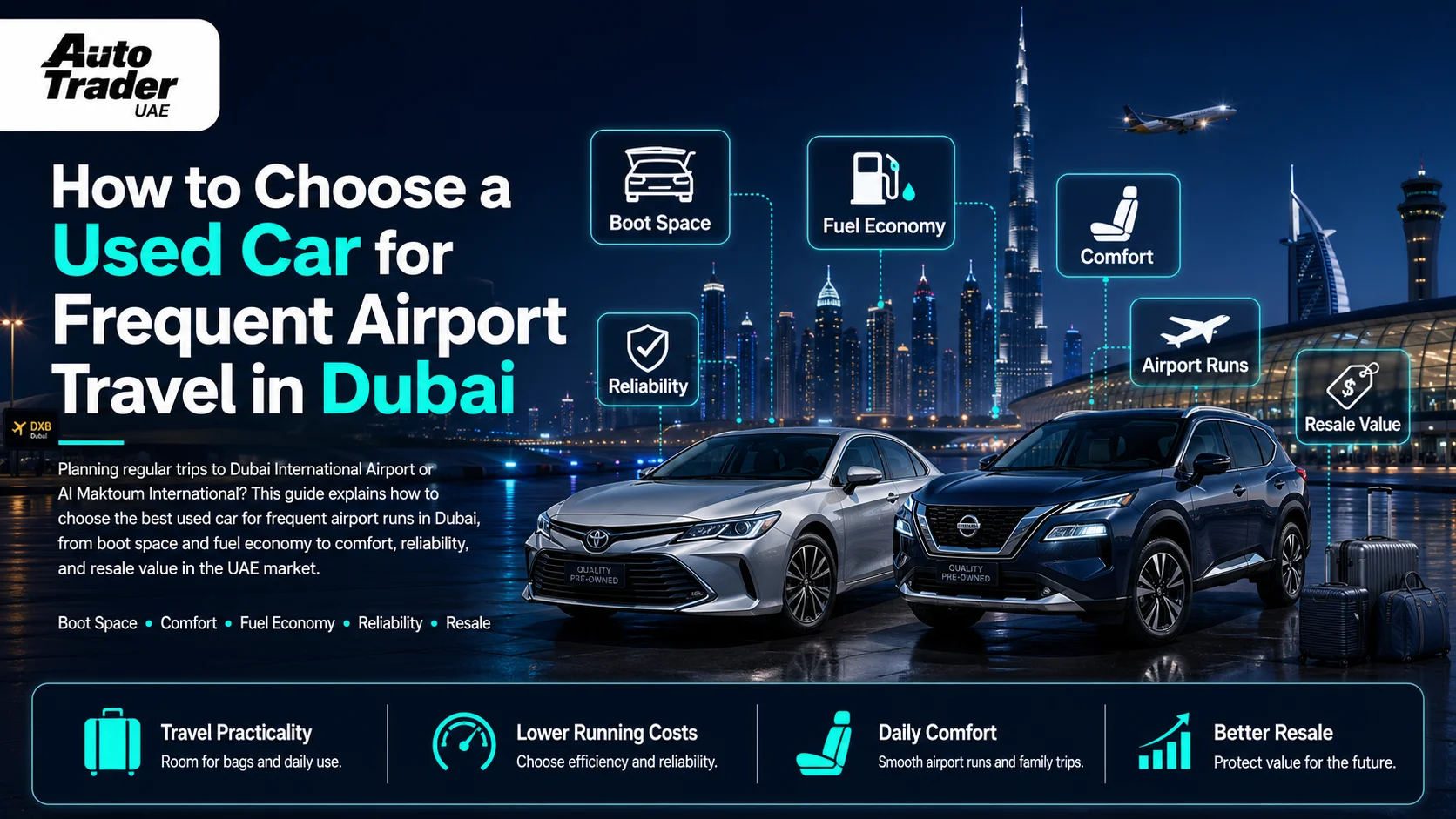
How to Choose a Used Car for Frequent Airport Travel in Dubai
If you often drive to Dubai International Airport (DXB) or Al Maktoum International (DWC), your car needs to handle more than just city errands. Long waits at terminals, heavy luggage, late‑night arrivals, and airport parking all put specific demands on your vehicle. This guide from Auto Trader UAE explains how to choose a used car that’s ideal for frequent airport travel in Dubai, with practical tips for both buyers and sellers.
1. Start with Your Airport Use Case
Before you search listings, be clear about how you’ll use the car:
- Who are you driving? Just yourself, or family, clients, guests, or tourists?
- How often? Daily airport runs, weekly, or a few times per month?
- What kind of luggage? Hand luggage only or multiple big suitcases, strollers, golf bags?
- When? Mostly daytime, or a lot of late‑night and early‑morning flights?
Your answers will decide what matters most: space, comfort, fuel economy, or image (for VIP clients and business use).
2. Key Features for an Airport-Focused Used Car in Dubai
2.1 Boot Space and Practicality
Airport runs mean luggage. Prioritise:
- Boot size: Look for a flat, wide boot with low loading height. Compact sedans can struggle with large suitcases; crossovers and SUVs are usually better.
- Foldable rear seats: Split-fold (60:40 or 40:20:40) seats help if you carry both passengers and bulky items.
- Wide tailgate opening: Makes it easier to load heavy bags and boxes.
- Hidden storage: Under‑floor compartments are useful for keeping valuables out of sight in airport parking.
Tip: When viewing a used car, bring at least one big suitcase and test how easily it fits.
2.2 Comfort for Long and Late-Night Drives
Airport traffic, late hours and waiting in pick‑up zones can be tiring. Look for:
- Supportive seats: Height and lumbar adjustment reduce fatigue on late‑night drives between Dubai and other emirates.
- Rear seat comfort: Extra legroom and good headroom if you carry passengers regularly.
- Quiet cabin: Good sound insulation reduces stress in heavy traffic around DXB.
- Automatic gearbox: Much easier in stop‑start Sheikh Zayed Road or Airport Road traffic.
- Dual‑zone AC (ideally rear vents): Essential in the UAE climate when collecting people from a long flight.
2.3 Fuel Economy and Engine Choice
Regular airport trips mean high mileage. Fuel-efficient engines save money over time.
- Petrol vs hybrid: Modern petrol engines can be efficient, but a hybrid can pay off if you do many city runs to DXB T1, T2, T3 with long idling times.
- Engine size: 1.5–2.0L engines usually balance performance and economy for Dubai’s mixed city/highway use.
- Check real‑world consumption: Search owner reviews for typical L/100 km in the UAE, not just brochure figures.
2.4 Reliability in UAE Conditions
Heat, dust and frequent stop‑start journeys around the airport are tough on cars. When buying used, prioritise:
- Proven reliability: Shortlist brands and models known to handle high mileage and heat.
- Service history: Look for regular servicing at authorised or reputable independent garages in the UAE.
- Parts availability: Popular models have easier access to affordable parts and faster repairs.
Avoid cars with obvious overheating history, warning lights, or irregular service records – airport runs expose weak cooling systems quickly.
2.5 Parking and Manoeuvrability at the Airport
DXB and DWC multi‑storey car parks can be tight, especially in older sections.
- Parking sensors and rear camera: Very useful in narrow ramps and tight spaces.
- Front sensors or 360° camera: Helpful if you drive a larger SUV or van.
- Compact dimensions: A mid‑size sedan or crossover is easier to live with than a full‑size SUV if you park at the airport frequently.
- Good turning circle: Makes pick‑up and drop‑off zones more manageable.
2.6 Safety and Driver Assistance
Frequent highway use (E11, E311) and late‑night driving demand strong safety features. Look for:
- Multiple airbags (front, side, curtain)
- ABS and stability control (ESC)
- Cruise control or adaptive cruise for long motorway runs
- Lane departure warning / blind‑spot monitoring if your budget allows
- Automatic headlights and good quality headlamps for night driving
3. Best Body Types for Frequent Airport Travel
Different body types suit different airport use cases in Dubai.
3.1 Sedans
Best for: Solo travellers, couples, light luggage.
- Usually the most fuel‑efficient option.
- Smooth and comfortable on highways to Abu Dhabi or Sharjah.
- Boot may be limited for large families or heavy luggage.
3.2 Crossovers and Compact SUVs
Best for: Families, mixed city and highway use.
- Higher driving position for better visibility in busy airport traffic.
- More flexible boot space than sedans.
- Often better rear-seat space and comfort.
- Fuel use slightly higher than sedans but still reasonable.
3.3 MPVs and 7-Seaters
Best for: Large families, airport taxi/ride-hailing, groups.
- Multiple seats for big families or business guests.
- Excellent luggage capacity if rear seats fold flat.
- Less convenient for tight airport car parks due to size.
3.4 Large SUVs
Best for: VIP clients, image-conscious business use.
- Strong road presence and comfort.
- High purchase and running costs.
- Can be harder to park at crowded terminals.
4. Features That Make Airport Runs Easier
Beyond the basics, some features are particularly valuable if you’re in and out of Dubai airports regularly.
4.1 Tech and Connectivity
- Built‑in navigation with live traffic helps avoid congestion around DXB.
- Smartphone integration (Apple CarPlay / Android Auto) for easy access to flight info, maps, and calls.
- USB ports and charging points for passengers coming off long flights.
4.2 Convenience Features
- Keyless entry and start: Handy when your hands are full of bags.
- Electric tailgate: Very practical for SUVs and crossovers with heavy luggage.
- Auto‑dimming rear-view mirror: Reduces glare from other cars at night.
- Rear sunshades or tinted glass: Adds comfort for jet‑lagged passengers in the UAE sun.
4.3 Interior Layout
- Plenty of storage: Door bins for water bottles, small trays for parking tickets and access cards.
- Cup holders: Useful for coffee on early‑morning runs.
- Easy-to-clean materials: Leather or high‑quality fabric is easier to maintain when you’re in and out of the car often.
5. Budgeting and Running Costs in Dubai
Frequent airport travel adds kilometres quickly, so think beyond the purchase price.
5.1 Purchase Budget
- Set a realistic total budget including registration, insurance, and minor maintenance after purchase.
- Consider slightly newer, lower‑mileage cars if you plan heavy airport use – they’ll generally be more reliable.
5.2 Fuel, Salik and Parking
- Fuel: Estimate your monthly airport trips and calculate approximate fuel spend based on the car’s real‑world L/100 km.
- Salik: Frequent DXB and DWC visits mean repeated Salik tolls; factor this into your monthly costs.
- Parking: If you park long‑term at the airport, your car will spend hours in the sun – a good AC system and sun protection (tint, sunshades) are essential.
5.3 Maintenance and Resale Value
- Choose models with strong resale demand in the UAE – helpful if you upgrade later.
- Ask for service records and check typical maintenance costs for that model in Dubai.
- High mileage from airport use affects resale – a well‑maintained, popular model will hold value better.
6. What to Inspect on a Used Car for Airport Use
When buying a used car specifically for frequent airport travel, pay extra attention to:
6.1 Air Conditioning and Cooling
- AC should cool quickly, even after the car has been parked in the sun.
- Check for any signs of overheating, coolant leaks, or fans not engaging properly.
6.2 Suspension and Comfort
- Test drive on both highway and city roads to check for vibrations, noise or knocking.
- Frequent airport use means you need a car that remains comfortable over long distances.
6.3 Lights and Visibility
- Inspect headlights, fog lamps and brake lights – crucial for safe night-time airport trips.
- Check that the windscreen and mirrors are clear and undamaged.
6.4 Tyres and Brakes
- Highway trips at speed require good tyre tread and no cracks from heat exposure.
- Brakes should be strong and responsive with no vibration under hard braking.
Always consider a professional inspection before buying, especially if the car will be used heavily for work or family airport runs.
7. Tips for Sellers: Positioning Your Car for Airport-Focused Buyers
If you’re selling a car that’s well suited to airport travel in Dubai, highlight the right points in your Auto Trader UAE listing:
- Emphasise space: Mention boot capacity, fold-flat seats, or 7-seat layout.
- Show comfort features: Dual‑zone AC, rear vents, good seat support, and quiet cabin.
- List safety and tech: Rear camera, parking sensors, navigation, CarPlay/Android Auto.
- Prove reliability: Upload photos of service book, recent maintenance, and any warranty.
- Mention usage: If the car has mainly highway kilometres and has been well serviced, note this clearly.
Well‑written ads attract buyers who specifically need a reliable airport car, helping you achieve a better price and faster sale.
8. Next Steps with Auto Trader UAE
Choosing the right used car for frequent airport travel in Dubai is about balancing space, comfort, running costs and reliability. Whether you’re driving family, clients, or using the car for ride‑hailing, focusing on these points will help you make a smarter choice. On Auto Trader UAE, you can:
- Browse thousands of used sedans, crossovers, SUVs and MPVs suitable for airport runs across Dubai and the wider UAE.
- Use filters for body type, mileage, year, price range and features like rear camera, parking sensors and navigation.
For more advice on budgeting, finance options and total running costs, visit the Auto Trader UAE money and finance guides. To stay updated with the latest buying tips and practical guides for UAE drivers, explore the Auto Trader UAE blog before you choose your next airport-ready used car.
Browse used cars in UAE on Auto Trader UAE to compare live listings, prices, and current market activity more clearly.
Related Links
Buyer Takeaway
When buying a used car in the UAE, focus on vehicle condition, service history, inspection quality, paperwork, and total running costs rather than price alone. Compare options carefully and choose the option that best matches your budget and real needs.
Seller Takeaway
If you are selling a used car in the UAE, present the service history clearly, price the vehicle realistically, and highlight condition, specification, and ownership strengths honestly. A well-prepared listing with accurate details usually attracts more serious buyers.
Conclusion
A careful used car purchase in the UAE starts with research, proper inspection, and clear paperwork before making the final decision.