
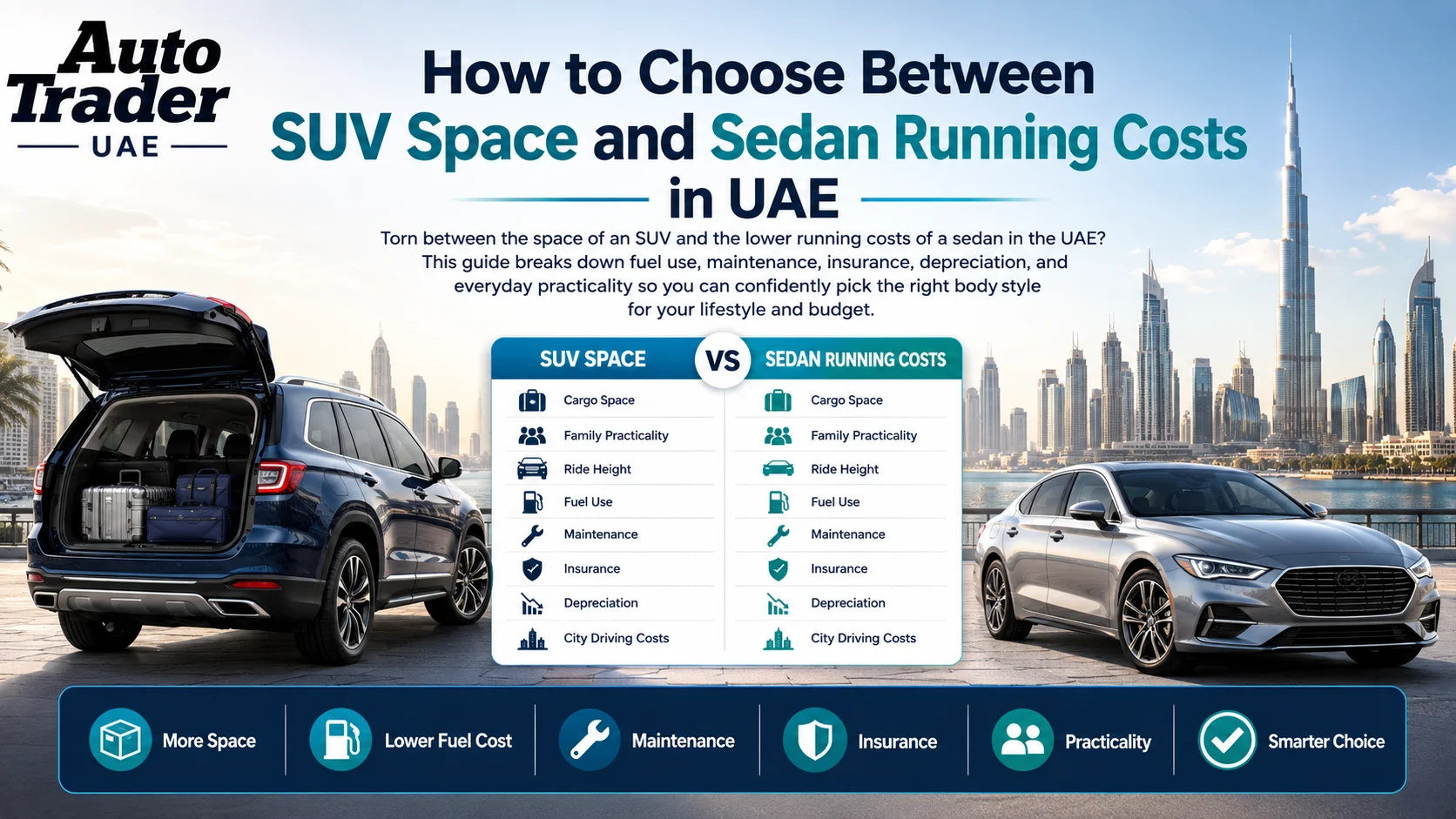
How to Choose Between SUV Space and Sedan Running Costs in UAE
Choosing between an SUV and a sedan in the UAE is rarely just about looks. It’s about how much space you truly need versus how much you’re willing to spend on fuel, maintenance, and insurance. This guide from Auto Trader UAE walks you through the real-world trade-offs so you can decide with confidence.
1. Start With How You Actually Use Your Car
Before comparing specs or prices, think about your weekly routine. The right answer for a family in Dubai is different from someone commuting solo in Abu Dhabi.
Key questions to ask yourself
- How many people ride with you most days? Solo or couple driving usually suits a sedan; families of 4–5 often appreciate SUV space.
- Do you regularly carry bulky items? Prams, sports gear, camping kit and strollers are easier with SUV boot space and folding seats.
- How far is your daily commute? Long daily drives make sedan fuel savings more noticeable.
- Where do you park? Tight underground parking or older buildings might favour a compact sedan or small SUV.
- Do you go off-road or to desert spots? Occasional desert drives and trips to rugged wadis are more comfortable in an SUV, especially one with higher ground clearance.
Once you’re honest about your usage, it becomes much clearer whether SUV space is a necessity or just a “nice to have”.
2. How SUVs and Sedans Compare in the UAE
Space and practicality
- SUVs: Higher seating, more headroom, larger boot, easier for kids and older passengers to get in and out. Many offer flexible seating and can handle family road trips comfortably.
- Sedans: Lower seating position, more aerodynamic, usually quieter at speed. Boot access is more limited than an SUV hatch, but still fine for daily errands and weekend bags.
Fuel consumption
- SUVs: Taller, heavier, and often less aerodynamic. Even with efficient engines, they typically use more fuel, especially around town with start–stop traffic and heavy AC use.
- Sedans: Lighter and sleeker, so they usually offer better fuel economy. Over thousands of kilometres, that can mean noticeable savings at UAE fuel prices.
Driving experience
- SUVs: High driving position gives a commanding view of the road and can feel more secure in heavy traffic. Some drivers, especially new or nervous ones, prefer this.
- Sedans: Typically feel more stable and responsive on highways, with less body roll in corners. If you enjoy driving, the sedan may feel more refined and engaging.
3. Running Costs in the UAE: SUV vs Sedan
Buying price is just one part of the equation. To choose wisely, compare ongoing ownership costs over at least 3–5 years.
Fuel costs
Because of their size and weight, SUVs generally consume more fuel than comparable sedans. Even a small difference in litres per 100 km, multiplied by long UAE commutes, adds up over a year.
If you drive mostly within city limits like Dubai or Sharjah, with traffic and full-time AC, the gap between a compact sedan and a mid-size SUV can be significant.
Maintenance and tyres
- SUVs: Larger tyres and components can cost more to replace. Some SUVs use more complex suspension setups, and heavy use on rough roads or sand can increase wear.
- Sedans: Generally cheaper tyres and slightly lower service costs for comparable brands and model years.
Always compare service intervals and typical service package prices for the specific models you’re considering.
Insurance costs
Insurers in the UAE look at vehicle value, repair costs, safety features, and driver profile. A more expensive SUV tends to attract higher premiums than an equivalent sedan. However, well-equipped SUVs with strong safety ratings may benefit from slightly better terms in some cases.
Depreciation in the UAE market
Both body styles depreciate, but trends change with buyer demand:
- Family-friendly SUVs can hold value well due to strong demand for practical family cars.
- Efficient sedans with low running costs remain attractive to commuters and ride-hailing drivers, supporting resale values.
Check current used cars in UAE listings on Auto Trader UAE to see real-world asking prices for 3–5-year-old SUVs versus sedans of similar brands and mileage.
4. Lifestyle Factors: When SUV Space Matters
Growing families
If you have young children or plan to soon, an SUV’s rear space and boot make a real difference. Fitting child seats, prams, scooters, and shopping is simply easier with a higher roof and wide-opening tailgate.
Weekend trips and active hobbies
Drivers who regularly visit beaches, desert camps, or mountain roads appreciate an SUV’s higher ground clearance and flexible cargo space. You don’t need a hardcore off-roader; even a compact SUV can handle rough car parks and packed roads more calmly than many sedans.
Comfort in traffic
In dense UAE traffic, the elevated seating of an SUV can feel less stressful. You see further ahead, and the cabin often feels airier. For some drivers, that comfort justifies the extra fuel cost.
5. When Sedan Running Costs Win
Long daily commutes
If you drive from Sharjah to Dubai or Abu Dhabi daily, fuel bills become a major factor. A fuel-efficient sedan makes sense, especially if your passengers are usually just one or two people.
Parking and tight spaces
Sedans can be easier in older buildings, narrow streets, and busy city areas. Shorter length and lower height can make daily parking simpler and reduce the chance of scrapes in tight multi-storey car parks.
Lower ownership budget
For first-time buyers, students, or those prioritising savings, a sedan usually offers:
- Lower purchase price for similar age and mileage
- Better fuel economy
- Potentially lower insurance premiums
Over a few years, those small differences can equal the cost of your next upgrade.
6. Choosing the Right Type of SUV or Sedan
Types of SUVs
- Compact SUVs: City-friendly size, decent boot, and moderate fuel use. Ideal if you want the SUV feel without full-size costs.
- Mid-size SUVs: Strong family choice with more legroom and often optional third rows.
- Large / 7-seater SUVs: Best for big families or shared family cars, but with higher fuel and tyre costs.
Types of sedans
- Compact sedans: Great for city driving, economical, and usually very budget-friendly to run.
- Mid-size sedans: More rear legroom and comfort, ideal for long-distance commuting.
- Executive sedans: Higher purchase and maintenance cost but excellent comfort and refinement.
If you’re browsing, you can explore a wide range of used SUVs in UAE and used sedans in UAE on Auto Trader UAE to see what fits your budget and style.
7. Budgeting: Total Cost of Ownership, Not Just Purchase Price
To fairly compare SUV space with sedan economy, look at the total cost of ownership:
- Purchase price: Newer, larger, and better-equipped SUVs cost more; older or smaller sedans cost less.
- Fuel over 3–5 years: Estimate your annual mileage. Multiply by average fuel consumption for the models you’re considering.
- Servicing and tyres: Check recommended service intervals, typical service costs, and tyre sizes.
- Insurance: Get quotes for both SUV and sedan options before you decide.
- Expected resale value: View similar age and mileage cars on Auto Trader UAE to understand likely resale prices.
This approach gives you a clearer view of what each choice will really cost you each year.
8. Fuel-Saving Tips for SUV and Sedan Owners in UAE
If you choose an SUV for space or a sedan for economy, driving habits still matter.
- Maintain correct tyre pressure: Underinflated tyres increase rolling resistance and fuel consumption.
- Avoid aggressive acceleration and hard braking: Smooth driving saves fuel and reduces wear.
- Use Eco driving modes: Many modern cars have Eco settings that soften throttle response and optimise gear changes.
- Service on time: Clean filters, correct oil, and healthy spark plugs improve efficiency.
- Travel light: Unnecessary weight in the boot or on roof racks impacts fuel use, especially in SUVs.
9. New vs Used: Getting the Best Value
In the UAE, the used market is strong and offers good value in both SUVs and sedans.
- Buying a used SUV: You can often afford a better-equipped, safer, and more spacious model than a brand-new entry-level SUV.
- Buying a used sedan: Depreciation often makes well-maintained sedans very cost-effective for daily commuting.
When shopping used, always:
- Check service history and mileage.
- Inspect tyres, suspension, and AC performance.
- Consider a pre-purchase inspection, especially for SUVs that may have been driven off-road.
Browse a wide range of used cars in UAE and refine by body type to compare SUVs and sedans side by side.
10. Who Should Choose an SUV in the UAE?
An SUV is likely the better choice if:
- You have a family or regularly carry 3–5 passengers.
- You often carry large items like strollers, sports equipment, or luggage.
- You enjoy weekend trips and need extra ground clearance.
- You prefer a higher driving position and don’t mind paying more for fuel and tyres.
For many buyers, a compact or mid-size SUV offers the best balance of space and running costs.
11. Who Should Choose a Sedan in the UAE?
A sedan is probably the smarter choice if:
- You mostly drive alone or with one passenger.
- You have a long daily commute and want to keep fuel costs under control.
- You live or work where parking is tight.
- You prioritise low total ownership cost over maximum space.
Efficient sedans remain one of the most economical ways to get around the UAE, especially for daily highway use.
12. Practical Next Steps on Auto Trader UAE
To turn this guide into a decision:
- Set your budget for purchase, fuel, and insurance.
- Decide whether space (SUV) or economy (sedan) matters more for your lifestyle.
- Shortlist a few models in each category using filters for body type, price, year, and mileage.
- Compare real listings: boot space, fuel consumption, and features like parking sensors and safety tech.
- Arrange test drives and check parking comfort, visibility, and ride quality.
When you’re ready to browse, you can explore:
Whether you end up in a fuel-efficient sedan or a spacious SUV, Auto Trader UAE gives you the tools and listings to find the right car, at the right price, for the way you live and drive in the Emirates.
Browse used cars in UAE on Auto Trader UAE to compare live listings, prices, and current market activity more clearly.
Related Links
Buyer Takeaway
When buying a used car in the UAE, focus on vehicle condition, service history, inspection quality, paperwork, and total running costs rather than price alone. Compare options carefully and choose the option that best matches your budget and real needs.
Seller Takeaway
If you are selling a used car in the UAE, present the service history clearly, price the vehicle realistically, and highlight condition, specification, and ownership strengths honestly. A well-prepared listing with accurate details usually attracts more serious buyers.
Conclusion
A careful used car purchase in the UAE starts with research, proper inspection, and clear paperwork before making the final decision.