
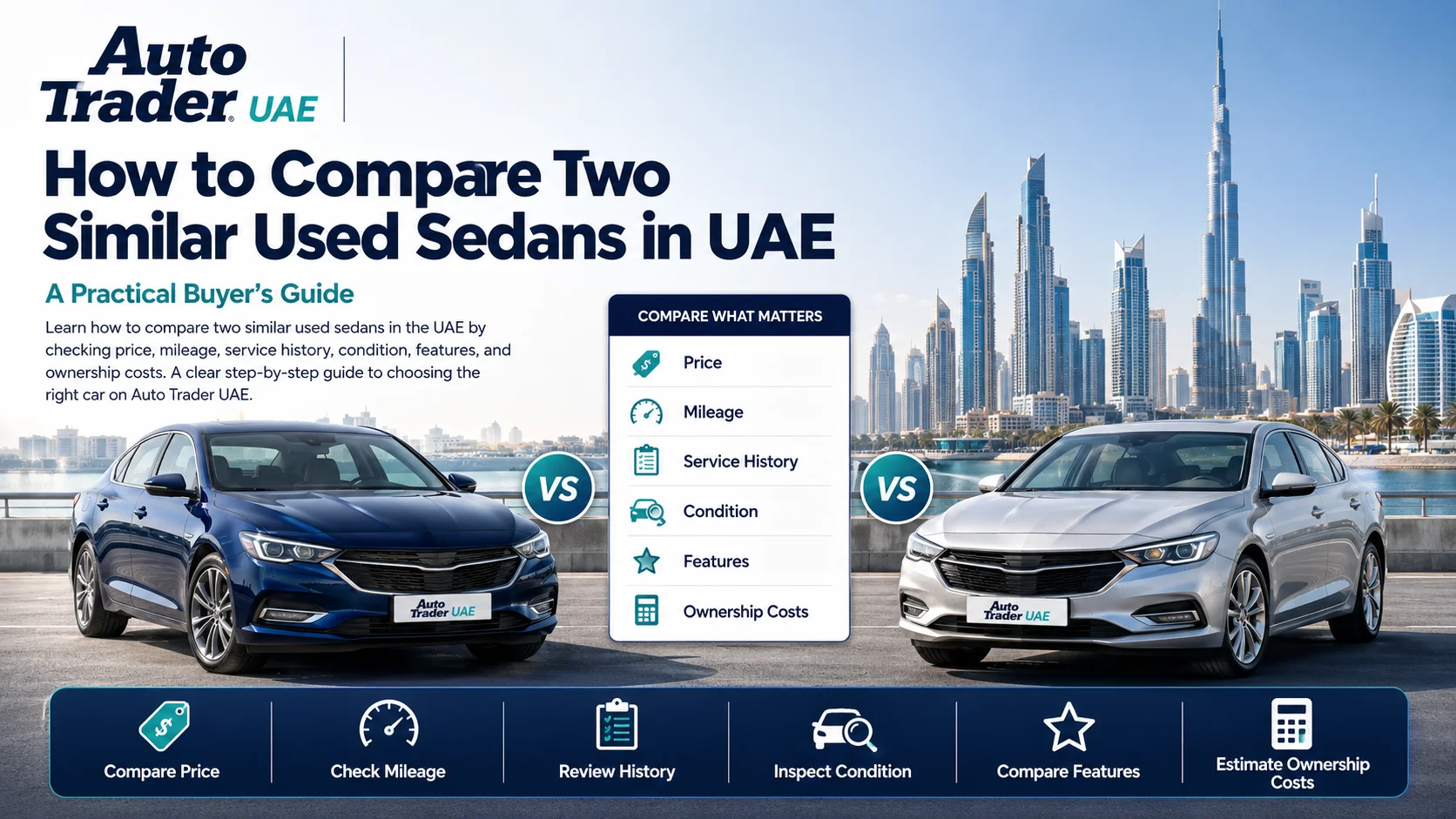
How to Compare Two Similar Used Sedans in UAE
Browsing Auto Trader UAE and stuck between two very similar used sedans? Same segment, close prices, both look clean in the photos – but which one is actually the better buy?
This guide walks you step by step through how to compare two similar used sedans in the UAE market, using real‑world checks you can apply directly to any listing on Auto Trader UAE.
1. Start With a Like‑for‑Like Comparison
Before you dive into details, make sure you’re genuinely comparing like for like. When you open two sedan listings side by side, check:
- Model year: Even a one‑year difference can change features, safety tech and resale value.
- Trim level: A base trim vs a mid or top trim can mean big differences in equipment and price.
- Engine and gearbox: Compare engine size, fuel type, and transmission (automatic vs CVT vs dual‑clutch).
- Body style: Some sedans have regular boot and "fastback" versions – note practicality differences.
On Auto Trader UAE, use filters for year, mileage, transmission and fuel type to narrow down to directly comparable sedans. This avoids wasting time on cars that only look similar at first glance.
2. Compare Total Cost, Not Just Asking Price
Two sedans might be listed at almost the same price, but their real cost of ownership in the UAE can be quite different.
2.1 Asking Price vs Market Reality
Check several live listings for the same model year and trim on Auto Trader UAE. If one car is priced noticeably lower than similar cars, ask why. Possible reasons include:
- Higher mileage than average
- Accident history or repaint
- Pending service work (tyres, brakes, major service)
- Imported spec or non‑GCC spec (can affect resale and cooling performance)
2.2 Ownership Costs in the UAE
Then consider ongoing costs:
- Fuel consumption: A slightly more expensive sedan with better fuel economy can be cheaper to own if you commute daily.
- Expected maintenance: Some engines and gearboxes are known to be more durable; others can be costly out of warranty.
- Insurance category: Higher trim, larger engine or turbo models can cost more to insure.
- Annual registration and testing: Similar for most sedans, but very old models may need more repairs to pass testing.
When comparing two cars, note what each one will really cost you over the next 2–3 years, not just what you pay on day one.
3. Mileage vs Age: Which Matters More?
Many UAE buyers focus heavily on mileage, but age is just as important.
- Newer, slightly higher mileage: Often a better bet if it has full dealer or specialist service history and mostly highway use.
- Older, very low mileage: Can be attractive but may suffer from age‑related issues (rubber parts, seals, batteries) if unused for long periods.
When comparing two sedans, consider:
- Mileage per year (total km ÷ years since new)
- How and where the car was driven (city vs highway)
- Evidence of regular, on‑time servicing
A newer sedan with slightly higher but well‑documented mileage often wins over an older, unknown‑history, low‑mileage car.
4. Service History and Records: The Deal‑Maker
In the UAE climate, proper maintenance is crucial. When you compare two used sedans, their service history is often the deciding factor.
4.1 What a Strong History Looks Like
- Stamped service book from dealer or recognised workshop
- Invoices showing major services, parts replacements and dates
- Consistent intervals (e.g. every 10,000 km or annually)
- Recent big services completed (timing belt/chain checks, transmission service, coolant, brake fluid)
4.2 When One Car Clearly Wins
When you place two sedans side by side:
- If Car A has full history and Car B has gaps or only basic verbal assurances, Car A is usually the safer choice – even if it’s slightly more expensive.
- If both have good records, see which one has had more preventive work done recently (tyres, brakes, battery, AC service).
5. Condition in Detail: Exterior, Interior, and Under the Skin
Pictures can hide a lot. When possible, view both sedans in person, ideally back to back.
5.1 Exterior Checklist
- Look along the body for uneven paint or panels that don’t align – clues to past accidents.
- Check tyre condition and matching brands. Four good matching tyres suggest careful ownership.
- Examine headlights for yellowing or cracks and windscreen for chips that can spread.
5.2 Interior and Comfort
- Inspect seat wear, steering wheel and gear knob – heavy wear on low‑mileage cars is a red flag.
- Test AC performance thoroughly. In UAE heat, weak or slow‑cooling AC is a serious negative.
- Check all electronics: windows, mirrors, central locking, infotainment, reverse camera, sensors.
5.3 Mechanical Impressions
- Listen for strange noises on startup (ticking, knocking, loud belts).
- On the test drive, feel for gearbox smoothness, brake feel, and suspension comfort over bumps.
When you compare notes after driving both sedans, the one that feels more solid, quieter and smoother usually represents better long‑term value.
6. Features and Safety: Don’t Undervalue Tech
Two identical‑looking sedans in the UAE can have very different equipment levels depending on trim, region spec and options.
6.1 Must‑Have Features for UAE Use
- Strong dual‑zone or rear‑vent AC for hot months
- Parking sensors and reverse camera for tight city parking
- Apple CarPlay/Android Auto or at least Bluetooth and USB
- Cruise control for highway driving between emirates
6.2 Safety Equipment
Compare:
- Number of airbags (front, side, curtain)
- Electronic stability control (ESC), ABS and traction control
- Advanced driver assistance (where available): blind‑spot monitoring, lane departure alert, emergency braking
If one sedan offers clearly stronger safety and convenience spec for a similar price, that’s a major plus in its favour.
7. GCC Spec vs Non‑GCC Spec
When comparing similar used sedans in the UAE, clarify whether each car is GCC spec or imported (US, Europe, Japan etc.).
Consider:
- Cooling systems: GCC‑spec cars are designed for local climate and heavy AC use.
- Resale value: GCC cars generally resell more easily.
- Odometer and history: Imported cars may have different reporting systems; verify history carefully.
Between two similar sedans, a clean GCC‑spec example with history is often the more straightforward choice for most buyers.
8. Ownership History: Number of Owners and Usage
Ask the seller about previous ownership and how the car was used.
- Number of private owners: Fewer, longer‑term owners can be a positive sign.
- Corporate or fleet use: May have higher mileage but often with regular maintenance schedules.
- Usage pattern: Daily commuting, occasional use, or ride‑hailing? Each has different wear patterns.
If one sedan has a clear, simple ownership story and the other has frequent transfers or unclear background, that alone can be a deciding factor.
9. Test Drive Both, Back to Back
Whenever possible, schedule test drives close together. After each drive, quickly note:
- Ride comfort and cabin noise
- Steering feel and braking confidence
- AC performance at city and highway speeds
- Visibility and ease of parking
Driving them back to back makes differences obvious. A car that feels more confidence‑inspiring and comfortable will be easier to live with in daily UAE traffic.
10. Factor in Pre‑Purchase Inspection
For close calls, a professional inspection in the UAE can be the tie‑breaker. Many workshops and inspection centres offer pre‑purchase checks covering:
- Chassis and accident assessment
- Engine and gearbox health
- Suspension, brakes and tyres
- Computer scan for hidden fault codes
If you only inspect one of the two sedans, inspect the one you’re leaning toward. If it comes back with major issues, you’ll know to reconsider the alternative.
11. When the Choice Is Still Difficult
If both cars are very similar even after all checks, use these final filters:
- Gut feeling and comfort: Which one do you feel better in and more confident about?
- Seller responsiveness: Clear, honest sellers are easier to deal with if issues arise later.
- Negotiation room: Which car has more realistic space for a fair discount after inspection?
12. How to Use Auto Trader UAE Effectively
To compare similar used sedans efficiently on Auto Trader UAE:
- Use filters to match year, mileage range, transmission and fuel type.
- Shortlist your top two or three sedans using the "save" or "favourite" function (if available in your browser profile).
- Open listings in separate tabs and compare photos, description and service history side by side.
- Contact sellers directly through the platform for quick answers about history, accidents and last service.
From budget‑friendly daily commuters to better‑equipped family sedans, you can explore a wide range of used cars in UAE on Auto Trader UAE and compare them using the steps in this guide.
Buyer Takeaway
When comparing two similar used sedans in the UAE, don’t rush to the one with the slightly lower price. Look deeper at service history, condition, equipment and total ownership cost. A better‑maintained, well‑documented sedan with stronger features will usually save you money and hassle over the next few years – even if the upfront price is a little higher.
Seller Takeaway
If you’re selling a used sedan and you know buyers are comparing your car directly with similar listings, give yourself an advantage by:
- Organising and photographing your service records
- Highlighting GCC spec, low ownership count and any major recent maintenance
- Listing key features clearly (safety, infotainment, comfort)
- Setting a realistic price that aligns with comparable cars on Auto Trader UAE
Well‑presented, transparently described sedans attract more serious buyers and justify stronger offers.
Conclusion
Choosing between two similar used sedans in the UAE becomes much easier when you follow a structured comparison: confirm like‑for‑like specs, review total cost, prioritise history and condition, test drive carefully and use professional inspection where needed. Auto Trader UAE gives you the marketplace and tools to do this side‑by‑side, from initial browsing through to contacting the seller.
Ready to put this guide into practice? Start comparing live listings of used cars in UAE and, if you’re based in the emirate, explore great deals on used cars in Dubai today.
Browse used cars in UAE on Auto Trader UAE to compare live listings, prices, and current market activity more clearly.