
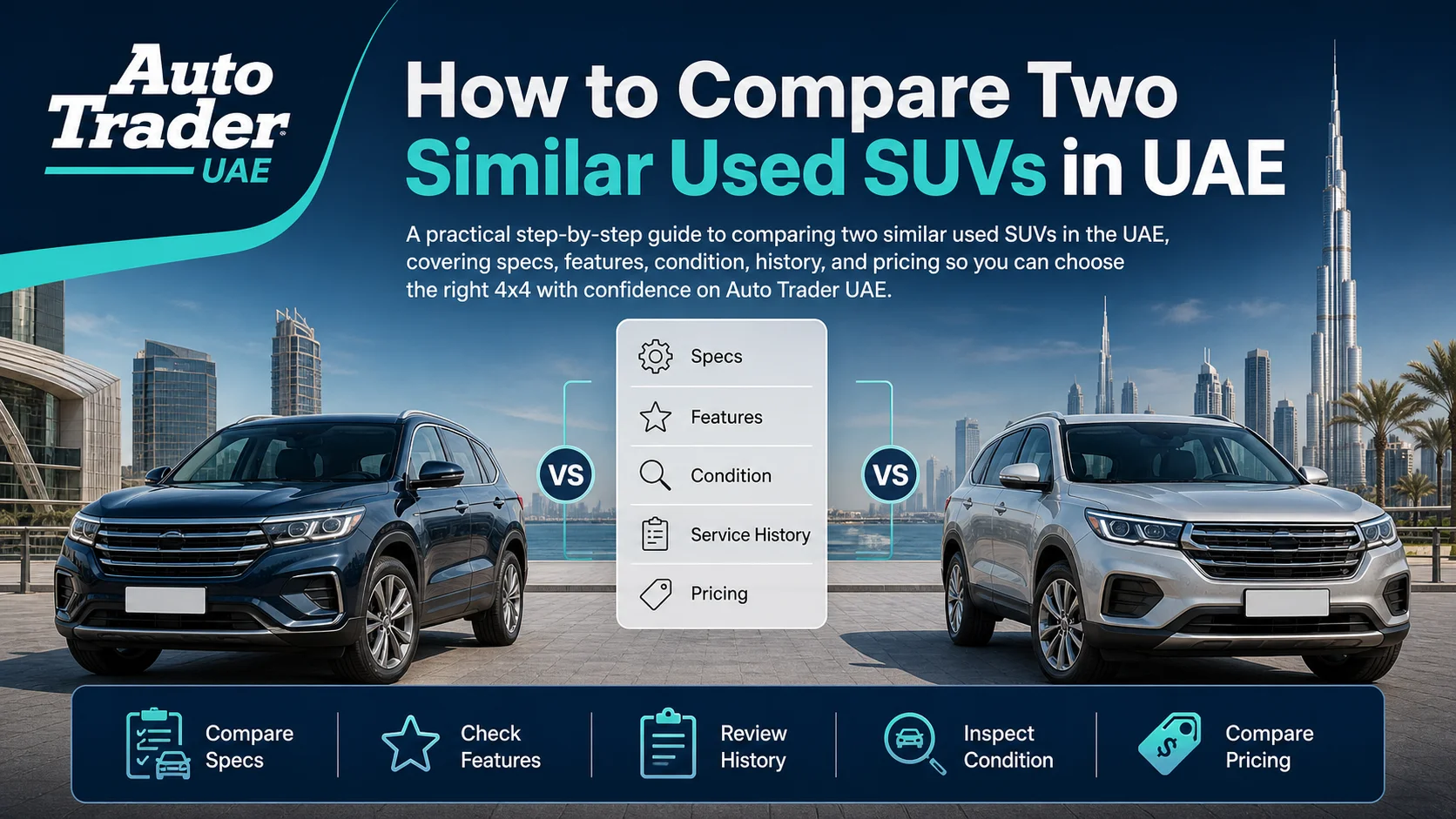
How to Compare Two Similar Used SUVs in UAE
Shortlisting two similar used SUVs in the UAE can feel confusing. Same segment, close mileage, similar price – but which one is really better for you and your family? This guide walks you step‑by‑step through how to compare two used SUVs side by side, using real‑world criteria that matter on UAE roads and in our climate.
Use this as a checklist when you browse used cars in UAE on Auto Trader UAE, save your favourites, and then compare them in detail before you call the seller.
1. Start with Your Needs, Not the Badges
Before you get lost in specs, be clear about what you actually need from an SUV in the UAE:
- Daily commute only? Focus on fuel economy, comfort, and safety tech.
- Family use? Prioritise space, boot size, rear AC vents, Isofix points, and safety ratings.
- Desert trips or camping? Check 4x4 systems, ground clearance, and off‑road modes.
- Mixed city/highway driving? Look for a balance of power, comfort, and fuel use.
Write down your top 5 priorities and keep them in front of you when comparing any two SUVs. The “better” car is the one that fits your life in the UAE, not just the one with the higher trim name.
2. Match the Basics: Year, Trim, Engine and Drivetrain
To compare fairly, make sure the two SUVs are as close as possible on key basics:
- Model year: Features and safety can change a lot between years. Try to compare within 1–2 model years.
- Trim level: A high‑spec lower‑priced SUV can be better value than a base model from a “bigger” brand.
- Engine type: Petrol vs diesel vs hybrid; turbo vs non‑turbo; engine size and cylinders.
- Drivetrain: 2WD, AWD, or 4x4 – important for desert driving and occasional off‑road.
When browsing used SUVs in UAE on Auto Trader UAE, use the filters to narrow down year, engine size, and drivetrain so your shortlist is truly comparable.
3. Compare Space, Seating and Comfort
The best SUV for UAE living is often the one that keeps the family comfortable in traffic and on weekend trips.
Cabin and Seating
- 5‑seater vs 7‑seater: If you rarely carry more than 4 people, a comfortable 5‑seater can be better than a cramped 7‑seater.
- Rear legroom and headroom: Sit in the back; don’t just rely on photos.
- Seat adjustment: Height adjustment and lumbar support matter for long Dubai–Abu Dhabi drives.
Cargo and Practicality
- Check boot size with seats up and down.
- Look at how flat the seats fold and if the loading lip is high.
- Count the number of storage spaces, cupholders, and charging ports.
Comfort Features for UAE Climate
- Dual‑zone or tri‑zone climate control
- Rear AC vents (essential for kids)
- Ventilated or at least good‑quality fabric seats
- Sunroof vs panoramic roof (great, but can increase heat – check how good the sunshade is)
4. Put Safety and Driver Assistance First
Two SUVs can look similar but differ a lot in safety equipment. When comparing, list the safety tech each SUV actually has:
Basic Safety
- Number of airbags (front, side, curtain)
- ABS, stability control, traction control
- Isofix child seat anchors in the rear
Advanced Driver Assistance (Depends on Model/Trim)
- Adaptive cruise control
- Lane keep assist / lane departure warning
- Blind‑spot monitoring
- Rear cross‑traffic alert
- Autonomous emergency braking
- 360° camera or parking sensors front and rear
If one SUV offers strong safety and the other has basic equipment only, that’s a major point in the comparison – especially for families.
5. Check Engine Performance and Fuel Economy in the Real World
Look at power and torque, but also think about how the SUV will feel in daily UAE driving:
- Engine size and power: Enough for confident overtakes on E11 and E311, but not unnecessarily big if you drive mostly in the city.
- Transmission: Smooth shifting in traffic; test for jerks or delay.
- Fuel economy: Compare seller claims with independent figures where possible; larger 4x4 SUVs will consume more, especially with roof racks or off‑road tyres.
During your test drive, reset the trip computer and watch short‑term fuel consumption in mixed driving. Over a few similar routes, you’ll see which SUV is realistically more efficient for your style and routes.
6. Assess Ride Quality and Noise
On UAE roads, refinement makes a big difference to daily comfort:
- Ride comfort: Try speed bumps and imperfect tarmac; notice if one SUV crashes over bumps more than the other.
- Cabin noise: Compare wind and tyre noise at 100–120 km/h.
- Steering feel: Look for stability at highway speeds and light effort in parking.
Do back‑to‑back test drives on similar routes (city + highway) to clearly feel the difference between the two SUVs.
7. Evaluate Technology, Infotainment and Connectivity
Tech can be the deciding factor if the two SUVs are otherwise similar.
- Screen size and responsiveness
- Apple CarPlay / Android Auto availability
- Bilingual navigation support and voice control usefulness
- Number and type of USB / USB‑C ports
- Quality of the sound system
Check that all features actually work properly in both SUVs. A higher‑spec system that’s slow or glitchy may be more annoying than a simple but reliable one.
8. Inspect Condition: Mileage, Wear and Service Records
Condition is where one SUV can clearly win over another, even if it’s a year older or slightly lower trim.
Mileage vs Maintenance
- Lower mileage is not everything; a higher‑mileage SUV with full agency or specialist history can be safer than a low‑mileage one with no records.
- Look for stamped service book, invoices, or digital service history.
Signs of Hard Use
- Uneven tyre wear
- Misaligned panels or mismatched paint (possible accident repairs)
- Excessive wear on steering wheel, gear lever, and seats compared to displayed mileage
- Rust or corrosion under the car (less common in UAE, but worth a quick look)
Professional Inspection
If you’re torn between two similar SUVs, invest in a pre‑purchase inspection with a trusted workshop or inspection centre. Comparing two independent reports can make the choice obvious.
9. Check Ownership Costs: Insurance, Registration and Tyres
When comparing two SUVs, calculate total cost, not just the purchase price:
- Insurance: Larger engines and higher values may cost more to insure.
- Registration and testing: Make sure the car can pass RTA tests easily; ask about any existing fines.
- Tyres: SUV tyres are not cheap. If one SUV needs four new tyres soon, that’s a hidden cost you can use to negotiate.
Ask sellers for recent invoices on tyres, battery, and brakes. If one SUV has fresh wear‑and‑tear items, it may be the smarter buy even at a slightly higher price.
10. Compare Off‑Road and Towing Capability (If Relevant)
If you plan desert drives, camping, or towing a boat or jetski, compare these details carefully:
- 4x4 modes and low‑range (if available)
- Ground clearance and approach/departure angles
- Underbody protection
- Towing capacity and presence of a proper tow hitch
Even among similar‑looking SUVs, off‑road hardware can be very different. Check owners’ forums and local off‑road groups for feedback on the exact models you’re comparing.
11. Price, Negotiation and Value for Money
Once you’ve compared specs and condition, put prices side by side:
- Use Auto Trader UAE to see similar used SUVs for sale and check if the asking price is realistic.
- Factor in immediate costs: tyres, major services, registration renewal, and minor repairs.
- Decide your maximum budget for each SUV before you start negotiating.
If one SUV is slightly more expensive but offers better condition, newer tyres, more safety tech, and full service history, it usually represents stronger long‑term value.
12. Use a Simple Comparison Checklist
To stay objective, create a basic comparison table. For each SUV, score 1–5 for:
- Space and comfort
- Safety and driver assistance
- Performance and fuel economy
- Ride and refinement
- Technology and infotainment
- Condition and service history
- Running costs
- Price and value
Add up the scores and see which SUV wins overall and in the categories that matter most to you.
13. Tips for Sellers: How to Make Your SUV Stand Out in Comparisons
If you’re selling a used SUV in the UAE, assume buyers are comparing your car directly against similar listings on Auto Trader UAE. To make yours the obvious choice:
- Gather all service records and inspection reports and show them clearly.
- Highlight new tyres, battery, or recent major services in your ad.
- Write an honest, detailed description mentioning features and condition.
- Upload clear photos of the exterior, interior, tyres, and odometer.
- Price realistically by checking similar used cars in UAE currently listed.
The more transparent you are, the better your SUV will look when buyers compare it against others.
14. Final Decision: Head vs Heart
After all the numbers and checklists, ask yourself two final questions for each SUV:
- Do I feel confident taking my family anywhere in this car?
- Am I comfortable with the total cost and potential risks?
If both SUVs pass these tests, choose the one that feels more natural to drive and own. Sometimes the small everyday details – seat comfort, visibility, how easy the doors and tailgate are to use – make the biggest difference.
Next Steps on Auto Trader UAE
Ready to put this guide into action?
- Browse a wide range of used SUVs in UAE filtered by budget, year, and features.
- Save two or three favourites and compare their specs, photos, and prices.
- Contact sellers directly to arrange back‑to‑back test drives and inspections.
Whether you’re buying or selling, using a structured comparison like this will help you move faster and with more confidence. Start exploring the latest used cars in UAE and, if you’re nearby, check options among used cars in Dubai today on Auto Trader UAE.
Browse used cars in UAE on Auto Trader UAE to compare live listings, prices, and current market activity more clearly.
Related Links
Buyer Takeaway
When buying a used car in the UAE, focus on vehicle condition, service history, inspection quality, paperwork, and total running costs rather than price alone. Compare options carefully and choose the option that best matches your budget and real needs.
Seller Takeaway
If you are selling a used car in the UAE, present the service history clearly, price the vehicle realistically, and highlight condition, specification, and ownership strengths honestly. A well-prepared listing with accurate details usually attracts more serious buyers.
Conclusion
A careful used car purchase in the UAE starts with research, proper inspection, and clear paperwork before making the final decision.