
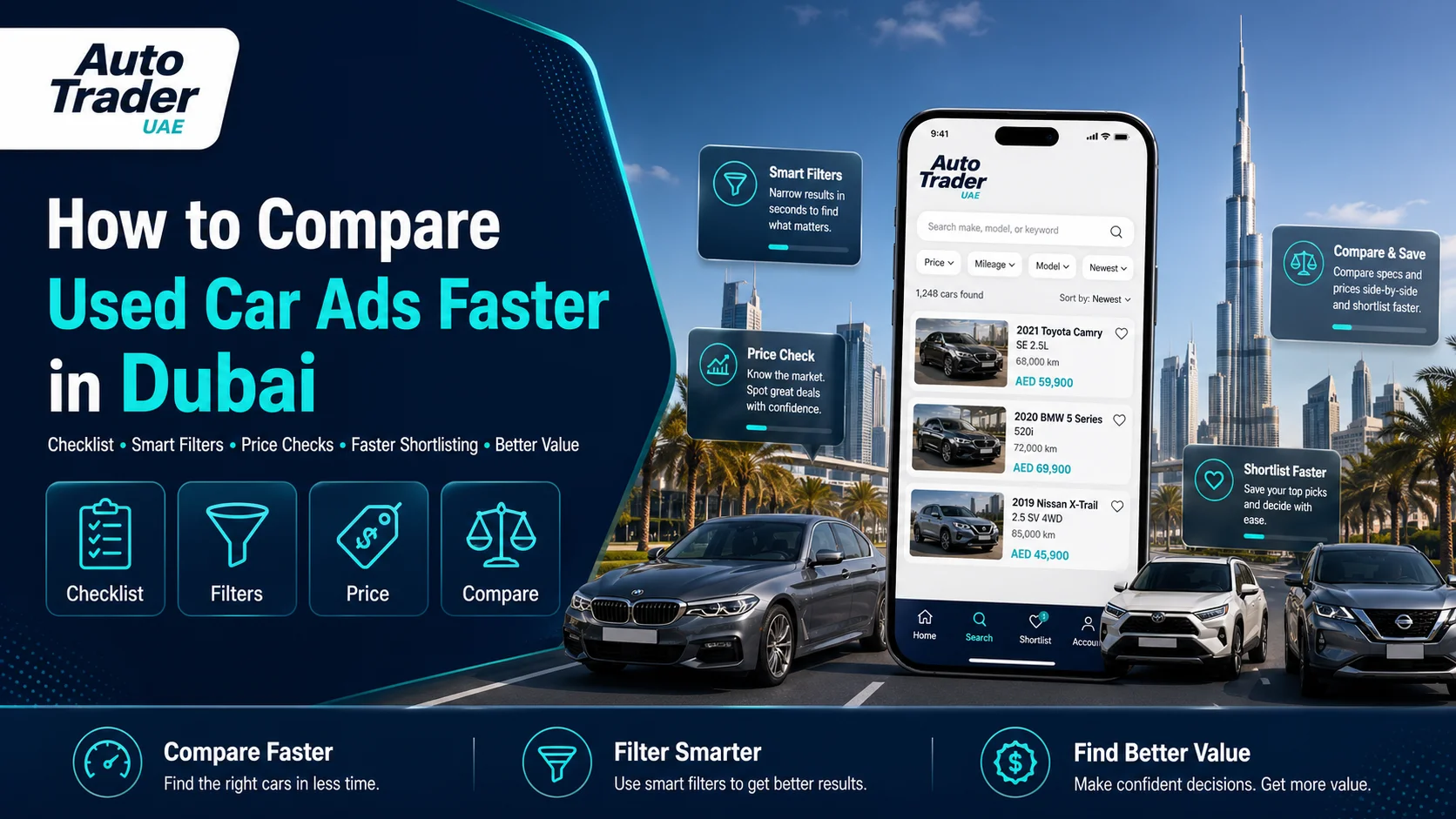
How to Compare Used Car Ads Faster in Dubai
Hunting for a used car in Dubai can quickly turn into endless scrolling and screenshot chaos. The good news: with the right system, you can scan and compare used car ads in minutes – and still make a confident decision.
This guide shows you how to compare used car ads faster in Dubai, using simple checklists, smart filters, and a few practical tricks that work especially well on Auto Trader UAE.
1. Get Clear on What You Actually Need
Before you even open a classifieds site, decide what you really need from a car. This makes it much easier to ignore 80% of the ads straight away.
Set your non‑negotiables
Write down the basics you won’t compromise on:
- Budget: Total budget and max you’re willing to stretch to.
- Body type: Sedan, SUV, hatchback, pickup, etc.
- Fuel type: Petrol, diesel, hybrid, electric (keep in mind fuel prices and your daily usage).
- Transmission: Automatic (most common in Dubai) or manual.
- Usage: Daily commuting, school runs, business use, weekend car, ride‑hailing, etc.
- Size: How many passengers and how much boot space you actually need.
Having this list in front of you lets you quickly skip any ad that doesn’t match – no more wasting time on cars that were never suitable.
2. Use Filters Properly to Cut Your Search Time
Most buyers underuse filters. If you’re just typing the model name and scrolling, you’re losing hours.
Filters to set first
On platforms like Auto Trader UAE, start with these filters:
- Price range: Stay within your realistic budget.
- Year: Set a minimum year based on your reliability and tech expectations.
- Kilometres: Put a reasonable upper limit for mileage.
- Region/Emirate: If you prefer to buy within Dubai only, filter by location.
- Transmission & fuel type: To remove irrelevant listings instantly.
Good rule: if a filter exists and it matters to you, use it. This alone can cut your ad count in half or more.
Shortlist first, compare later
Once your filters are set, quickly scan and add promising cars to your shortlist (or save them). Don’t overanalyse every ad yet. Focus on:
- Price vs year
- Mileage
- Service history mention
- Accident‑free claim
After you have 5–10 strong candidates, then move to detailed comparison.
3. Use a Simple Comparison Table
Trying to remember details from multiple ads is a sure way to get confused. A simple table will help you compare at a glance.
What to include in your comparison table
Create a quick table (on paper, Excel, or your notes app) and add columns like:
- Make & model
- Year
- Mileage (km)
- Price (AED)
- Number of owners (if mentioned)
- Service history (agency / independent / not mentioned)
- Accidents (none mentioned / minor / major / not clear)
- Trim & options (sunroof, leather, ADAS, etc.)
- Warranty (manufacturer / dealer / none)
- Location
As you open each shortlisted ad on Auto Trader UAE, fill in the table. Weak options will stand out immediately.
Red flags to mark in your table
- Unusually low price compared with similar ads
- Very high mileage for the year
- No service history mentioned at all
- Vague description, little information, or stock photos only
- Seller not willing to show chassis number or inspection report
Cars with multiple red flags usually aren’t worth your time.
4. Compare Price the Smart Way
In Dubai, price alone doesn’t tell the full story. Two cars with the same year and model can have very different values.
Check price against three key factors
When you see a price, always ask:
- Is the mileage reasonable?
For Dubai daily drivers, a rough average is around 15,000–25,000 km per year. Significantly higher or lower changes the value. - Is the condition described clearly?
“Lady driven” and “family used” are not enough. Look for information about paint, interior, tyres, and mechanical condition. - Is there documented service history?
A slightly higher price with full service history at a known workshop or agency is usually better value than a cheaper car with no records.
On Auto Trader UAE, compare 5–10 similar cars (same model, year, and similar mileage) to understand the real market range. Then you can quickly reject ads that are suspiciously cheap or unrealistically expensive.
5. Read the Photos Faster – What to Look for
Photos are where you can save the most time. Train your eye to spot issues quickly.
Key things to scan in photos
- Panel gaps and paint differences: Uneven gaps or different shades of paint can suggest accident repairs.
- Tyres: Look for tyre brand, condition, and wear pattern. Uneven wear may point to suspension or alignment issues.
- Interior wear: Heavy wear on the steering wheel, seats, and gear knob can signal high usage, even if the mileage looks low.
- Dashboard warning lights: If the car is shown running, check for any warning lights in the photo.
- Service stickers: In some photos you can see service stickers on the windshield showing last service date and km.
If the photos are very few, low‑quality, or avoid key angles (front, rear, both sides, interior, odometer), treat it as a warning sign and move on unless the seller can provide more.
6. Compare Descriptions, Not Just Specs
Two ads with identical specs can be very different once you read the description carefully.
Good descriptions usually include:
- Exact trim level and engine size
- Ownership details (first owner, expat owner, company car, etc.)
- Where it was serviced (agency or independent workshop)
- Recent maintenance (new tyres, brakes, battery, major service)
- Reason for selling
- Any known issues or minor cosmetic damage
Sellers who are transparent in the ad are usually easier to deal with and less likely to waste your time later.
Warning signs in descriptions
- Too short: “Car in good condition. Serious buyers only.” with no detail.
- All caps or aggressive wording.
- Overly emotional language instead of facts.
- Refusing inspections: “No time wasters, no inspections.”
When comparing multiple ads, prioritise the ones with specific, factual descriptions. They’re easier to verify and faster to assess.
7. Factor in Dubai‑Specific Costs
To compare used car ads fairly, look beyond the sticker price and consider the total cost of putting the car on the road in Dubai.
Costs to keep in mind
- Registration and transfer fees: Paid at RTA when the car changes ownership.
- Insurance: Premium depends on age of driver, car value, claims history, and coverage type.
- RTA test (if due): Required for renewing registration on older vehicles.
- Pending maintenance: Tyres, brake pads, minor service – ask the seller what’s due soon.
When you compare ads, adjust for these costs. A slightly higher purchase price can still be the better deal if the car recently passed RTA, has new tyres, and doesn’t need immediate work.
8. Shortlist Only the Best 3–5 Cars
After comparing specifications, photos, descriptions, and estimated total cost, cut your shortlist down.
How to pick your final shortlist
Choose 3–5 cars that:
- Match your non‑negotiables
- Sit within a realistic price range for the market
- Have clean, detailed ads with clear photos
- Offer service history or at least some records
- Show no obvious accident or neglect signs
Contact these sellers only. This keeps your calls and viewings focused, saving time and fuel.
9. Ask the Same Questions to Every Seller
To compare used car ads properly, you need to compare seller answers in a consistent way.
Essential questions to ask
- How long have you owned the car?
- Where was it usually serviced? Do you have invoices or a service booklet?
- Any accidents? If yes, what was repaired and where?
- Are there any current warning lights or mechanical issues?
- When was the last major service done and at what mileage?
- What will need attention soon (tyres, brakes, battery, registration)?
Note the answers for each car. You’ll quickly see which ads were more honest and which cars are likely to be trouble.
10. Use Auto Trader UAE Tools to Speed Things Up
When searching on Auto Trader UAE, take advantage of features that make comparing used car ads faster:
- Advanced filters: Narrow down by make, model, year, price, body type, and more.
- Saved searches: Save your ideal criteria and check back instead of starting from zero each time.
- Favourites/shortlist: Save only the strongest candidates so you can compare them side by side later.
Once you’re comfortable with a set of filters and a comparison method, you can go from hundreds of ads to a solid shortlist in under an hour.
Buyer Takeaway: Fast Doesn’t Mean Rushed
Comparing used car ads faster in Dubai isn’t about rushing into a decision; it’s about removing obvious bad options early and focusing on the few cars that truly make sense for your budget and needs.
If you follow this system – clear criteria, smart filters, a simple comparison table, photo and description checks, and consistent questions – you’ll spend less time scrolling and more time test‑driving the right cars.
Seller Takeaway: Make Your Ad Easy to Compare
If you’re selling your car in Dubai, remember buyers are comparing you against many similar ads. Help them choose you by:
- Writing a clear, honest description with specific details
- Uploading good‑quality photos from all angles, inside and outside
- Mentioning service history, recent maintenance, and any remaining warranty
- Pricing realistically based on similar listings on Auto Trader UAE
The easier your car is to compare, the faster serious buyers will contact you.
Next Steps with Auto Trader UAE
Ready to put this into practice? Visit Auto Trader UAE to search thousands of used cars across Dubai and the rest of the UAE. Use the filters, build your shortlist, and apply the checklist in this guide to find the best value quickly.
For more practical advice on budgeting, finance, insurance, and getting the most from your next purchase or sale, explore the money and ownership tips in the Auto Trader UAE blog and related finance sections. They’ll help you understand running costs, negotiate more confidently, and complete a safe, smooth transaction.
Browse used cars in UAE on Auto Trader UAE to compare live listings, prices, and current market activity more clearly.
Related Links
Conclusion
A careful used car purchase in the UAE starts with research, proper inspection, and clear paperwork before making the final decision.