
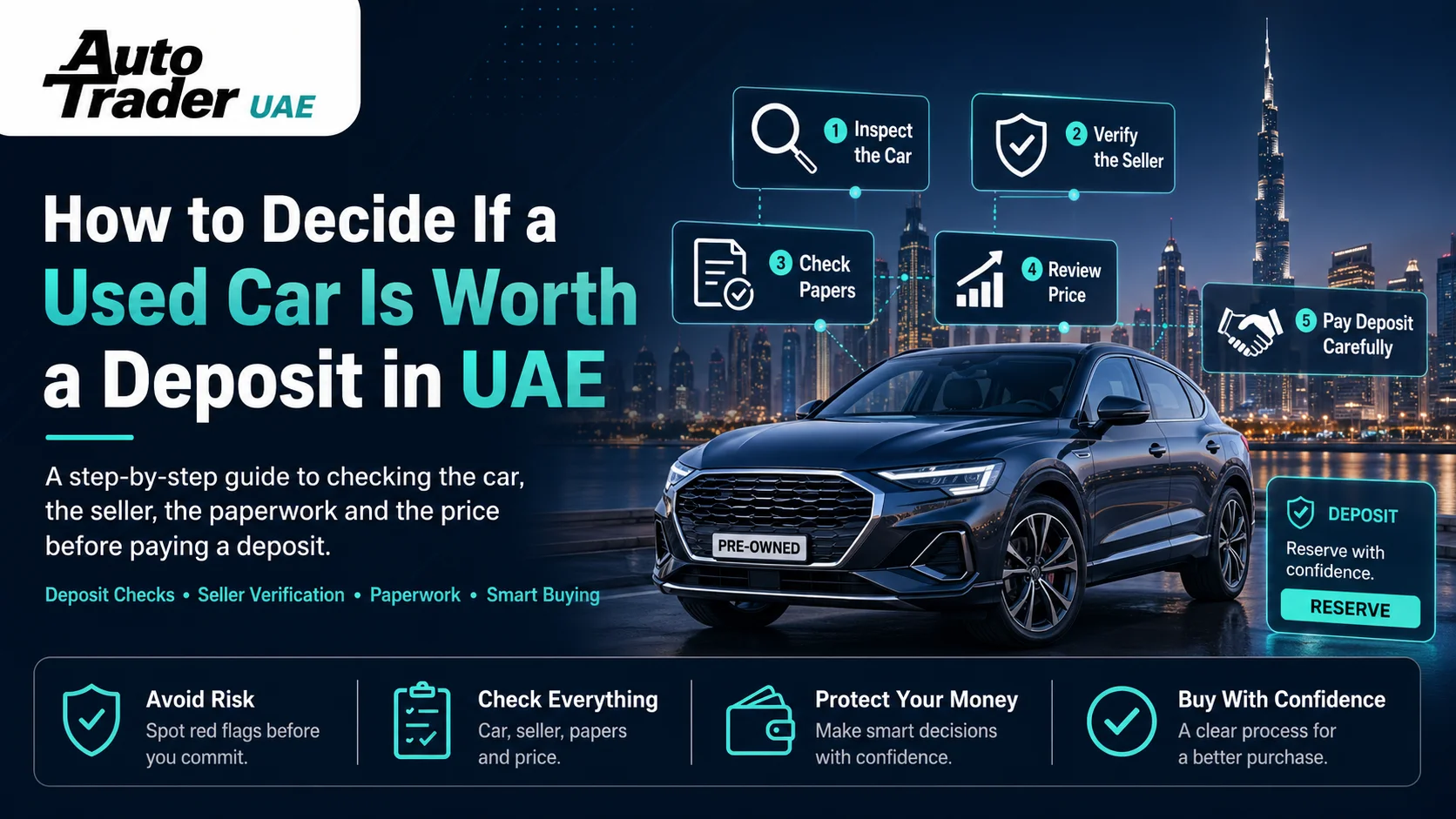
How to Decide If a Used Car Is Worth a Deposit in UAE
Putting a deposit on a used car in the UAE can secure a great deal – or lock you into a bad one. This guide will help you decide when a car is truly worth a deposit, what to check first, and how to protect yourself when buying through classifieds or dealerships.
1. What a Car Deposit Really Means in the UAE
Before you transfer any money, be clear on what the deposit actually does:
- For buyers: A deposit usually reserves the car for you for a set period while you arrange payment, finance or inspection.
- For sellers: A deposit shows you are serious, so they stop showing the car to other buyers.
In the UAE, deposits are often:
- Non-refundable once you agree to buy, unless otherwise written.
- Partly refundable if the car fails an agreed inspection or RTA test.
Never pay a deposit until the terms are written and both sides understand when it is refundable and when it is not.
2. When You Should Not Pay a Deposit Yet
Hold your money until you have checked at least the following:
- You have seen the car in person in daylight.
- You have done a proper test drive.
- You have verified the seller (ID, ownership, trade licence if dealer).
- You have checked RTA passing, service history and basic accident status.
- You have a clear written understanding of the price and conditions.
If any of these are missing, the car is not yet worth a deposit – no matter how good the deal sounds.
3. Step 1 – Check the Seller Before the Car
Your risk level depends heavily on who you are dealing with.
3.1 Private seller checks
For a private seller, make sure:
- The name on the Emirates ID matches the name on the Mulkiya (registration card).
- They are the legal owner or have signed authorisation if selling on behalf of someone else.
- They can meet you at a safe, public place or at an RTA test centre.
Warning signs:
- Seller refuses to show original Emirates ID or Mulkiya.
- Car is registered to someone else and no clear explanation is given.
- Urgent pressure: “Pay deposit now, many buyers waiting.”
3.2 Dealer checks
With a showroom or trader:
- Confirm they have a valid trade licence.
- Read their standard sales and deposit terms carefully.
- Ask whether the car comes with any warranty or return period.
A reputable dealer will provide a receipt, proper paperwork and will not hide the car’s status.
4. Step 2 – Inspect the Car Before You Commit
You don’t need to be a mechanic, but you should do these basic checks before even thinking about a deposit.
4.1 Exterior and bodywork
Walk around the car in good light:
- Look for uneven panel gaps, overspray or mismatched paint (signs of accident repairs).
- Check tyres for even wear and date codes (older than 5–6 years may need replacing soon).
- Look for rust or corrosion under doors and around the boot.
4.2 Interior and features
Inside the cabin:
- Test AC performance – critical in UAE climate.
- Check all windows, mirrors, seat controls, infotainment and dashboard buttons.
- Look for airbag warning lights or any error indicators.
4.3 Engine bay and fluids
With the engine off and then on:
- Check for leaks under the car.
- Listen for unusual noises (tapping, knocking, whining).
- Notice excessive smoke from exhaust (blue, white or black smoke can mean problems).
If anything feels seriously wrong, walk away rather than paying a deposit “subject to fixing”.
5. Step 3 – Do a Proper Test Drive
A car is not worth a deposit until it drives correctly.
5.1 Before you move
- Adjust seat and mirrors for comfort.
- Start the engine and check for warning lights that stay on.
- Test steering while stationary for heavy spots or noises.
5.2 During the drive
On a mix of slow and highway speeds:
- Accelerate gently and then firmly – the car should respond smoothly.
- Check the gearbox shifts (no jerks, slips or delays).
- Test brakes for strength and straight-line stopping without pulling.
- Listen for vibrations or clunks from suspension.
5.3 After the drive
- Re-check for any new leaks.
- Notice any burning smells or overheating.
If the car passes this drive and you still like it, only then move towards a conditional deposit.
6. Step 4 – Verify Documents and History
Paperwork is as important as the car itself.
6.1 Essential documents
Ask to see and match:
- Mulkiya (registration card) – confirms owner and basic car details.
- Last RTA test result – shows whether the car recently passed inspection.
- Service history – dealership or specialist stamps and invoices.
6.2 Accident and finance status
Ideally, you want to know:
- If the car has been in any major accident (airbags deployed, chassis damage).
- Whether the car is under bank finance – a loan must be cleared before transfer.
You can request the seller to obtain an RTA certificate or official report where applicable, and you should confirm with the bank if there is outstanding finance listed.
6.3 Mileage and age sense-check
Compare:
- Odometer reading vs. service intervals.
- Car’s age vs. typical UAE usage (15,000–25,000 km per year is common).
If mileage looks suspiciously low without proof, treat the car as higher risk and be careful with any deposit.
7. Step 5 – Decide If the Price Justifies a Deposit
Now that you know the condition and history, check if the price is realistic.
7.1 Compare similar cars in UAE
Use platforms like Auto Trader UAE to compare:
- Same make, model, year and engine.
- Similar mileage and condition.
- Private vs. dealer pricing differences.
If the asking price is close to market value and the car is in strong condition, a deposit may be justifiable to secure it.
7.2 Understand why a car is cheap
A price that is much lower than the market average can mean:
- Serious hidden issues (engine, gearbox, accident, flood damage).
- Urgent sale due to relocation or financial pressure.
- Outstanding fines or finance to clear.
Do extra checks before paying any deposit, and never send money just because “it’s a bargain”.
8. How Much Deposit Is Reasonable in UAE?
Deposit amounts vary, but common practice is:
- Private sale: Often AED 500–2,000 depending on car value.
- Dealership: Often 5–10% of the car price, or a fixed showroom policy.
A deposit should be enough to show commitment, but not so high that you cannot afford to walk away if terms are not honoured.
9. Always Use a Written Deposit Agreement
Never hand over cash or transfer money without written proof. At minimum, your deposit agreement or receipt should include:
- Buyer’s full name and Emirates ID number.
- Seller’s name, ID or trade licence number.
- Car details: make, model, year, colour, VIN, plate number.
- Deposit amount and date paid.
- Total agreed sale price.
- Deadline to complete the purchase or inspection.
- Clear terms when the deposit is refundable and when it is forfeited.
Example conditions you can include:
- “Deposit fully refundable if car fails RTA test due to major issues costing more than AED X to repair.”
- “Deposit refundable if bank finance is not approved by [date].”
- “Deposit non-refundable if buyer cancels for personal reasons after [date].”
A short, clear written agreement signed by both parties reduces disputes and makes the deposit safer.
10. Red Flags – When You Should Walk Away
If any of the following happen, the car is not worth a deposit:
- Seller refuses independent inspection or RTA test.
- Seller demands a large deposit before viewing or test driving.
- Name on the Mulkiya does not match the person selling.
- Car fails RTA test for major structural or safety reasons.
- Seller pressures you heavily: “Pay now or I will sell to someone else.”
- Only cash payments are accepted, with no receipt.
In these cases, it’s safer to walk away and find another car.
11. Extra Protection: Independent Inspection and RTA Test
For higher-value cars, luxury models or anything with unclear history, insist on:
- A full inspection at a reputable workshop or testing centre.
- A fresh RTA test if the current passing is old or close to expiry.
You can link your deposit to this step:
- “Deposit refundable if inspection report shows major accident damage.”
- “Deposit refundable if RTA fails the car for chassis or engine issues.”
This way, you secure the car but keep a safety net.
12. Safe Payment Methods for Deposits in UAE
Safer ways to pay a deposit include:
- Bank transfer to the seller’s UAE account with a clear reference (car model and plate number).
- Card payment at a dealership with a printed receipt.
If you must pay cash, do it only in person and insist on:
- A signed receipt with all details.
- Photo of the receipt and the car details for your records.
Avoid sending deposits via unknown payment apps, international transfers to personal accounts, or to people you have never met in person.
13. Buyer Checklist – Is This Used Car Worth a Deposit?
Before you pay, confirm you can tick most or all of these:
- I have seen and driven the car in person.
- The seller’s identity and ownership are verified.
- The car’s price matches similar listings on Auto Trader UAE.
- Service history and RTA test documents look reasonable.
- I understand any accident or repair history disclosed.
- I have a written deposit agreement with refund conditions.
- The deposit amount is reasonable and affordable.
If you cannot tick several of these, delay the deposit until you can.
14. Seller Tips – How to Use Deposits Safely
As a seller in the UAE, deposits protect your time and prevent no-shows.
14.1 When to ask for a deposit
Ask for a deposit when:
- A buyer has viewed and test driven the car and verbally agreed on price.
- You are holding the car for them while they arrange cash, finance or inspection.
14.2 How to keep it fair
- Use a clear, signed receipt stating deposit amount, deadline and conditions.
- Allow refund if RTA fails the car for major safety issues or inspection finds serious hidden damage.
- Be transparent about any accidents, repairs or known issues.
A fair deposit policy builds trust and helps genuine buyers commit.
15. Next Steps with Auto Trader UAE
Deciding if a used car is worth a deposit in the UAE comes down to verification, inspection and clear terms. When these three elements line up, a deposit is a powerful way to secure a good car in a busy market. Use Auto Trader UAE to:
- Compare prices of similar used cars before you negotiate a deposit.
- Filter by year, mileage and condition so you know what is realistic for your budget.
For more practical advice on budgeting, finance and safe payment methods, visit the Auto Trader UAE money and finance guides. You can also explore the latest tips and buying guides on the Auto Trader UAE blog to stay informed before you commit to any deposit.
Browse used cars in UAE on Auto Trader UAE to compare live listings, prices, and current market activity more clearly.
Related Links
Buyer Takeaway
When buying a used car in the UAE, focus on vehicle condition, service history, inspection quality, paperwork, and total running costs rather than price alone. Compare options carefully and choose the option that best matches your budget and real needs.
Seller Takeaway
If you are selling a used car in the UAE, present the service history clearly, price the vehicle realistically, and highlight condition, specification, and ownership strengths honestly. A well-prepared listing with accurate details usually attracts more serious buyers.
Conclusion
A careful used car purchase in the UAE starts with research, proper inspection, and clear paperwork before making the final decision.