
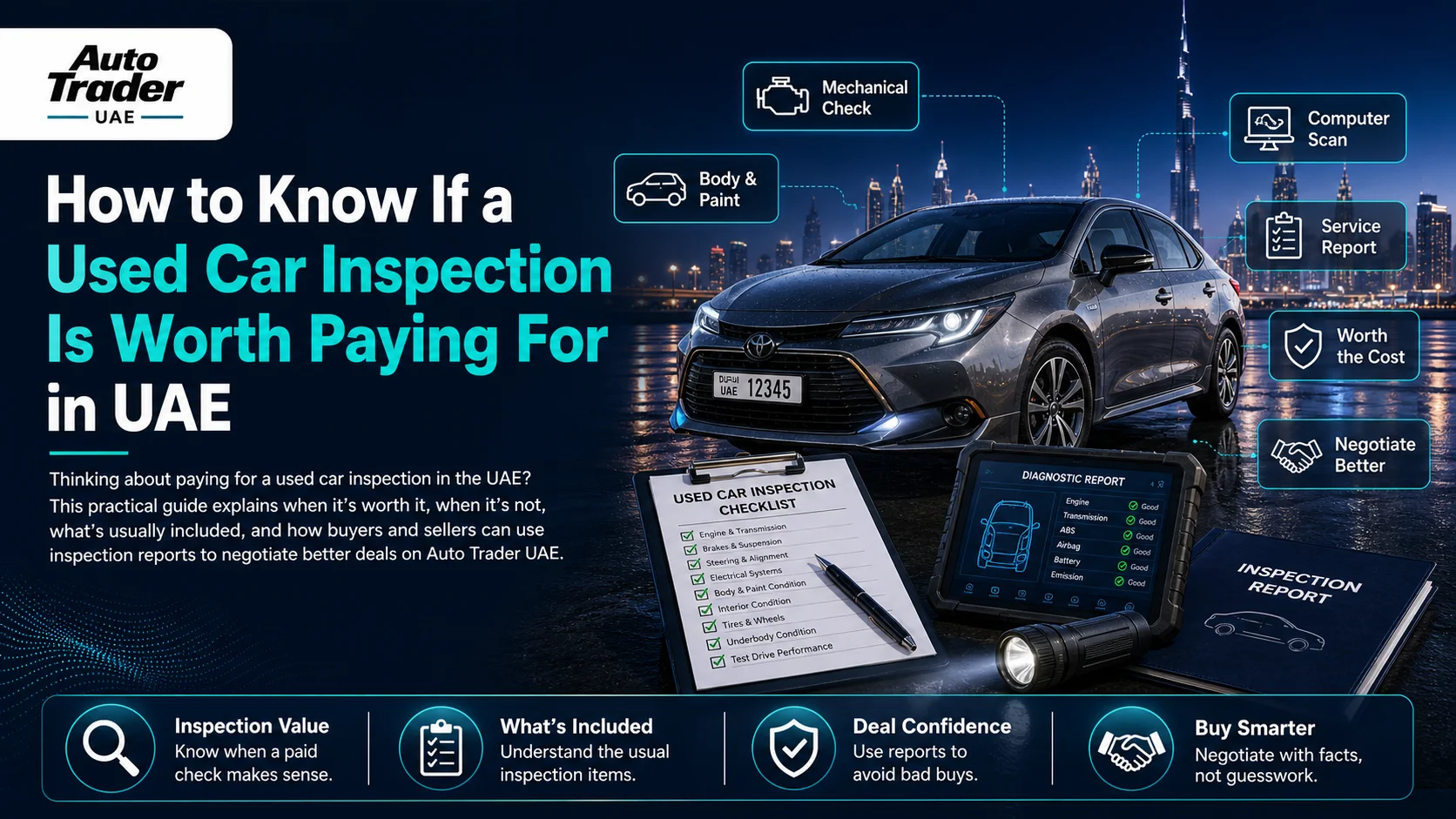
How to Know If a Used Car Inspection Is Worth Paying For in UAE
Buying a used car in the UAE can save you a lot of money, but only if you avoid hidden problems. A paid pre-purchase inspection can help – but it’s not always necessary. This guide explains how to decide if a used car inspection is worth paying for in the UAE, and how to use the report to protect your budget.
What Is a Used Car Inspection in the UAE?
A used car inspection is a professional, independent check of the vehicle before you buy it. In the UAE, this usually means a workshop, dealer, or inspection centre runs a series of visual, mechanical, and electronic tests, then shares a written report. Typical paid inspections in the UAE can include:
- Computer diagnostics (error codes, ECU scan, sensors)
- Engine and transmission check
- Suspension, steering, and brakes inspection
- Chassis and underbody (signs of accidents, rust, repairs)
- Air-conditioning performance (critical in UAE climate)
- Tyres, wheels, and alignment
- Electrical and safety systems (lights, airbags, ABS, etc.)
- Road test (if offered)
On Auto Trader UAE, you can browse used cars for sale in the UAE and shortlist a few options before deciding which one is worth inspecting.
When Is a Used Car Inspection Worth Paying For?
Use these practical checkpoints to decide if you should spend money on an inspection.
1. The Car’s Value and Your Budget
A paid inspection usually makes sense when:
- The car is expensive: Luxury models, recent SUVs, and high-spec trims often justify the cost of a detailed inspection. Spending a few hundred dirhams can protect tens of thousands.
- The car will be your daily driver: If you rely on it for commuting, school runs, or work, reliability is crucial.
- You plan to keep it for several years: Long-term ownership means potential repair costs matter more than a small inspection fee.
An inspection may not be worth it if:
- The car is very cheap and you’re prepared to scrap or fix it without complaint.
- You only need a short-term runaround and are comfortable with some risk.
2. The Type of Car (and Typical Repair Costs)
Some vehicles are far more expensive to repair than others. You should almost always consider paying for an inspection if you’re buying:
- European luxury brands with complex electronics and air suspension
- High-performance cars with turbocharged engines or performance brakes
- Large SUVs used for desert driving or towing
- Hybrids and EVs, where battery and high-voltage issues can be costly
For simpler, common sedans and hatchbacks with cheap parts, the decision is more about mileage, condition, and service history. Browse body types to see what suits your budget and risk comfort:
3. Vehicle Age, Mileage, and Service History
You should strongly consider an inspection if:
- The car is more than 5–7 years old.
- The odometer shows high mileage (e.g., above 120,000–150,000 km).
- Service history is incomplete, missing, or only partially stamped.
- Maintenance was done at small garages with no detailed invoices.
You might skip a paid inspection (with caution) when:
- The car is relatively new with low mileage.
- There is a full, verifiable dealer or specialist service history.
- Warranty or extended warranty is still active and transferable.
Always verify service records and, where possible, call the servicing garage or dealer to confirm major work.
4. Where the Car Has Been Driven
In the UAE, usage patterns matter as much as mileage:
- City-only cars may have more stop-start wear on brakes and transmissions.
- Highway-driven cars often have smoother wear but higher overall mileage.
- Off-road or desert-driven SUVs may need closer checks on suspension, underbody, cooling, and 4x4 systems.
If an SUV has clearly seen off-road use, an inspection is usually wise, especially to check for underbody damage and overheating history.
Red Flags That Make a Paid Inspection Essential
Certain warning signs should almost automatically push you toward a professional check.
1. Inconsistent or Missing Paperwork
Be cautious if:
- Service book stamps don’t match mileage or dates.
- The seller cannot provide invoices for major repairs.
- Ownership history is unclear or has too many short-term owners.
These issues don’t always mean problems, but a thorough inspection helps you decide based on facts, not guesswork.
2. Fresh Paint, Panel Gaps, or Overspray
Accidents are common in busy UAE traffic. Look for:
- Differing paint shades across panels
- Uneven panel gaps around doors, bonnet, and boot
- Overspray on rubber seals, lights, or badges
A minor repair is fine if it was done properly, but a badly repaired accident can hide frame damage. A professional can usually tell the difference.
3. Engine or Gearbox “Stories”
If the seller says things like:
- “Gearbox sometimes jerks but it’s normal for this model.”
- “There’s a small oil leak, nothing serious.”
- “Check engine light appears sometimes; just a sensor.”
Treat these as immediate reasons to seek an inspection. A “sensor issue” can sometimes be an early warning of a much more expensive failure.
4. Strong Modifications or Aftermarket Tuning
In the UAE, it’s common to see tuned engines, upgraded exhausts, and modified suspensions. Modified cars can be great, but you should inspect them if:
- The engine has been remapped or turbo-boosted.
- Lowered or lifted suspension has been installed.
- Non-standard wheels, brakes, or body kits are fitted.
An inspection helps confirm whether the work was done professionally and safely.
When You Might Skip a Paid Inspection (With Caution)
While a pre-purchase inspection is almost always beneficial, there are a few situations where you might reasonably skip it:
- Low-value car with full transparency: If the car is very cheap, you accept it “as is”, and the seller is honest about known issues.
- Still under manufacturer warranty: Newer vehicles with active warranty and clear dealer service history may not strictly need a third-party check, though it can still provide extra peace of mind.
- Certified pre-owned from an official dealer: Many main dealers in the UAE already perform their own multi-point checks. Review their inspection checklist; you may not need another one unless something feels off.
If you skip a professional inspection, at least do a thorough test drive and basic visual checks (see below).
What a Good Used Car Inspection Should Include
Before paying, confirm exactly what will be checked and how detailed the report will be. A thorough UAE-style inspection usually covers:
1. Mechanical Systems
- Engine condition (noise, leaks, performance)
- Gearbox and clutch or automatic transmission behaviour
- Cooling system (radiator, hoses, fans, coolant level and condition)
- Brakes (pads, discs, brake lines, ABS function)
- Suspension and steering (shocks, bushings, joints)
2. Electrical and Safety Checks
- Dashboard warning lights and fault codes
- Airbags, ABS, traction control functionality
- Lights, indicators, horn, wipers, windows, locks
- Battery condition and charging system
3. Body, Chassis, and Underbody
- Accident damage or welding on chassis rails
- Rust or corrosion (less common but still possible)
- Oil leaks, transmission leaks, power steering leaks
- Exhaust system condition
4. Interior and Comfort Features
- A/C performance – vital in UAE climate
- Seat controls, infotainment, navigation, Bluetooth
- Sunroof or panoramic roof operation (and leaks)
5. Road Test
Not all inspections have a road test, but it’s valuable. It can reveal:
- Vibrations at speed
- Gearbox hesitation or jerks
- Steering alignment issues
- Braking performance and noise
Ask for a written report with clear comments and, if possible, photos of any serious issues.
How Much Does a Used Car Inspection Cost in the UAE?
Costs vary by workshop and inspection level, but in general you can expect to pay more for:
- Premium brands and large SUVs
- Dealership inspections versus independent garages
- Full diagnostic and road test packages
When comparing prices, focus on value, not just cost:
- What exactly is included?
- Is the inspector experienced with this brand/model?
- Do you receive a detailed written report, not just a verbal comment?
If the inspection fee is only a small percentage of the vehicle price and could save you from a major repair, it’s usually money well spent.
How to Use the Inspection Report to Negotiate
Paying for an inspection is most useful when you know how to act on the results.
1. Separate “Immediate” from “Future” Costs
Ask the inspector to highlight:
- Critical safety issues (brakes, tyres, steering, airbags)
- Major upcoming costs (timing belt, suspension overhaul, gearbox service)
- Minor or cosmetic issues (small dents, worn trim)
This helps you decide if the car is still worth buying and what discount to request.
2. Negotiate Based on Real Numbers
If the inspection finds, for example, that the car needs new tyres and front brake discs, get repair quotes from workshops. Use these numbers to negotiate a lower price or ask the seller to fix the issues before sale. Sellers are more likely to accept a fair, documented negotiation based on an independent report than a random low offer.
3. Be Ready to Walk Away
If the inspection reveals severe engine damage, major accident history, or multiple expensive faults, be prepared to move on. There are plenty of alternatives across the UAE. You can quickly compare options on:
Tips for Sellers: When a Pre-Inspection Helps You
Inspections aren’t just for buyers. As a seller, paying for an inspection can:
- Increase buyer confidence: A clean report reassures serious buyers and justifies your asking price.
- Speed up the sale: Transparent condition reports reduce time spent answering the same questions.
- Help you set the right price: You’ll know exactly what needs work and can price the car accordingly.
A pre-sale inspection makes the most sense for:
- Higher-value or luxury cars
- Well-maintained, low-mileage vehicles
- Unique or enthusiast models where buyers expect detailed proof of condition
You can then list your car on Auto Trader UAE with a clear description that matches the report.
Basic Checks You Can Do Yourself Before Paying
Before investing in a professional inspection, do your own quick assessment. If the car fails these basic checks, you may decide not to proceed at all.
Exterior and Body
- Walk around the car in good light; look for colour differences and panel misalignment.
- Check all lights, indicators, and windows.
- Inspect tyres for uneven wear, cracks, or old date codes.
Interior
- Check seat wear versus claimed mileage.
- Test all switches, windows, mirrors, infotainment, and A/C.
- Look for water leaks or musty smells that might indicate prior flooding.
Test Drive
- Listen for unusual engine, suspension, or wind noises.
- Feel for vibrations through steering or pedals.
- Check that the gearbox shifts smoothly and brakes don’t pull or vibrate.
If the car passes these basic checks and you’re still interested, that’s the right moment to commit to a professional inspection.
Decision Checklist: Is a Used Car Inspection Worth It for You?
Ask yourself these questions:
- Is the car’s price significant relative to my budget?
- Would a major repair in the next 12–24 months seriously hurt my finances?
- Is the vehicle complex (luxury, SUV, hybrid, high-performance)?
- Is the service history incomplete, uncertain, or from unknown garages?
- Are there visible signs of paintwork, modifications, or off-road use?
- Do I plan to keep the car for several years?
If you answer “yes” to several of these, a paid inspection is almost always worth it.
Next Steps with Auto Trader UAE
1. Shortlist the right cars: Use Auto Trader UAE filters to narrow down by budget, mileage, year, and body type:
2. Talk to the seller: Ask about service history, accident history, and any known issues before ordering an inspection. 3. Book an inspection for serious candidates only: Don’t pay to inspect every car you view. Reserve paid inspections for the one or two vehicles you are genuinely ready to buy. 4. Use the report to negotiate or walk away: Let the facts guide your decision, not pressure or emotion. With a clear strategy and the right inspection, you can buy a used car in the UAE with confidence, protect your budget, and enjoy the right vehicle for your lifestyle. Auto Trader UAE gives you the marketplace and tools to find it; a smart inspection strategy makes sure it’s a car you’ll be happy to own.
Browse used cars in UAE on Auto Trader UAE to compare live listings, prices, and current market activity more clearly.
Related Links
Buyer Takeaway
When buying a used car in the UAE, focus on vehicle condition, service history, inspection quality, paperwork, and total running costs rather than price alone. Compare options carefully and choose the option that best matches your budget and real needs.
Seller Takeaway
If you are selling a used car in the UAE, present the service history clearly, price the vehicle realistically, and highlight condition, specification, and ownership strengths honestly. A well-prepared listing with accurate details usually attracts more serious buyers.
Conclusion
A careful used car purchase in the UAE starts with research, proper inspection, and clear paperwork before making the final decision.