
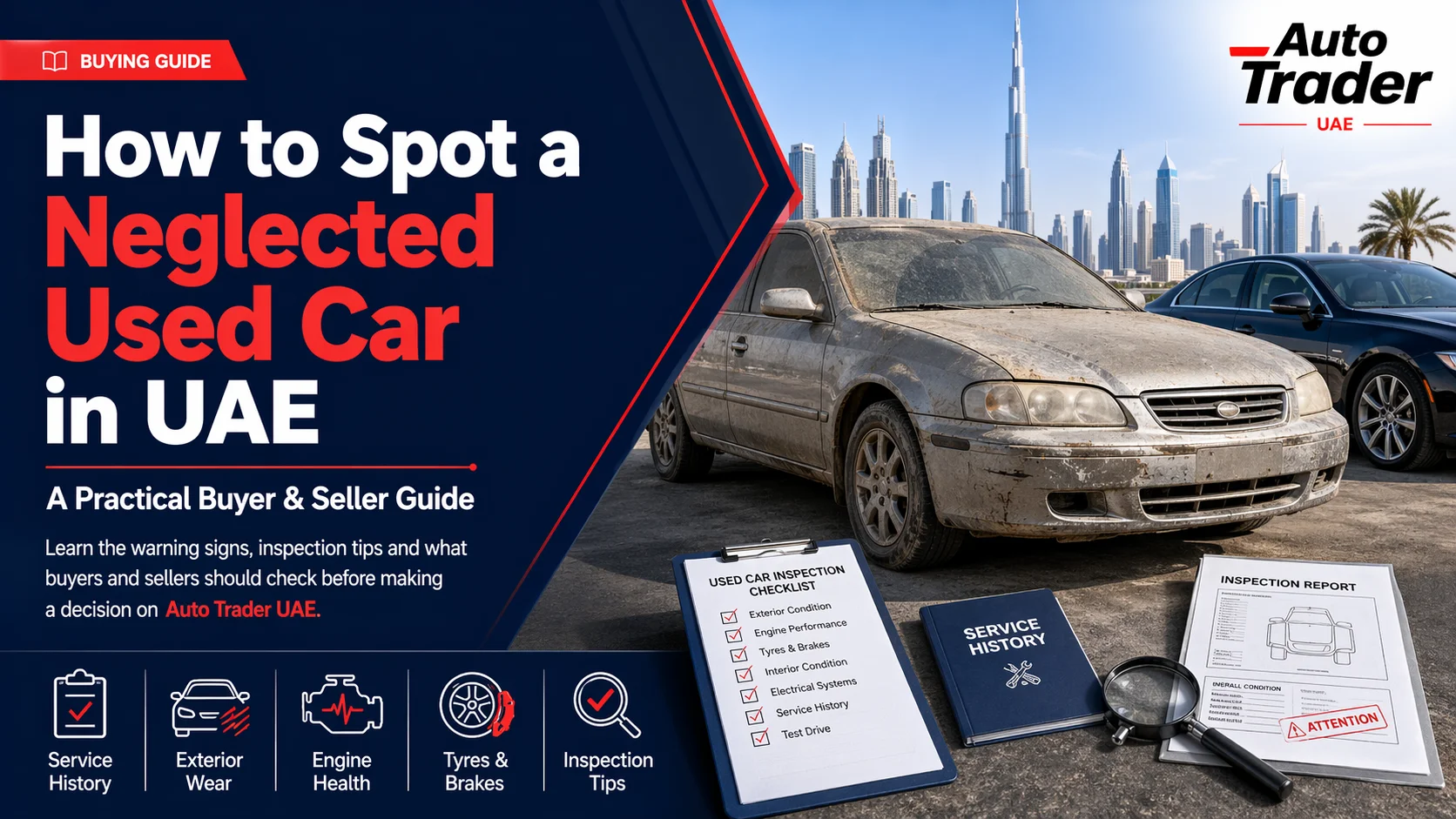
How to Spot a Neglected Used Car in UAE
Buying used in the UAE can save you a lot of money, but a neglected car can turn those savings into expensive repairs. This guide from Auto Trader UAE explains how to spot a poorly maintained car quickly, what to check in person, and how both buyers and sellers can protect themselves.
Why Neglect Matters in the UAE
The UAE’s climate is harsh on cars. High temperatures, sand, and humidity mean that regular servicing is not optional – it’s essential. A neglected used car in the UAE can hide:
- Overheating and engine damage from missed coolant changes
- Faded paint and cracked trim from constant sun exposure
- Worn suspension from speed bumps and rough roads
- Air-conditioning issues from heavy year-round use
Spotting neglect early helps you:
- Avoid costly repairs after purchase
- Negotiate a realistic price based on condition
- Walk away from unsafe or badly treated cars
Quick Checklist: Fast Signs of a Neglected Car
Before diving into the details, here are quick red flags when you first see a listing or arrive to inspect the car:
- No service history or very patchy records
- Uneven paint, mismatched panels, or obvious fading
- Oil leaks under the car or on the engine
- Strong burning, fuel, or mouldy smells inside
- Warning lights illuminated on the dashboard
- Very worn tyres, different brands or sizes on each axle
- Dirty engine bay covered in old oil, sand, and dust
- >
- Rough idling, strange noises, or smoke from the exhaust
If you see several of these together, treat the car as high-risk and consider walking away or insisting on a full inspection at an RTA-approved testing centre.
1. Service History and Paperwork
What a Healthy History Looks Like
In the UAE, a well-looked-after car usually has:
- Stamped service book or digital records from an agency or reputable workshop
- Regular services every 5,000–10,000 km (check the owner’s manual for the correct interval)
- Invoices for major work like brakes, tyres, battery, and AC repairs
- Clear mileage progression that makes sense over the years
Warning Signs of Neglect
- No records at all – “Lost book” or “all done but no invoices” is a red flag.
- Big gaps – For example, 60,000 km between services, or missing years.
- Only very recent services – A rush of last-minute maintenance may hide years of poor care.
- Suspicious mileage – Very low mileage for the car’s age without a good explanation.
If you’re unsure, ask the seller if you can verify history at the main dealer or trusted service centre. A genuine seller will usually agree.
2. Exterior: Bodywork, Paint, and Glass
Sun and Sand Damage
Look for signs the car has lived uncovered in the heat:
- Dull, faded, or chalky paint – especially on roof, bonnet, and boot
- Cloudy or yellowed headlights that reduce night visibility
- Cracked or brittle plastic trims and mirror housings
- Rubber seals around doors and windows that are dry, split, or loose
These don’t always mean mechanical neglect, but they suggest the car wasn’t protected from the elements.
Body Repairs and Poor-Quality Work
Neglected cars are often repaired cheaply after accidents. Check for:
- Mismatched paint shades between panels
- Overspray on rubber seals, badges, or glass
- Uneven gaps around doors, bonnet, and boot lid
- Visible filler or waves in the body when you look along the side of the car
Major accident damage plus poor maintenance is a strong reason to reconsider the car.
3. Tyres, Brakes, and Suspension
Tyres
Tyres in the UAE are critical for safety in hot conditions. Inspect:
- Tread depth – Very worn or close to legal limit indicates neglect.
- Cracks or dry rot – Common in older tyres exposed to heat.
- Uneven wear – More wear on one side may indicate poor alignment or suspension issues.
- Mixed brands and ages – Different tyres on each corner suggest cost-cutting.
Check the tyre manufacture date (DOT code). Very old tyres, even with good tread, are unsafe in UAE heat.
Brakes
During a test drive and visual check:
- Listen for squealing, grinding, or vibration under braking.
- Check discs for heavy grooves, rust patches, or cracks.
- Feel the pedal – it should be firm, not spongy or sinking.
Lack of brake maintenance is a serious safety concern and a sign of wider neglect.
Suspension
Dubai, Abu Dhabi, Sharjah and other emirates all have speed bumps and mixed road surfaces that punish suspension. Look and feel for:
- Car sitting unevenly or leaning to one side
- Knocking sounds over bumps
- Excessive bouncing when you push down on each corner
- Oil leaks from shocks or struts
Neglected suspension can become a major repair bill, especially on larger SUVs.
4. Engine Bay and Fluids
Quick Visual Inspection
Open the bonnet and check:
- Oil leaks on the engine block, under the car, or around gaskets
- Heavy dirt, sand, and old oil – suggests long periods without proper cleaning or checks
- Loose or makeshift wiring and non-standard modifications
- Battery condition – heavy corrosion on terminals or insecure mounting
Fluid Checks
Where possible (and only when the engine is cool), inspect:
- Engine oil – should be within the dipstick range, not thick black sludge or milky.
- Coolant – correct level, not rusty, brown, or oily.
- Brake fluid – not extremely dark; low level may point to leaks or worn pads.
- Power steering and transmission fluids (if accessible) – check for correct level and colour.
Dirty or low fluids across the board usually mean the car hasn’t been serviced on time.
5. Interior Condition and Smells
The cabin tells you a lot about how an owner treats their car.
Interior Wear
Check for:
- Heavily worn steering wheel, gear knob, or pedals on a “low mileage” car
- Sagging roof lining – common in older cars left in heat
- Torn seats, broken seat adjusters, and damaged plastics
- Sticky buttons, broken switches, or non-working controls
Excessive wear suggests rough use or long hours in harsh conditions.
Odours and Moisture
Smell the interior when you first open the door:
- Mouldy or damp smell – may indicate water leaks, poor AC drainage, or flood damage.
- Strong air freshener – sometimes used to cover odours.
- Fuel or burning smells – possible leaks or electrical problems.
Lift the boot floor (if possible) and check for moisture, rust, or water marks.
6. Air-Conditioning and Electronics
In the UAE, a neglected AC system can make the car almost unusable in summer.
AC Performance
During the test drive:
- Turn the AC to maximum cold – the air should become noticeably cold within a minute or two.
- Check all vents, front and rear (if fitted), for airflow.
- Listen for loud compressor noise or strange sounds when the AC engages.
Weak or inconsistent cooling may indicate poor maintenance or an upcoming expensive repair.
Electronics and Features
Test as many features as possible:
- Power windows, mirrors, central locking, and door handles
- Infotainment, Bluetooth, reverse camera, and parking sensors
- Instrument cluster and all dashboard buttons
- Headlights, indicators, brake lights, and hazard lights
Multiple non-working electrical items often point to neglect or poorly done modifications.
7. Test Drive: How a Neglected Car Feels
A short, focused test drive can reveal a lot.
Before You Set Off
Start the car from cold if possible:
- Note how easily it starts and idles.
- Listen for rattling, ticking, or knocking noises from the engine.
- Watch for excessive smoke from the exhaust – blue, white, or black smoke are all warning signs.
On the Road
While driving at different speeds:
- Feel for vibrations in the steering, seat, or floor.
- Check that the steering is straight and doesn’t pull strongly to one side.
- Listen for whining, humming, or clunking sounds from the drivetrain.
- Observe gear changes – they should be smooth in both automatic and manual cars.
- Test the brakes in a safe area – the car should stop in a straight line without drama.
Any combination of strange noises, vibrations, and poor braking should make you cautious.
8. When to Walk Away vs When to Negotiate
Not every issue is a deal-breaker, but some are serious warning signs.
Strong Reasons to Walk Away
- No service history and obvious signs of neglect
- Major structural or accident damage with poor repairs
- Overheating, heavy smoke, or severe engine noise
- Serious brake or steering problems
- Seller unwilling to allow inspection or testing
Possible Negotiation Points
If the car is otherwise sound but shows manageable wear, you may use these to negotiate:
- Old, cracked tyres needing replacement soon
- Minor paint fade, small dents, or scratched trim
- Weak but functioning AC that may need servicing
- Routine maintenance due soon (brake pads, battery, fluids)
Always get an estimate from a trusted UAE workshop so you know the true cost before agreeing on a price.
9. How Sellers Can Avoid Their Car Looking Neglected
If you’re planning to sell your car on Auto Trader UAE, presenting it well – and genuinely maintaining it – can increase interest and sale price.
Maintain Properly Before Listing
- Keep up with regular services and keep all invoices.
- Replace worn tyres, wipers, and small items that are obviously tired.
- Fix simple issues like broken bulbs, warning lights, or missing trim.
- Get the AC serviced if performance has dropped.
Prepare the Car for Photos and Viewings
- Wash and wax the exterior, including wheels and glass.
- Deep clean the interior and remove personal items.
- Use high-quality, clear photos taken in good light.
- Mention genuine maintenance work in your listing description.
A well-maintained car with proof of care will stand out positively in UAE used car listings.
10. Get a Professional Inspection in the UAE
Even if you know what to look for, a professional inspection brings peace of mind. You can:
- Use RTA-approved testing centres where available.
- Ask a trusted independent workshop to carry out a pre-purchase inspection.
- Check for any outstanding recalls with the dealer for that make.
Share the report with the seller and use it to support your final offer or your decision to move on.
Buyer Takeaway
To spot a neglected used car in the UAE:
- Start with the service history – gaps usually mean risk.
- Inspect exterior, tyres, and suspension for visible wear.
- Look under the bonnet for leaks and dirty fluids.
- Check the interior and test every major function, especially AC.
- Always test drive and listen for unusual noises.
- When in doubt, get a professional inspection or walk away.
Use Auto Trader UAE to compare similar cars, prices, and conditions so you understand what a well-kept example looks like before you commit.
Seller Takeaway
If you’re selling in the UAE and want serious buyers:
- Maintain your car properly and keep your service records.
- Fix simple, visible issues before listing.
- Be transparent about the car’s condition and any past repairs.
- Create a detailed, honest listing on Auto Trader UAE with clear photos.
A car that doesn’t look or feel neglected will attract more clicks, more viewings, and stronger offers.
Next Steps with Auto Trader UAE
Whether you’re buying or selling, Auto Trader UAE is built around the UAE market and conditions:
- Browse used cars by make, model, price, and location to compare well-maintained examples.
- Explore make and model pages to understand common issues and maintenance costs.
- Read more buying guides for tips on financing, inspections, and negotiation.
Use these checks alongside trusted professional advice, and let Auto Trader UAE help you find – or sell – a used car that’s been cared for, not neglected.
If you are exploring used cars in Dubai or elsewhere in the UAE, Auto Trader UAE makes it easier to compare listings, prices, trims, mileage, and seller details in one place.
Related Links
Conclusion
A careful used car purchase in the UAE starts with research, proper inspection, and clear paperwork before making the final decision.