
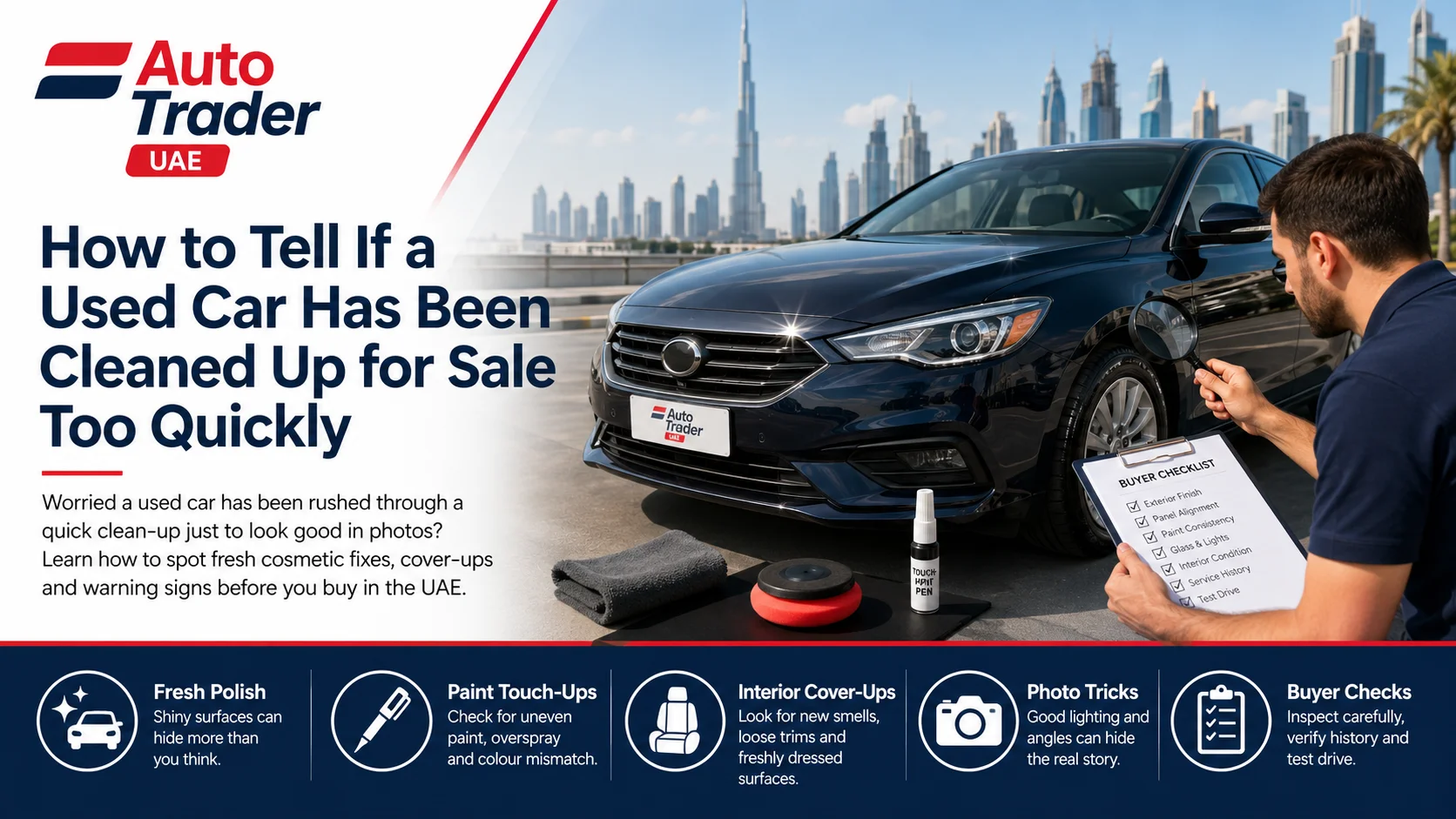
How to Tell If a Used Car Has Been Cleaned Up for Sale Too Quickly
In the UAE’s fast‑moving used car market, many sellers present cars that look showroom‑fresh in photos but tell a different story in person. A quick wash, interior fragrance, shiny tyres and some cheap cosmetic work can hide years of hard use.
This guide from Auto Trader UAE explains how to tell if a used car has been cleaned up for sale too quickly – and how to protect yourself when browsing used cars in the UAE.
Why rushed clean‑ups are a red flag
A freshly detailed car is not automatically a problem – most good sellers will wash and vacuum a vehicle before advertising it. The risk comes when a car has been:
- Heavily cleaned to hide leaks, stains or damage
- Rushed through basic cosmetic work right before photos
- Perfumed to mask smells from floods, smoking or pets
In the UAE, where heat, sand and stop‑start traffic are hard on vehicles, an over‑polished appearance can sometimes be used to distract from poor mechanical condition or accident history.
1. Exterior signs the car was rushed for sale
Unnatural shine on a tired body
A car that’s several years old, exposed to Gulf sun, should show some light wear. Be cautious if:
- The paint is extremely glossy but rubber trim, badges or plastic parts look faded.
- There is heavy wax residue around badges, window edges or in panel gaps.
- You see holograms or swirl marks in the clear coat under direct sunlight.
This can indicate a quick machine polish to make the car look great for photos while ignoring underlying paint issues.
Fresh paint in small areas
Look closely for signs of recent paintwork that hasn’t been disclosed:
- Mismatched shades between panels, especially on bumpers, doors, bonnet and boot.
- Overspray on rubber seals, wheel arch liners or inside door openings.
- Orange‑peel texture or rough finish on one panel compared to others.
Repaired paint isn’t automatically bad – many UAE cars have minor bodywork from parking dings. The problem is when the seller hides it or refuses to discuss the repair.
Tyres and wheels: shiny but suspect
- Tyre shine overload: Thick, wet‑looking tyre dressing can hide small cracks in the sidewall or dry rot from sun damage.
- Dirty wheel wells: Clean wheels with very dirty inner arches or suspension parts suggest a quick superficial wash.
- Uneven tyre ages: Check the DOT date stamp. One new tyre with three worn ones may indicate the car was prepared just to pass a basic check.
Glass and lights
- Cloudy or freshly polished headlights: Heavy sanding marks or clear coat overspray can hint at budget preparation before sale.
- Windshield chips just filled: Very fresh chip repairs may be OK, but several recent fixes can hint at hard highway use.
2. Interior clues a car was cleaned in a hurry
Overpowering fragrances
If the first thing you notice when you open the door is a very strong perfume, air freshener or detergent smell, pause. Sellers often use heavy scents to cover:
- Persistent cigarette or shisha smoke
- Mildew from water leaks or past flood damage
- Pet odours
Turn off the A/C, open all doors, wait a few minutes and then smell again. Any musty, sour or smoky odour after the fragrance fades is a warning sign.
Suspiciously clean carpets and seats
Professional detailing is common in Dubai, Abu Dhabi and Sharjah, but rushed jobs leave clues:
- Damp carpets or seats on a hot day – they may have been shampooed that morning to hide stains.
- Uneven colour patches on fabric seats where heavy stains were treated.
- Loose seat covers that don’t match the age or quality of the rest of the interior.
Lift floor mats and inspect the carpet underneath, especially in the front footwells and around the centre console.
Shiny plastics and greasy surfaces
Excessive use of dashboard polish can:
- Make plastics dangerously shiny and reflective on the windscreen.
- Hide minor scratches and wear on buttons and trim.
Look for polish residue in creases, around buttons, and inside storage compartments. Genuine low use will show minimal wear on commonly touched areas such as the steering wheel, gear lever, window switches and A/C controls.
Misaligned or reinstalled interior trim
Quick interior work can leave things slightly out of place:
- Loose panels under the dashboard or around the centre console.
- Missing or mismatched screws and clips.
- Headlining (roof fabric) sagging or looking freshly glued.
This may indicate previous electrical work, water leak repairs or DIY fixes not properly disclosed.
3. Signs of leaks or flood damage that cleaning can’t hide
Water damage indicators (important in the UAE)
Even in a desert climate, heavy rain, flash floods and basement parking leaks do happen. Quick interior cleaning may try to hide:
- Rust in unusual places: Under seats, inside seat rails, on metal brackets under the dashboard.
- Water lines or silt: A faint tide mark on seat bases, carpets or spare tyre wells.
- Electrical issues: Flickering dashboard lights, intermittent window operation or strange sensor warnings.
Lift the boot floor and check the spare wheel area. Any standing water, damp smell or rust is a major concern.
Oil and fluid leak cover‑ups
A freshly cleaned engine bay can look impressive, but it can also hide problems:
- Look for wet or oily patches starting to appear again around gaskets, hoses and seals.
- Check under the car for fresh drips, especially after a test drive.
- Inspect the underside protection panels (if visible) for new stains or heavy cleaning marks.
On a genuinely healthy car, a light film of dust on the engine is normal. An engine bay that looks steam‑cleaned the same day you view it deserves extra attention.
4. Mechanical red flags that cosmetics can’t fix
Mileage vs. wear
Compare the odometer reading with the visible wear:
- Heavy wear on pedals, steering wheel and driver’s seat on a “low‑mileage” car is suspicious.
- Newly fitted steering wheel covers or pedal rubbers on an older car may hide wear.
In the UAE, many cars rack up highway kilometres between emirates. Modest wear is normal. What’s worrying is when the visible condition doesn’t match the claimed mileage or usage.
Test drive: how it really feels
No amount of cleaning can hide:
- Rough engine idle, hesitation or misfires.
- Slipping or jerky gear changes (especially in automatic and dual‑clutch gearboxes).
- Suspension knocks, clunks or rattles over bumps.
- Steering that pulls to one side or vibrates at speed.
Always insist on a proper test drive on mixed roads: city, speed bumps and highway where possible.
5. Paperwork, history and timing clues
RTA test and service history
In the UAE, you should always ask for:
- Recent RTA test results: Check if the car only just passed, or failed and then passed after repairs.
- Service invoices: Look for regular maintenance at reputable workshops, not just one big service right before sale.
- Accident history: Ask if the car has any major insurance claims in its past.
Timing of recent work
Be cautious if the seller says “we just changed” many items in the last few days: oil, tyres, battery, A/C service, detailing and minor paint. That can be positive, but it can also mean the car was neglected then quickly refreshed purely to sell.
6. How UAE buyers can protect themselves
Use pre‑purchase inspections
For any used car you’re serious about, especially higher‑value SUVs and luxury models, arrange an independent inspection with a trusted workshop or testing centre. Ask them to:
- Check for fresh leaks after a test drive.
- Scan the car with a diagnostic tool for stored fault codes.
- Inspect underbody, suspension and brakes for wear or accident damage.
View the car in daylight
Bright UAE sunlight is your friend. View the car outside during the day if possible – harsh lighting shows paint defects, uneven panels and interior wear that indoor showroom lights can hide.
Take your time
Rushed decisions are what bad sellers rely on. Move slowly around the car, open every door, fold seats, check storage compartments and electronics, and take notes. If anything feels off, be ready to walk away – there are plenty of alternatives on Auto Trader UAE.
7. Tips for honest sellers in the UAE
If you’re selling your own car, good preparation helps you achieve a fair price without misleading buyers:
- Clean the car properly but avoid over‑perfuming or hiding minor flaws.
- Be upfront about previous paintwork, minor accidents or replaced parts.
- Gather all service records, RTA test slips and warranty documents.
- Fix small, obvious items (bulbs, wiper blades, basic service) rather than leaving them for the buyer.
Honest presentation builds trust and helps your listing stand out among the many used cars for sale in the UAE.
What to do if a car looks “too clean to be true”
- Slow down and inspect the car more carefully inside and out.
- Ask direct questions about recent work, detailing and paint.
- Check documentation: service history, RTA tests, invoices.
- Arrange an independent mechanical inspection.
- Compare with similar models on Auto Trader UAE to see if the price aligns with condition.
Next steps with Auto Trader UAE
A spotless used car can be a genuine, well‑cared‑for vehicle – or it can be a quick clean‑up hiding problems. By using the checks in this guide and taking your time, you can tell the difference.
When you’re ready to buy, browse a wide range of used cars in the UAE and, if you’re shopping in the emirate, used cars in Dubai on Auto Trader UAE. Filter by budget, body type and mileage, then use this checklist in person to make a confident, informed choice.
Browse used cars in UAE on Auto Trader UAE to compare live listings, prices, and current market activity more clearly.
Related Links
Buyer Takeaway
When buying a used car in the UAE, focus on vehicle condition, service history, inspection quality, paperwork, and total running costs rather than price alone. Compare options carefully and choose the option that best matches your budget and real needs.
Seller Takeaway
If you are selling a used car in the UAE, present the service history clearly, price the vehicle realistically, and highlight condition, specification, and ownership strengths honestly. A well-prepared listing with accurate details usually attracts more serious buyers.
Conclusion
A careful used car purchase in the UAE starts with research, proper inspection, and clear paperwork before making the final decision.
Auto Trader UAE connects you with thousands of used cars from trusted private sellers and dealers across Dubai and the UAE.