
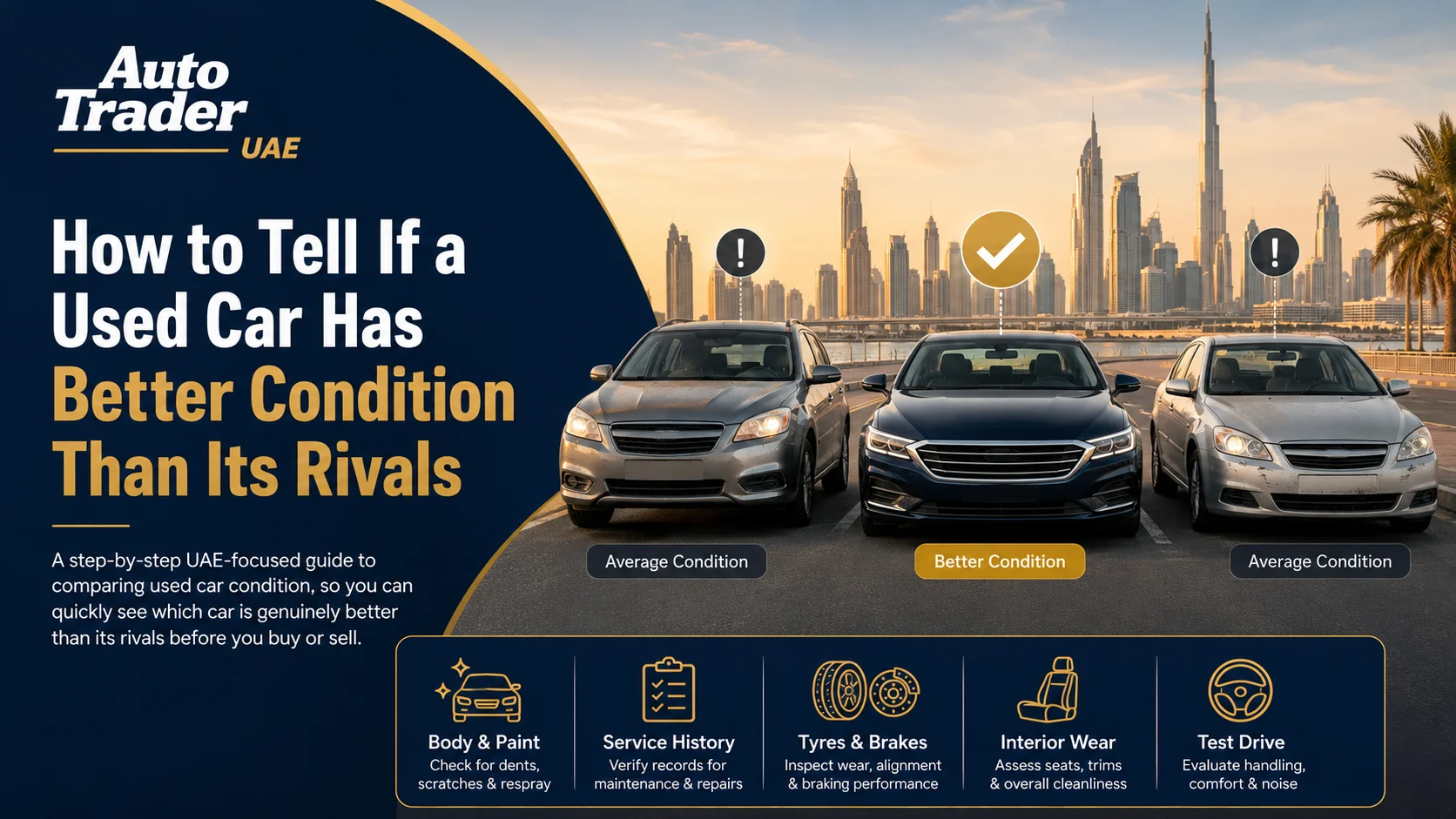
How to Tell If a Used Car Has Better Condition Than Its Rivals
When you shop for a used car in the UAE, you’ll often see several similar cars: same model, close mileage, similar price. The real difference is usually condition. Knowing how to spot a car that’s in better shape than its rivals can save you thousands of dirhams and many headaches later.
This guide from Auto Trader UAE explains how to compare used cars side by side, what to check in person, and how to use online listings to judge which car is genuinely the best buy.
1. Start Online: Compare Listings Like a Pro
Before you ever see the car, the advert itself gives strong clues about condition. When you search used cars in the UAE, open several similar listings in new tabs and compare them point by point.
1.1 Look for Complete, Honest Descriptions
- Detailed history: Mentions of service history, previous owners, accident records, and major repairs are good signs.
- Clear spec and options: Properly listed trim level, engine size, and key features show the seller knows the car well.
- Honesty about flaws: Minor issues openly mentioned (small scratch, worn tyre) often indicate a more trustworthy listing than one claiming the car is “perfect” with no detail.
1.2 Study the Photos Carefully
A used car that’s in better condition than its rivals usually shows it in the pictures:
- Lighting and angles: Clear daylight photos from all sides, plus interior, engine bay, and boot.
- Panel alignment: Check gaps around doors, bonnet, and boot for consistency.
- Tyres and wheels: Zoom in – even wear across the tread and undamaged alloys suggest careful ownership.
- Cabin wear: Look at the steering wheel, seats, gear lever, and buttons. Heavy wear on a low‑mileage car is a red flag.
On Auto Trader UAE you can filter by model to make fair comparisons, for example: used Toyota cars, used Nissan cars, or used BMW cars. This makes it easy to line up similar cars and start judging which looks better cared‑for.
2. Service History: The Strongest Indicator of Condition
When comparing otherwise similar cars, service history is often the biggest difference.
2.1 Full vs Partial vs Unknown History
- Full service history (FSH): Stamped service book or invoices showing regular oil changes and scheduled maintenance at the dealer or a known workshop. This is usually worth paying extra for.
- Partial history: Some records are missing, but you can see maintenance was mostly kept up. Value depends on the gaps and mileage.
- No records: Very hard to judge condition beyond a basic check; usually should be cheaper than rivals with full history.
2.2 What to Check in the Records
- Intervals: Oil changes roughly every 10,000–15,000 km or at least once a year for most cars in the UAE heat.
- Major services: Timing belt/chain, transmission service, coolant, and brake fluid changes at the correct mileage.
- Recurring issues: The same problem repaired multiple times may hint at deeper mechanical trouble.
If one car has complete records from a main dealer and another doesn’t, the one with strong history is almost always the better option, even if it’s a little more expensive.
3. Exterior Inspection: How to Spot the Better Bodywork
In the UAE’s sun and traffic, exterior condition varies a lot between cars of the same age. Here’s how to see which one is really in better shape.
3.1 Paint and Panels
- Colour consistency: Stand back and look along the sides. Panels with slightly different shades may indicate resprays or repairs.
- Orange peel and overspray: Uneven texture or paint on rubber trims and window seals often means cheaper bodywork.
- Dents and scratches: Light marks are normal on used cars. Multiple deep dents, cracked bumpers, or misaligned panels may suggest hard use or previous accidents.
3.2 Glass, Lights, and Trim
- Windscreen: Check for chips and cracks – these matter at registration and can be costly.
- Headlights: Clear lenses usually indicate less sun damage; heavily yellowed units can hint at long outdoor parking.
- Rubber seals and plastics: Dried, cracked rubber or faded plastics can show the car has spent years in open sun.
When you’re choosing between two similar cars, the one with straight panels, matching paint, and healthier plastic parts is likely in better overall condition.
4. Interior Inspection: Where Daily Use Really Shows
The cabin often reveals how a car has been treated. A well‑kept interior usually means more careful ownership.
4.1 Seats and Surfaces
- Seat bolsters: Excessive wear, tears, or collapsed padding on the driver’s seat suggest heavy use or a high‑mileage life.
- Leather vs fabric: Cracked leather or sagging fabric is common in older cars, but severe damage on newer cars is a warning sign.
- Headliner and carpets: Stains, water marks, or sagging roof lining can indicate leaks or previous smoking.
4.2 Controls and Electronics
- Steering wheel and gear knob: Smooth, shiny surfaces on a low‑mileage car may mean the odometer doesn’t match actual use.
- Buttons and switches: Faded symbols or broken switches point to hard use.
- All features working: Test AC, infotainment, windows, mirrors, seat adjustment, and sunroof. A car where everything works cleanly is usually in better condition than similar cars with half‑working features.
5. Mechanical Condition: Comparing How Cars Drive
Two cars can look similar but drive completely differently. Always test drive any serious candidate and compare impressions.
5.1 Engine Health
- Cold start: When safe, start the engine from cold. It should fire quickly and idle smoothly without knocking sounds.
- Smoke and smell: Excessive exhaust smoke or burning smells are warning signs.
- Fluid leaks: Look under the car and around the engine bay for oil, coolant, or transmission fluid leaks.
5.2 Gearbox and Suspension
- Automatic gear changes: Should be smooth; harsh shifts or delay when selecting D or R can be expensive to fix.
- Manual gearbox: Clutch should take up smoothly without slipping; gears should engage cleanly.
- Suspension and steering: Listen for clunks over bumps, and check the steering tracks straight without vibration.
If you drive two comparable cars, the one that feels tighter, quieter, and more stable is almost always the better‑condition choice, even if the mileage is slightly higher.
6. Mileage vs Condition: Which Car Is Really Better?
In the UAE, buyers often focus heavily on low mileage, but low mileage doesn’t always mean better condition.
- Low‑mileage, poorly maintained car: Long periods of standing in the sun, infrequent oil changes, and short urban trips can be hard on engines and interiors.
- Higher‑mileage, well‑maintained car: Regular long highway drives, frequent servicing, and careful ownership can leave a car in excellent condition.
When comparing rivals, give more weight to complete service history and how the car drives than to mileage alone.
7. Accident and Repair History: How to Compare Risk
Many used cars in the UAE have had minor bodywork. What matters is the quality and extent of repairs.
7.1 Asking the Right Questions
- Has the car had any accidents? Major or minor?
- Which panels were repaired or replaced?
- Where was the repair done? Dealer bodyshop or independent garage?
- Are there invoices or photos from the repair?
7.2 What Looks Acceptable vs Concerning
- Acceptable: Minor bumper repair, small resprays with high‑quality finish, documented insurance claims.
- Concerning: Chassis damage, airbags deployed, twisted panel gaps, or multiple major repairs with no paperwork.
When weighing two options, a car with a small, well‑documented repair may be a safer bet than another with a mysterious history and poor‑quality paintwork.
8. Ownership Profile: How the Previous Owner Matters
Not every seller will share full details, but whatever you can learn about the car’s life helps you compare.
- Single private owner vs many owners: Fewer owners usually means more consistent care.
- Family car vs fleet or rental: Rental and fleet cars can be maintained regularly but used hard; condition and records become critical.
- Parking situation: A car kept in covered parking in Dubai or Abu Dhabi generally ages better than one left outdoors year‑round.
Between rivals, the car with long‑term private ownership, covered parking, and documented care almost always has the better underlying condition.
9. Professional Inspection and RTA Checks
For higher‑value used cars or if you’re unsure, a pre‑purchase inspection is one of the best ways to see which car is genuinely healthier.
- Independent inspection: A qualified workshop can put the car on a lift, scan for fault codes, and check for accident repairs you might miss.
- Registration test reports: In the UAE, RTA and other emirate authorities test cars at registration; ask to see any recent fail/repair reports.
- Comparison tool: If two cars pass your basic checks, use the mechanic’s report to decide which has fewer upcoming expenses.
10. How Sellers Can Present a Car as Better Than Its Rivals
If you are selling your car in the UAE, the same factors can help you stand out from competing listings.
- Gather paperwork: Service invoices, warranty documents, and registration papers all build trust.
- Fix small issues: Replacing worn wiper blades, tired bulbs, or very worn tyres can make your car feel much fresher than rivals.
- Deep clean: Professionally detailing the interior and exterior often makes a big difference in buyer perception.
- Take high‑quality photos: Good lighting, clean surroundings, and clear angles suggest a cared‑for car.
- Write a transparent description: Mention any minor flaws honestly; buyers appreciate clarity.
A well‑presented car with strong documentation often sells faster and closer to asking price than similar cars with vague adverts.
11. Quick Checklist: Is This Used Car in Better Condition?
When comparing two or three similar cars, use this simple side‑by‑side checklist:
- Service history: Which car has the most complete, consistent records?
- Exterior: Which has straighter panels, more consistent paint, and less sun damage?
- Interior: Which cabin shows less wear and feels more solid?
- Mechanical: Which drives more smoothly, quietly, and confidently?
- Accident history: Which has fewer or better‑documented repairs?
- Ownership story: Which car’s past seems clearer and better cared‑for?
- Upcoming costs: Which car needs fewer immediate expenses (tyres, brakes, AC repairs)?
The car that wins most of these points is usually the one in genuinely better condition than its rivals.
12. Next Steps with Auto Trader UAE
Whether you’re buying or selling, comparing condition properly helps you get the best value and avoid surprises. Use Auto Trader UAE to:
- Browse used cars for sale across the UAE and shortlist similar models.
- Compare key segments such as used SUVs in the UAE, used sedans, and used 4x4s.
- Explore popular choices like used Toyota Land Cruiser and used Nissan Patrol and see how condition varies between listings.
When you’re ready, you can also list your own car on Auto Trader UAE, present its condition clearly, and reach serious buyers looking for well‑cared‑for vehicles. For more choice, explore our full range of used cars in the UAE and, if you’re based in the emirate, our dedicated stock of used cars in Dubai.
Browse used cars in UAE on Auto Trader UAE to compare live listings, prices, and current market activity more clearly.
Related Links
Buyer Takeaway
When buying a used car in the UAE, focus on vehicle condition, service history, inspection quality, paperwork, and total running costs rather than price alone. Compare options carefully and choose the option that best matches your budget and real needs.
Seller Takeaway
If you are selling a used car in the UAE, present the service history clearly, price the vehicle realistically, and highlight condition, specification, and ownership strengths honestly. A well-prepared listing with accurate details usually attracts more serious buyers.
Conclusion
A careful used car purchase in the UAE starts with research, proper inspection, and clear paperwork before making the final decision.