
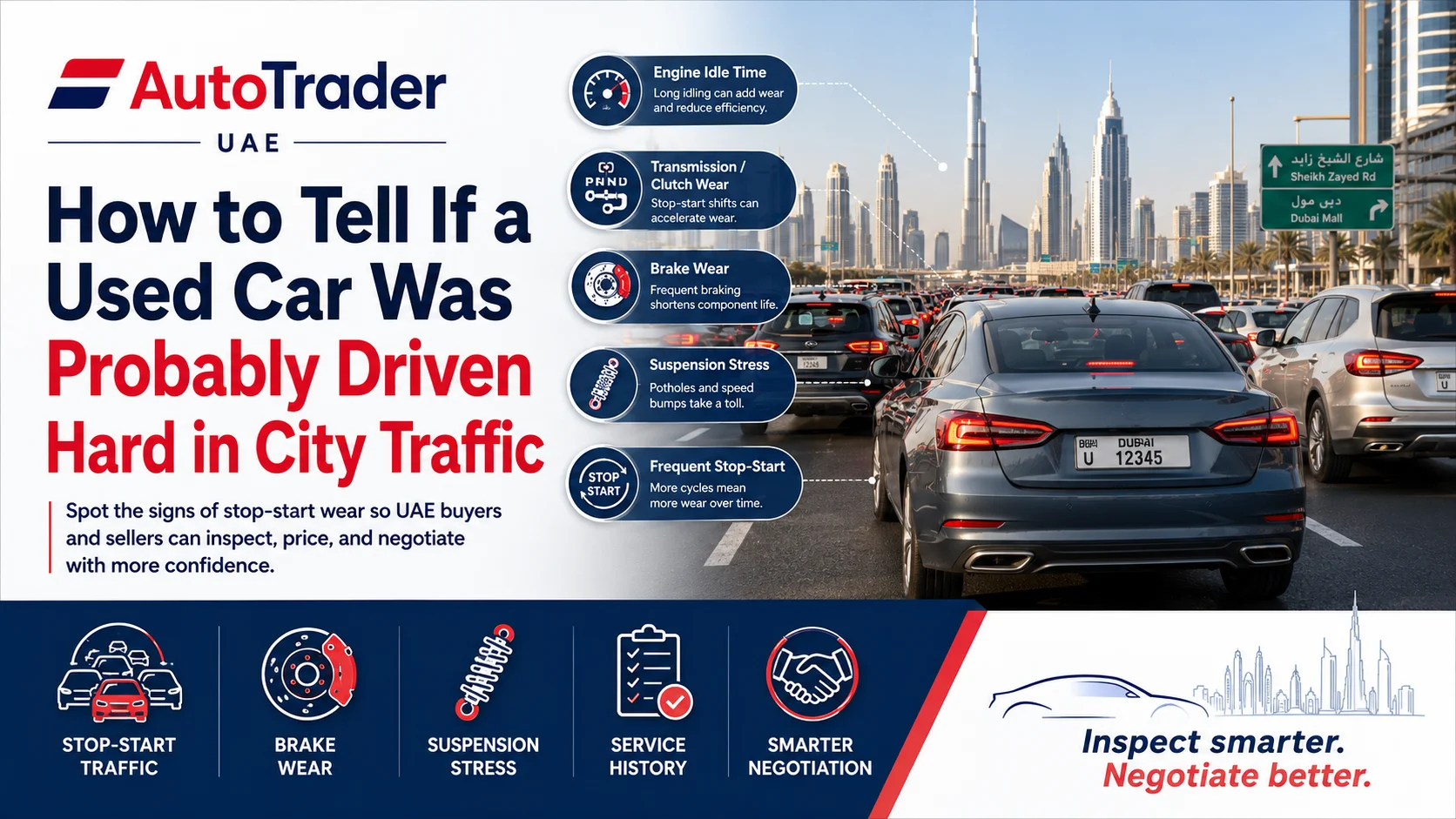
How to Tell If a Used Car Was Probably Driven Hard in City Traffic
Shopping for a used car in the UAE often means choosing between vehicles that have spent most of their lives in city traffic. Stop‑start driving, speed bumps, tight parking and hot weather can all accelerate wear – even if the mileage looks low. This guide explains how to tell if a used car was probably driven hard in city traffic, what to check before you buy, and how sellers can prepare cars honestly for sale on Auto Trader UAE.
Why City Driving Is Tough on Used Cars
City use isn’t automatically bad, but hard city driving usually means:
- Constant stop‑start use in heavy traffic
- Short trips with little highway cruising
- Heavy braking for junctions, roundabouts and speed bumps
- Frequent parking manoeuvres, kerb hits and tight turns
- Idling with the A/C on in hot UAE summers
Over time, this pattern can wear certain parts faster than gentle highway use – especially brakes, suspension, steering components, clutches and automatic transmissions.
1. Mileage vs Age: Low Kilometres Is Not Always Good News
One of the easiest clues that a car has lived a city life is the relationship between age and mileage.
Check the kilometres per year
- Very low mileage (e.g. under 10,000 km per year): Often means short, urban trips rather than long highway runs.
- Average mileage (around 15,000–20,000 km per year): Could be a mix of city and highway driving.
- High mileage (over 25,000 km per year): Often includes more highway kilometres, which is usually gentler on the car if well maintained.
Low mileage can still be good value – but if the car is several years old and has very low kilometres, inspect it closely for the signs of stop‑start use below.
2. Exterior Clues: Parking, Kerbs and Bumper‑to‑Bumper Life
Cars that live in busy city areas like Dubai Marina, Deira or central Abu Dhabi often show it on the outside.
Look for urban parking damage
Check for:
- Scuffed bumpers – especially corners, which suggests regular tight parking and small impacts.
- Multiple small dents and scratches along doors (from car parks) rather than one or two isolated marks.
- Number plate damage – cracked holders or misaligned plates can indicate light impacts in traffic.
Inspect wheels and tyres
- Curb rash on alloys: Deep scratches or gouges on the rim edge show frequent contact with kerbs.
- Sidewall damage: Bulges, cuts or abrasions on tyres may come from hitting kerbs or potholes.
- Uneven tread wear: City cars that hit speed bumps fast or carry heavy loads can wear tyres unevenly.
Some cosmetic wear is expected on any used car, but extensive wheel and bumper damage often points to a harder city life.
3. Signs of Heavy Braking and Stop‑Start Use
Hard city driving means frequent, often aggressive braking. Over time this shows up in the braking system.
Test the brakes on your drive
On a safe test drive:
- Listen for noises: Squealing, grinding or scraping when braking can indicate worn pads or discs.
- Feel for vibrations: A pulsing brake pedal or vibration through the steering when braking from speed can mean warped discs – often from heavy or sudden braking.
- Check straight‑line braking: If the car pulls to one side, braking components may be worn or uneven.
Visual brake inspection
Through the alloy wheel spokes you can often see the brake discs and sometimes the pads:
- Grooved or lip‑edged discs – deep grooves or a pronounced outer lip show they’ve worked hard.
- Rusty or heavily discoloured discs – surface rust is normal after washing, but thick or uneven rust can hint at long periods of sitting or inconsistent use.
City‑driven cars often need brake work sooner than pure highway cars, so budget for this if other signs point to heavy urban use.
4. Suspension and Steering: Speed Bumps, Potholes and Tight Turns
Dubai, Abu Dhabi and Sharjah all have plenty of speed bumps, ramps and tight car parks. Hard city use can stress suspension and steering parts.
Test drive clues
During your test drive:
- Listen over bumps: Clunks, knocks or rattles when going over bumps or speed humps suggest worn bushes, links or shock absorbers.
- Feel the steering: Excessive play, vibration or a pulling sensation can indicate suspension or alignment issues.
- Body control: If the car bounces several times after a bump, the shocks may be tired.
Visual clues
Park on level ground and look at the car from the front and side:
- Uneven ride height – one corner noticeably lower can indicate a worn spring or shock.
- Tyre wear patterns – heavy wear on inner or outer edges can reflect poor alignment or worn components, often worsened by hard city driving.
5. Transmission and Clutch Wear in City Traffic
Stop‑start traffic is one of the hardest environments for gearboxes and clutches, especially on smaller engines or when driven aggressively.
Manual gearbox and clutch
For manual cars:
- Clutch bite point: A very high or inconsistent bite point can point to clutch wear.
- Slipping under load: On a test drive in a higher gear, accelerate firmly; if revs rise without a matching increase in speed, the clutch may be slipping.
- Stiff or notchy gear changes: Hard city use and frequent shifting may accelerate wear in linkages and synchros.
Automatic and dual‑clutch transmissions
For automatics, CVTs and dual‑clutch gearboxes commonly used in UAE:
- Shudder on take‑off: Hesitation or judder when moving off can hint at wear from repeated stop‑start use.
- Rough shifts: Harsh or delayed gear changes, especially at low speed, may reflect hard urban driving or poor maintenance.
- Overheating history: Ask if the transmission fluid has ever been changed; in hot climates like the UAE, city heat plus traffic can be tough on fluid.
Because transmission repairs can be expensive, any doubts should be factored into the price – or you can keep browsing used cars in the UAE on Auto Trader UAE until you find a better example.
6. Engine Condition: Idling, Short Trips and Overheating Risk
Engines in city cars often spend more time idling than cruising. Combined with UAE heat, that can increase stress on cooling and lubrication systems.
Check for excessive idling signs
- Rough idle: A shaky or unstable idle when stopped in traffic can suggest wear, dirty injectors or ignition issues.
- Warning lights: Any check‑engine or temperature warnings are strong reasons to get a diagnostic scan.
- Cooling fan behaviour: Fans will run frequently in UAE weather, but very loud or constantly running fans may indicate the engine is working hard to stay cool.
Oil and coolant checks
Ask the seller to show you:
- Oil condition: Very dirty, thick oil could suggest long intervals between services.
- Coolant level and colour: Very low coolant, oil in coolant, or brown sludge in the reservoir are red flags.
A well‑maintained engine can handle city life, but lack of servicing in a hot, stop‑start environment dramatically increases wear.
7. Interior Wear: Pedals, Seats and Steering Wheel
The cabin can reveal how hard a car has been used, regardless of what the odometer says.
Check for high‑use wear points
- Steering wheel: Smooth, shiny or worn leather/trim can indicate lots of short urban trips and constant turning.
- Gear lever: Worn markings or polished surfaces reflect frequent shifting, common in city traffic.
- Pedals: Worn rubber on brake and clutch pedals is a good clue to heavy use, even on a low‑km car.
- Driver’s seat: Sagging bolsters or cracked fabric/leather on the outer edge show frequent in‑and‑out city use.
If interior wear looks heavy but the mileage is low, it’s worth asking more questions about the car’s history.
8. Service History: How to Read It for City Use
In the UAE, a full service history is especially important for cars that may have lived in tough city conditions.
What to look for in the records
- Regular servicing: Oil changes on time (or earlier) are crucial for engines that do lots of short trips.
- Brake and suspension work: City cars often need pads, discs, bushings and shocks earlier; documented replacements are a positive sign.
- Transmission fluid changes: Particularly on automatics and CVTs in hot climates.
- Cooling system maintenance: Radiator flushes, coolant changes and any overheating repairs.
A city‑driven car with a strong service record can be a safer buy than a low‑priced car with unknown history.
9. Questions to Ask the Seller in the UAE
Combine what you see with what you hear from the seller. Some useful questions:
- “Where was the car mainly driven? City (Dubai/Abu Dhabi/Sharjah) or highway (between emirates)?”
- “Typical daily use? Short school or office runs, or longer commute?”
- “Was it used for delivery, ride‑hailing or fleet?” (These can involve harder city use.)
- “How often was it serviced, and where?” Ask to see invoices, not just stamps.
- “Any major repairs?” Especially gearbox, suspension, brakes or cooling system.
Honest sellers on Auto Trader UAE will usually be clear about how the car was used, and serious buyers appreciate that transparency.
10. When City Use Is Not a Deal‑Breaker
Many cars in the UAE spend most of their lives in urban traffic – you won’t always find a perfect highway‑only example. City use is usually acceptable when:
- The car has full, documented maintenance with regular oil and filter changes.
- Wear items like brakes, tyres and suspension have already been replaced as needed.
- The transmission shifts smoothly and the engine runs clean and cool.
- Any cosmetic city scars are minor and clearly visible (not hidden with poor repairs).
In many cases, a fairly driven, well‑maintained city car can be excellent value – especially if the price reflects its use and condition.
Tips for Buyers on Auto Trader UAE
- Compare several similar cars: If one car shows obvious hard city wear and another doesn’t, use that to guide your choice and negotiation.
- Budget for wear items: If brakes, tyres or suspension are tired, factor replacements into your total cost.
- Get a pre‑purchase inspection: For higher‑value cars or if you suspect hard use, a professional inspection in the UAE is money well spent.
- Use detailed listings: On Auto Trader UAE, look for ads that mention service history, recent maintenance and usage type.
When you’re ready to browse, you can start with:
Tips for Sellers in the UAE
If your car has mostly done city kilometres, you can still achieve a strong price by preparing it properly and being transparent.
- Fix obvious issues first: Replace very worn tyres, noisy brake pads or failed suspension parts if possible.
- Service before selling: A fresh oil change and basic service are attractive to buyers and look better in the ad.
- Be honest about usage: Mention that the car was mainly used in city traffic, but highlight consistent maintenance.
- Highlight recent major work: New brakes, shocks, tyres or battery can reassure buyers who worry about hard city use.
- Clean interior and exterior: A well‑detailed car looks cared‑for and makes normal city wear seem less severe.
Key City‑Use Red Flags vs Normal Wear
To summarise, here’s how to quickly judge whether a used car was probably driven hard in city traffic:
- Stronger suspicion of hard city use when:
- Very low annual kilometres but heavy pedal, steering and seat wear
- Repeated brake, suspension or transmission issues in service records
- Multiple bumper and wheel scuffs, plus noisy or weak brakes on test
- Rough, hesitant gear changes in stop‑start driving
- More likely normal or mixed use when:
- Mileage matches age sensibly and wear is consistent inside and out
- Service history is complete with proactive maintenance
- Car drives smoothly, brakes straight and feels tight with no major noises
Next Steps with Auto Trader UAE
Understanding how to tell if a used car was probably driven hard in city traffic helps you buy and sell with more confidence in the UAE market.
- If you’re buying, use the checks in this guide during viewings and test drives, and compare multiple listings on Auto Trader UAE.
- If you’re selling, prepare your car properly, be honest about its city use, and highlight maintenance to stand out from other used cars in Dubai and across the UAE.
With the right inspection approach and clear communication, both buyers and sellers can turn city‑driven cars into smart, fair deals on Auto Trader UAE.
Browse used cars in UAE on Auto Trader UAE to compare live listings, prices, and current market activity more clearly.
Related Links
Buyer Takeaway
When buying a used car in the UAE, focus on vehicle condition, service history, inspection quality, paperwork, and total running costs rather than price alone. Compare options carefully and choose the option that best matches your budget and real needs.
Seller Takeaway
If you are selling a used car in the UAE, present the service history clearly, price the vehicle realistically, and highlight condition, specification, and ownership strengths honestly. A well-prepared listing with accurate details usually attracts more serious buyers.
Conclusion
A careful used car purchase in the UAE starts with research, proper inspection, and clear paperwork before making the final decision.
Auto Trader UAE connects you with thousands of used cars from trusted private sellers and dealers across Dubai and the UAE.