
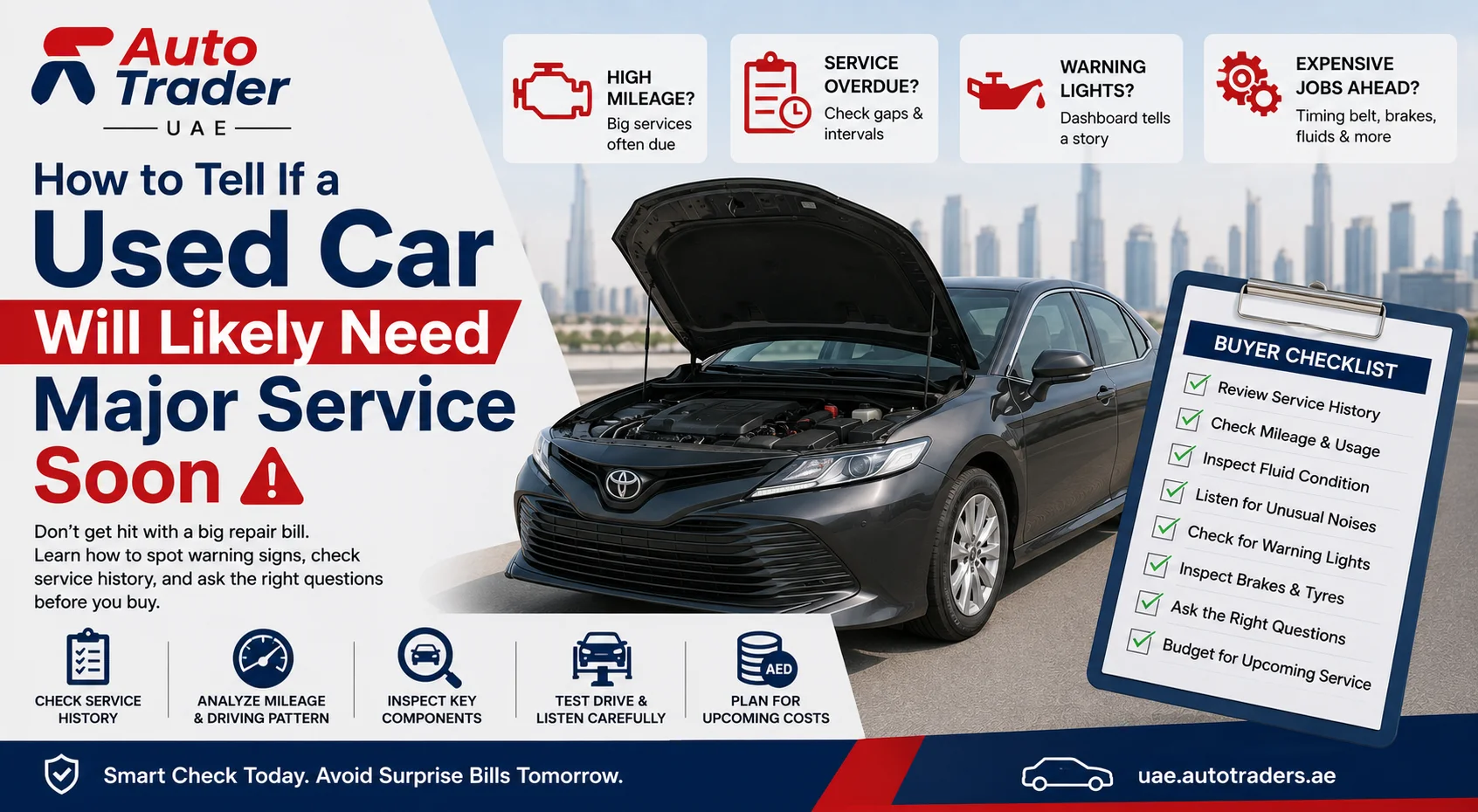
How to Tell If a Used Car Will Likely Need Major Service Soon
Buying a used car in the UAE can save you a lot of money, but only if you avoid cars that are about to need major service. This guide from Auto Trader UAE explains how to spot warning signs before you commit, whether you’re shopping from a private seller or a dealer. We’ll focus on simple checks you can do yourself, plus the key questions to ask. Use this as a checklist on your phone when you go to view a car.
1. Understand What “Major Service” Usually Means
A “major service” is more than just an oil change. It typically includes items that are expensive or labour‑intensive. Common examples:
- Timing belt or timing chain work (if applicable)
- Transmission service or overhaul (especially on older automatics and some dual‑clutch gearboxes)
- Suspension and steering components (bushes, shocks, control arms)
- Engine cooling system (radiator, water pump, hoses)
- Major brake work (discs/rotors, calipers, ABS issues)
- Air‑conditioning system repairs (compressor, condenser, leaks)
- Electric and electronic faults (ECU issues, wiring problems)
In the UAE’s hot climate, some of these items wear faster, especially AC components, rubber parts and cooling systems.
2. Check the Service History Carefully
The service history is your first clue to future expenses.
2.1 What a healthy service history looks like
Look for:
- Regular oil changes roughly every 10,000 km or 1 year (or as per manufacturer schedule)
- Stamped dealer or specialist service book, or digital invoices over the years
- Timing belt / major interval service already done at the correct mileage or age
- Consistent mileage progression (no sudden drops or gaps that may suggest odometer tampering)
If the car has been serviced mainly at the official dealer in Dubai, Abu Dhabi, or another emirate, you can often verify history through the dealer network.
2.2 Red flags in service records
Be cautious if you see:
- Long gaps with no records (for example 40,000 km or several years missing)
- Only minor jobs done on a high‑mileage car (no proof of major items ever replaced)
- Recently done urgent work but without invoices or details
- Service book “recreated” with many stamps added at once
If major services are missing and the car is at the mileage where they should have been done, assume you will have to pay for them soon.
3. Know the Critical Mileage & Age Milestones
Different brands and models have different schedules, but these are common ranges when big jobs come up:
- 60,000–80,000 km: first bigger service for many cars (plugs, fluids, filters, often transmission fluid)
- 80,000–120,000 km: timing belt on many petrol engines, suspension bushes, engine mounts, AC work
- 5–7 years old: rubber components (seals, hoses, belts) start ageing, even on low‑mileage cars
- 150,000+ km: automatic transmission problems more likely if not well maintained; suspension overhauls, larger engine issues
If the car you’re viewing is close to one of these milestones with no proof of major work, budget that in.
4. Exterior and Bodywork Checks
Major service needs are not just inside the engine. The body can also show whether a car has had a hard life.
4.1 Signs of accident damage
Accident repairs, if done poorly, can lead to future costs and alignment issues:
- Mismatched paint shades or overspray on rubber seals
- Uneven panel gaps around doors, bonnet and boot
- Rust spots or bubbling paint (less common in UAE but possible on imported cars)
- Front end parts (headlights, grille) from different model years
Heavy accident damage can affect the suspension and chassis, leading to ongoing repair bills.
4.2 Tyres and wheels
Tyres tell you a lot about how a car has been used and maintained:
- Uneven tyre wear can indicate bad wheel alignment, worn suspension or steering components.
- Different tyre brands on the same axle may show cost‑cutting maintenance.
- Very old tyres (check date code) are a safety risk and a cost you must plan for.
If tyres are close to worn out or mismatched, factor in a full replacement soon after purchase.
5. Engine Bay Checks (No Tools Needed)
You don’t need to be a mechanic to spot basic engine warning signs.
5.1 Fluids
Check these with the engine cool and parked on level ground:
- Engine oil: pull the dipstick (if present). Oil should be between the marks, not black and sludgy, and without metal shavings.
- Coolant: look in the expansion tank. Fluid should be clean and coloured (usually green, pink, or orange), not rusty brown or oily.
- Power steering / brake fluid: level should be within the range; very dark or low fluid can hint at neglected maintenance.
Low or very dirty fluids may mean poor servicing and potential upcoming issues.
5.2 Visible leaks and smells
Look around the engine and under the car:
- Fresh oil or coolant on engine parts or the ground
- Smell of burnt oil (possible leaks onto hot components)
- Strong fuel smell (possible fuel line or injector leak)
Any of these could mean medium to major repair work soon.
6. How to Test‑Drive for Hidden Problems
Always insist on a proper test drive on both slow city roads and at highway speeds.
6.1 Starting and idling
When you start the car cold:
- Does it start easily or struggle to crank?
- Does the idle feel smooth, or is the engine shaking and hunting (revving up and down)?
- Do any warning lights stay on for the engine, ABS, airbag or transmission?
Persistent warning lights can lead to expensive diagnostics and repairs.
6.2 During driving
Pay attention to:
- Automatic gear shifts – should be smooth, without jerks or slipping revs.
- Manual clutch – no slipping, heavy pedal, or grinding gears.
- Steering – car should go straight without pulling to one side.
- Brakes – firm pedal, no vibration, no squealing or grinding noises.
- Suspension – listen for knocking over bumps; car should not feel bouncy or unstable.
Any combination of these symptoms suggests you may soon face major work on the gearbox, brakes or suspension.
7. Watch the Dashboard and Electronics
Modern cars in the UAE are packed with electronics, and repairing them can be costly.
7.1 Warning lights
Common warning lights that should not stay on:
- Check Engine
- ABS / Brake system
- Airbag / SRS
- Transmission or 4x4 / AWD lights
If any are lit, ask the seller for a recent diagnosis report. If they cannot provide it, assume you might need to pay for diagnostics and repair.
7.2 Comfort and convenience features
Check that all the following work properly:
- Air‑conditioning – cools quickly and consistently
- Power windows, mirrors, central locking
- Infotainment, reverse camera, parking sensors
- Sunroof (if fitted) – no strange noises or leaks
Intermittent or dead electronics can be time‑consuming and expensive to fix, especially on high‑spec luxury models popular in the UAE.
8. Interior Wear vs. Odometer Reading
Compare the condition of the interior with the claimed mileage:
- Very worn steering wheel, pedals or driver’s seat on a “low‑mileage” car can signal odometer tampering.
- Torn seat bolsters, cracked dashboard and faded controls show heavy use or sun damage.
- Water stains or damp smells suggest leaks that could damage electronics.
If the story doesn’t match the wear, reconsider or prepare for unexpected issues later.
9. Specific UAE Climate Considerations
The UAE climate creates a few extra checks that matter for future major service.
9.1 Air‑conditioning health
In the UAE, a weak AC is close to a deal‑breaker and can be costly to fix. During the test drive:
- Set AC to maximum cold; the air should get cold within a minute or two.
- Listen for strange noises from the compressor.
- Check if the AC keeps working in heavy traffic and at idle, not just at high speed.
If the AC struggles, budget for potential compressor or condenser replacement.
9.2 Heat and sand damage
Look for:
- Brittle or cracked plastic in the engine bay
- Cracked dashboard or door trims
- Dust and sand inside electrical connectors
These can lead to electrical issues and plastics breaking, especially on older cars parked outside for years.
10. Ask the Right Questions to the Seller
A few simple questions can reveal a lot:
- “What big jobs have been done recently?” – look for clear answers with receipts.
- “Has the timing belt / major service been done? When?”
- “Any issues that might need attention soon?” – honest sellers often mention minor things.
- “Why are you selling?” – listen for signs that the car has become too expensive to maintain.
If answers are vague or defensive, be extra cautious.
11. Always Consider a Pre‑Purchase Inspection
Even if the car looks good, a professional pre‑purchase inspection is one of the best investments you can make.
- Use a trusted independent workshop or specialist familiar with the brand.
- Request a written report with estimated costs of urgent and upcoming work.
- Use the report to negotiate the price or walk away if the car is a “money pit”.
In many UAE cities, mobile inspection services can come to the seller’s location, which is convenient for both buyers and sellers.
12. How to Use This Checklist When Shopping on Auto Trader UAE
When browsing listings on Auto Trader UAE:
- Shortlist cars with detailed descriptions and clear service history notes.
- Favour ads that mention major service recently completed (timing belt, gearbox service, new tyres, etc.).
- Use the photos to examine tyres, interior wear and dashboard warning lights.
- Save your top choices, then take this guide with you for physical inspections and test drives.
Whether you’re looking for a fuel‑efficient commuter, a family SUV, or a premium saloon, combining smart online research with careful physical checks will help you avoid cars that are about to need major work.
Buyer Takeaway
- Assume that missing major service history = upcoming expense. Price the car accordingly or keep searching.
- Use the test drive to focus on the gearbox, brakes, AC and warning lights – these are often the most expensive areas.
- A UAE‑specific check on AC performance and heat damage is essential, especially on older vehicles.
- A paid inspection is far cheaper than being surprised by a gearbox, AC or engine overhaul later.
Seller Takeaway
If you’re selling your car in the UAE and want to build trust:
- Complete any overdue major service before listing, if it makes financial sense.
- Gather all service records and invoices and mention major jobs clearly in your Auto Trader UAE ad.
- Be transparent about any upcoming maintenance needs to avoid wasted viewings.
Well‑maintained cars with proven service history often sell faster and closer to the asking price.
Conclusion: Reduce Risk, Not Just Price
The cheapest used car is rarely the best deal if it needs a major service soon after purchase. By checking service history, inspecting key wear points, and taking a focused test drive, you can quickly separate solid cars from those that are likely to cost you more in the long run. When you’re ready to find your next car, explore the latest used cars in the UAE available on Auto Trader UAE, compare options, and contact sellers directly. If you’re shopping in the emirate, you can also browse a wide range of used cars in Dubai and apply this guide on every viewing to buy with confidence.
Browse used cars in UAE on Auto Trader UAE to compare live listings, prices, and current market activity more clearly.
Related Links
Auto Trader UAE connects you with thousands of used cars from trusted private sellers and dealers across Dubai and the UAE.