
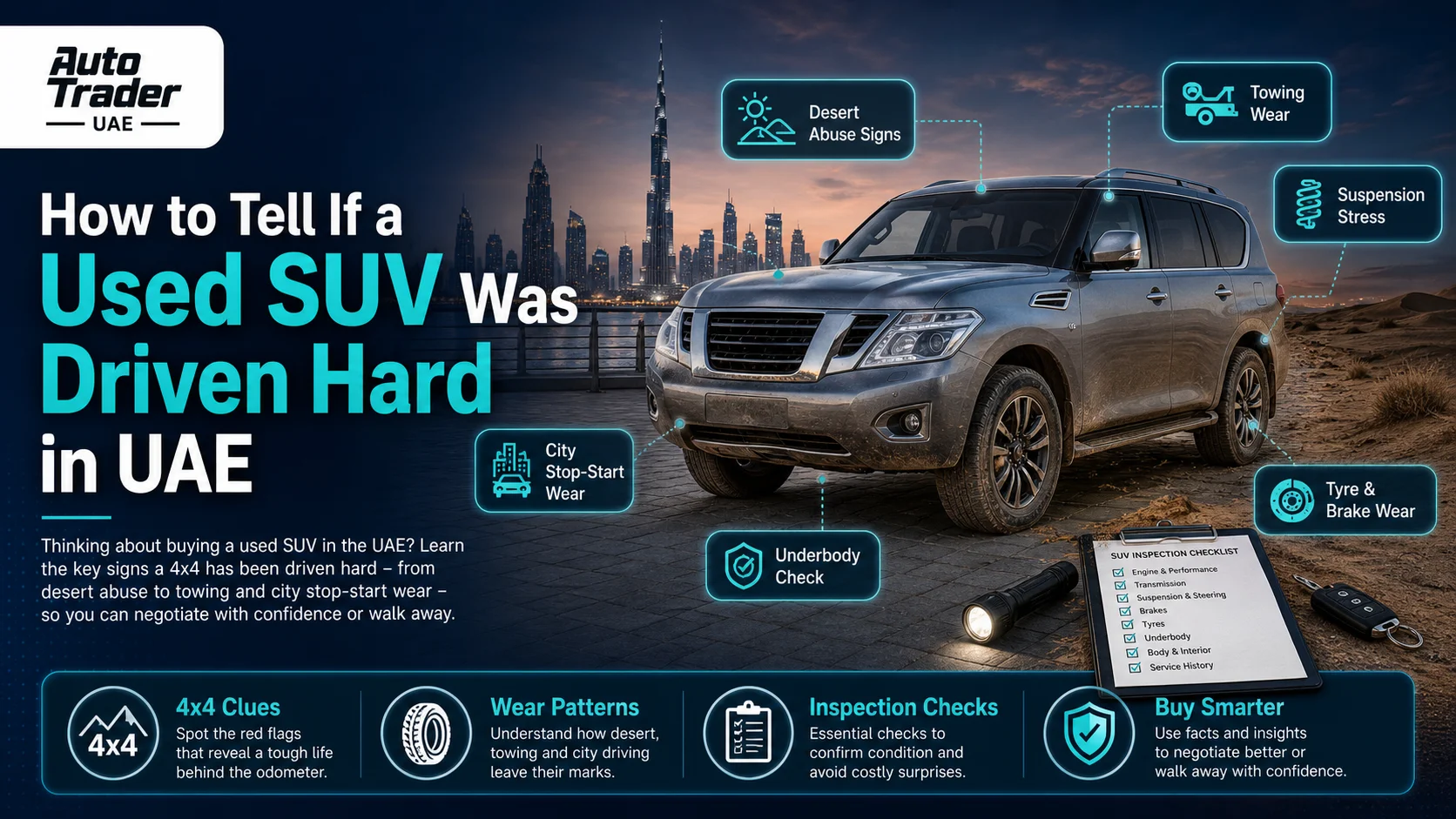
How to Tell If a Used SUV Was Driven Hard in UAE
Buying a used SUV in the UAE can be a smart move – you get lots of space and capability without paying new‑car prices. But many SUVs here live tough lives: desert trips, heavy towing, high heat, and aggressive city driving. Knowing how to spot a hard‑driven SUV can save you from expensive surprises. This guide explains what to look, listen, and feel for so you can make a confident decision on Auto Trader UAE or at any dealership.
Why It Matters If an SUV Was Driven Hard
An SUV that’s been pushed to its limits may still look clean, but hidden wear can show up later as:
- Engine and gearbox problems
- Suspension knocks and steering play
- Overheating and cooling system failures
- Premature brake and tyre wear
- Rust and damage from off‑road use
A bit of spirited driving or occasional desert use isn’t a deal‑breaker if the SUV was maintained well. Your goal is to separate genuinely well‑cared‑for vehicles from ones that were driven hard and neglected.
1. First Impressions: What to Check as You Walk Around
Look for Signs of Off‑Road and Desert Abuse
In the UAE, many SUVs do double duty as daily drivers and weekend off‑roaders. Look closely for:
- Scrapes under the front and rear bumpers – consistent scraping marks and bent plastic can indicate aggressive dune driving.
- Damaged skid plates and underbody – look underneath for dents, gouges, and scraped metal on skid plates, exhaust, and chassis rails.
- Sand accumulation – check door sills, under seats, boot storage compartments, spare tyre area, and inside the engine bay corners.
- Rock chips high on the body – multiple chips on doors and lower panels can suggest gravel or rocky track use.
Off‑road use isn’t always bad – many 4x4s are built for it – but heavy dune abuse can stress the engine, gearbox, cooling system, and suspension, especially if servicing wasn’t done on time.
Bodywork, Gaps, and Alignment
Hard driving and rough use can lead to minor accidents and body damage:
- Uneven panel gaps – check gaps around the bonnet, tailgate, and doors. Uneven spacing may mean accident repairs.
- Mismatched paint shades – look at the SUV in daylight; different tones on bumpers or doors can signal resprays after damage.
- Door operation – doors that don’t close cleanly, or tailgates that need a slam, may indicate body misalignment.
2. Tyres, Brakes, and Suspension: Where Abuse Shows First
Tyres: Wear Patterns Tell a Story
Tyres can reveal a lot about how an SUV was driven and maintained in the UAE’s hot climate:
- Uneven wear – more wear on one edge can mean poor alignment or worn suspension from hitting curbs or off‑road use.
- Different brands or ages – mixed tyres on the same axle show cost‑cutting; on 4x4s this can also stress the drivetrain.
- Cracks and dryness – strong sun and heat dry tyres; deep cracks between treads mean they’re overdue for replacement.
- Chunked tread blocks – bits missing from tread can indicate aggressive off‑road driving on rocks.
Brakes: Signs of Hard City Driving or Towing
Short‑trip city driving, stop‑start traffic, and towing boats or trailers all stress the brakes:
- Grooved or lipped brake discs – deep grooves or a heavy lip at the edge may show overdue pad changes or very hard use.
- Blue or discoloured discs – overheated brakes from heavy braking, mountain driving, or towing.
- Pulsing pedal on test drive – may indicate warped discs from frequent hard stops.
Suspension and Steering: Feel for Play and Noise
Rough roads, speed bumps taken at speed, and off‑road use can wear out suspension components quickly:
- Uneven ride height – one corner sitting lower can mean a tired spring or damaged suspension.
- Clunks over bumps – worn bushings or ball joints from harsh use.
- Loose steering – excessive free play in the wheel suggests worn steering components.
- Leaking shocks – look for oil on shock absorbers; it means they’re past their best.
3. Engine Bay: Heat, Sand, and Neglect
In the UAE, heat is the enemy. A hard‑driven SUV with poor maintenance can hide problems under the bonnet.
Cooling System Condition
Overheating is common when SUVs are pushed hard in sand with AC on full:
- Coolant level and colour – low level or rusty, brown coolant can mean neglect. Clean, coloured coolant is a good sign.
- Coolant stains – white or green stains around hoses, the radiator, or expansion tank suggest leaks.
- Radiator fins – check for bent or clogged radiator fins; heavy desert use can block them with dust and insects.
Oil Leaks and General Cleanliness
- Oil leaks around the engine and gearbox – damp, oily areas may indicate worn seals from heat and stress.
- Burnt oil smell – may point to oil leaks on hot engine parts, often a sign of long‑term hard use.
- Excess sand and dust – some dust is normal, but thick sand inside electrical connectors or on top of the engine suggests frequent off‑roading.
Belts, Hoses, and Plastics
High heat plus hard driving ages rubber quickly:
- Cracked belts – drive belts with visible cracks or fraying edges are overdue for replacement.
- Hard, brittle hoses – squeeze coolant hoses (when engine is cold); they should feel firm but not rock‑hard or cracked.
- Faded plastics – extreme discoloration around the engine bay shows heavy sun and heat exposure.
4. Inside the Cabin: Clues from the Interior
A heavily used or hard‑driven SUV often shows it inside too.
Steering Wheel, Pedals, and Seats
- Worn steering wheel – smooth, shiny leather or peeling surfaces at relatively low mileage can hint at higher actual use or very heavy daily driving.
- Pedal wear – heavily worn brake and accelerator pedal rubbers at modest mileage suggest more use than the odometer shows.
- Collapsed driver’s seat bolster – indicates frequent short trips and tough usage.
Off‑Road and Utility Clues
- Scratched interior plastics – especially in the boot area where heavy gear, coolers, or tools may have been carried.
- Dirty or stained headliner – can suggest frequent use with equipment or off‑road trips with windows down.
- Aftermarket switches – extra switches for light bars, air compressors, or winches usually indicate off‑road modification and use.
5. Service History: Paperwork Reveals Driving Style
A full, traceable service history is one of the best protections when buying any used SUV in the UAE.
What to Look For in the Records
- Regular servicing – oil and filter changes on time (or earlier) are vital in hot climates.
- Cooling system work – radiator, water pump, or thermostat replacements may signal past overheating.
- Frequent brake and tyre changes – can indicate hard driving, especially if combined with low mileage.
- Suspension and drivetrain repairs – repeated work on shocks, bushings, or differentials suggests tough use, often off‑road.
Gaps and Inconsistencies
Be cautious if you see:
- Long gaps in service history – especially during the first 3–5 years.
- Sudden changes of workshop – multiple small, unknown garages instead of steady dealer or reputable independent servicing.
- Odometer doubts – mileage that seems too low for the age, with interior wear that suggests more use.
6. The Test Drive: How to Feel for Hard Use
Always test drive on mixed roads: slow city streets, speed bumps, and, if possible, a short stretch of highway.
Engine Behaviour
- Cold start – engine should start easily without rattling or loud knocking. Excessive smoke on startup is a warning sign.
- Acceleration – power should build smoothly; misfires or hesitation can indicate engine wear or poor tuning.
- Exhaust smoke – blue smoke means oil burning; black smoke can point to fueling issues.
Gearbox and 4x4 System
Automatic gearboxes that have been worked hard (towing, sand driving) can show:
- Rough or delayed shifts
- Slipping under acceleration
- Clunks when engaging Drive or Reverse
For 4x4‑equipped SUVs:
- Engage 4H and 4L (if safe and permitted) to check for smooth engagement.
- Listen for whining or clunking from the transfer case or differentials.
Ride, Steering, and Brakes
- Over bumps – listen for knocking or rattling from suspension.
- Straight‑line stability – SUV should track straight without constant steering correction.
- Braking – no vibration, pulling to one side, or grinding noises.
7. Common UAE Use Cases That Stress an SUV
Understanding how SUVs are commonly used in the UAE helps you interpret what you see.
Desert and Off‑Road Trips
Regular dune bashing can cause:
- Overheated engines and gearboxes if cooling and fluids aren’t upgraded or monitored
- Suspension and steering wear from repeated impacts
- Sand intrusion into air filters, bearings, and electrical components
Ask the seller directly:
- How often the SUV was used off‑road
- Whether any modifications were done (lift kits, larger tyres, tune)
- If servicing intervals were shortened due to off‑road use
Towing Boats, Caravans, or Trailers
Towing in hot weather adds extra load:
- Transmission overheating and wear
- Brake fade and disc warping
- Rear suspension sagging
Look for tow bars, reinforced rear springs, or wiring for trailer lights as clues.
Heavy City and Ride‑Hailing Use
SUVs used for ride‑hailing or heavy family use may show:
- High mileage with lots of stop‑start wear
- Worn seats and interior plastics
- Frequent brake and tyre replacements in service records
8. When to Walk Away – and When a Hard‑Driven SUV Can Still Be a Good Buy
Not every sign of hard use means you should reject the SUV. Consider:
Walk Away If…
- There’s clear evidence of overheating (burnt smells, head gasket issues, repeated cooling repairs).
- The gearbox shifts poorly and repair costs are likely high.
- Accident damage or chassis issues are visible or suspected.
- The seller cannot provide any service history or seems evasive.
Consider Buying If…
- The SUV shows signs of active use (light off‑road, family trips) but has a strong, documented maintenance history.
- Wear items (tyres, brakes, suspension) have been recently replaced with quality parts.
- A pre‑purchase inspection by a trusted workshop in the UAE confirms the mechanical condition.
Use what you find to negotiate a fair price – for example, budgeting for new tyres or shocks – or to choose a better‑cared‑for SUV from another seller.
9. Next Steps: Buying and Selling Used SUVs in the UAE
For buyers:
- Shortlist a few options from reputable listings on Auto Trader UAE used cars.
- Use this checklist during viewings and test drives.
- Arrange an independent inspection before transferring ownership.
For sellers:
- Gather all service records, invoices, and inspection reports.
- Address obvious wear items (tyres, brakes, minor leaks) to reassure serious buyers.
- Be transparent about any off‑road or towing use, and highlight any extra maintenance you did because of it.
When you’re ready to upgrade or buy, browse a wide range of used SUVs in the UAE on Auto Trader UAE. If you’re based in the emirates, you can also explore competitively priced used cars in Dubai to find an SUV that fits your budget and lifestyle – without the hidden signs of hard driving.
Browse used cars in UAE on Auto Trader UAE to compare live listings, prices, and current market activity more clearly.
Related Links
Buyer Takeaway
When buying a used car in the UAE, focus on vehicle condition, service history, inspection quality, paperwork, and total running costs rather than price alone. Compare options carefully and choose the option that best matches your budget and real needs.
Seller Takeaway
If you are selling a used car in the UAE, present the service history clearly, price the vehicle realistically, and highlight condition, specification, and ownership strengths honestly. A well-prepared listing with accurate details usually attracts more serious buyers.
Conclusion
A careful used car purchase in the UAE starts with research, proper inspection, and clear paperwork before making the final decision.