
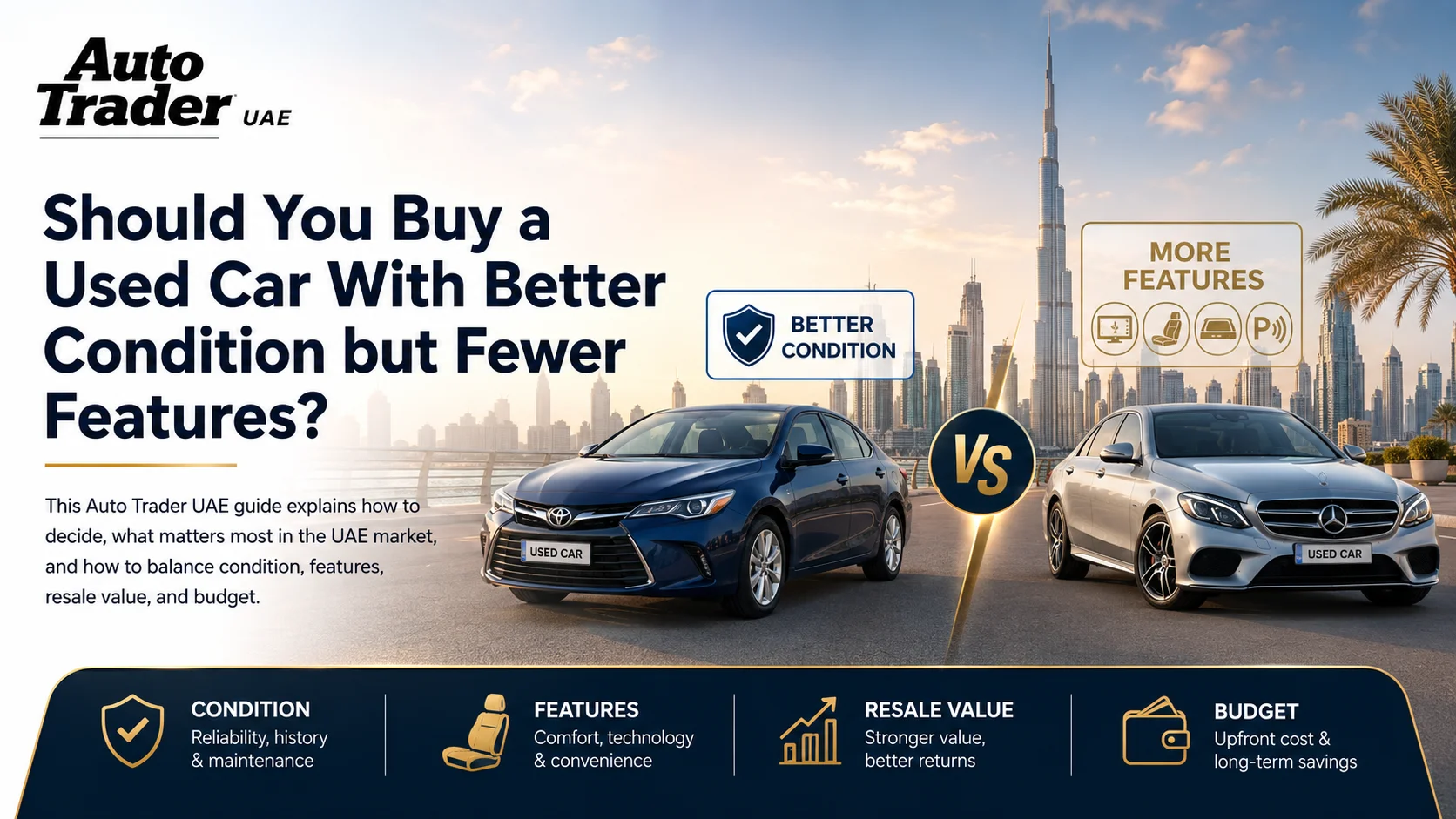
Should You Buy a Used Car With Better Condition but Fewer Features?
When shopping for a used car in the UAE, you’ll often face a common dilemma: choose the car that’s in better condition but with basic features, or go for the more loaded car that shows more wear and tear.
This guide from Auto Trader UAE walks you through how to decide, based on how you drive, your budget, and UAE market realities like heat, resale value, and insurance costs.
What This Question Really Means
Usually you’re choosing between two types of used cars:
- Car A: Better condition, fewer features
Lower mileage, clean service history, minimal cosmetic damage, basic trim (no sunroof, fabric seats, smaller screen etc.). - Car B: More features, weaker condition
Higher mileage, more wear, older tyres or brakes, maybe some accident history – but full options, bigger screen, leather, panoramic roof, etc.
The right answer depends on how long you’ll keep the car, how much you drive in UAE conditions, and which extra features actually add value for you.
Why Condition Usually Matters More Than Features
For most used-car buyers in the UAE, overall vehicle condition is more important than having every feature. Here’s why:
1. Reliability in UAE Heat
- High temperatures, stop-start traffic, and long highway runs put extra stress on engines, gearboxes, and cooling systems.
- A car in genuinely good mechanical condition is less likely to overheat, break down, or surprise you with big repair bills.
- Features like a sunroof or premium audio are nice, but they won’t help when your radiator or gearbox fails.
2. Lower Running and Repair Costs
- Cars in better condition usually need fewer immediate repairs: tyres, brakes, suspension, fluids, etc.
- Major components (engine, transmission, AC) are more likely to last longer if they’ve been properly maintained.
- Repairing or replacing mechanical parts is typically more expensive than living without a feature like a sunroof or adaptive cruise control.
3. Stronger Resale Value in the UAE
- Many UAE buyers and dealers focus first on mileage, service history, and accident records.
- A well-maintained base or mid-option car can be easier to sell than a tired full-option car that feels abused.
- During trade-in on platforms like used cars in UAE, condition often has more impact on price than features alone.
4. Comfort and Safety Basics Are Now Standard
On most modern cars, even basic trims still include:
- Air conditioning (essential for the UAE)
- Multiple airbags and ABS
- Stability control on many models
- Basic infotainment with Bluetooth in newer years
Because the base level is already decent, the jump from mid-option to full-option is often less important than choosing a car with healthier mechanicals.
When Fewer Features Is the Better Choice
Choosing the cleaner, simpler car is usually the smarter move in these situations:
1. You Plan to Keep the Car for Several Years
- The longer you keep the car, the more you benefit from reliability and lower repair costs.
- Well-kept cars age better, which helps when you eventually list it on Auto Trader UAE’s used cars marketplace.
2. You Drive a Lot in the UAE
- Daily Abu Dhabi–Dubai commutes, delivery work, or long Sharjah–Dubai traffic means high annual mileage.
- In these cases, saving money on fuel and repairs is more important than having a panoramic roof or seat memory.
3. You’re on a Tight or Fixed Budget
- A car in better condition reduces the risk of sudden large bills that can disrupt your finances.
- Insurance can also be cheaper for cars with lower declared value and without expensive extras.
4. You Want Low-Stress Ownership
- Fewer complex systems (air suspension, advanced electronics, expensive LED headlamps) means fewer things to go wrong.
- This is especially important with older European luxury models where repairs can be costly in the UAE.
When More Features Might Make Sense
There are situations where a more feature-rich car is worth considering, even if its condition is slightly weaker — but you should be very selective.
1. Safety Features You Actually Need
If the higher-spec car includes major safety upgrades that the basic car doesn’t have, it can be worth it, for example:
- Additional airbags (side/curtain)
- Advanced driver-assistance systems (AEB, lane keep assist, blind-spot monitoring)
- Better headlamps for night driving
Even then, don’t compromise on serious issues like accident damage to the chassis, gearbox problems, or overheating history.
2. You’ll Only Keep the Car Short-Term
- If you plan to keep the car for 1–2 years only, you may accept minor condition weaknesses if the price is low.
- Some UAE buyers prioritise a more "premium" feel for short-term use, especially in popular segments like used SUVs or used luxury cars.
3. The Condition Difference Is Small
If both cars are in broadly similar condition, then choosing the better-equipped one can make sense. For example:
- Both have full service history, similar mileage, and no major accident history.
- The price difference is reasonable for the extra options.
- The features genuinely improve daily use (e.g. rear camera, parking sensors, upgraded AC).
Features That Matter vs. Features You Can Skip
Not all features are equally important. Use this breakdown to decide what you really need in the UAE.
High-Value Features for UAE Conditions
These can genuinely improve safety, comfort, and ownership:
- Strong AC with rear vents – Essential for families and summer use.
- Parking sensors and rear camera – Very useful in tight Dubai/Sharjah parking.
- Cruise control – Reduces fatigue on long UAE highways.
- Automatic headlights and wipers – Convenience and safety boost.
- Keyless entry/start – Helpful when your hands are full, especially in hot weather.
- Android Auto/Apple CarPlay – Easier navigation and hands-free calls.
Nice-to-Have but Not Essential
These are comfortable luxuries, but shouldn’t outweigh a big condition difference:
- Sunroof or panoramic roof
- Leather seats and ambient lighting
- Premium sound systems
- Large alloy wheels (which can mean more expensive tyres)
- Body kits and cosmetic upgrades
Features That Can Increase Future Costs
Some advanced features can be expensive to repair or replace out of warranty:
- Air suspension and adaptive dampers
- Advanced LED or matrix headlamps
- Complex infotainment systems and digital dashboards
- Powered folding seats and soft-close doors
If you’re choosing between a simpler, well-kept car and a heavily loaded but poorly maintained car, factor these potential repair costs into your decision.
How to Compare Two Used Cars Step by Step
When deciding between better condition vs more features, use this practical checklist.
Step 1: Check the Paperwork
- Service history (dealer or reputable workshop)
- Registration details and RTA inspection history
- Any available accident reports or insurance claims
- Number of previous owners
Step 2: Inspect the Mechanical Condition
- Cold start: listen for unusual noises and check for smoke from the exhaust.
- Check for fluid leaks under the car.
- Look at tyre wear and age; uneven wear can signal alignment or suspension issues.
- Test the AC thoroughly at idle and while driving.
- On the test drive, make sure the gear changes are smooth and the steering feels stable.
Step 3: Inspect the Body and Interior
- Look for mismatched paint, panel gaps, or overspray – signs of repairs.
- Check that all windows, locks, mirrors, and lights work.
- Test all features the seller is advertising (sunroof, camera, sensors, infotainment).
- Confirm there are no warning lights on the dashboard.
Step 4: Estimate Immediate Costs
For each car, note what you’ll need to spend in the first 6–12 months:
- Tyres
- Brakes
- Fluids and filters
- Minor mechanical repairs
- Any feature repairs (e.g. broken sensors, infotainment issues)
A cheaper, full-option car can quickly become more expensive once you include these costs.
Resale Value: How UAE Buyers Think
When you eventually resell or upgrade on Auto Trader UAE, both condition and features will matter – but not equally.
1. Mileage and Service History First
- Lower mileage with proper documentation is a major plus.
- Regular servicing at recognised garages helps build trust with buyers.
2. Popular Trims and Specifications
- In mainstream models (e.g. Japanese sedans, crossovers, and used Toyota or used Nissan), mid- to high-option trims are often easier to sell.
- But a clean mid-option car will usually sell faster than a badly maintained full-option version.
3. Accident and Repair History
- Major accidents and structural repairs can significantly reduce resale value.
- Buyers in the UAE are increasingly cautious and compare many listings before deciding.
Examples of How to Decide
Scenario 1: Family SUV in Dubai
You’re choosing between:
- SUV A: Mid-option, 75,000 km, full dealer service history, very clean, no major accidents.
- SUV B: Full-option with panoramic roof and leather, 130,000 km, partial history, minor front accident repaired.
Better choice: In most cases, SUV A. You get lower mileage, stronger history, and fewer future risks. You might miss the leather and roof, but AC, safety, and reliability come first in UAE weather.
Scenario 2: City Commuter Hatchback
You’re choosing between:
- Hatchback A: Base trim, 60,000 km, full history, basic radio, no reverse camera.
- Hatchback B: Higher trim with camera and alloy wheels, 80,000 km, solid history, clean condition overall.
Better choice: If both are in good condition, Hatchback B could make sense – the mileage gap is small, and the camera and better equipment can improve everyday use in tight parking.
How to Use Auto Trader UAE to Compare Options
When searching on Auto Trader UAE, you can quickly compare condition and features across similar listings:
- Filter by mileage, year, and price to narrow down choices.
- Compare spec levels and equipment in the listing details.
- Check photos carefully for interior wear, tyre condition, and body repairs.
- Browse specific categories like used cars in UAE, used cars in Dubai, used sedans, or used SUVs.
Buyer Checklist: Condition vs Features
Use this quick decision guide:
- Always prioritise: Mechanical health, AC performance, mileage, service history, accident history.
- Prefer but don’t insist on: Parking aids, modern infotainment, basic comfort features.
- Only pay extra for: Safety tech that genuinely improves your driving and protects your family.
- Be cautious of: High-spec cars with incomplete service history, very high mileage, or visible signs of heavy use.
Conclusion: So, What Should You Choose?
For most buyers in the UAE, a used car in better overall condition is the smarter purchase than a heavily optioned car with visible wear and questionable history. Features add comfort and sometimes safety, but they can’t compensate for poor maintenance, overheating issues, or major accident repairs.
If you’re stuck between two similar cars, lean towards:
- Lower mileage with proof of regular servicing.
- Clean accident and repair history.
- Reliable performance in a thorough test drive.
- Essential comfort and safety features that match your real daily needs.
Ready to compare real cars and see how condition vs features look in the metal? Explore current listings on Auto Trader UAE for used cars in UAE and city-specific options like used cars in Dubai, and use this guide as your checklist on every test drive.
Browse used cars in UAE on Auto Trader UAE to compare live listings, prices, and current market activity more clearly.
Related Links
Buyer Takeaway
When buying a used car in the UAE, focus on vehicle condition, service history, inspection quality, paperwork, and total running costs rather than price alone. Compare options carefully and choose the option that best matches your budget and real needs.
Seller Takeaway
If you are selling a used car in the UAE, present the service history clearly, price the vehicle realistically, and highlight condition, specification, and ownership strengths honestly. A well-prepared listing with accurate details usually attracts more serious buyers.