
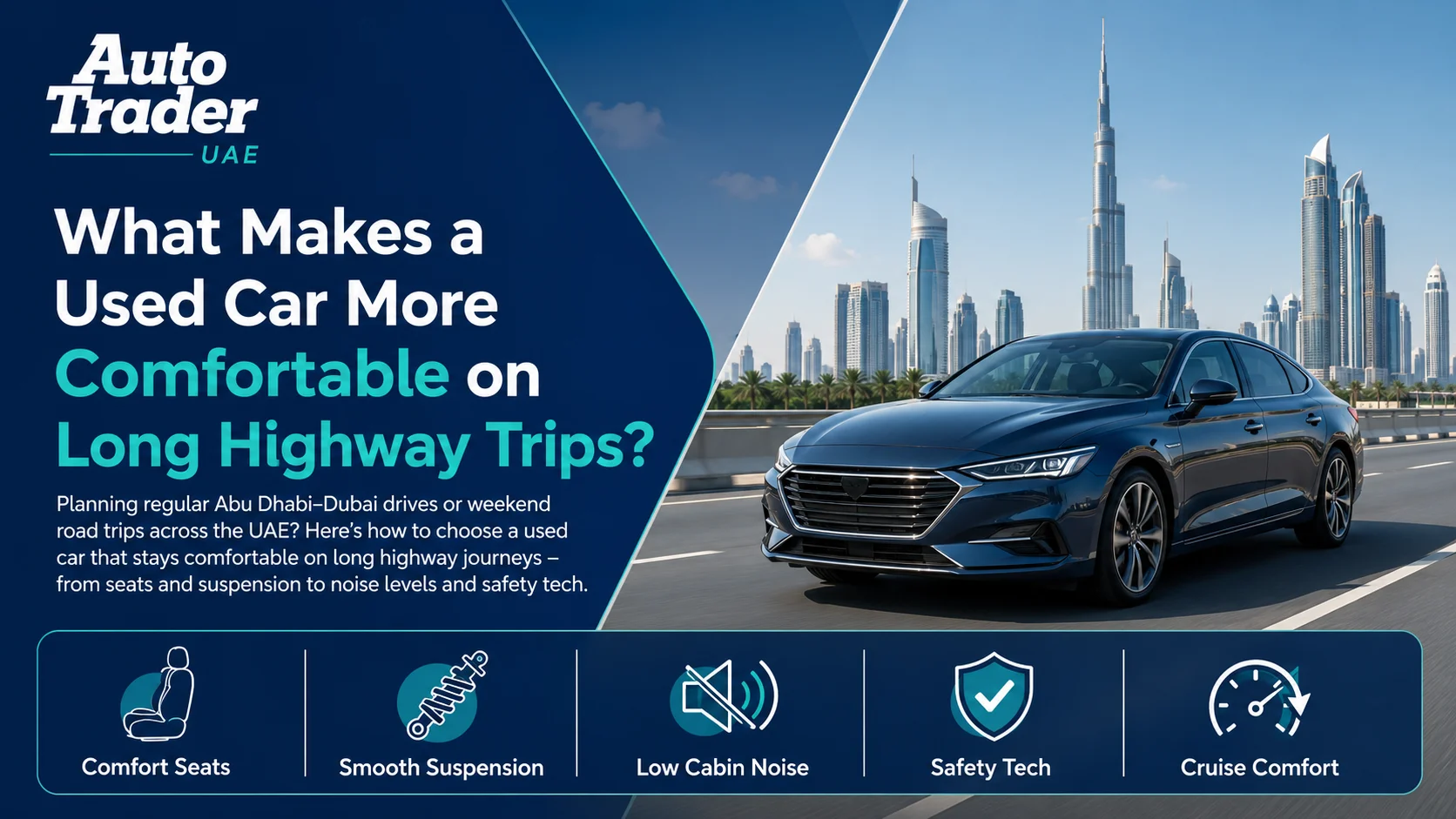
What Makes a Used Car More Comfortable on Long Highway Trips?
Buying a used car in the UAE often means thinking beyond price and mileage. If you regularly drive between emirates, commute on E11, or take family road trips, highway comfort should be a top priority. This guide from Auto Trader UAE explains exactly what makes a used car more comfortable on long highway trips, and how to check these features before you buy.
1. Why Highway Comfort Matters in the UAE
Long, straight highways, high average speeds, and hot weather make comfort more than a luxury in the UAE – it’s a safety factor.
- Less fatigue: Supportive seats and low noise keep you alert on Sharjah–Dubai or Dubai–Abu Dhabi drives.
- Better focus: Stable suspension and good visibility reduce stress when traffic is fast and lane changes are frequent.
- Happier passengers: Families and colleagues will feel the difference on weekend trips or daily commuting.
When comparing used cars, look beyond the spec sheet to how the car actually feels at 100–140 km/h on the highway.
2. Seat Comfort: Your First Priority for Long Trips
On a long drive, seats matter more than horsepower. Poor seats can cause back, neck, and leg pain in under an hour.
What to look for in used car seats
- Adjustability: Height adjustment, lumbar support, and steering wheel reach/tilt help you find a natural driving position.
- Lumbar support: Built-in or adjustable lumbar support reduces lower-back strain on long trips.
- Seat cushioning: Seats should feel supportive, not overly soft or rock-hard. Check for sagging or tilted seat bases in older models.
- Side bolstering: Gentle side support keeps you stable in your lane without squeezing you.
- Rear-seat comfort: If you carry family or colleagues, make sure rear seats have enough padding and backrest angle.
How to test seat comfort on a used car
- Sit in your natural driving position for at least 10–15 minutes with the car stationary.
- Adjust seat height, steering wheel, and backrest angle until your hips, knees, and shoulders feel relaxed.
- Check if your lower back is supported without forcing you to sit too upright.
- Sit in the rear seats and check thigh support and headroom.
If you immediately notice discomfort on the test drive, it will only get worse on a Dubai–Al Ain or Abu Dhabi–Ruwais run.
3. Suspension and Ride Quality: How the Car Handles UAE Highways
Comfort on E11, E311, and other UAE highways is heavily influenced by suspension tuning.
What makes a ride comfortable?
- Soft but controlled suspension: Absorbs small bumps and expansion joints without feeling floaty.
- Quality shock absorbers: Worn shocks can make the car bounce and sway at speed.
- Wheel size and tyres: Larger wheels with very low-profile tyres often look good but can make the ride harsher.
How to check ride comfort on a test drive
- Drive at highway speed (where legally allowed) and notice how the car feels over joints, patches, and mild ripples in the road.
- Watch for excessive bouncing after bumps – a sign the shock absorbers may be worn.
- Listen for knocks or clunks from the suspension over uneven surfaces.
- Check the tyre profile – 16–18 inch wheels with moderate-profile tyres usually balance comfort and control well.
SUVs and crossovers often feel more comfortable on broken surfaces, but some are tuned quite firm. Always test the exact car you’re considering.
4. Cabin Noise and Refinement: Quiet Equals Relaxing
At 120–140 km/h, wind and tyre noise quickly become tiring. A quiet cabin makes conversation easier and reduces fatigue.
Key noise factors
- Sound insulation: Doors, floor, and firewall insulation keep road and engine noise out.
- Tyre type and condition: Budget tyres or old, hardened rubber can generate a constant drone.
- Door and window seals: Worn rubbers allow wind noise to whistle into the cabin.
- Engine refinement: Some engines cruise quietly; others sound strained at highway speeds.
Noise checks during a test drive
- On a clear stretch of road, turn off the radio and listen at 100–120 km/h.
- Note wind noise around mirrors, A-pillars, and sunroof (if fitted).
- Check for rattles from the dashboard, doors, and rear hatch on uneven surfaces.
- Ask the seller about tyre age; tyres older than 5–6 years often get noisier in UAE heat.
If the cabin is too noisy, consider budgeting for better tyres or checking another car of the same model for comparison.
5. Interior Space, Seating Layout, and Practicality
On long trips, cramped cabins quickly become uncomfortable, especially for families and tall drivers.
Comfort features to look for
- Front and rear legroom: Make sure tall passengers can sit comfortably behind a tall driver.
- Headroom: Avoid constant contact with the roof lining, particularly with sunroof-equipped models.
- Adjustable steering wheel and driver’s seat: Critical for drivers of different sizes sharing one car.
- Rear seat recline and split-fold: Helps passengers find a more relaxed position and increases luggage flexibility.
- Armrests: Central front and rear armrests significantly add to comfort on long drives.
Boot space and luggage
For weekend getaways or airport runs, a practical boot makes life easier.
- Check if the boot can take suitcases and strollers without blocking rear visibility.
- Look for wide openings and low load lips for heavier items.
- In SUVs, make sure luggage doesn’t rattle against the rear seats or tailgate.
6. Climate Control: Beating UAE Heat on Long Drives
In the UAE, effective air conditioning is essential for any long highway journey.
Comfort-focused AC features
- Automatic climate control: Maintains a set temperature without constant adjustment.
- Dual-zone or tri-zone AC: Lets front and rear passengers choose their own comfort levels.
- Rear AC vents: Vital in hotter months so rear passengers don’t overheat.
- Ventilated seats (if fitted): Particularly useful for leather seats in hot weather.
How to test AC performance
- Start the car after it has been parked in the sun and time how quickly the cabin cools.
- Check airflow strength from all vents, including rear ones.
- Listen for unusual AC compressor noises or smells that might indicate poor maintenance.
A used car with weak AC is uncomfortable on the highway and could cost more to repair later.
7. Driving Position, Ergonomics, and Visibility
You’ll spend hours in the driver’s seat, so the driving position must feel natural and relaxed.
Ergonomic details that matter
- Reachable controls: Audio, cruise control, and phone buttons should be within easy reach.
- Clear instrument cluster: Speed, fuel, and temperature gauges should be easy to read at a glance.
- Supportive steering wheel: Adjustable for height and reach, with a comfortable grip.
- Pedal placement: Should allow you to move between pedals smoothly without awkward angles.
Visibility and mirrors
- Check for blind spots around the rear pillars.
- Adjust mirrors and ensure you can see clearly down both sides of the car.
- If fitted, test blind-spot monitoring and rear camera clarity.
A car that feels awkward to drive around town will usually feel worse on a long highway trip.
8. Highway Safety and Driver Assistance Features
Comfort is linked to peace of mind. Modern driver assistance systems can make long journeys safer and less tiring.
Helpful highway features
- Cruise control or adaptive cruise control: Reduces fatigue by maintaining speed and distance to the car ahead.
- Lane-keeping assist or lane-departure warning: Warns or gently guides you if you drift out of your lane.
- Blind-spot monitoring: Very useful on multi-lane highways when traffic is heavy.
- Forward-collision warning and automatic emergency braking: Adds an extra layer of protection.
- Tyre-pressure monitoring: Important in hot weather, where tyre failures at speed can be dangerous.
When shopping used, check that these systems still work correctly and that no warning lights are on.
9. Infotainment, Connectivity, and Small Comforts
Long drives feel shorter when you’re well entertained and connected.
Useful comfort and tech features
- Apple CarPlay / Android Auto: Easier navigation, music, and calls using your phone’s apps.
- Quality sound system: Clear audio at low and high volume without distortion.
- Multiple USB ports and charging points: Keep all devices powered on long trips.
- Navigation: Built-in or via your phone to avoid delays and find the best route.
- Storage spaces: Cup holders, door bins, and a central console to keep the cabin tidy.
These features don’t just add luxury – they reduce distractions and make highway driving smoother.
10. Mechanical Smoothness: Engine and Gearbox Behaviour
A car can have great seats and AC, but if the engine and gearbox feel stressed at highway speeds, comfort suffers.
What to pay attention to
- Engine RPM at cruising speed: Lower revs at 120 km/h usually mean a quieter and more relaxed drive.
- Gearbox shifts: Automatic gear changes should be smooth and predictable, without jerks or hunting for gears.
- Vibrations: Feel for vibrations through the steering wheel, seat, and floor, especially at steady speeds.
- Steering stability: The car should track straight without constant corrections.
Always take a used car onto a main road or highway (where allowed) before buying, not just around the block.
11. Best Types of Used Cars for Long Highway Trips
Comfort is found across many body types, but some categories tend to be better for long UAE drives.
Comfortable choices to consider
- Mid-size and large sedans: Often offer smooth rides, good sound insulation, and supportive seats.
- Crossovers and SUVs: Higher driving position, more space, and softer suspension in many models.
- Premium and near-premium models: Used examples can offer luxury-level comfort at a lower price.
You can browse a wide range of used cars in UAE and filter by body type, price, and features to match your comfort priorities.
12. Inspection Tips: How to Judge Comfort Before You Buy
When viewing a used car, follow a simple comfort checklist:
- Before driving
- Adjust seat, steering, and mirrors to your liking.
- Check all seat functions and lumbar support.
- Turn on AC and verify cooling and airflow.
- City and highway test
- Drive over bumps and rough patches to feel the suspension.
- Reach highway speed (where legal) and check noise levels and stability.
- Use cruise control and driver assistance (if equipped).
- Passenger checks
- Have a friend or family member sit in the rear.
- Ask about legroom, seat comfort, and AC effectiveness in the back.
If anything feels uncomfortable in a 20-minute test, imagine it after two or three hours on Sheikh Zayed Road.
13. Comfort vs Budget: Choosing the Right Used Car in the UAE
You don’t need a luxury badge to get good highway comfort. Instead of paying extra for performance options or cosmetic upgrades, consider investing in:
- Better seats and interior spec levels.
- Well-maintained suspension and quality tyres.
- Stronger AC and added sound insulation.
When comparing listings on Auto Trader UAE, focus on the individual car’s condition and equipment, not just the model name.
14. Next Steps: Find a Comfortable Used Car for Your UAE Road Trips
To make your next long highway journey smoother:
- List the comfort features you care most about: seats, AC, noise, safety tech, or space.
- Shortlist models known for relaxed cruising and good refinement.
- Use Auto Trader UAE filters to find used cars in UAE that match your budget and comfort needs.
- Book test drives and pay close attention to how each car feels at highway speeds.
When you’re ready, explore:
With the right information and a focused test drive, you can find a used car that keeps you and your passengers comfortable on every long highway trip across the UAE, while staying within your budget.
Browse used cars in UAE on Auto Trader UAE to compare live listings, prices, and current market activity more clearly.
Related Links
Buyer Takeaway
When buying a used car in the UAE, focus on vehicle condition, service history, inspection quality, paperwork, and total running costs rather than price alone. Compare options carefully and choose the option that best matches your budget and real needs.
Seller Takeaway
If you are selling a used car in the UAE, present the service history clearly, price the vehicle realistically, and highlight condition, specification, and ownership strengths honestly. A well-prepared listing with accurate details usually attracts more serious buyers.
Conclusion
A careful used car purchase in the UAE starts with research, proper inspection, and clear paperwork before making the final decision.